Cool History Fact of the night
Uncategorized
19
Posts
12
Posters
0
Views
-
Cool History Fact of the night
Before woodblock printing (which was extensively used in China well before the west), there was a very clever, effective way to mass-reproduce the most important texts.
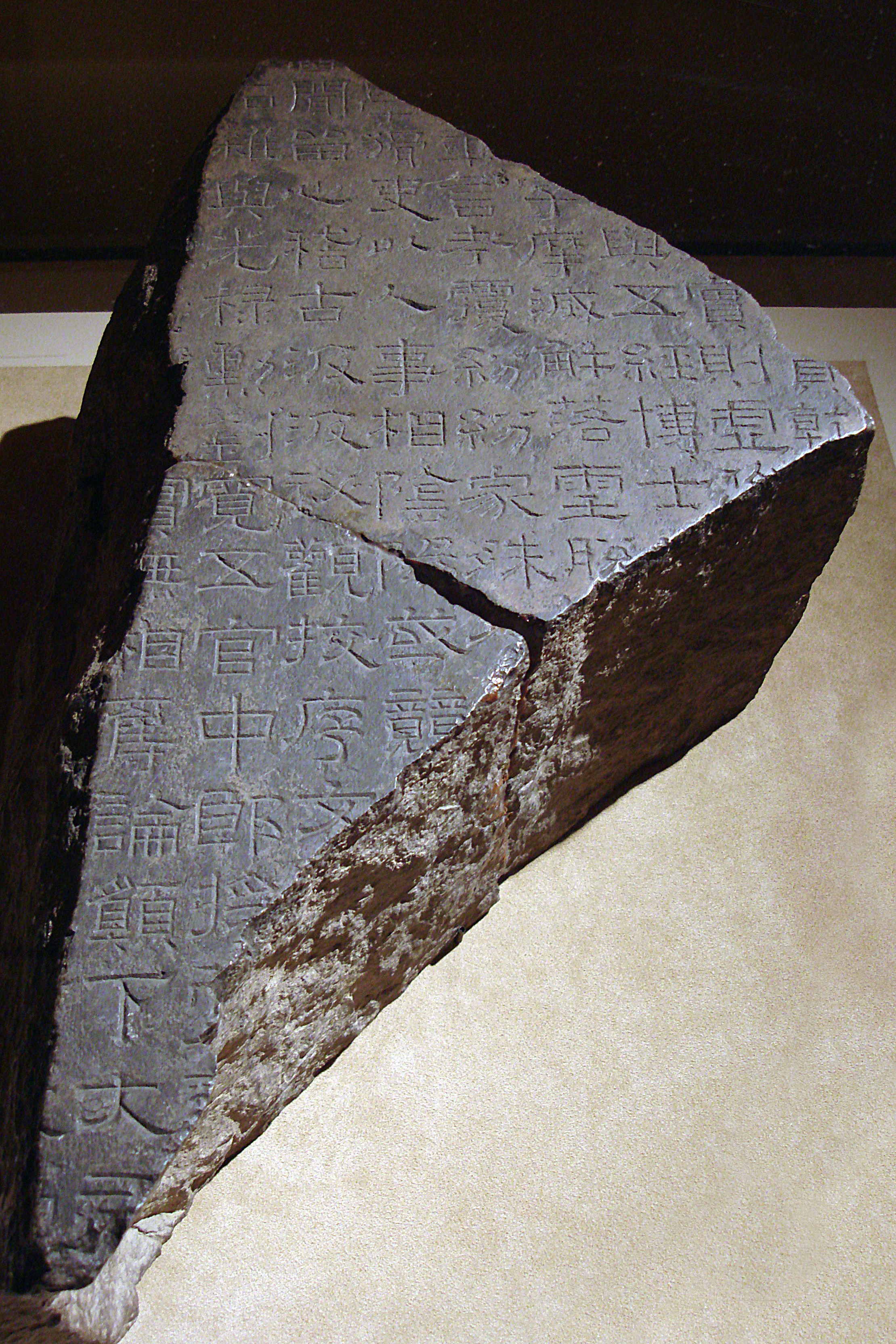
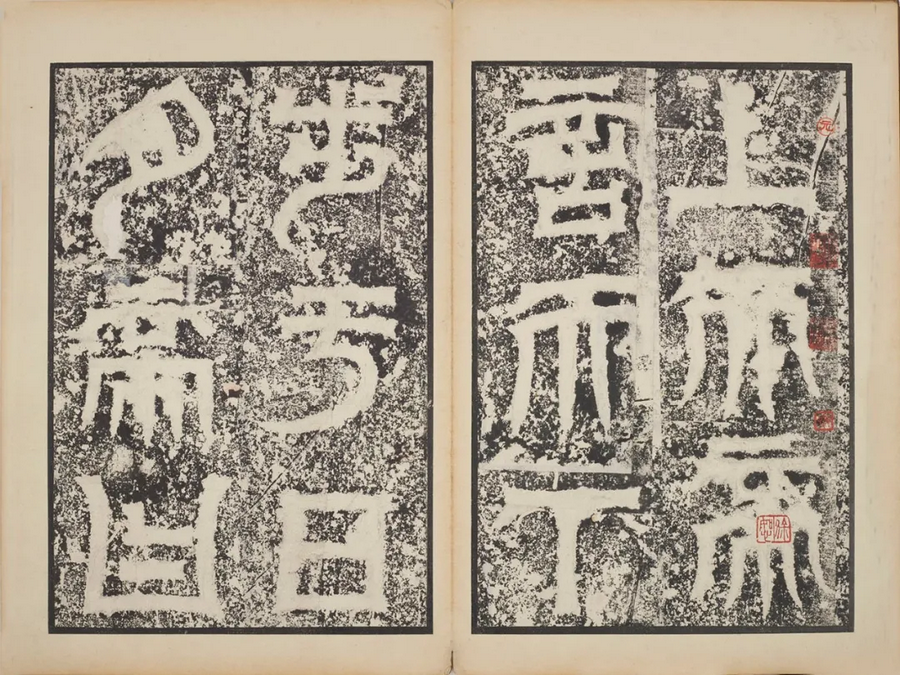
A few different times in imperial China, stone tablets of the most important books were commissioned. Anyone could walk up and look at them, but more importantly: anyone could lay a wet piece of paper over them and then gently rub ink over the paper, which would create a copy of white text on a black background.(And unlike printing, nothing needs to be done backwards.)
And if you were a famous enough calligrapher, you'd be asked to write onto a stone so someone else could chisel out your handwriting exactly, and then copies could be mass-reproduced as teaching examples.
(and I'm fascinated by how the stone fragment here is 1800 years old but the writing style is already extremely legible to me. It still uses the X-style 五 but is otherwise very Normal)
It’s very interesting.. I’d be curious at this point how accessible paper and even ink was to the population. It still required some minimal wealth.
-
It’s very interesting.. I’d be curious at this point how accessible paper and even ink was to the population. It still required some minimal wealth.
@GhostOnTheHalfShell aiui paper was much cheaper in China than in Europe. And ink was (and is) just charcoal+glue. You can get a traditional handmade ink stick for like $2 and the videos of their manufacture are very satisfying, it looks like black taffy candy
-
@GhostOnTheHalfShell aiui paper was much cheaper in China than in Europe. And ink was (and is) just charcoal+glue. You can get a traditional handmade ink stick for like $2 and the videos of their manufacture are very satisfying, it looks like black taffy candy
I’m thinking historically.
-
Cool History Fact of the night
Before woodblock printing (which was extensively used in China well before the west), there was a very clever, effective way to mass-reproduce the most important texts.
A few different times in imperial China, stone tablets of the most important books were commissioned. Anyone could walk up and look at them, but more importantly: anyone could lay a wet piece of paper over them and then gently rub ink over the paper, which would create a copy of white text on a black background.(And unlike printing, nothing needs to be done backwards.)
And if you were a famous enough calligrapher, you'd be asked to write onto a stone so someone else could chisel out your handwriting exactly, and then copies could be mass-reproduced as teaching examples.
(and I'm fascinated by how the stone fragment here is 1800 years old but the writing style is already extremely legible to me. It still uses the X-style 五 but is otherwise very Normal)
@0xabad1dea This is a (partial photo) of a Korean ink rubbing from a stone the method you described. Made by a relative, it's supposed to be a part of a saying by Confucius.
-
Cool History Fact of the night
Before woodblock printing (which was extensively used in China well before the west), there was a very clever, effective way to mass-reproduce the most important texts.
A few different times in imperial China, stone tablets of the most important books were commissioned. Anyone could walk up and look at them, but more importantly: anyone could lay a wet piece of paper over them and then gently rub ink over the paper, which would create a copy of white text on a black background.(And unlike printing, nothing needs to be done backwards.)
And if you were a famous enough calligrapher, you'd be asked to write onto a stone so someone else could chisel out your handwriting exactly, and then copies could be mass-reproduced as teaching examples.
(and I'm fascinated by how the stone fragment here is 1800 years old but the writing style is already extremely legible to me. It still uses the X-style 五 but is otherwise very Normal)
@0xabad1dea this is such a cool fact, I want to tell everyone!
-
Cool History Fact of the night
Before woodblock printing (which was extensively used in China well before the west), there was a very clever, effective way to mass-reproduce the most important texts.
A few different times in imperial China, stone tablets of the most important books were commissioned. Anyone could walk up and look at them, but more importantly: anyone could lay a wet piece of paper over them and then gently rub ink over the paper, which would create a copy of white text on a black background.(And unlike printing, nothing needs to be done backwards.)
And if you were a famous enough calligrapher, you'd be asked to write onto a stone so someone else could chisel out your handwriting exactly, and then copies could be mass-reproduced as teaching examples.
(and I'm fascinated by how the stone fragment here is 1800 years old but the writing style is already extremely legible to me. It still uses the X-style 五 but is otherwise very Normal)
@0xabad1dea huh, yeah, that is Just Chinese Writing. I wouldn't blink if a modern font just looked like that
-
@0xabad1dea huh, yeah, that is Just Chinese Writing. I wouldn't blink if a modern font just looked like that
a modern computer font which looks similar as this ancient writing (it's sorta "artistic" and not used for professional documents though):
-
@pounce @0xabad1dea yes, it's documented on wikipedia:
https://zh.wikipedia.org/wiki/%E6%B3%A8%E9%9F%B3%E7%AC%A6%E8%99%9F
-
a modern computer font which looks similar as this ancient writing (it's sorta "artistic" and not used for professional documents though):
@bootlegrydia @pikhq @0xabad1dea
It's a style called clerical script. Very popular in signs and calligraphy all over the sinosphere. I've even been given a note written in ballpoint pen in a style that was visibly clerical.
One characteristic is the occasional use of archaic forms, like the x-form 五 OP mentioned.
-
Cool History Fact of the night
Before woodblock printing (which was extensively used in China well before the west), there was a very clever, effective way to mass-reproduce the most important texts.
A few different times in imperial China, stone tablets of the most important books were commissioned. Anyone could walk up and look at them, but more importantly: anyone could lay a wet piece of paper over them and then gently rub ink over the paper, which would create a copy of white text on a black background.(And unlike printing, nothing needs to be done backwards.)
And if you were a famous enough calligrapher, you'd be asked to write onto a stone so someone else could chisel out your handwriting exactly, and then copies could be mass-reproduced as teaching examples.
(and I'm fascinated by how the stone fragment here is 1800 years old but the writing style is already extremely legible to me. It still uses the X-style 五 but is otherwise very Normal)
Really cool tech.
-
Cool History Fact of the night
Before woodblock printing (which was extensively used in China well before the west), there was a very clever, effective way to mass-reproduce the most important texts.
A few different times in imperial China, stone tablets of the most important books were commissioned. Anyone could walk up and look at them, but more importantly: anyone could lay a wet piece of paper over them and then gently rub ink over the paper, which would create a copy of white text on a black background.(And unlike printing, nothing needs to be done backwards.)
And if you were a famous enough calligrapher, you'd be asked to write onto a stone so someone else could chisel out your handwriting exactly, and then copies could be mass-reproduced as teaching examples.
(and I'm fascinated by how the stone fragment here is 1800 years old but the writing style is already extremely legible to me. It still uses the X-style 五 but is otherwise very Normal)
@0xabad1dea
They do it with fish too -
 undefined oblomov@sociale.network shared this topic







Feed RSS
Gli ultimi otto messaggi ricevuti dalla Federazione
-
Valigia Blu (@valigiablu.it)
https://bsky.app/profile/valigiablu.it/post/3mgmhbhvpzc2o
> Unendo i puntini, la direzione appare tracciata: una transizione istituzionale silenziosa che concentra il potere nelle mani della Presidenza del Consiglio. La nuova legge elettorale potrebbe persino consentire alla maggioranza di turno di influire pesantemente sulla scelta del Quirinale
-
@alberto_cottica @mora @FlaviaMarzano Alla prova dei fatti molte persone si scoraggiano prima. Spesso restano soprattutto quelle che hanno la fortuna di entrare in un’istanza dove trovano subito persone con interessi in comune, con cui riescono ad allargare la propria rete.
Per molti altri, invece, l’esperienza iniziale può essere piuttosto desolante, nei primi giorni si vede poco movimento, si conosce quasi nessuno e non è facile orientarsi. Ed è proprio in quella fase che tanti abbandonano.
-
Prof @Adrianogallina ma che fine ha fatto https://untempoperpensare.wordpress.com/ ? Ha smesso di scrivere? Lo sa che puó collegare il sito al fediverso? https://m.youtube.com/watch?v=t4pmWufYRr0&pp=ugMGCgJpdBABugUEEgJpdMoFFXdvcmRwcmVzcyBhY3Rpdml0eXB1YtgHAQ%3D%3D
Lo fece tempo fa @WhiteJolly con il suo @get-backs.com ma adesso si è preso una pausa… chissà perchè 🤔
-
Un mio contatto autore, si è lamentato che in molti gli hanno scritto che i suoi testi sarebbero stati prodotti da IA.
Lui dice di averli scritti di suo pugno.
Così ha passato un capitolo di un suo romanzo al sw che individua scritti da parte di IA. il responso: 76% è opera di IA.
Cosa a suo dire non vera.Non sono solo gli umani che non sanno valutare l'origine genuina di un testo. Non lo sa fare neppure un software studiato appositamente per quello scopo.
-
Le notizie di oggi è che dopo merda c'è altra merda. Tanta merda. Merda per tutti. Se ti piace la merda sarai a posto
-
-
Iran, il caro-energia torna a spaventare l’UE. Il tema sul tavolo dei leader
@news
https://www.eunews.it/2026/03/09/iran-il-caro-energia-torna-a-spaventare-lue-il-tema-sul-tavolo-dei-leader/
L'impennata dei prezzi di petrolio e gas ridisegna le agende dei ministri economici e dei capi di Stato e di governo. A Bruxelles si lavora già a scenari di risposta comune
-
@malerba e mai raccogliere noci con il mallo a mani nude che per due settimane rimangono marroni!