🚀 Castopod v1.15 is out: giving some love to FrankenPHP on Docker!
Uncategorized
4
Posts
3
Posters
2
Views

-
🚀 Castopod v1.15 is out: giving some love to FrankenPHP on Docker!
Rebuilt the all-in-one Docker image on FrankenPHP + Caddy (replacing discontinued Nginx Unit).
Enjoy faster loads + lower latency with:
✅ HTTP/3 support
✅ HTTP range requests (audio seeking works perfectly!)⚠️ Breaking changes for Docker users, see release notes: https://code.castopod.org/adaures/castopod/-/releases/v1.15.0
-
🚀 Castopod v1.15 is out: giving some love to FrankenPHP on Docker!
Rebuilt the all-in-one Docker image on FrankenPHP + Caddy (replacing discontinued Nginx Unit).
Enjoy faster loads + lower latency with:
✅ HTTP/3 support
✅ HTTP range requests (audio seeking works perfectly!)⚠️ Breaking changes for Docker users, see release notes: https://code.castopod.org/adaures/castopod/-/releases/v1.15.0
@Castopod thank you for this new version. Do you have any data lossless upgrade guide from the previous versions to keep castopod settings and podcast data as they are? Should I just update the docker-compose with the new volume mapping and internal 8080 port and then restart the container or it’s more complicated than that?
-
@Castopod thank you for this new version. Do you have any data lossless upgrade guide from the previous versions to keep castopod settings and podcast data as they are? Should I just update the docker-compose with the new volume mapping and internal 8080 port and then restart the container or it’s more complicated than that?
-
@yassinedoghri @Castopod Hi Yassine, I was searching a docker compose template for Castopod 1.15.x and I found this template in the official castopod documentation:
https://docs.castopod.org/main/en/getting-started/docker/
Nevertheless in this yml template the port mapping is still
- "8080:8080" for HTTP
and not
- 8000:8080 as suggested here in the release notes:
https://code.castopod.org/adaures/castopod/-/releases/v1.15.0
May I assume that the full template could work with v1.15.4 changing
- "8080:8080"
in
- "8000:8080"
or should I change sthing else?



Gli ultimi otto messaggi ricevuti dalla Federazione
-
@timbray -- another one, they claim to be billionaire-proof but don't offer anything to back that up. i don't think they are. they fully control their users. no different from any other silo. twitter had an api too.
-
tim, i never was able to find the valuation confirmed. i think there was a techcrunch story.
for all we know elon musk owns it.
-
"Stiamo assistendo alla caduta di un Paese sotto la dittatura quasi senza alcuna resistenza"
La Guerra Fredda? Un gioco da ragazzi rispetto a ciò che ci aspetta, secondo lo storico statunitense Robert Kagan. Trump, dice, sta guidando il mondo verso l'era più pericolosa dal 1945.
-
PayPal rivela una violazione dei dati che ha esposto le informazioni degli utenti per 6 mesi
L'incidente ha interessato l' app di prestito PayPal Working Capital (PPWC), che fornisce alle piccole imprese un rapido accesso ai finanziamenti.
-
and followed @team@protocolsforpublishers.com
-
😅 subscribed!
-
-
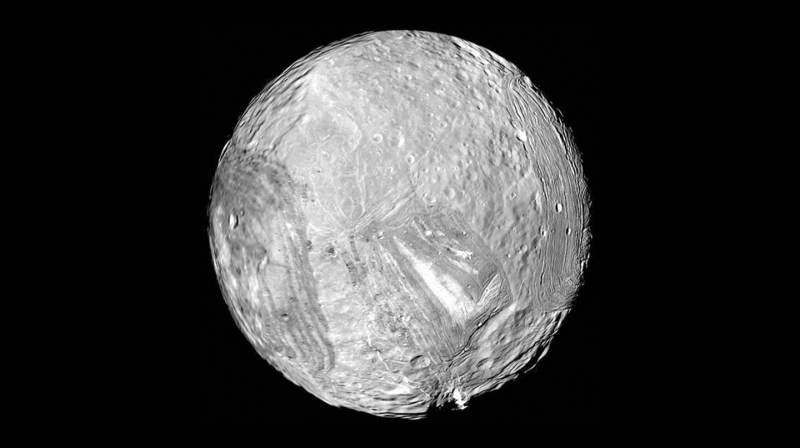
Miranda’s Unlikely Ocean Has Us Asking If There’s Life Clinging On Around Uranus
If you’re interested in extraterrestrial life, these past few years have given an embarrassment of places to look, even in our own solar system. Mars has been an obvious choice since before the Space Age; in the orbit of Jupiter, Europa’s oceans have been of interest since Voyager’s day; the geysers of Enceladus give Saturn two moons of interest, if you count the possibility of a methane-based chemistry on Titan. Even faraway Neptune’s giant moon Triton probably has an ocean layer deep inside. Now the planet Uranus is getting in on the act, offering its moon Miranda for consideration in a kinda-recent study in the Planetary Science Journal.
Miranda and Uranus, the new hot spot for life-hunters.
Photomontage credit NASA.
Even if you’re into astronomy, it may seem like this is coming out of left field. “Miranda, really? What new data could we possibly have on a moon of Neptune nobody’s visited since the 1980s?” Well, none, really. This study relies on reexamining the data collected during the Voyager 2 encounter and trying to make sense of the chaotic, icy world that the space probe revealed.The faults and other features on Miranda indicated it was geologically active at some point; this study tries to recreate the moon’s history through computer modelling to find that Miranda probably had a ≥100 km thick ocean sometime in the last 100-500 million years, and that while some of it has likely frozen since, tidal heating could very well keep a layer of liquid water within the moon’s interior. Since the moon itself is only 470 km (290 mi) in diameter, a 100km deep ocean layer would actually be a huge proportion of its volume.
The model is a fairly simple one, with the ocean sandwiched between two layers of ice and a rocky core. Image from Caleb Strom et al 2024 Planet. Sci. J. 5 226
Right now, the over-optimistic thinking is that “water means life”, since that’s how it seems to work on Earth. It remains to be seen if Miranda, or indeed any of the icy moons, ever evolved so much as a microbe. Aside from the supposed presence of liquid dihydrogen monoxide, there’s nothing to suggest they have. Finding out is going to take a while: even with boots — er, robots — on the ground, Mars isn’t giving up that secret easily. Still, if we’re able to discover irrefutable evidence for such extraterrestrial life, it will provide an important constraint on one term of The Drake Equation: what fraction of worlds develop life. That by itself won’t tell us “are we alone,” but it will be interesting.Of course, even if all these worlds are barren now, they might not be for long, once our probes start visiting.
Story via Earth.com
Header image: Miranda, imaged by Voyager 2. Credit NASA/JPL-Caltech