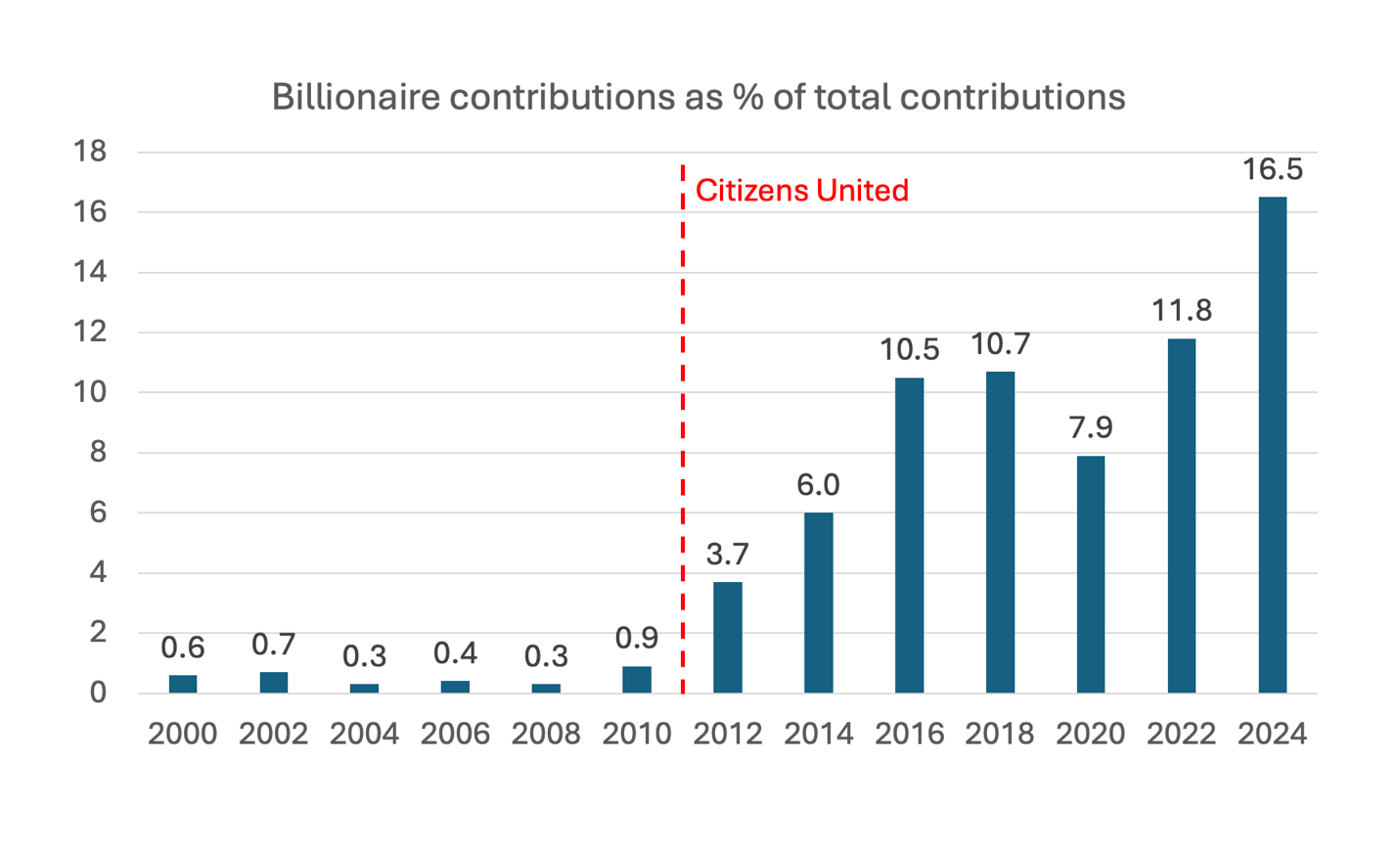
Remember, with the right it's ALWAYS projection.
Uncategorized
8
Posts
5
Posters
20
Views
-
Remember, with the right it's ALWAYS projection. (They denounce in others what they themselves have done or want to do: they can't comprehend how anyone could "think different".)
Complaints about "cancel culture" always indicated a desire for far-right censorship. https://www.threads.com/@barackobama/post/DOvxeLxDajY
-
Remember, with the right it's ALWAYS projection. (They denounce in others what they themselves have done or want to do: they can't comprehend how anyone could "think different".)
Complaints about "cancel culture" always indicated a desire for far-right censorship. https://www.threads.com/@barackobama/post/DOvxeLxDajY
Wow, that thread is horrendous. Shows a big difference between the Fediverse's moderation (with overworked and mostly unpaid, yet amazing, volunteers) compared to those of a for-profit data-mining company.
-
Wow, that thread is horrendous. Shows a big difference between the Fediverse's moderation (with overworked and mostly unpaid, yet amazing, volunteers) compared to those of a for-profit data-mining company.
@david_chisnall @cstross
I made the mistake of clicking on that link and reading some of the comments. An astonishing mix of ignorance and hatred. The USA is cooked. It's done. The only question remaining is how will the rest of the world survive the fall out?
#USPol -
@david_chisnall @cstross
I made the mistake of clicking on that link and reading some of the comments. An astonishing mix of ignorance and hatred. The USA is cooked. It's done. The only question remaining is how will the rest of the world survive the fall out?
#USPol@ewen @david_chisnall @cstross I'm in the US, I think everyone will be fine without us. Hell, maybe the collapse of our country will help tamp down on rampant consumerism globally. I just wish I wasn't stuck here, the next couple years are really going to suck.
-
@ewen @david_chisnall @cstross I'm in the US, I think everyone will be fine without us. Hell, maybe the collapse of our country will help tamp down on rampant consumerism globally. I just wish I wasn't stuck here, the next couple years are really going to suck.
The consensus at the end of the Second World War was that trade was a good disincentive for war. If all of your supply chains are threaded through potential enemy countries, it's very hard for you to go to war with them because it will break your economy. Asimov referenced this in the Foundation series.
It's been quite successful. The down side is that it assumes rationality on the part of leadership. Putin is not acting rationally, but that's a relatively minor problem because Russia's economy is tiny and propped up by fossil fuel reserves that are rapidly dropping in value as alternatives price them out of the market.
In contrast, the USA was a major advocate of free trade for most of the last century. This means a lot of supply chains are threaded through the USA. I think the statistic when Trump announced tariffs on Canada and Mexico was that cars made in North America enter and leave the USA seven times before they're finished.
Nothing the USA does is irreplaceable, but moving to alternatives will take a while. Spinning up factory capacity and rerouting distribution takes a long time. And the drop in efficiency when this happens can easily cause recessions. The only way of avoiding that is a lot of government investment (which will likely cause inflation and so needs to be part of a broader stimulus package) and the UK government is completely incapable of that and I think most EU governments will also struggle.
In the near term, the AI bubble is currently propping up the commercial real-estate bubble in the USA. When these pop together, it's going to wipe out almost a third of the value of the stock market, which will make a large number of pension funds insolvent. Trump is completely incapable of participating in the kind of multinational cooperation that followed the 2008 financial crisis, so the most urgent priority for other world leaders should be ensuring that they have a mechanism in place to instantly firewall the US financial system from the rest of the world. That probably takes at least a few years of preparation and I don't think the people who need to do it have started yet (I hope they have. And, for obvious reasons, if they did, they wouldn't be talking about it publicly).
Longer term, a large part of the problem in the USA is caused of the concentration of wealth in the hands of a few. Incompetent politicians in the UK and EU want to recreate US big tech locally. What they should be aiming to do is create an ecosystem that is bigger and more valuable than the US big tech ecosystems, but where each individual participant is much smaller and where the failure of any company has limited impact. And that requires a lot more changes, starting with electing people able to think through the consequences of their actions more than one step.
-
The consensus at the end of the Second World War was that trade was a good disincentive for war. If all of your supply chains are threaded through potential enemy countries, it's very hard for you to go to war with them because it will break your economy. Asimov referenced this in the Foundation series.
It's been quite successful. The down side is that it assumes rationality on the part of leadership. Putin is not acting rationally, but that's a relatively minor problem because Russia's economy is tiny and propped up by fossil fuel reserves that are rapidly dropping in value as alternatives price them out of the market.
In contrast, the USA was a major advocate of free trade for most of the last century. This means a lot of supply chains are threaded through the USA. I think the statistic when Trump announced tariffs on Canada and Mexico was that cars made in North America enter and leave the USA seven times before they're finished.
Nothing the USA does is irreplaceable, but moving to alternatives will take a while. Spinning up factory capacity and rerouting distribution takes a long time. And the drop in efficiency when this happens can easily cause recessions. The only way of avoiding that is a lot of government investment (which will likely cause inflation and so needs to be part of a broader stimulus package) and the UK government is completely incapable of that and I think most EU governments will also struggle.
In the near term, the AI bubble is currently propping up the commercial real-estate bubble in the USA. When these pop together, it's going to wipe out almost a third of the value of the stock market, which will make a large number of pension funds insolvent. Trump is completely incapable of participating in the kind of multinational cooperation that followed the 2008 financial crisis, so the most urgent priority for other world leaders should be ensuring that they have a mechanism in place to instantly firewall the US financial system from the rest of the world. That probably takes at least a few years of preparation and I don't think the people who need to do it have started yet (I hope they have. And, for obvious reasons, if they did, they wouldn't be talking about it publicly).
Longer term, a large part of the problem in the USA is caused of the concentration of wealth in the hands of a few. Incompetent politicians in the UK and EU want to recreate US big tech locally. What they should be aiming to do is create an ecosystem that is bigger and more valuable than the US big tech ecosystems, but where each individual participant is much smaller and where the failure of any company has limited impact. And that requires a lot more changes, starting with electing people able to think through the consequences of their actions more than one step.
@david_chisnall @Jennifer @ewen @cstross How is the AI bubble propping up the commercial real-estate bubble? I'm familiar with each bubble independently, but I didn't know they were connected.
-
@david_chisnall @Jennifer @ewen @cstross How is the AI bubble propping up the commercial real-estate bubble? I'm familiar with each bubble independently, but I didn't know they were connected.
@Azuaron @david_chisnall @Jennifer @ewen The AI bubble is causing AI companies to commission huge data centers, which in turn raise commercial real estate prices all round (we're talking fractional-million square metre warehouse scale buildings here, not simple office blocks).
-
 undefined oblomov@sociale.network shared this topic on
-
@Azuaron @david_chisnall @Jennifer @ewen The AI bubble is causing AI companies to commission huge data centers, which in turn raise commercial real estate prices all round (we're talking fractional-million square metre warehouse scale buildings here, not simple office blocks).
@cstross @Azuaron @Jennifer @ewen
It's a bit more than that. A load of real estate funds were sitting on what was about to become negative equity because COVID reduced the demand for office space. A lot of loans came due this summer, but the new data centre leases let them refinance them and hide other losses. But that depends on their tenants not invoking early break clauses. Rather than the bubble bursting, it was propped up by another one. And that means they are likely to pop together.





Gli ultimi otto messaggi ricevuti dalla Federazione
-
@paco@infosec.exchange why Discourse?
Use NodeBB. We keep our shit in one folder.
You can put that folder anywhere 🫠
-
@paco this is also important to me. 👊
-
But no. The discourse "easy installer" sprays shit all over /var. I'm gonna get some database down in /var/lib/docker/something and I'm going to get assets living in /var/discourse, and umpteen gajillion container images in /var/lib/docker.
But I also have fucking /var/log for OS logs, and /var/run for runtime information like PIDs, and /var/lock and /var/tmp. I think /var/most-important-app-on-the-system is NOT where you put application software. So my volume/filesystem to encapsulate discourse? Is that a big ass /var?
I love #FreeBSD because it is so well organized. They even go to trouble to make packages like postfix or apache fit the idiom, rather than let it install in /var/lib/opt/sbin/etc or some shit.
This public service announcement sponsored by Old Man Yells at Cloud, Inc.
-
More moaning about #linux. I'm trying to get a discourse server off the ground. Why the fuck do they insist on installing non-OS stuff in the middle of all the OS stuff.
/var/discourse is not a good default. And then fucking docker wants to be /var/lib/docker. Never mind how /var/lib doesn't make any goddamn sense.
Related to my earlier discussion of hard drive partitioning. What I would like to do is have a volume that is not the operating system, but is instead all the application data. The discourse data, database, assets people upload, etc. That way I can have this nice virtual disk that encapsulates it. I could theoretically build a new node, attach this drive to the new node, and migrate the site. I can snapshot that drive more frequently than, say, the OS drive. Lots of benefits to encapsulating it.
-
Operazioni aritmetiche e scorciatoie
@matematica - Pare che i maschi siano più portati a usarle rispetto alle femmine.
-
@m104 i will not. it will sit unread in my inbox and buried under the endless torrent of email from mailing lists i never signed up for
-
@aeva no, but he can
<cat enters chat>
-
@aeva you may receive a strongly-worded letter