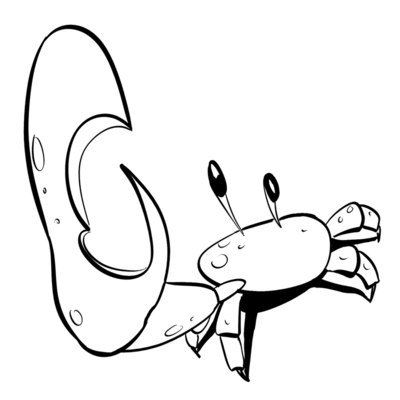
A group of roaches are suing "moltbook" for defamation.
Uncategorized
20
Posts
11
Posters
3
Views
-
@futurebird Wait hold on. Your "team" are high schoolers, right?
*Thinks*
Okay. I believe in their ability to make a robot that can fly at a person's face and makes them scream
@mcc @futurebird Can confirm. Built a quadrotor in high school and accidentally sent it in the direction of my face once. Would have screamed if I wasn't busy dodging the thing and trying to find the e-stop on the telemetry panel. Left a good dent in the ceiling with it at one point, too. (And that ceiling is tough plaster and cement, not drywall...)
-
That sounds amazing.
The thing about insect exoskeletons is they aren't anything like robots at all. Chitin is flexible, it has variable thickness. This is integrated into insect motion. For example trap jaw ants use deformation of their skulls to generate more force.
It's more subtle than our system of rigid bones.
@futurebird @MedeaVanamonde now i'm wondering how ribs work when we breathe... always assumed there was some give in the bones there but my anatomy was never that good -
@futurebird Wait hold on. Your "team" are high schoolers, right?
*Thinks*
Okay. I believe in their ability to make a robot that can fly at a person's face and makes them scream
@mcc I believe the children are our future. Teach them well and let them lead the way ... in jumpscare robots
-
@mcc I believe the children are our future. Teach them well and let them lead the way ... in jumpscare robots
This is my teaching philosophy. I'm putting this in my "year end reflection"
-
That sounds amazing.
The thing about insect exoskeletons is they aren't anything like robots at all. Chitin is flexible, it has variable thickness. This is integrated into insect motion. For example trap jaw ants use deformation of their skulls to generate more force.
It's more subtle than our system of rigid bones.
@futurebird humans had left robots behind to help The Dogs who had inherited the earth.
The ant sized ant-robots primary task was drilling into the main processors of the humanoform metal robots and reprogram them to help with major macro scale construction projects that ants were engaged in.According to one Raccoon the mechano-ants made a “ticking” sound when held to the ear.
Simak’s assumption, like most if not all gold age science fiction writers, was that organics would make their robots in their own images.
How did the ants get robots in just a few thousand years? They’d been given technology by an offshoot of humanity, starting with fire and steam and the wheel. Those off shoot “humans” later got bored with the ants, figured out how to fold space at ground level, and left Earth just as most of their progenitor species had.
-
@MedeaVanamonde @futurebird I have that and should get around to actually reading it
It can be a quick read. My copy is from the 70s and falling apart more from age than readings…
-
That sounds amazing.
The thing about insect exoskeletons is they aren't anything like robots at all. Chitin is flexible, it has variable thickness. This is integrated into insect motion. For example trap jaw ants use deformation of their skulls to generate more force.
It's more subtle than our system of rigid bones.
@futurebird @MedeaVanamonde Some electronics have similar mechanisms! You may know about bimetallic strips (a strip made of two metals adhered together in some way), which are flat normally, but if you heat them or apply enough current, they pop into a curved shape. It'd be pretty cool to imagine a robotic ant that superheats its exoskeleton to perform a similar action
-
@futurebird @MedeaVanamonde Some electronics have similar mechanisms! You may know about bimetallic strips (a strip made of two metals adhered together in some way), which are flat normally, but if you heat them or apply enough current, they pop into a curved shape. It'd be pretty cool to imagine a robotic ant that superheats its exoskeleton to perform a similar action
@Goopadrew @futurebird @MedeaVanamonde There are materials that do this without excessive heat requirements too.
-
@Goopadrew @futurebird @MedeaVanamonde There are materials that do this without excessive heat requirements too.
@Goopadrew @futurebird @MedeaVanamonde I bet there's a clever way to operate it on thermal differential instead of absolute temperature too. Two layers with a layer of micro TECs in between and insulation outside.
-
That sounds amazing.
The thing about insect exoskeletons is they aren't anything like robots at all. Chitin is flexible, it has variable thickness. This is integrated into insect motion. For example trap jaw ants use deformation of their skulls to generate more force.
It's more subtle than our system of rigid bones.
The muscles providing most of the force for flight in Diptera don't even pull on the wings at all. They excite a resonant mode in the thoracic exoskeleton that vibrates the wings.
-
@Goopadrew @futurebird @MedeaVanamonde I bet there's a clever way to operate it on thermal differential instead of absolute temperature too. Two layers with a layer of micro TECs in between and insulation outside.
@dalias @futurebird @MedeaVanamonde I mostly just like the idea of a giant robot fire ant that literally burns when it bites
-
"Humans often associate arthropods with robots simply because we have jointed limbs and exoskeletons. This is very unfortunate. A robot will never understand the joy of finding a fresh carrot on the kitchen floor. A robot will never know the thrill of flying at a person's face and making them scream."
@futurebird Do we know if cockroaches prefer fresh carrots (or fresh anything) to, say, a moldering old carrot? Just wondering. (I think people may tend to believe they would like spoiled things more, but it's actually just that they'll eat anything and everything they find?)
-
 undefined oblomov@sociale.network shared this topic on









Gli ultimi otto messaggi ricevuti dalla Federazione
-
I am declaring war on the San Marino republic.
-
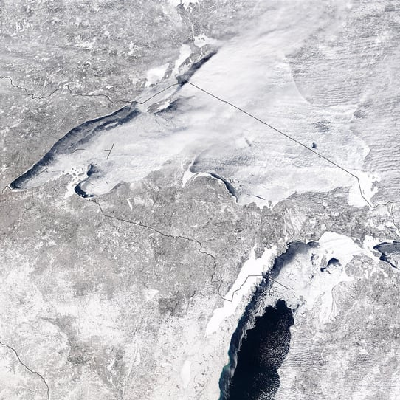
Current* conditions near Duluth, MN:
-
How to get out of jury duty.
Judge forced to slash SF jury pool over hate for Elon Musk: One candidate said, "In a criminal trial, I would feel morally obligated to convict, however, in a civil trial I could set those views aside," adding, "I believe it would be to the benefit of the human race for Mr. Musk to be sent to prison." ...
https://jwz.org/b/yk3p
-
Blathering Heights
#booksForExtroverts
#hashtagGames
-
A Game of Phones
#booksForExtroverts
#hashtagGames
-
Ever thought to yourself, “I wish an FPS game had ninjas?”
Flash of the Blade exists!
You jump around, slicing a katana, throwing shurikens, shooting crossbows.
And this is far more addictive than I thought it would be. Never thought meting out revenge against my former clan would have such an impact but here we are.
All in this beautiful voxel world where I listen to traditional Japanese instruments like the koto.
-
@davew
The AI doesn't even need to actually attend the conference. If it knows what kind of stuff you're interested in, it can just generate it.
-
Quizzino della domenica: dadi riordinati
@matematica - Riordinare i dadi non è sempre facile.