Sto tornando
Uncategorized
6
Posts
3
Posters
4
Views
-
Sto tornando.
La storia triste è che dovevo restituire le luci a una compagnia di Bergamo e ho preso la Piacenza-Brescia, e il Tano doveva essere a Verona entro un certo orario.
L'ho lasciato in stazione a Brescia e ho dovuto tornare fino a Bergamo. Ora riparto per Verona. -
Sto tornando.
La storia triste è che dovevo restituire le luci a una compagnia di Bergamo e ho preso la Piacenza-Brescia, e il Tano doveva essere a Verona entro un certo orario.
L'ho lasciato in stazione a Brescia e ho dovuto tornare fino a Bergamo. Ora riparto per Verona.Mannaggia!
-
Sto tornando.
La storia triste è che dovevo restituire le luci a una compagnia di Bergamo e ho preso la Piacenza-Brescia, e il Tano doveva essere a Verona entro un certo orario.
L'ho lasciato in stazione a Brescia e ho dovuto tornare fino a Bergamo. Ora riparto per Verona. -
Mannaggia!
@GustavinoBevilacqua però ho con me l'aglio di caraglio. -
@PaoloParti secondo me mi aspetta al casello di Verona Est.
-
@PaoloParti secondo me mi aspetta al casello di Verona Est.
-
 undefined oblomov@sociale.network shared this topic on



Feed RSS
Gli ultimi otto messaggi ricevuti dalla Federazione
-
@Takiro @BathysphereHat I guess I was wondering if the cards' stats are updated regularly or if they're frozen from a database snapshot.
-
@evan @BathysphereHat
I guess. The attack power is based on popularity, I guess that's nothing you can influence really (except by playing dirty) but rarity and defence are based on quality and length and that's something everyone can improve.
-
@giuliofirenze.bsky.social
Tra Puglia e Molise stanno finalmente partendo con progetto per condotta tra bacino del Lissone e quello di Occhito.
Si dovrebbe evitare di buttare a mare una 60ina di milini di mc all'anno.
Sperem!
-
-
Fictional Moon: Reality TV and SciFi Don’t Mix
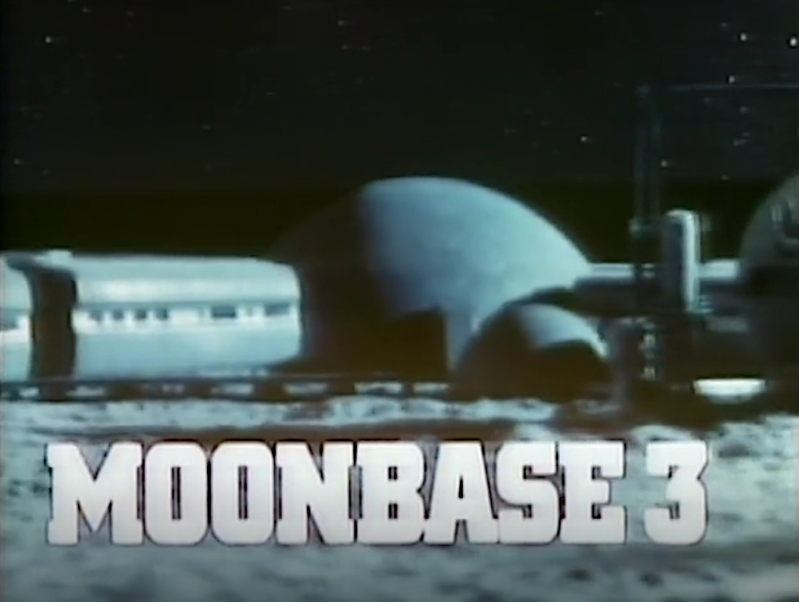
It is a safe bet that nearly all Hackaday readers like to at least imagine what it would be like to build and live in an orbital station, on the moon, or on another planet. Moon bases and colonies show up all the time in fictional writing and movies, too. For the Hackaday crowd, some of these are plausible, and others are — well — a bit fanciful. However, there’s one fictional moonbase that we think might have been too realistic: Moonbase 3.
View of the base from above.
If that didn’t ring a bell, we aren’t surprised. The six-episode series was a co-production between Twentieth Century Fox and the BBC that aired in 1973. To make matters worse, after the initial airings in the UK, Australia, and New Zealand, the video master tapes were wiped out. Until 1993, there were no known copies of the show, but then one turned up in a US television station.The show had many links to Dr. Who and, in fact, if you think the spacesuits look familiar, they made later appearances in two Dr. Who episodes.
These spacesuits would later show up in Dr. Who.
Consider the year 1973. Four years earlier, the US went to the moon after essentially starting from scratch ten years earlier. The show was set in the far future of 2003, so it is easy to imagine that a lot would happen in the next 30 years. Sadly, that wasn’t the case, but you can hardly blame the writers.The premise was that there were five moonbases, each with a number. The US and Russia had Moonbases 1 and 2. The Europeans had the titular Moonbase 3. China and Brazil had the final two moonbases.
The goal of the Moonbase was to conduct scientific research on materials such as foamed metals and exotic fuels. Of the six episodes, the final one is amazing and redeems the rest of the series. However, overall, the show is competent but nothing special. However, as I mentioned, it is almost too realistic.
The Realism
The show had a real science advisor, BBC science correspondent [James Burke], later of “Connections” fame, so things looked mostly good. The NASA-like chatter is realistic, and they talk about computers using nouns and verbs like the Apollo computers, but which didn’t turn out to be especially accurate in the far future of 2003. The producers’ aim was to make a realistic program and stay away from “bug-eyed monsters.” It is true, though, that one episode at least hinted at monsters, but, in the end, it turned out to be a false alarm.The tech isn’t amazingly realistic, but none of it is just crazy fantasy either. But the true realism — and the part that might have prevented it from being a big hit like Star Trek or Dr. Who — was the story content itself.
Another day at the (lunar) office.
Most of the stories show people in slightly futuristic-looking offices talking about how to maintain their funding from Earth. If you’ve ever worked on a government project, you know this is probably the most realistic thing you could do on a show like this. It is also tedious and boring.Sure, there are stories about psychological stress, accidents (which, of course, threaten funding), and erratic scientists. There’s a Mr. Scott-like engineer who needs rescuing by a Russian — heady stuff for 1973. But the thread through it all is worrying about budget cuts or a shutdown order.
That said, none of the episodes are especially bad, either. The first episode, “Departure and Arrival,” has the old director leaving and a new director arriving, which makes it handy to introduce everyone to the audience. The other episodes were filmed in a different order than the airing order, so it doesn’t hurt much to skip around, but we’d suggest saving the last episode for last.
We don’t write TV dramas, but we imagine the same could be said of most genres. If you made a realistic show about the police force, the fire department, and a hospital emergency room, too much realism would probably be a real drag. No one wants to see the department have mandatory safety training or check hoses for defects. There might be some excitement, but the ratio of excitement to mundanity is probably pretty lopsided toward the boring.
Some of what the show predicted came true: Russia and the US would cooperate in space. The moon did have ice. But like most shows of its era, it missed the boat on things like personal communication, flat screens, and other modern tech.
Unrealistic
Not that it is all realistic. For some reason, the low gravity on the moon is only apparent outside the Moonbase, but there doesn’t seem to be any artificial gravity. The model work leaves something to be desired, and while you can excuse it as quaint, other shows of the same time or earlier did better.To build drama, the characters had to make mistakes. A lot of them. “Oh! I ran out of oxygen!” “Drat! My spaceship was throwing an error, but it fixed itself, and now it’s back!” Things like that. It is hard to imagine that, given the hostile environment and the cost of a base like this, the people would be so careless.
The final episode features a scientific project that’s hard to imagine, but I won’t say more because I don’t want to spoil the best episode.
Of course, there are plenty of technical errors if you consider what really happened in 2003, but you can forgive those.
Your Favorite
I don’t mean to pan the show. You should hang in there for episode six. I don’t recommend skipping right to it, either. It may not become your favorite moonbase, but the show is highly watchable. You can find a few copies of the entire series on YouTube. There are also a few copies on Archive.org.What’s your favorite fictional moonbase? We wish some of the planned moonbases had become real, but alas, they, too, were fictions. While not a moonbase, the Great Moon Hoax was fictional, even though it claimed to be factual.
-
C’è chi vota No. Tutti in piazza del Popolo il 18 marzo
@giornalismo
articolo21.org/2026/03/ce-chi-…
Il 18 Marzo, in piazza del Popolo a Roma, il Comitato “Società Civile per il No nel referendum costituzionale” chiude la campagna referendaria. Massimo Cirri, conduttore della trasmissione radiofonica
-
-
@BathysphereHat @Takiro so, can you juice your deck by improving the quality of the articles?