Efficiency is the removal of redundancy.
Uncategorized
49
Posts
37
Posters
1
Views
-
Efficiency is the removal of redundancy. Redundancy is a necessary element of resilient systems. The unbounded search for efficiency has one result: brittleness.
Die allzu hart sind, brechen.
Die allzu spitz sind, stechen
Und brechen ab sogleich,
Und brechen ab sogleich.
(Wolf Biermann) -
One thing I keep seeing is the same lessons being learned across different disciplines: pilots and doctors learning about the importance of checklists, road and industrial machine engineers learning about safe by default design, industrial and software UX designers learning about how to best make machines and humans talk to each other. We need more cross pollination. Across industries. Across borders. Across people. That's how we build a better future. And for that we need to listen.
@ekuber
Safe by default design has been a principle of green chemistry for nearly 4 decades, today with the additional aspect of sustainability (safe and sustainable by design). -
Efficiency is the removal of redundancy. Redundancy is a necessary element of resilient systems. The unbounded search for efficiency has one result: brittleness.
Why not make each individual step as efficient as possible and then gather them together in a redundant system?
-
I'm all for global chains of distribution: specialization is real and you won't ever grow bananas in Alaska (even if Iceland showed it is technically possible last century), manufacture a computer chip in Paris or produce wine in Greenland, but we as consumers have to accept and understand that having pineapple out of season anywhere in the planet is not reasonable at the prices we're used to paying. In some French super markets I've seen signs on the produce next to the price with the country of origin and helpful information of when the growing season is. I found that as an excellent nudge for the almost entirely fictional homo economicus. I'd like us to surface that information to everyone for everything. Maybe that way people would understand just how connected we are.
@ekuber honestly, I want to take part in forming a future where every region is self-sufficient for people's basic needs and the things we trade globally are those that improve quality of life
but not like, say, the plastic car parts the machine I was sat at produced in Germany (out of oil probably from the Americas) that then were sent to Argentine to be made into half-finished products, and then sent on to other countries to be made into complete cars
-
Efficiency is the removal of redundancy. Redundancy is a necessary element of resilient systems. The unbounded search for efficiency has one result: brittleness.
@ekuber so true, customer at work wants to.use all resources on database servers all the time. Issue there is they now cannot fail over to DR site
-
Why not make each individual step as efficient as possible and then gather them together in a redundant system?
@jrdepriest @ekuber is each step going to continue being redundant? Because if each step is as efficient as possible, that's a single point of failure at each step and future steps won't solve that
-
Efficiency is the removal of redundancy. Redundancy is a necessary element of resilient systems. The unbounded search for efficiency has one result: brittleness.
@ekuber I want that on my Teams background so every time I’m in a planning and budgeting meeting it’ll be there when anyone looks at me
-
Efficiency is the removal of redundancy. Redundancy is a necessary element of resilient systems. The unbounded search for efficiency has one result: brittleness.
@ekuber
Examining the structures of dependencies which create democracies and autocratic regimes, produces a similar mapping to resiliency and brittleness, using a core analogical model of "binding energies". https://johntinker.substack.com/p/democracy-fascism-and-binding-energies -
@c_merriweather "limitations are good for innovation" is a good one that covers art and engineering
@c_merriweather @ekuber I keep telling my peers and students, that good engineering starts with well defined constraints.
-
-
@swallez so many small things that add no cost but have a material impact. I always think of the legislation forcing plastic bottle caps to remain attached by default. Such a small thing, such a large impact on both loose trash and recyclability. There are so many small changes we can do that no one would bat an eye at that would improve all our lives. So many others that people would have kneejerk reactions towards that would be beneficial to all.
-
Efficiency is the removal of redundancy. Redundancy is a necessary element of resilient systems. The unbounded search for efficiency has one result: brittleness.
@ekuber
Agreed. Years ago, a group of us visited the NUMMI car factory, joint venture of GM and Toyota. They started with talk about place & methods, emphasizing importance of Just in Time logistics… and were quite embarrassed when, during our visit, the production line stopped because some truck coming from L.A. got delayed.
https://en.wikipedia.org/wiki/NUMMI
The brittleness of hyper-efficient systems leading to societal collapse was one of the themes of A Deepness in the Sky: -
One thing I keep seeing is the same lessons being learned across different disciplines: pilots and doctors learning about the importance of checklists, road and industrial machine engineers learning about safe by default design, industrial and software UX designers learning about how to best make machines and humans talk to each other. We need more cross pollination. Across industries. Across borders. Across people. That's how we build a better future. And for that we need to listen.
@ekuber
Aim for the best, expect the worst and plan for it. Its a generic concept that works in all areas.
Its also an understanding that optimism and pessimism are false constructs when practical realism enters the chat. -
@swallez so many small things that add no cost but have a material impact. I always think of the legislation forcing plastic bottle caps to remain attached by default. Such a small thing, such a large impact on both loose trash and recyclability. There are so many small changes we can do that no one would bat an eye at that would improve all our lives. So many others that people would have kneejerk reactions towards that would be beneficial to all.
@ekuber True! And for me, for things other than food, this also starts with questioning myself "do I really need it?". Not always easy as a geek that loves home automation, but even there I try to stay frugal. I also repair a lot of things. We changed our dishwasher recently after 35 years and many repairs, basically my entire adult life 😅
-
@sandorspruit @ekuber we do that as well, we have a subscription with a very local farmer who prepares a box of vegetables and fruits every week. They don't produce everything, but everything is seasonal and organic. And every week is a surprise: "what are we going to eat this week?" 😛
-
One thing I keep seeing is the same lessons being learned across different disciplines: pilots and doctors learning about the importance of checklists, road and industrial machine engineers learning about safe by default design, industrial and software UX designers learning about how to best make machines and humans talk to each other. We need more cross pollination. Across industries. Across borders. Across people. That's how we build a better future. And for that we need to listen.
@ekuber
It reminds me of people trying to figure out gravity before it was common knowledge. They ascribed the fact that stuff falls down to god or any other outlandish idea.The same happens if you ask a liberally educated person to explain cooperation.
They use individualism, idealism, utopianism, reinvent the wheel.
We have tools for this for over 100 years. It is called planned economy, socialism and materialism. Its dead easy but the knowledge has been forcefully replaced.
-
@jrdepriest @ekuber is each step going to continue being redundant? Because if each step is as efficient as possible, that's a single point of failure at each step and future steps won't solve that
If you have error checking and loops or retries, it might. If future steps verify what comes out of previous steps, it might.
My point is that you can have a redundant overall process with efficiency in the individual pieces and that just focusing on overall efficiency in general doesn't make sense.
But that assumes you get to design the whole system and understand all the inputs, outputs, and failure modes. And whatever passes for a threat model, fault tolerance, and risk appetite. Or possibly regulatory requirements or contractual obligations. Or how much time you have to build it.
Anybody who says "we only focus on efficiency" is vastly oversimplifying.
-
Efficiency is the removal of redundancy. Redundancy is a necessary element of resilient systems. The unbounded search for efficiency has one result: brittleness.
@ekuber This reminds me of an argument I had with management of the network operations center where I worked. I made a beautiful point about "pickle factory staffing" versus "firehouse staffing" but it took them months to see my point.
-
@ekuber
It's a cross-and multi-disciplinary group looking at how high-reliability organizations can, do, and should work, how systems fall, and how the human parts of those systems help them not fail completely.
https://www.resilience-engineering-association.org/Good starting places in the literature are Dekker's "A Field Guide to 'Human Error'", the Woods paper "The Theory of Graceful Extensibility: Basic Rules that Govern Adaptive Systems", and (from a different end of the community) Leveson's Engineering a Safer World.
-
Efficiency is the removal of redundancy. Redundancy is a necessary element of resilient systems. The unbounded search for efficiency has one result: brittleness.
@ekuber and boy has private equity prospered by gutting all the redundancy they can find while leaving the rest of us to deal with the inevitable system failures.
capitalism sure is efficient when we let capitalistic vultures define efficiency


















Gli ultimi otto messaggi ricevuti dalla Federazione
-
@AleF2050
Sembrerebbe uBlock Origin il problema
-
@pawido
Ich denke SBB und ÖBB haben ihr das schon gezeigt. 😉
@xavierdatatech
-
Grazie a te @PaoloParti, e naturalmente a @snow, per l'impegno che ci mettete assieme agli altri admin.
Ed a tutta la community, che rende questo posto una piccola isola speciale nel mare magnum di internet.
Ad maiora !
@assofante @sirpondo @tleilax @anche_no @Elena @liberotoncello @mahteo @esilvia @Comandante_Virgola @Giank_hill @Majden888 @budfox @paolabonacini @LeleGroot @signoredibaux @ro @marcoboh @ghim @Alistella @glitch @Marty @uz @Tiz @more_word @siro @evana @Caterinantonietta @Parolinventate
-
@matz con cosa stai combattendo?
-
@DigiDavidex A chi lo dici...
-
Ho letto "squattrinato da Bida"

-
-
Se faccio vedere questa foto al Lidl non ci credono e dicono che è un'immagine generata da una AI 🤣
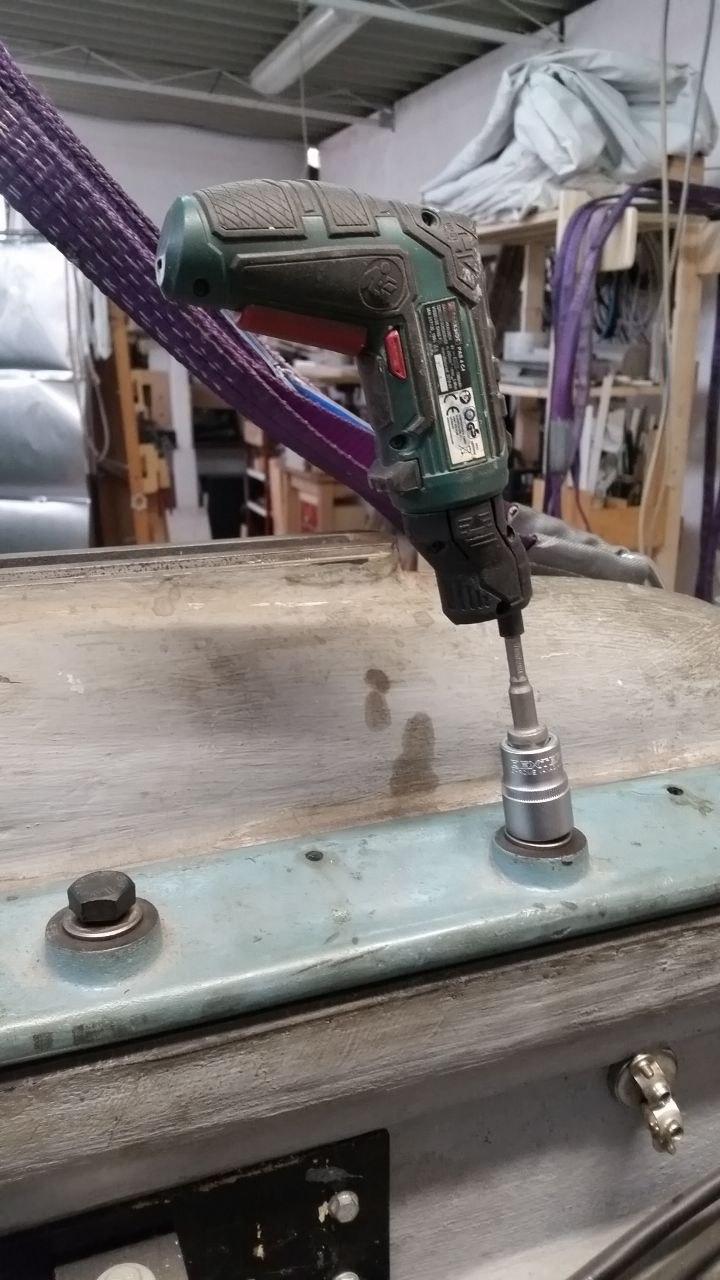
L'avvitatore economico, con adattatore da 1/2 pollice, sul quale è infilata bussola da 21 mm… però è comodo e funziona!
Poi finisco di stringere con la chiave dinamometrica, però.