Happy #QuantumDay to all who celebrate!
Uncategorized
11
Posts
1
Posters
25
Views
-
Happy #QuantumDay to all who celebrate!
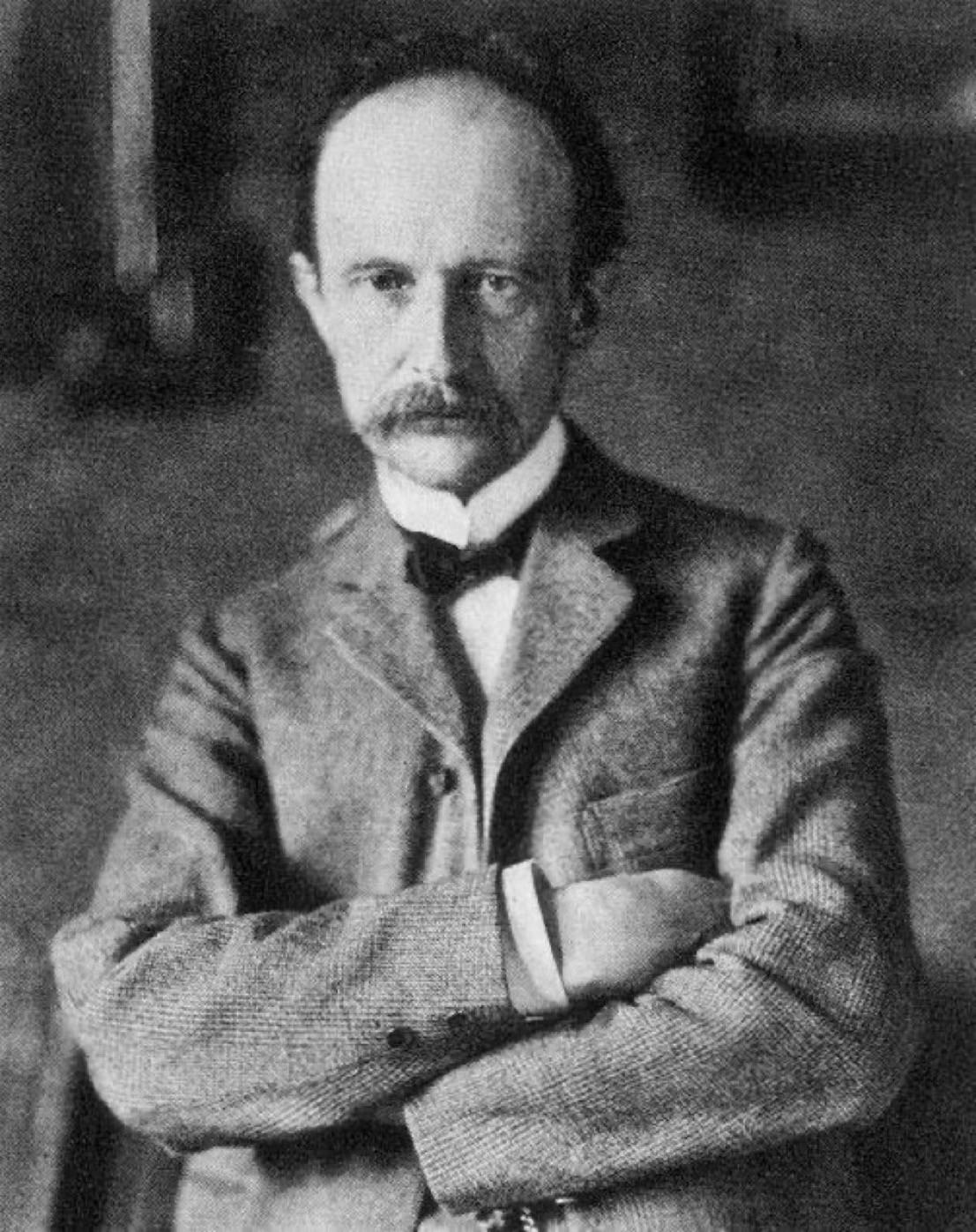
Max Planck presented work on blackbody radiation to the German Physical Society #OTD in 1900.
His novel “quantum hypothesis” suggested that matter should be treated as it it emits and absorbs light with frequency f only in discrete chunks of energy E=hf.
Image: AIP
-
Happy #QuantumDay to all who celebrate!
Max Planck presented work on blackbody radiation to the German Physical Society #OTD in 1900.
His novel “quantum hypothesis” suggested that matter should be treated as it it emits and absorbs light with frequency f only in discrete chunks of energy E=hf.
Image: AIP
Planck’s quantum hypothesis would revolutionize physics, but he initially thought it wasn’t real.
He suspected that the interaction of matter and radiation was tremendously complicated but still governed by the physics known at the time — what we now call “classical physics.”
Invoking quanta of radiation to derive the blackbody emission spectrum was, it seemed to Planck, just a mathematical trick that somehow encapsulated all that complication.
-
Planck’s quantum hypothesis would revolutionize physics, but he initially thought it wasn’t real.
He suspected that the interaction of matter and radiation was tremendously complicated but still governed by the physics known at the time — what we now call “classical physics.”
Invoking quanta of radiation to derive the blackbody emission spectrum was, it seemed to Planck, just a mathematical trick that somehow encapsulated all that complication.
If so, it was a trick that *worked*.
Previous efforts to derive the blackbody emission spectrum using classical physics gave nonsensical results at high frequencies. Replace continuous emission with discrete quanta and things work out perfectly.
Evidence for the reality of quanta began with Einstein’s explanation of the photoelectric effect in 1905. The proposal that radiation of frequency f exists only in discrete chunks of energy E=hf was the first result of Einstein’s “Miracle Year.”
-
If so, it was a trick that *worked*.
Previous efforts to derive the blackbody emission spectrum using classical physics gave nonsensical results at high frequencies. Replace continuous emission with discrete quanta and things work out perfectly.
Evidence for the reality of quanta began with Einstein’s explanation of the photoelectric effect in 1905. The proposal that radiation of frequency f exists only in discrete chunks of energy E=hf was the first result of Einstein’s “Miracle Year.”
Many physicists remained skeptical. But Arthur Compton’s 1923 explanation of X-rays scattering off electrons was near-incontrovertible evidence that quanta were real.
-
Many physicists remained skeptical. But Arthur Compton’s 1923 explanation of X-rays scattering off electrons was near-incontrovertible evidence that quanta were real.
Here's a great APS Landmarks entry where you can read more about Compton Scattering and the reality of photons.
-
Here's a great APS Landmarks entry where you can read more about Compton Scattering and the reality of photons.
This sequence of events was a not uncommon narrative in the transformative years of late 19th and early 20th century physics. It would go something like this:
1. An experimental result doesn’t make sense
2. A physicist proposes a radical solution.
3. The solution seems too weird to be real. Everyone assumes it must be a convenient "trick."
4. Eventually, everyone realizes it wasn't a trick, and reality is in fact weirder than they expected.
-
This sequence of events was a not uncommon narrative in the transformative years of late 19th and early 20th century physics. It would go something like this:
1. An experimental result doesn’t make sense
2. A physicist proposes a radical solution.
3. The solution seems too weird to be real. Everyone assumes it must be a convenient "trick."
4. Eventually, everyone realizes it wasn't a trick, and reality is in fact weirder than they expected.
Planck’s hypothesis was in fact a deep statement about the nature of Nature. Electromagnetic adiation of frequency f comes in discrete chunks of energy E=hf. It's not an artifact of a complicated interaction with matter.
Nowadays we refer to the proportionality constant h as "Planck's constant." In the SI system it takes the value h=6.626 x 10⁻³⁴ kg*m²/s, or 4.136 x 10⁻¹⁵ eV*s.
As far as we can tell, h is a fundamental constant that is hardwired into our Universe.
-
Planck’s hypothesis was in fact a deep statement about the nature of Nature. Electromagnetic adiation of frequency f comes in discrete chunks of energy E=hf. It's not an artifact of a complicated interaction with matter.
Nowadays we refer to the proportionality constant h as "Planck's constant." In the SI system it takes the value h=6.626 x 10⁻³⁴ kg*m²/s, or 4.136 x 10⁻¹⁵ eV*s.
As far as we can tell, h is a fundamental constant that is hardwired into our Universe.
The results of Planck’s December 14th lecture were submitted to Annalen der Physik a few weeks later, on January 7th, and published not long after that.
You can see the original (in German) here:
https://onlinelibrary.wiley.com/doi/epdf/10.1002/andp.19013090310An English translation of Planck’s paper, taken from Dirk ter Haar’s “The Old Quantum Theory,” is available here:
https://web.archive.org/web/20230529024105/http://hermes.ffn.ub.es/luisnavarro/nuevo_maletin/Planck%20(1900),%20Distribution%20Law.pdf -
The results of Planck’s December 14th lecture were submitted to Annalen der Physik a few weeks later, on January 7th, and published not long after that.
You can see the original (in German) here:
https://onlinelibrary.wiley.com/doi/epdf/10.1002/andp.19013090310An English translation of Planck’s paper, taken from Dirk ter Haar’s “The Old Quantum Theory,” is available here:
https://web.archive.org/web/20230529024105/http://hermes.ffn.ub.es/luisnavarro/nuevo_maletin/Planck%20(1900),%20Distribution%20Law.pdfSomething that isn’t as widely known is that “h” is not the only fundamental constant that was introduced during Planck’s presentation to the German Physical Society #OTD in 1900!
Planck was investigating emission and absorption by blackbodies, so he needed a way to relate energies and temperatures. Thus, he had to introduce what we now refer to as “Boltzmann’s constant.”
-
Something that isn’t as widely known is that “h” is not the only fundamental constant that was introduced during Planck’s presentation to the German Physical Society #OTD in 1900!
Planck was investigating emission and absorption by blackbodies, so he needed a way to relate energies and temperatures. Thus, he had to introduce what we now refer to as “Boltzmann’s constant.”
That’s right, the factor of “k” that appears in the formula “S = k log W” — the formula engraved on Boltzmann’s memorial! — was actually introduced by Max Planck. Boltzmann expressed his results in terms of the ideal gas constant R.
Image: user Daderot on Wikipedia
-
That’s right, the factor of “k” that appears in the formula “S = k log W” — the formula engraved on Boltzmann’s memorial! — was actually introduced by Max Planck. Boltzmann expressed his results in terms of the ideal gas constant R.
Image: user Daderot on Wikipedia
The transition from classical to quantum physics went about as smoothly as you would expect. Happy #QuantumDay!
(Unfortunately, I have no idea who made this classic physics meme. It has been around forever. If you know, please tell me!)
-
 undefined oblomov@sociale.network shared this topic on

Gli ultimi otto messaggi ricevuti dalla Federazione
-
@EnigmaRotor ahahah nice!
-
In questo video, almeno due cose trovo significative:
0) il riferimento al fatto che le argomentazioni per il SI potrebbero "non funzionare", non riuscire a convincere... la dice lunga su quanto manco loro sanno di cosa stanno parlando
1) l'incitazione a usare il "solito sistema clientelare"... IL SOLITO... il che dice del loro modo di fare politica
Fate e pensate come volete, ma io ogni volta che li vedo e li sento, d'istinto, mi calo il passamontagna 😂
-
Want to propose a cool demo for the next #FediForum? Fill out our form!
https://apps.fediforum.org/nextcloud/apps/forms/s/SbsT8BAxBJFzzLKTzwwqCWen
-
Iran, Caracciolo: "Italia sta parlando con Teheran per Hormuz"
https://www.youtube.com/watch?v=d7uWeKoFz2Q
TRUMP DICE CHE STABILIRÀ LA FINE DELLE OSTILITÀ CON L'IRAN “QUANDO LO SENTIRÒ A PELLE”
-
Delightful day at #FOSSBackstage - followed by dinner with some folks from the Mastodon team. 👌🏻
-
@gabardino 'io no scopa, io usa aspirapolvere' 🤣
-
@stefano 🎤I’m blue da da di da da da la da di da da da la da si la da da…🎵 (sorry, and sorry)
-
Stamattina scendo dal treno e mi avvio verso la metropolitana. Prima di arrivare alla banchina vengo fermato da un venditore ambulante cinese che vuole vendermi un ombrello tascabile. Gli dico: «Non mi serve, oggi è una bella giornata di sole.»
Lui sogghigna e mi risponde: «Tu comprare preservativo mentre scopa?»