what if ram buyout is part of a greater attack on personal computing
Uncategorized
46
Posts
16
Posters
110
Views
-
CPU microcode "security patches" - a discovered "fundamental flaw" requiring always-online validation to boot. turns every processor into a subscription service. precedent already exists with Intel Management Engine and AMD PSP.
ethernet/network chips - if networking hardware became scarce or required licensing/authentication.
discrete GPU extinction - already happening organically, but accelerated scarcity would eliminate any serious computing, gaming, or AI work on personal machines.
the most elegant attack would combine legitimate security concerns with artificial scarcity.
-
what if ram buyout is part of a greater attack on personal computing
any other indicators?
@lritter its the colonization of the computer indigenous world, local computer users and self-reparing and developing savages are basicly the indigenous population. and it is in full progress.
-
the most elegant attack would combine legitimate security concerns with artificial scarcity.
i sure would hate it if open source were the eli sunday whose milkshake will be drunk
-
what if ram buyout is part of a greater attack on personal computing
any other indicators?
@lritter i think this is ascribing malice to something which is almost entirely mechanically profit driven
-
@lritter i think this is ascribing malice to something which is almost entirely mechanically profit driven
@lritter reality is boring, follow the money
-
@lritter its the colonization of the computer indigenous world, local computer users and self-reparing and developing savages are basicly the indigenous population. and it is in full progress.
@tomtrottel you see a self-sufficient people, i see future addicts i mean customers! customers!
-
@lritter reality is boring, follow the money
@profan if it is deliberate it is more predictable; which makes it easier to defend against. if it's chaos, no need to do anything. tbh if i were attacking, i would make it seem like chaos.
and money is a huge motivator for war
-
what if ram buyout is part of a greater attack on personal computing
any other indicators?
It occurred to me, too.
And the times where one could dismiss such thoughts as implausible are, sadly, over.
-
economic pressure:
* hobbyist computing priced out (current RAM situation)
* home servers becoming impractical vs cloud services
* development tools increasingly cloud-based (GitHub codespaces, cloud IDEs)
honestly, all fairly weak and circumnavigable indicators, but also possibly a death by a thousand cuts.
Unfortunately, this entire scenario makes eminent (twisted) sense in the current times.
Even if it is partly true "by accident" / emergent from the general atmosphere of greed and lust for control ...
-
the pattern would be: make personal computing expensive, complicated, and unnecessary while making cloud dependence cheap, simple, and required. whether coordinated or emergent, the trajectory is similar - computing power migrating from personal ownership to rental access.
@lritter They rewind the Personal Computer Revolution which started in 1976.
And they now go back to Mainframe and terminal (browser).
So, what is the next „Personal Computer“?
-
possible deliberate future attack vectors:
SSD controller chips - a "sudden shortage" would be catastrophic. if NAND controllers became scarce or prohibitively expensive, it would force cloud storage dependence overnight. people couldn't even backup locally anymore.
PSUs - capacitor or transformer supply "disruption" would halt all PC building.
BIOS/UEFI firmware - a "security crisis" requiring signed firmware. approved vendors only or nothing boots
SecureBoot is indeed one of those pretend-solutions, that do not really increase security of the machine, nor the customer, but only benefit the vendors.
There's only one good part, and only that one in the SecureBoot chain, and that is measured boot, i.e. checksum-chaining each subsequent piece of software before it's executed. Combine this with verity checked RO filesystems, that are linked to boot measures using a owner supplied key (=passphrase) and you're good.
-
SecureBoot is indeed one of those pretend-solutions, that do not really increase security of the machine, nor the customer, but only benefit the vendors.
There's only one good part, and only that one in the SecureBoot chain, and that is measured boot, i.e. checksum-chaining each subsequent piece of software before it's executed. Combine this with verity checked RO filesystems, that are linked to boot measures using a owner supplied key (=passphrase) and you're good.
All the other crap like firmware signing and bootloader signing and such are not really addressing the actual problem space.
SecureBoot doesn't solve the "protect the owner of a machine from the machine running code the owner doesn't want it to run", but instead solves the "let the machine only run code that the maker of the machine allow it to run", which is antithetical to free markets and ownership.
-
what if ram buyout is part of a greater attack on personal computing
any other indicators?
@lritter Qualcomm taking over Arduino, Raspberry Pi being dependent on Broadcom (though they started building their own chips with the Pico microcontrollers).
-
All the other crap like firmware signing and bootloader signing and such are not really addressing the actual problem space.
SecureBoot doesn't solve the "protect the owner of a machine from the machine running code the owner doesn't want it to run", but instead solves the "let the machine only run code that the maker of the machine allow it to run", which is antithetical to free markets and ownership.
@lritter That's not a new fight though. The whole struggle for the ownership of our devices has been going on for over 20 years. In the noughties they called it TCPA.
-
@lritter That's not a new fight though. The whole struggle for the ownership of our devices has been going on for over 20 years. In the noughties they called it TCPA.
-
what if ram buyout is part of a greater attack on personal computing
any other indicators?
@lritter IMHO this 'war on personal computing' had been going on in the background for decades with varying intensity, similar to how DDOS attacks happen all the time without bringing the whole internet down (mostly at least). Personal computing might go back to be the niche/hobbyist activity it was in the 70s to 90s, but it won't entirely disappear. I guess it might become an expensive hobby again though :/
-
@lritter IMHO this 'war on personal computing' had been going on in the background for decades with varying intensity, similar to how DDOS attacks happen all the time without bringing the whole internet down (mostly at least). Personal computing might go back to be the niche/hobbyist activity it was in the 70s to 90s, but it won't entirely disappear. I guess it might become an expensive hobby again though :/
@floooh it begs the question what we wrote all this infrastructure for. certainly not so a bunch of locusts can run their datacenters on it, and nothing else.
-
@floooh it begs the question what we wrote all this infrastructure for. certainly not so a bunch of locusts can run their datacenters on it, and nothing else.
@lritter hmm yeah... AFAIK the home computer revolution was mostly feeding on an overcapacity of slightly outdated 8-bit chips which suddenly became very cheap at the start of the 80s, and hobbyists and enthusiasts started to build all sorts of awesome things with this 'junk'.
Maybe we'll see a similar Cambrian Explosion after the AI bubble pops and suddenly there's a shitton of just slightly outdated GPUs and memory flooding the market waiting to be used for actually interesting stuff :)
-
@lritter hmm yeah... AFAIK the home computer revolution was mostly feeding on an overcapacity of slightly outdated 8-bit chips which suddenly became very cheap at the start of the 80s, and hobbyists and enthusiasts started to build all sorts of awesome things with this 'junk'.
Maybe we'll see a similar Cambrian Explosion after the AI bubble pops and suddenly there's a shitton of just slightly outdated GPUs and memory flooding the market waiting to be used for actually interesting stuff :)
@floooh indeed. i speculated as much myself.
-
@tomtrottel you see a self-sufficient people, i see future addicts i mean customers! customers!
@lritter its way worse than "just" creating a "drug" syndicate. its colonization. its creating slaves and kills the rest. a drug dealer does not want to kill its users.











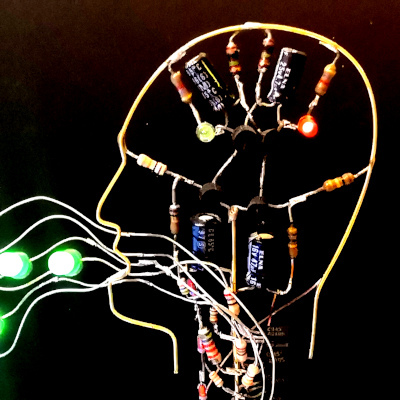
Gli ultimi otto messaggi ricevuti dalla Federazione
-
Basta gognia mediatica! Nun ce stanno inchieste su Delmastro e se vince er referendum ce assicureremo che nun ce provano neanche
Eppoi a chi è che nun è mai capitato pe sfiga de annà a cena con un mafioso ed entrarce in società? Daje sù... capita!
No?
-
@aeva nothing good happened is the takeaway. price has been stagnating since january.
-
Ma come se fà a dì che la riforma daa maggistratura nun sveltirà i processi?
Ner momento in cui impediremo a i PM de indagà la Santanché sai quanto tenpo libbero avranno pe le artre cose?
https://www.micromega.net/caselli-no-alla-truffa-del-governo-e-una-riforma-contro-la-magistratura
-
(It Ain't Necessarily So. (Yet, that is.))
Systemd adds age verification
https://forum.endeavouros.com/t/systemd-adds-age-verification/78702
> Could the devs please state clearly and immediately if the Systemd in EOS will contain age verification. If “yes” then I’m out of here right now, even though I only just arrived. Is it possible to fork Systemd to remove all age verification stuff ?
-
Roberto Aringhieri 🇵🇸 (@aringoogle.bsky.social)
https://bsky.app/profile/aringoogle.bsky.social/post/3mhg7wqhwf227
> [senza parole]
-
Detergenteparaombligo (@mpmjl.bsky.social)
https://bsky.app/profile/mpmjl.bsky.social/post/3mhhqiifqds2k
> UNIVERSO Si alguna vez estoy persiguiendo las cosas incorrectas, realinéame.
-
John-y-Cash (@john-y-cash.eurosky.social)
https://bsky.app/profile/john-y-cash.eurosky.social/post/3mhhryigtr22d
> Simple, efficace ... #HumourDouteux
-
Montse 🍉 (@lamonze.bsky.social)
https://bsky.app/profile/lamonze.bsky.social/post/3mhhrya2nq22w
> Jo crec que els catalans fem part del 10%