Bases.
Uncategorized
48
Posts
29
Posters
73
Views
-
@futurebird yeah, tricky. “View this abstraction you’re comfortable with as an entirely different category of abstraction” is always a tall order.
It reminds me a little of the confusion I’ve seen in beginners about the distinction between variables themselves and the values of variables.
@futurebird ok EXTREMELY off the wall suggestion: warm them up to thinking like this by having them read a bit of Through The Looking Glass
-
Bases. (decimal, binary etc) are best explained through examples.
"You can only write three symbols in base 3. These are: 0, 1, 2"
So you count: 0, 1, 2, 10, 11, 12 ...
I think the word "symbols" is confusing, but so is "characters"? Students don't think of numbers or letters as "symbols" or characters. The card sorting puzzle helps with this. But I'm always refining the language:
How would you put this as plainly as possible?
@futurebird Digits?
-
Bases. (decimal, binary etc) are best explained through examples.
"You can only write three symbols in base 3. These are: 0, 1, 2"
So you count: 0, 1, 2, 10, 11, 12 ...
I think the word "symbols" is confusing, but so is "characters"? Students don't think of numbers or letters as "symbols" or characters. The card sorting puzzle helps with this. But I'm always refining the language:
How would you put this as plainly as possible?
@futurebird
uhm...as a thought experiment, and based on the principle that a rose by any other name would smell as sweet, I wonder how it would go to pick three random actual symbols, for instance ^,&,* and count with them, then repeat with three characters like F,K,T, in hope that they could eventually relax with the specific visual representations of the counting operations -
Thing is then when we get to hex they are upset that A and F are not "digits" but ... maybe.
@futurebird @dancingtreefrog Maybe use 'numbers' until you hit the letters and then see if they can solve the problem of what to call them. Explain that you also had trouble about what to call them, and that their ideas might help next years' class, and hey presto you're also teaching empathy! Win-win!
-
@futurebird Glyphs ... Then use things other than digits.
@ColinTheMathmo @futurebird glyphs are fancy symbols, so that would be a more advanced approach
-
They don't have place value. And they use... subtraction. But our students are very familiar with roman numerals for some reason (I think the PE staff uses them a lot?)
I want to bring them out when it can be more obvious how strange they are.
Change the symbols and I don't even know if you could do a sorting problem with them.
@futurebird Roman numerals are like that because it's a finger counting system being written down, essentially a record of hand positions. (So four is traditionally IIII, not the compact for monuments IV.)
If I understand the discussion at all, which I might well not, the history-of-writing folks think positional notation and zero are effectively the same concept; it's difficult to do the one without the other. And, oddly, given the Babylonians did have it, Classical Antiquity didn't.
-
Bases. (decimal, binary etc) are best explained through examples.
"You can only write three symbols in base 3. These are: 0, 1, 2"
So you count: 0, 1, 2, 10, 11, 12 ...
I think the word "symbols" is confusing, but so is "characters"? Students don't think of numbers or letters as "symbols" or characters. The card sorting puzzle helps with this. But I'm always refining the language:
How would you put this as plainly as possible?
@futurebird Symbol. It means “stands for”. The trouble comes because are reusing 1 and 0 together to mean something different. Somehow you need to convey that the symbol “represents” a concept, it is itself not the concept. The symbol alone carries no meaning except that which we agree to assign it.
-
@futurebird Symbol. It means “stands for”. The trouble comes because are reusing 1 and 0 together to mean something different. Somehow you need to convey that the symbol “represents” a concept, it is itself not the concept. The symbol alone carries no meaning except that which we agree to assign it.
@meltedcheese
I'm hoping this helps: -
Bases. (decimal, binary etc) are best explained through examples.
"You can only write three symbols in base 3. These are: 0, 1, 2"
So you count: 0, 1, 2, 10, 11, 12 ...
I think the word "symbols" is confusing, but so is "characters"? Students don't think of numbers or letters as "symbols" or characters. The card sorting puzzle helps with this. But I'm always refining the language:
How would you put this as plainly as possible?
@futurebird Maybe not the answer you're looking for, but this got me thinking about why exactly these words are confusing, and it occrs to me that people are trying to un-learn the decimal system every time they use numbers to express things in a different base. I wonder if it would help to just use actual, unique symbols. If you give people 0, 1 and 2 and tell them to count, their brains are tripping over themselves because they have to fight the natural assumption that "10" is "the number of fingers I have" or "the number that comes after nine". Take away that association until people understand the concept of counting using fewer or more symbols (which look nothing like the numbers they're using in their head), and maybe it will make more sense.
It would be like learning a different language where every word already means something in English. -
Bases. (decimal, binary etc) are best explained through examples.
"You can only write three symbols in base 3. These are: 0, 1, 2"
So you count: 0, 1, 2, 10, 11, 12 ...
I think the word "symbols" is confusing, but so is "characters"? Students don't think of numbers or letters as "symbols" or characters. The card sorting puzzle helps with this. But I'm always refining the language:
How would you put this as plainly as possible?
@futurebird I'd use emoji to introduce the concept. For extra fun, have each emoji relate to the number.
Example: I have a new way of counting. It uses 🍩, 👁️, and 🧦.
(doughnut/circle/zero, eye/i/one, pair/two) -
Bases. (decimal, binary etc) are best explained through examples.
"You can only write three symbols in base 3. These are: 0, 1, 2"
So you count: 0, 1, 2, 10, 11, 12 ...
I think the word "symbols" is confusing, but so is "characters"? Students don't think of numbers or letters as "symbols" or characters. The card sorting puzzle helps with this. But I'm always refining the language:
How would you put this as plainly as possible?
@futurebird there are only 10 numer keys on the keyboard... Imagine of there were more or fewer. Also consider a clock where we count by 12s and 60s and use : to separate.
-
@futurebird "shapes"? "squiggles"?
@kw217 @futurebird This does at least make the idea more concrete and intuitive rather than introducing special language. I think people should ideally learn the terminology for a concept *after* grasping the concept itself. Then the fancy word ("symbol", "digit" etc.) is just a label for the thing they're already familiar with, and they can learn one thing at once.
-
Bases. (decimal, binary etc) are best explained through examples.
"You can only write three symbols in base 3. These are: 0, 1, 2"
So you count: 0, 1, 2, 10, 11, 12 ...
I think the word "symbols" is confusing, but so is "characters"? Students don't think of numbers or letters as "symbols" or characters. The card sorting puzzle helps with this. But I'm always refining the language:
How would you put this as plainly as possible?
@futurebird Mathematical
A number in base n is a polynomial
xn^0 + yn^1 + zn^2 + …
where x,y,z, … are whole numbers < n
-
@futurebird Mathematical
A number in base n is a polynomial
xn^0 + yn^1 + zn^2 + …
where x,y,z, … are whole numbers < n
This is great for students who have strong algebra. But that idea of using increasing powers? It's really not obvious that's what's going on when you first start.
But could one do something with... physical cubes and literal flat squares? That's Cuisenaire rods for decimal.
Are there... base 16 Cuisenaire rods? Why not? hmm....
-
@futurebird Glyphs ... Then use things other than digits.
@ColinTheMathmo @futurebird I thought about this, then thought it was too hard. But maybe it's a good signal for "you have to pay attention while I explain what a glyph is"?
-
@futurebird Roman numerals are like that because it's a finger counting system being written down, essentially a record of hand positions. (So four is traditionally IIII, not the compact for monuments IV.)
If I understand the discussion at all, which I might well not, the history-of-writing folks think positional notation and zero are effectively the same concept; it's difficult to do the one without the other. And, oddly, given the Babylonians did have it, Classical Antiquity didn't.
@graydon
Note that at least one, so presumably more, classical but not "Classical" cultures did have a zero concept and arguably notation (positional notation with an absence of knot being 0): https://www.science.org/doi/10.1126/science.216.4548.869I think there's a whole lot of deep ideas under "many ancient peoples understood metrics mostly by ratios, and not decimalized." Of course 1/3 is more intuitive than 0.3333... and so on.
One of the few ways imperial measurements are superior is better fractioning - much more intuitive and far fewer figures needed.
-
Thing is then when we get to hex they are upset that A and F are not "digits" but ... maybe.
@futurebird @dancingtreefrog i think at that point the upset about learning something new that violates a socially constructed rule is unavoidable and possibly even harmful to shield the kids from
...i remember the first time in english class when the teacher told us the author we were studying was gay... -
I will use any damn thing like a number, watch me go.
-
@futurebird Symbol. It means “stands for”. The trouble comes because are reusing 1 and 0 together to mean something different. Somehow you need to convey that the symbol “represents” a concept, it is itself not the concept. The symbol alone carries no meaning except that which we agree to assign it.
@meltedcheese @futurebird this is good
one thing that isn't taught nearly enough (and some religious or reactionary parents might even actively obstruct such learning) is the arbitrariness of the signifier's relationship to the signified and how you need to learn to be able to untangle that to get to higher levels of thinking about anything
...this is kinda starting to feel like that previous discussion https://brain.worm.pin... -
@meltedcheese @futurebird this is good
one thing that isn't taught nearly enough (and some religious or reactionary parents might even actively obstruct such learning) is the arbitrariness of the signifier's relationship to the signified and how you need to learn to be able to untangle that to get to higher levels of thinking about anything
...this is kinda starting to feel like that previous discussion https://brain.worm.pin...@apophis @futurebird Thanks. Understanding the concept of symbol reallly does unlock a lot of reasoning.











Feed RSS
Gli ultimi otto messaggi ricevuti dalla Federazione
-
@ai6yr my next experiment will be trying out encrypted off-grid messaging via meshcore - getting a Heltec v3 or v4 soon.
This is the result of spending almost 4 years on the Fediverse as my only social media 😅🤣
-
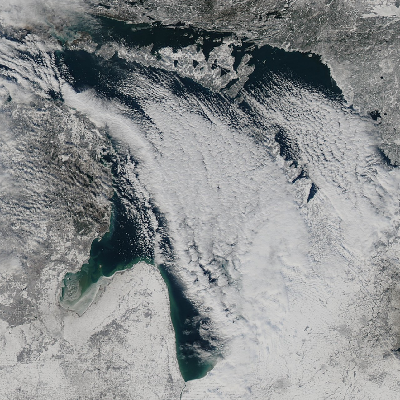
Current* conditions near Drummond, MI:
-
Trasferimento tecnologico protagonista alle 13.45 e alle 21.45 su RaiNews24 in #FUTURO24. Nella puntata di oggi vi porteremo all'innovation district Kilometro Rosso di Bergamo, dove si lavora per portare le innovazioni dai laboratori alle imprese
-
L'Itaglia cresce! Avemo fatto un bel +0.5% de PIL a la facciazza de i gufi che parlavano de economia bloccata!
Ha cresciuta pure la pressione fiscale anche se nun abbastanza da farce uscì er deficit da l'infrazzione con la UÈ. Peccato...
...speriamo che co l'aumento daa benzina pe l'Iran se fà un pò de cassa co le accise extra! 🤞😁🤞
-
@IgorGrouper Wow! Beautiful! Sure makes you wonder what these characters have gone through to become so badass!
-
Altro che Presidente della pace
@giornalismo
articolo21.org/2026/03/altro-c…
Non c’e’ male per un Presidente che ambisce al nobel per la pace. Dopo aver promesso al momento della sua elezione che avrebbe messo fine a tutte le guerre del mondo Donald Trump ha ordinato 255 bombardamenti in sette diverse nazioni. La sua fame di successi internazionali
-
Politica: depositato in parlamento il testo della nuova legge elettorale. col 40% dei voti il 60% dei seggi
@anarchia
È stato depositata in Parlamento la nuova legge elettorale per le prossime elezioni parlamentari. Il provvedimento, composto di 3 articoli, è stato depositato al Senato, firmato dai capogruppi della maggioranza. La