Hello #cpp / #cplusplus Fediverse,
Uncategorized
25
Posts
5
Posters
6
Views
-
@oblomov Never mind:
#include <stdio.h>

struct par1 {
  int par1a;
  par1() : par1a(1) {}
};

struct par2 {
  int par2a;
  par2() : par2a(2) {}
};

struct child : par1, par2 {
  int chfield3;
  child() : chfield3(3) {}
};

int main () {
  child ch;
  printf("ch.par1a = %i, ch.par2a = %i, ch.chfield3 = %i\n",
      ch.par1a, ch.par2a, ch.chfield3);
  printf("&ch = %p, (par1 *)&ch = %p, (par2 *)&ch = %p\n",
      &ch, (par1 *)&ch, (par2 *)&ch);
  return 0;
}
I might be able to make this work. Pondering.
-
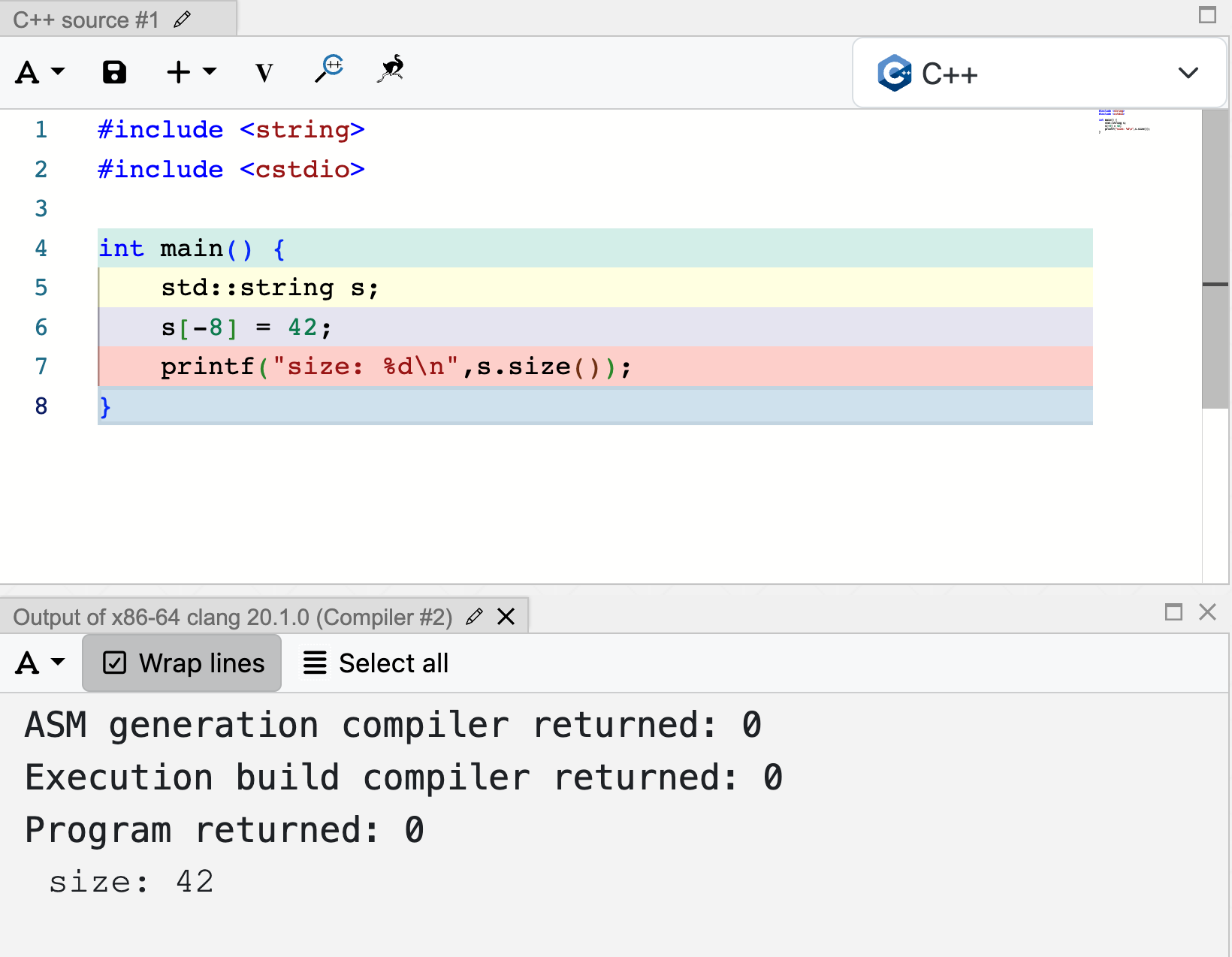
sure: https://godbolt.org/z/YvYa9b7jb
You do lose the POD property on foo though. Depending on your needs this may or may not be important.
-
@ananas That's my fall-back approach, except it's not
reinterpret_cast<bar*>(foo), it'sfoo->gimme_bar(). Andfoo::gimme_bar()will beinline, and so will be the couple hundred procedures that takestruct foo *, so in the end, very little binary code will come out of it, only the source code will be awfully bulky. Not ideal.@ananas Well, if I have to autogenerate, I could do this instead:
template <class T>
void work_on_paydirt (T *ambi_object) {
  struct bar *object = ambi_object->gimme_bar();
  printf("Teh paydirt is %i\n", object->paydirt);
}
Slightly less bulky, but it looks ugly.
-
sure: https://godbolt.org/z/YvYa9b7jb
You do lose the POD property on foo though. Depending on your needs this may or may not be important.
-


Gli ultimi otto messaggi ricevuti dalla Federazione
-
@chillybot Aww thank you Chilly!

-
@storiespettinate allora saprai che non ci sono sempre giorni buoni. E saprai anche che questi sono particolarmente complicati per chi cerca anche qualche spiraglio. Infine, saprai quanto sono importanti le tue parole per motivarci a continuare! Un abbraccio forte forte, grazie!
-
Statistics nerds...this is for you.
A nice uprecords output of the BSD Cafe endpoint VPS (where almost all the traffic flows).Please note:
* up 958 days, 02:14:56 | since Wed Jul 19 17:13:02 2023
* down 0 days, 00:45:22 | since Wed Jul 19 17:13:02 2023
* %up 99.997 | since Wed Jul 19 17:13:02 202399.997 uptime - 45 minutes of total downtime in 958 days, considering upgrades, reboots, etc. (and a migration).
-
-
@DarwinLovesBitcoin omg they are soooo cute! especially the tuxedo cat on the left - I think I'm in love 😍
-
I just spent about 2 hours making gumbo.
My hips hate me right now.
-
moon-creature friend wishes you all a happy full moon 🌕
-
(don't shoot me @shinmera this is a reply girl reply it's totally different)