Some things are harder to teach than others.
Uncategorized
53
Posts
31
Posters
292
Views
-
@futurebird I have a new-hire mentee that I keep having the same conversation with
him: should I do it by X?
me: sure. Y is also fine.
him: I don't understandI mean....yeah, that's clear and is also the problem. I'm not going to micromanage your keystroke by keystroke.
**I need you to understand the task.**
Only then will "instructions" make sense.
-
@futurebird @va2lam @bucknam
My grandmother taught me how to weave in ends on the back of the work when doing embroidery, but no-one ever taught me to sew. Wishing I had known to ask now. -
OK I've tried to draw it.
Do not overthink the details of these diagrams. Consider the difference between using a knot to hold the thread vs. using friction.
Friction is often a better, more robust solution. There are many ways to start sewing. Just overlap your stitches, back-stitch a few times until you feel it will not slide out.
@futurebird @Anke @va2lam @bucknam i do the second one but i usually tie one knot. sometimes it starts to slide but it definitely works
-
OK I've tried to draw it.
Do not overthink the details of these diagrams. Consider the difference between using a knot to hold the thread vs. using friction.
Friction is often a better, more robust solution. There are many ways to start sewing. Just overlap your stitches, back-stitch a few times until you feel it will not slide out.
@futurebird
and on a machine generally you sew forward a few stitches and then backward over them and then go... same at the end, reverse over the ending... i feel like thats probably taught more explicitly than hand stitching these days. like if you found a machine sewing beginners guide book theyd have it in there explicitly
@Anke @va2lam @bucknam -
@futurebird
and on a machine generally you sew forward a few stitches and then backward over them and then go... same at the end, reverse over the ending... i feel like thats probably taught more explicitly than hand stitching these days. like if you found a machine sewing beginners guide book theyd have it in there explicitly
@Anke @va2lam @bucknam -
@futurebird @va2lam @Anke @bucknam yeah I was def taught with a knot, and later learned to end that way, but never thought to start that way too
Great to know, and great visual :) -
OK I've tried to draw it.
Do not overthink the details of these diagrams. Consider the difference between using a knot to hold the thread vs. using friction.
Friction is often a better, more robust solution. There are many ways to start sewing. Just overlap your stitches, back-stitch a few times until you feel it will not slide out.
@futurebird @Anke @va2lam @bucknam I mean, knots are just friction made small, right?
-
OK I've tried to draw it.
Do not overthink the details of these diagrams. Consider the difference between using a knot to hold the thread vs. using friction.
Friction is often a better, more robust solution. There are many ways to start sewing. Just overlap your stitches, back-stitch a few times until you feel it will not slide out.
@futurebird @Anke @va2lam @bucknam Why not both?
-
@futurebird
yeah makes sense, I just mean that this knowledge of how to start or stop sewing using friction is more likely to be taught today in terms of a machine. the idea extends easily to hand sewing, but probably your students dont know machine sewing either.
@Anke @va2lam @bucknam -
@futurebird
I think I kinda had to figure it out sometime last millennium, but it's been a while. I borrowed a machine for something, so needed a better solution and it transferred.This century I'd probably look it up online.
All I ever needed was a running stich with a few backstitches to start, or just a backstitch, anyway.
-
Some things are harder to teach than others. One of the most difficult things to explain is "how to start sewing without putting a knot at the end of the thread."
Like many tasks that I stumble over when teaching I made the fatal mistake of thinking "this is easy"
I think I need to draw diagrams?
What makes it worse is it's not that important when you are sewing a book signature how you "knot the thread" since it will be covered in glue later.
My students want an "Official Procedure"
@futurebird
Having similar struggles.
Show & tell: Diagrams help person showing their idea to transmit it visually so observer can build their own mental models.
I saw your explaining diagram before the words & it totally “made sense” as I had lived experience of “end of string knot failure” mode compared to relying on earth friction physics-https://sauropods.win/@futurebird/115950780276008456
Had I seen the words first, I’d have interpreted them drawing my own imaginary diagram, that would not likely going to match yours. -
@futurebird I'd love to learn that. @va2lam @bucknam
-
@futurebird
Having similar struggles.
Show & tell: Diagrams help person showing their idea to transmit it visually so observer can build their own mental models.
I saw your explaining diagram before the words & it totally “made sense” as I had lived experience of “end of string knot failure” mode compared to relying on earth friction physics-https://sauropods.win/@futurebird/115950780276008456
Had I seen the words first, I’d have interpreted them drawing my own imaginary diagram, that would not likely going to match yours.I thought making a diagram was "overkill" but I can see that it's not.
Lets see if this helps them to be more independent about this part of the project.
-
OK I've tried to draw it.
Do not overthink the details of these diagrams. Consider the difference between using a knot to hold the thread vs. using friction.
Friction is often a better, more robust solution. There are many ways to start sewing. Just overlap your stitches, back-stitch a few times until you feel it will not slide out.
@futurebird bookmarking this diagram for the future. Very helpful, thanks!
-
I think this dynamic of people learning a task wanting formal official steps leads to people thinking that there is "One Right Way" to do tasks that can be done in many ways.
A frustrated teacher formalizes something that just isn't formal to avoid having everyone bugging her over and over "but how do I start it? how do I knot it?"
Will I cause someone in 20 years to be told "That's the Wrong Way to do it."
hmmm
@futurebird
OMG! I was discussing this “one right way” or “where is the template?” Linear thinking, simplistic, “100% certainty” approach.
A(ny old) way - tends to be the first solution people come up with in solving a problem. Then they stop looking.
The (most suitable) way - is the optimum way to address a need or problem and requires critical thinking/effort/patience/determination/tenacity/perseverance/grit/adaptability. -
Some things are harder to teach than others. One of the most difficult things to explain is "how to start sewing without putting a knot at the end of the thread."
Like many tasks that I stumble over when teaching I made the fatal mistake of thinking "this is easy"
I think I need to draw diagrams?
What makes it worse is it's not that important when you are sewing a book signature how you "knot the thread" since it will be covered in glue later.
My students want an "Official Procedure"
Does it become "official" when coded in hardware?
I still have the tin, but (k)not the machine, from my dad's automatic knotter.
He was a textile mechanic and this was in common use in the spinning and weaving sheds.
-
@futurebird thank you, it's perfect! I'll try it soon. @va2lam @bucknam
-
OK I've tried to draw it.
Do not overthink the details of these diagrams. Consider the difference between using a knot to hold the thread vs. using friction.
Friction is often a better, more robust solution. There are many ways to start sewing. Just overlap your stitches, back-stitch a few times until you feel it will not slide out.
@futurebird @Anke @va2lam @bucknam
When I was four, I learned both methods, but the second was much easier if I started with the first. The knot helped hold the thread in place for the first few stitches. When you are just learning, it’s very easy to accidentally pull the thread through when you go back, the knot stops that happening.
-
@futurebird @va2lam @bucknam
My grandmother taught me how to weave in ends on the back of the work when doing embroidery, but no-one ever taught me to sew. Wishing I had known to ask now.@Anke @futurebird @va2lam @bucknam nothing stopping you from starting now. sometime last year i started getting into fixing the fabric things around the house and it takes time but isn't very intimidating
-
I thought making a diagram was "overkill" but I can see that it's not.
Lets see if this helps them to be more independent about this part of the project.
It’s not just kids. I’ve seen grown adults, paid a salary to come up with solutions to problems, also asking,
- “keep it simple and tell me the “one right answer”!
- “Give me the answer and don’t make me work for it”.
- “I don’t want to make an(y) effort. Give me the answer”.It is a kind of “cognitive abdication”, “don’t make me think” or learned/programmed helplessness.




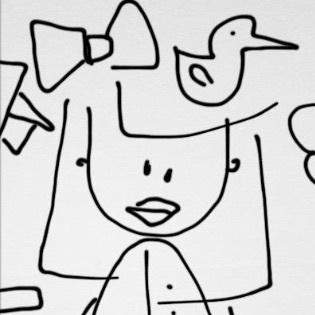






Gli ultimi otto messaggi ricevuti dalla Federazione
-
The outhouse in the rye
-
abandoned plow
On the grey and brown field
I wait for youPascoli's washerwomen is a beautiful little poem
-
@PeterLG@theblower.au @dillyd@turtleisland.social me lurves it, though it must be consumed whilst chanting... not edmund, not edmund, not...
-
@dillyd Good Lady, you have found a true gem among all the dross. KEEP HIM!
-
@PeterLG@theblower.au @dillyd@turtleisland.social eeeek, beware turkish delight 😱
-
@mia THOSE SMILES!
-
Trumpista prima di tutto | il manifesto
https://ilmanifesto.it/trumpista-prima-di-tutto
> Referendum (Editoriale) Non siamo complici, non siamo colpevoli, non siamo isolati. Non condividiamo ma neppure condanniamo. Questo solo oggi possiamo dire dopo aver ascoltato in parlamento Meloni, che non è Montale anche perché Montale era un grande poeta antifascista. La presidente del Consiglio certamente non è antifascista e probabilmente non sarà mai grande - si può essere
-
@mia they should make this country smaller