when do you usually use the man page for a complex command line tool to answer a question you have?
Uncategorized
272
Posts
207
Posters
0
Views
-
i think part of the reason I'm feeling interested in man pages right now even though I rarely use them is that search has gotten so much worse, it's frustrating, and it makes it feel more appealing to have trustworthy sources with clear explanations
@b0rk I date from the days when man pages were a novelty.
If it doesn't have a man page, it isn't finished.
-
when do you usually use the man page for a complex command line tool to answer a question you have? (like git, openssl, rsync, curl, etc)
(edit: no need to say "i use --help then man")
@b0rk it depends on how well I know the tool.
If I’m familiar with the tool and its terminology then the man page is where I go after trying g the --help flag or its equivalent.
For me they are fine reference material, but I usually end up using a search engine…
-
when do you usually use the man page for a complex command line tool to answer a question you have? (like git, openssl, rsync, curl, etc)
(edit: no need to say "i use --help then man")
@b0rk using #freebsd and having started on SCO Unix, I’m used to better than average man pages. And I learned sco before the web: so man and Usenet.
—help is my first stop these days.
Knowing how to use man means I can work offline too. So practicing that skill when a fallback is present is a worthy investment
-
@b0rk it depends somewhat on the program, and somewhat on what I'm trying to find out.
Man pages are usually good for finding out what an option does, if you already know the name of the option. Not all of them are so good for going in the other direction – if you know _what_ you want to do, and are trying to find out if there's an option that does it, and what it's called. Understandable, because the former is easier to write. But the latter is surely _more_ often what people want!
(Although not 100%. Reading other people's scripts is a common way to find out the name of an option you didn't know and now have to look up what it does.)
Usually I'll try --help before the manual, simply because it's likely to be shorter, so it's quicker to look through all the options and pick out the one I'm likely to want. Maybe if anything's still unclear I'll try the man page and hope it goes into more detail. But of course in some cases they do the same thing anyway: 'git foo --help' is no different from 'man git-foo'.
Of course, if you're starting from some task you want to perform another possibility is that you don't even yet know which _program_ you want to use, in which case a straight-up search engine might be the place to look first, looking for something like a Stack Exchange post that suggests a combination of program and options.
@simontatham @b0rk "... another possibility is that you don't even yet know which _program_ you want to use ..." apropos is your friend, my friend
-
i'm very curious about everyone who says "I'd look there first", if I want to figure out how to do something new I think I'll usually google how to do it rather than look at the man page, and then maybe later look at the man page to look up the details
(I've gotten enough of these answers:
- "I like that man pages don't require changing context"
- "with the man page I know I have the right version of the docs")I've been scolded way too often by my systems teacher back in the day that I automatically use --help first, then man <command> then, and in a last resort googling for what I'm trying to do
-
@karabaic I've never used openbsd but I'm so curious about the openbsd man page culture because of how people talk about it
do you know if there's anywhere that I can read about the documentation philosophy or about how people relate to it?
-
when do you usually use the man page for a complex command line tool to answer a question you have? (like git, openssl, rsync, curl, etc)
(edit: no need to say "i use --help then man")
I voted 'first' because it's close enough; it's usually second after '-?'
(-? is not be a valid argument in many programs, but most dump their usage on an invalid argument, and it's easier than typing --help)
-
i think part of the reason I'm feeling interested in man pages right now even though I rarely use them is that search has gotten so much worse, it's frustrating, and it makes it feel more appealing to have trustworthy sources with clear explanations
@b0rk
I tend to look for examples close to what I want to do, or tutorials. I would love if man pages were more consistent in giving clear examples for common use cases. This is much easier to parse quickly than detailed explanations. -
i'm very curious about everyone who says "I'd look there first", if I want to figure out how to do something new I think I'll usually google how to do it rather than look at the man page, and then maybe later look at the man page to look up the details
(I've gotten enough of these answers:
- "I like that man pages don't require changing context"
- "with the man page I know I have the right version of the docs")@b0rk for rsync, find or ls I use the man page. For ffmpeg or imagemagick I use duck duck go 🙂
-
i'm very curious about everyone who says "I'd look there first", if I want to figure out how to do something new I think I'll usually google how to do it rather than look at the man page, and then maybe later look at the man page to look up the details
(I've gotten enough of these answers:
- "I like that man pages don't require changing context"
- "with the man page I know I have the right version of the docs")@b0rk my experience is that I can often figure out what I need from the man page in one of 3 ways:
- often the first paragraph(ish) clarifies whatever I was confused about
- the EXAMPLES section (usually near the end) often has exactly the example I'd want
- often searching the man page ('/' to search, 'n' for next result) for keywords finds me what I need (another option) pretty fastI'm skewed towards this from years of offline computer use (work on trains with crappy/no wifi, though it started with an offline desktop in my room in high school before wifi was a thing), but also reinforced by recent nonsense in both AI summaries and keyword-spamming sites...
-
when do you usually use the man page for a complex command line tool to answer a question you have? (like git, openssl, rsync, curl, etc)
(edit: no need to say "i use --help then man")
@b0rk other = on FreeBSD I have found the documentation pretty useful for most commands. On Linux, much less so.
-
i'm very curious about everyone who says "I'd look there first", if I want to figure out how to do something new I think I'll usually google how to do it rather than look at the man page, and then maybe later look at the man page to look up the details
(I've gotten enough of these answers:
- "I like that man pages don't require changing context"
- "with the man page I know I have the right version of the docs")@b0rk Yestwrday I wanted to use exiftool to strip all tags from an image. Couldn’t easily find it in the man page so I piped it to an AI and it spat out the answer. I’m not sure if this was better, or more ecological. But Google was going to give me an AI summary anyway amidst AI slop posts so why not skip the middleman
-
i think part of the reason I'm feeling interested in man pages right now even though I rarely use them is that search has gotten so much worse, it's frustrating, and it makes it feel more appealing to have trustworthy sources with clear explanations
@b0rk One thing, and I don't know that this is solveable or maybe it was supposed to be solved by info pages but those were hard to memorize how to use, is learning the capabilities of a tool like...up front and at the top.
It's so hard to find the ingredients I need to concoct the correct incantation from man pages, even when I've done the thing with the tool before.
And sometimes you find things that SEEM like what you need but aren't.
-
i think part of the reason I'm feeling interested in man pages right now even though I rarely use them is that search has gotten so much worse, it's frustrating, and it makes it feel more appealing to have trustworthy sources with clear explanations
@b0rk I agree with the sentiment, and I think that's why I installed tldr.sh again recently 🥲 granted that's far less in depth that what is provided by the man pages, but examples are concise.
-
i'm very curious about everyone who says "I'd look there first", if I want to figure out how to do something new I think I'll usually google how to do it rather than look at the man page, and then maybe later look at the man page to look up the details
(I've gotten enough of these answers:
- "I like that man pages don't require changing context"
- "with the man page I know I have the right version of the docs")@b0rk i like to look first and then search for examples elsewhere. otherwise my search may not be relevant
-
when do you usually use the man page for a complex command line tool to answer a question you have? (like git, openssl, rsync, curl, etc)
(edit: no need to say "i use --help then man")
@b0rk I'd say I'd indeed look at the man page first. I've still voted "other", as I immediately turn away if it doesn't give a usage example in the first few lines.
I need to know if it's the right tool for the job, and only very few man pages declare what it does properly. I often need stackoverflow or blogs for that.
Then I return regularly to the man page to look up syntax of what I already know is there. -
i think part of the reason I'm feeling interested in man pages right now even though I rarely use them is that search has gotten so much worse, it's frustrating, and it makes it feel more appealing to have trustworthy sources with clear explanations
@b0rk I have a lingering guilt about not going to man pages first, but often a blog post has been better crafted than the friendly manual. Not all manuals but enough to encourage an antipattern in search first.
I totally agree with your motivation to address/revaluate that.
-
i think part of the reason I'm feeling interested in man pages right now even though I rarely use them is that search has gotten so much worse, it's frustrating, and it makes it feel more appealing to have trustworthy sources with clear explanations
@b0rk i remember this: when i learned about man and started using it, the stuff i wanted to know usually was on page 5 (quick reference / parameters). But i always forget that so it felt frustrating and abandoned them.
Instead I use --help command options. I only go to man when i want to learn the full and long version. But sometimes I do.
-
when do you usually use the man page for a complex command line tool to answer a question you have? (like git, openssl, rsync, curl, etc)
(edit: no need to say "i use --help then man")
@b0rk I generally go to `--help` first, and then a man page, often looking for the EXAMPLE section.
-
@b0rk using #freebsd and having started on SCO Unix, I’m used to better than average man pages. And I learned sco before the web: so man and Usenet.
—help is my first stop these days.
Knowing how to use man means I can work offline too. So practicing that skill when a fallback is present is a worthy investment
























Feed RSS
Gli ultimi otto messaggi ricevuti dalla Federazione
-
@montenavigante.bsky.social
https://bsky.app/profile/montenavigante.bsky.social/post/3mfezmb3yes2q
> Calcolatrice Logos 9, Mario Bellini, 1978
-
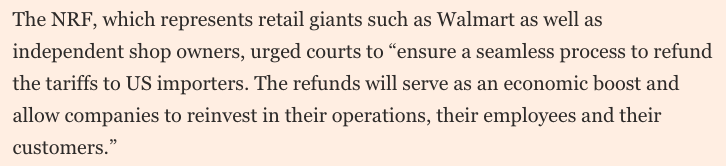
Da Walmart ai piccoli negozi, tutti esigono i rimborsi di quanto pagato. E li esigono subito. Ma come, i dazi non erano stati pagati dagli stranieri? 🤡
Si preannuncia una poderosa e incarognita guerra legale contro il governo federale. Pensate di quale beneficio per Trump al midterm 🍿
Corporate America demands refunds after Donald Trump’s tariffs are struck down https://www.ft.com/content/07a295a3-e323-4a96-af48-ba8d01ab059a
-
-
The Onion (@theonion.com)
https://bsky.app/profile/theonion.com/post/3mff3wrrdvk23
> God Wondering When Humans Will Realize Purpose Of Life Masturbating Continually https://theonion.com/god-wondering-when-humans-will-realize-purpose-of-life-masturbating-continually/
-
Che per caso c'hai sete? 😂 A prima vista pare una cosa da bere
-
Anita Sagastegui Photography (she/her) (@anitasagastegui.bsky.social)
https://bsky.app/profile/anitasagastegui.bsky.social/post/3mff4muzick2b
> #Two #BlueSkyArtShow #SantaMonica #sunsets #WestCoastKin #ThePhotoHour #UnJourUnePhoto #nikon #photography #California #BlueSkyPhotography #artshow #paysage #colorfulsunset #sunset #seascape #landscape #fineartphotgraphy #NatureArt
-
@stefano_zan sembri 'sempliciotto tontolone' quando raggiungi l'illuminazione. Non lo sottovalutare!
-
@lealternative @ufficiozero apro linuxmint.com e il logo mi ricorda qualcosa