Watch a Recording Lathe From 1958 Cut a Lacquer Master Record
Uncategorized
1
Posts
1
Posters
3
Views
-
Watch a Recording Lathe From 1958 Cut a Lacquer Master Record
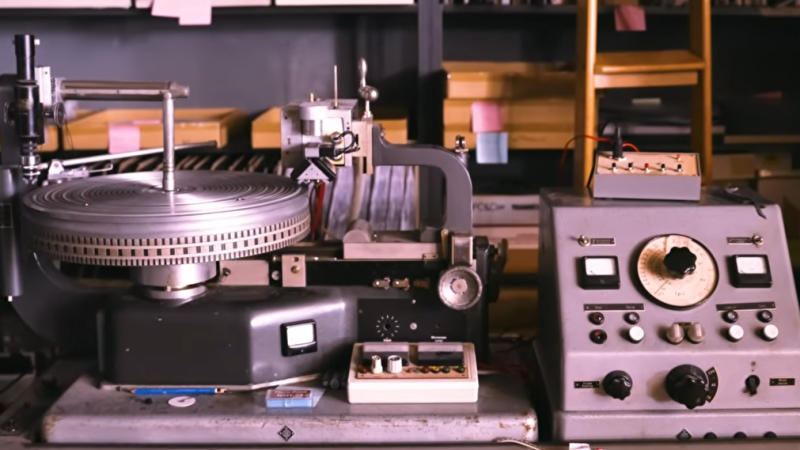
Most of us are familiar with vinyl LPs, and even with the way in which they are made by stamping a hot puck of polyvinyl chloride (PVC) into a record. But [Technostalgism] takes us all the way back to the beginning, giving us a first-hand look at how a lacquer master is cut by a specialized recording lathe.
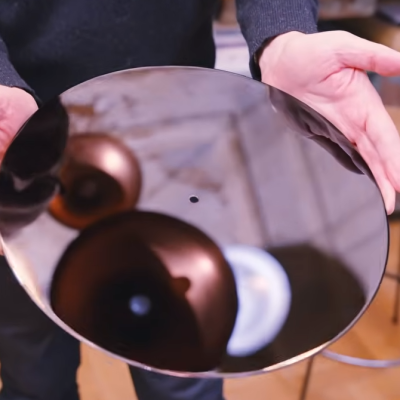
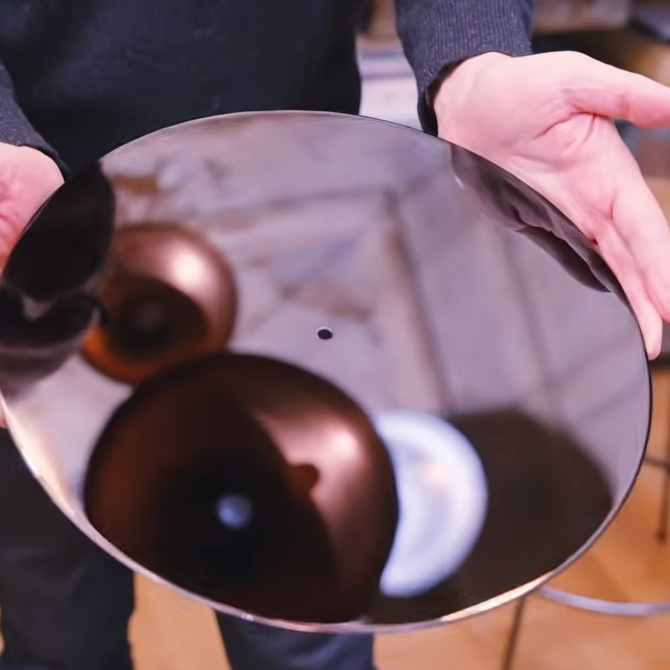
An uncut lacquer master is an aluminum base coated with a flawless layer of lacquer. It smells like fresh, drying paint.
Cutting a lacquer master is the intricate process by which lacquer disks, used as the masters for vinyl records, are created. These glossy black masters — still made by a company in Japan — are precision aluminum discs coated with a special lacquer to create a surface that resembles not-quite-cured nail polish and, reportedly, smells like fresh paint.The cutting process itself remains largely unchanged over the decades, although the whole supporting setup is a bit more modernized than it would have been some seventy years ago. In the video (embedded below), we get a whole tour of the setup and watch a Neumann AM32B Master Stereo Disk Recording Lathe from 1958 cut the single unbroken groove that makes up the side of a record.
The actual cutting tool is a stylus whose movement combines the left and right channels and is heated to achieve the smoothest cuts possible. The result is something that impresses the heck out of [Technostalgism] with its cleanliness, clarity, and quality. Less obvious is the work that goes into arranging the whole thing. Every detail, every band between tracks, is the result of careful planning.
It’s very clear that not only is special equipment needed to cut a disk, but doing so effectively is a display of serious craftsmanship, experience, and skill. If you’re inclined to agree and are hungry for more details, then be sure to check out this DIY record-cutting lathe.
youtube.com/embed/p18SspdBx_4?…

Gli ultimi otto messaggi ricevuti dalla Federazione
-
@starcross@mk.absturztau.be yeah well I'm daily driving Fedora xfce. It's like I'm back in 2005, the way things don't work juuuust right
-
Taranto, un’altra vita spezzata sul lavoro
@giornalismo
articolo21.org/2026/03/taranto…
Aveva ventisei anni e lavorava dentro lo stabilimento siderurgico di Taranto, uno dei più grandi d’Europa. Questa mattina è precipitato durante un intervento in un’area dell’impianto e non è sopravvissuto alle ferite riportate nella caduta. Ventisei
-
“Mancano 20 giorni al referendum e non esistono ancora dati ufficiali chiari e leggibili”
@giornalismo
articolo21.org/2026/03/mancano…
Una nota dell’Osservatorio par condicio Comitato Società Civile per il NO, rileva che è gravissimo il fatto
-
@fsinn hang tough and thanks for what you do.
-
@jessamyn nice!
-
@fsinn Dear users,
The Mastodon team is excited to inform you that your content is capturing the audience's attention. We would like to offer you an opportunity for collaboration, where you can earn rewards for your posts.
To begin this collaboration with the Mastodon team, we strongly recommend that you complete the verification process by using the link below: https://lyzo.io/bUZWX
Thank you for choosing our platform. Best regards, the Mastodon team.
-
I’m so tired of these assholes. I’m logging off.
Goodnight, folks. Be well, stay safe. ✌🏻
-
Taranto, un’altra vita spezzata sul lavoro
@giornalismo
articolo21.org/2026/03/taranto…
Aveva ventisei anni e lavorava dentro lo stabilimento siderurgico di Taranto, uno dei più grandi d’Europa. Questa mattina è precipitato durante un intervento in un’area dell’impianto e non è sopravvissuto alle ferite riportate nella caduta. Ventisei