"The Revigator was intended to add radioactivity (radon) to drinking water.
Uncategorized
30
Posts
25
Posters
0
Views
-
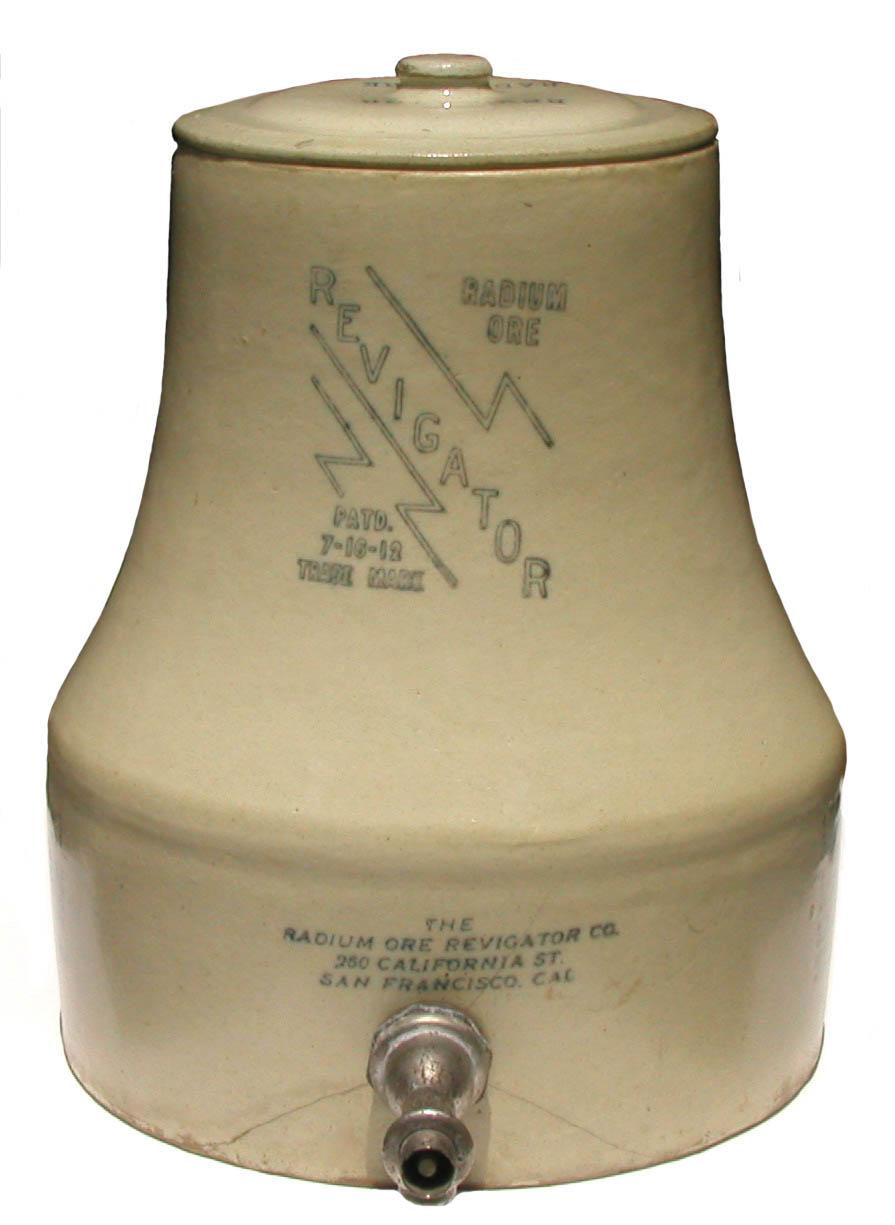
"The Revigator was intended to add radioactivity (radon) to drinking water. Water without radioactivity was 'devoid of its life element.'
The glazed ceramic body of the jar has a porous lining that incorporated uranium ore. Water placed inside the jar would absorb the radon released by decay of the radium in the ore.
Advertised as 'an original radium ore patented water crock,' it sold in the hundreds of thousands between 1924 and 1930."
@jalefkowit We are such a stupid species.
-
"The Revigator was intended to add radioactivity (radon) to drinking water. Water without radioactivity was 'devoid of its life element.'
The glazed ceramic body of the jar has a porous lining that incorporated uranium ore. Water placed inside the jar would absorb the radon released by decay of the radium in the ore.
Advertised as 'an original radium ore patented water crock,' it sold in the hundreds of thousands between 1924 and 1930."
@jalefkowit it was, in fact, a crock
-
"The Revigator was intended to add radioactivity (radon) to drinking water. Water without radioactivity was 'devoid of its life element.'
The glazed ceramic body of the jar has a porous lining that incorporated uranium ore. Water placed inside the jar would absorb the radon released by decay of the radium in the ore.
Advertised as 'an original radium ore patented water crock,' it sold in the hundreds of thousands between 1924 and 1930."
@jalefkowit Oh boy oh boy oh boy! I really hope RFK gave these out to ALL the big shots in the administration!
-
"The Revigator was intended to add radioactivity (radon) to drinking water. Water without radioactivity was 'devoid of its life element.'
The glazed ceramic body of the jar has a porous lining that incorporated uranium ore. Water placed inside the jar would absorb the radon released by decay of the radium in the ore.
Advertised as 'an original radium ore patented water crock,' it sold in the hundreds of thousands between 1924 and 1930."
@jalefkowit I see Revigator and subconscious adds a hyphen to make revi-gator which my brain turns into Revision Gator. It’s an alligator that reviews and revises books to ensure they’re age-appropriate for children.
-
"The Revigator was intended to add radioactivity (radon) to drinking water. Water without radioactivity was 'devoid of its life element.'
The glazed ceramic body of the jar has a porous lining that incorporated uranium ore. Water placed inside the jar would absorb the radon released by decay of the radium in the ore.
Advertised as 'an original radium ore patented water crock,' it sold in the hundreds of thousands between 1924 and 1930."
@jalefkowit Probably not the first garbage tech to come out of San Francisco, and definitely not the last.
-
"The Revigator was intended to add radioactivity (radon) to drinking water. Water without radioactivity was 'devoid of its life element.'
The glazed ceramic body of the jar has a porous lining that incorporated uranium ore. Water placed inside the jar would absorb the radon released by decay of the radium in the ore.
Advertised as 'an original radium ore patented water crock,' it sold in the hundreds of thousands between 1924 and 1930."
@jalefkowit This was the era of the Radium Girls and of quack treatments involving radium
-
"The Revigator was intended to add radioactivity (radon) to drinking water. Water without radioactivity was 'devoid of its life element.'
The glazed ceramic body of the jar has a porous lining that incorporated uranium ore. Water placed inside the jar would absorb the radon released by decay of the radium in the ore.
Advertised as 'an original radium ore patented water crock,' it sold in the hundreds of thousands between 1924 and 1930."
@jalefkowit please remember it's all about the dose, people who live in mountains close to uranium ores already have this effect without any trinkets
-
"The Revigator was intended to add radioactivity (radon) to drinking water. Water without radioactivity was 'devoid of its life element.'
The glazed ceramic body of the jar has a porous lining that incorporated uranium ore. Water placed inside the jar would absorb the radon released by decay of the radium in the ore.
Advertised as 'an original radium ore patented water crock,' it sold in the hundreds of thousands between 1924 and 1930."
@jalefkowit People of the era were well used to gravity fed ceramic filtration systems to purify water and remove dangerous pathogens. Devices looking similar to this developed by Henry Doulton in the 19th century had become the gold standard for filtering drinking water. They were simple to use and easy to clean. Something like this would have come off as a "new and improved" refinement of a familiar concept.
-
"The Revigator was intended to add radioactivity (radon) to drinking water. Water without radioactivity was 'devoid of its life element.'
The glazed ceramic body of the jar has a porous lining that incorporated uranium ore. Water placed inside the jar would absorb the radon released by decay of the radium in the ore.
Advertised as 'an original radium ore patented water crock,' it sold in the hundreds of thousands between 1924 and 1930."
@jalefkowit I always thought radon was an inert element. How can it be absorbed?
-
@jalefkowit please remember it's all about the dose, people who live in mountains close to uranium ores already have this effect without any trinkets
@exus1pl @jalefkowit there is a big difference between an internal and an external dose
-
"The Revigator was intended to add radioactivity (radon) to drinking water. Water without radioactivity was 'devoid of its life element.'
The glazed ceramic body of the jar has a porous lining that incorporated uranium ore. Water placed inside the jar would absorb the radon released by decay of the radium in the ore.
Advertised as 'an original radium ore patented water crock,' it sold in the hundreds of thousands between 1924 and 1930."
@jalefkowit Nice example! Also, for those who don't know it, there were luxury spas built around the natural springs in Bad Gastein around the idea that people should bath in the radioactive waters. By the 90s, it was a ghost town since almost no one believed that radon was healthy any more.
-
"The Revigator was intended to add radioactivity (radon) to drinking water. Water without radioactivity was 'devoid of its life element.'
The glazed ceramic body of the jar has a porous lining that incorporated uranium ore. Water placed inside the jar would absorb the radon released by decay of the radium in the ore.
Advertised as 'an original radium ore patented water crock,' it sold in the hundreds of thousands between 1924 and 1930."
@jalefkowit
Reject modernity, embrace tradition! -
"The Revigator was intended to add radioactivity (radon) to drinking water. Water without radioactivity was 'devoid of its life element.'
The glazed ceramic body of the jar has a porous lining that incorporated uranium ore. Water placed inside the jar would absorb the radon released by decay of the radium in the ore.
Advertised as 'an original radium ore patented water crock,' it sold in the hundreds of thousands between 1924 and 1930."
where can i get one? asking for a friend.
-
@jalefkowit I always thought radon was an inert element. How can it be absorbed?
@liilliil @jalefkowit The noble gases are not srictly "inert". Individual atoms have a very stable electron structure, so they don't normally feel the need to swap or share electrons with other elements. But most can sometimes do so, and all do dissolve in fluids - see eg
https://www.sciencedirect.com/science/article/pii/S0265931X16304556
or for other noble gases:
https://www.sciencedirect.com/science/article/pii/S0304420318303037
-
@liilliil @jalefkowit The noble gases are not srictly "inert". Individual atoms have a very stable electron structure, so they don't normally feel the need to swap or share electrons with other elements. But most can sometimes do so, and all do dissolve in fluids - see eg
https://www.sciencedirect.com/science/article/pii/S0265931X16304556
or for other noble gases:
https://www.sciencedirect.com/science/article/pii/S0304420318303037
@FaithfullJohn @jalefkowit
0.01 mol/(kg*bar) — how much is that in tangible terms? -
 undefined oblomov@sociale.network shared this topic
-
"The Revigator was intended to add radioactivity (radon) to drinking water. Water without radioactivity was 'devoid of its life element.'
The glazed ceramic body of the jar has a porous lining that incorporated uranium ore. Water placed inside the jar would absorb the radon released by decay of the radium in the ore.
Advertised as 'an original radium ore patented water crock,' it sold in the hundreds of thousands between 1924 and 1930."
@jalefkowit I'm surprised HHS isn't mandating their use.
-
"The Revigator was intended to add radioactivity (radon) to drinking water. Water without radioactivity was 'devoid of its life element.'
The glazed ceramic body of the jar has a porous lining that incorporated uranium ore. Water placed inside the jar would absorb the radon released by decay of the radium in the ore.
Advertised as 'an original radium ore patented water crock,' it sold in the hundreds of thousands between 1924 and 1930."
@jalefkowit I'd drink that.
-
"The Revigator was intended to add radioactivity (radon) to drinking water. Water without radioactivity was 'devoid of its life element.'
The glazed ceramic body of the jar has a porous lining that incorporated uranium ore. Water placed inside the jar would absorb the radon released by decay of the radium in the ore.
Advertised as 'an original radium ore patented water crock,' it sold in the hundreds of thousands between 1924 and 1930."
@jalefkowit seeya later, revigator [takes a massive swig]
-
@jalefkowit I always thought radon was an inert element. How can it be absorbed?
@liilliil @jalefkowit it's a noble gas, and therefore chemically inert, but it is still radioactive
-
"The Revigator was intended to add radioactivity (radon) to drinking water. Water without radioactivity was 'devoid of its life element.'
The glazed ceramic body of the jar has a porous lining that incorporated uranium ore. Water placed inside the jar would absorb the radon released by decay of the radium in the ore.
Advertised as 'an original radium ore patented water crock,' it sold in the hundreds of thousands between 1924 and 1930."
@jalefkowit The Oak Ridge Museum of Radiation and Radioactivity is great! The "Torbena Jars" are similar to the Revigator, and the online catalogue provides lots of similarly excellent/horrifying background info 🤯 😱
https://orau.org/health-physics-museum/collection/radioactive-quack-cures/jars/torbena-jar.html















Gli ultimi otto messaggi ricevuti dalla Federazione
-
@Yaku noi ceniamo all'ora di cena, siete tutti voi altri che cenate tardi :D
-
How it feels to have a chronic illness
-
@alexia @liaizon in terms of outreach, I will also say that this is hard. For a lot of teams, it means joining their Discord or a forum, making requests in a group chat, and hoping that someone sees it and replies. I try to do it for events like FOSDEM, but I don't always reach out proactively for standards work. More effort is warranted!
-
@valhalla giusto, voi cenate allo spuntare dell'aurora boreale.
-
Il cielo è di tutti di Gianni Rodari (Omegna, 1920 – Roma, 1980)
Qualcuno che la sa lunga
mi spieghi questo mistero:
il cielo è di tutti gli occhi
di ogni occhio è il cielo intero.
È mio, quando lo guardo.
È del vecchio, del bambino,
del re, dell’ortolano,
del poeta, dello spazzino ... https://cctm.website/gianni-rodari-il-cielo-e-di-tutti/#GianniRodari #cielo #poesia #cctmwebsite #anoipiaceleggere #leggere
-
Testing MastoBlaster. Seems to be working. 📱
-
New excellent work on #Epstein-
#Israel by #RyanGrim and #MurtazaHussain
#DropSiteNews: a must read
-
@Yaku noi qui abbiamo già finito di cenare!