Wenn WordPress loslässt, wird das Fediverse klüger #BloggerCamp @blog
Uncategorized
1
Posts
1
Posters
0
Views
-
Wenn WordPress loslässt, wird das Fediverse klüger #BloggerCamp @blog

Steffen Voß schreibt über ein Detail, das in WordPress-Ecken gern als „Plugin-Kleinkram“ abgetan wird – und zeigt, warum genau diese Kleinigkeiten darüber entscheiden, ob das Fediverse als offenes Netz funktioniert oder als bloßes Twitter-Ersatztheater endet. Sein Text ist weniger Empörung als Übersetzungsarbeit: Er nimmt eine technische Änderung (die Abkündigung der bisherigen Einstellmöglichkeit, wie Posts auf Mastodon erscheinen) und legt sie so aus, dass sie plötzlich wie das wirkt, was sie im Kern ist: eine Reifung des Protokoll-Denkens.
Was Voß richtig gut macht: Er verwandelt Frust in Verständnis
Der Ausgangspunkt ist klassisch: „Früher konnte ich einstellen, wie es aussieht – jetzt nicht mehr.“ Genau an dieser Stelle kippen viele Texte ins Nostalgische oder ins Misstrauische („Entwickler nehmen uns Kontrolle weg“). Voß geht den anderen Weg: Er fragt nach, hört zu, und baut aus der Antwort eine kleine Argumentationsbrücke, die auch Nicht-Nerds tragen kann.
Das ist nicht nur nett, das ist zentral – denn ActivityPub ist nicht „ein weiteres Teilen-Feature“, sondern ein Protokoll, das dezentrale Interaktion ermöglicht. Genau so beschreibt es auch die Spezifikation: ActivityPub ist ein dezentraler Standard für soziale Netzwerke, der Zustellung und Interaktion zwischen unabhängigen Systemen regelt.
Die Pointe der Abkündigung: Nicht „weniger“, sondern „richtiger“
Matthias Pfefferles Begründung – so wie Voß sie paraphrasiert – zielt auf ein Prinzip, das man im offenen Web immer wieder lernen muss: Der Publisher liefert möglichst gute Informationen; die empfangende Plattform entscheidet über die Darstellung. Das ist ein Bruch mit der Crossposting-Denke („Ich bestimme, wie es überall aussieht“) – und zugleich die Voraussetzung dafür, dass unterschiedliche Clients (Mastodon, Friendica, Pixelfed usw.) ihre Stärken ausspielen können.
Dass das kein bloßes Ideal ist, sieht man sogar in der Entwicklung des Plugins selbst: Im Changelog wird explizit beschrieben, dass ActivityPub inzwischen standardmäßig eine automatisierte Objekttyp-Auswahl nutzt und die frühere manuelle Variante nur noch als Kompatibilitäts-Option in „Advanced“ weiterlebt. Das ist ziemlich genau die Bewegung, die Voß’ Text erklärt: weg vom „Template-Tuning“ hin zu mehr semantischer Korrektheit.
„Das ist kein Crossposting“ – der wichtigste Satz im ganzen Stück
Voß trifft einen Nerv, wenn er den häufigsten Denkfehler anspricht: Viele halten ActivityPub für eine raffiniertere Tweet-Schleuder. Tatsächlich wird das Blog mit Plugin zu einem Account im Fediverse – inklusive Follow-Beziehung, Timeline-Ausspielung und Rückkanal. Genau so wird es auch in der offiziellen Plugin-Beschreibung formuliert: Ein WordPress-Blog fungiert als föderiertes Profil, dem man folgen kann; Autoren können eigene Profile haben.
Und mehr noch: Replies aus dem Fediverse landen als Kommentare im Blog – die „Reaktionen“ bleiben am Ursprungstext kleben. Das beschreibt auch Pfefferle selbst in einem WordPress.com-Kontext als zentrales Versprechen: Antworten von Fediverse-Plattformen werden zu WordPress-Kommentaren und erzeugen eine synchronisierte Diskussion.
Voß formuliert daraus einen kulturellen Gewinn: Die Leserschaft verteilt sich, die Konversation sammelt sich.
Der unterschätzte Hebel: Post-Formate als Signal, nicht als Deko
Ein besonders starker Abschnitt ist der über WordPress-„Formate“ (Link, Status, Audio …). Voß zeigt: Das ist nicht Kosmetik, sondern ein maschinenlesbares Signal, das ActivityPub in unterschiedliche Objektformen übersetzen kann – was dann wieder Clients nutzen können (z. B. Audio-Player in Mastodon-Apps, wenn ein Beitrag als Audio rausgeht). Diese Perspektive ist Gold wert, weil sie den Blick von „Wie sieht’s aus?“ auf „Was ist es?“ verschiebt. Genau dort beginnt Protokoll-Intelligenz.
https://social.cologne/deck/@blog@kaffeeringe.de/115678052509653605
Bitte folgen: https://social.cologne/deck/@ichsagmal.com
Steffen Voß schreibt über ein Detail, das in WordPress-Ecken gern als „Plugin-Kleinkram“ abgetan wird – und zeigt, warum genau diese Kleinigkeiten darüber entscheiden, ob das Fediverse als offenes Netz funktioniert oder als bloßes Twitter-Ersatztheater endet. Sein Text ist weniger Empörung als Übersetzungsarbeit: Er nimmt eine technische Änderung (die Abkündigung der bisherigen […]
https://ichsagmal.com/wenn-wordpress-loslaesst-wird-das-fediverse-klueger-bloggercamp-blogkaffeeringe-de/ https://wp.me/p880Y-hMw -
 undefined pfefferle@mastodon.social shared this topic on
Gli ultimi otto messaggi ricevuti dalla Federazione
-
@cybersecurity
io è da un annetto che sto nel gruppo telegram di Davide Gatti. Un'altra cosa bellina che ha fatto è Ora Quadra, anche quello è un progetto che merita
-
@zanmarco
Stiamo cercando di capirlo anche noi!
-
How much did it cost to develop a roll of film?
Does anyone know where I can find historic prices for the typical UK high-street developer? I know some rolls used to come with "free" development if you sent them off.
If anyone has a reputable source of data - that'd be great, ta!
-
@kenobit Per la rubrica Blobit.
OT: come mai non ci sono i vod delle ultime mattinate e ieri sera su Twitch?
-
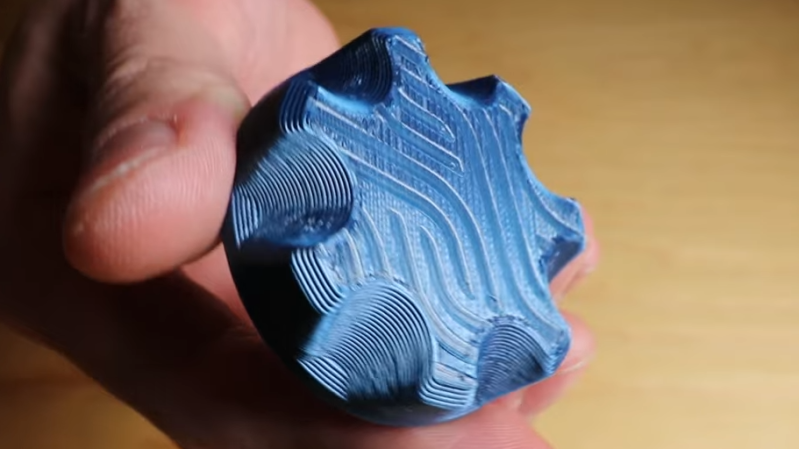
Selective Ironing Adds Designs To 3D Prints
While working on a project that involved super-thin prints, [Julius Curt] came up with selective ironing, a way to put designs on the top surface of a print without adding any height.
For those unfamiliar, ironing is a technique in filament-based 3D printing that uses the extruder to smooth out top surfaces after printing them. The hot nozzle makes additional passes across a top surface, extruding a tiny amount in the process, which smooths out imperfections and leaves a much cleaner surface. Selective ironing is nearly the same process, but applied only in a certain pattern instead of across an entire surface.
Selective Ironing can create patterns by defining the design in CAD, and using a post-processing script.
While conceptually simple, actually making it work was harder than expected. [Julius] settled on using a mixture of computer-aided design (CAD) work to define the pattern, combined with a post-processing script. More specifically, one models the desired pattern into the object in CAD as a one-layer-tall feature. The script then removes that layer from the model while applying the modified ironing pattern in its place. In this way, one can define the pattern in CAD without actually adding any height to the printed object. You can see it in action in the video, embedded below.We’ve seen some interesting experiments in ironing 3D prints, including non-planar ironing and doing away with the ironing setting altogether by carefully tuning slicer settings so it is not needed. Selective Ironing is another creative angle, and we can imagine it being used to embed a logo or part number as easily as a pattern.
Selective Ironing is still experimental, but if you find yourself intrigued and would like to give it a try head over to the GitHub repository where you’ll find the script as well as examples to try out.
-
@kenobit siiii!
-
E poi ci domandiamo perché l'ascensore sociale in Italia è bloccato. Figli di medici, avvocati e architetti: i nuovi posti letto negli studentati sono “riservati” https://www.avvenire.it/attualita/figli-di-medici-avvocati-e-architetti-i-nuovi-posti-letto-negli-studentati-sono-riservati_105620
-
@kenobit Bellissimo, assolutamente sì