Tremate gente, egli sta arrivando
Uncategorized
7
Posts
3
Posters
26
Views

-
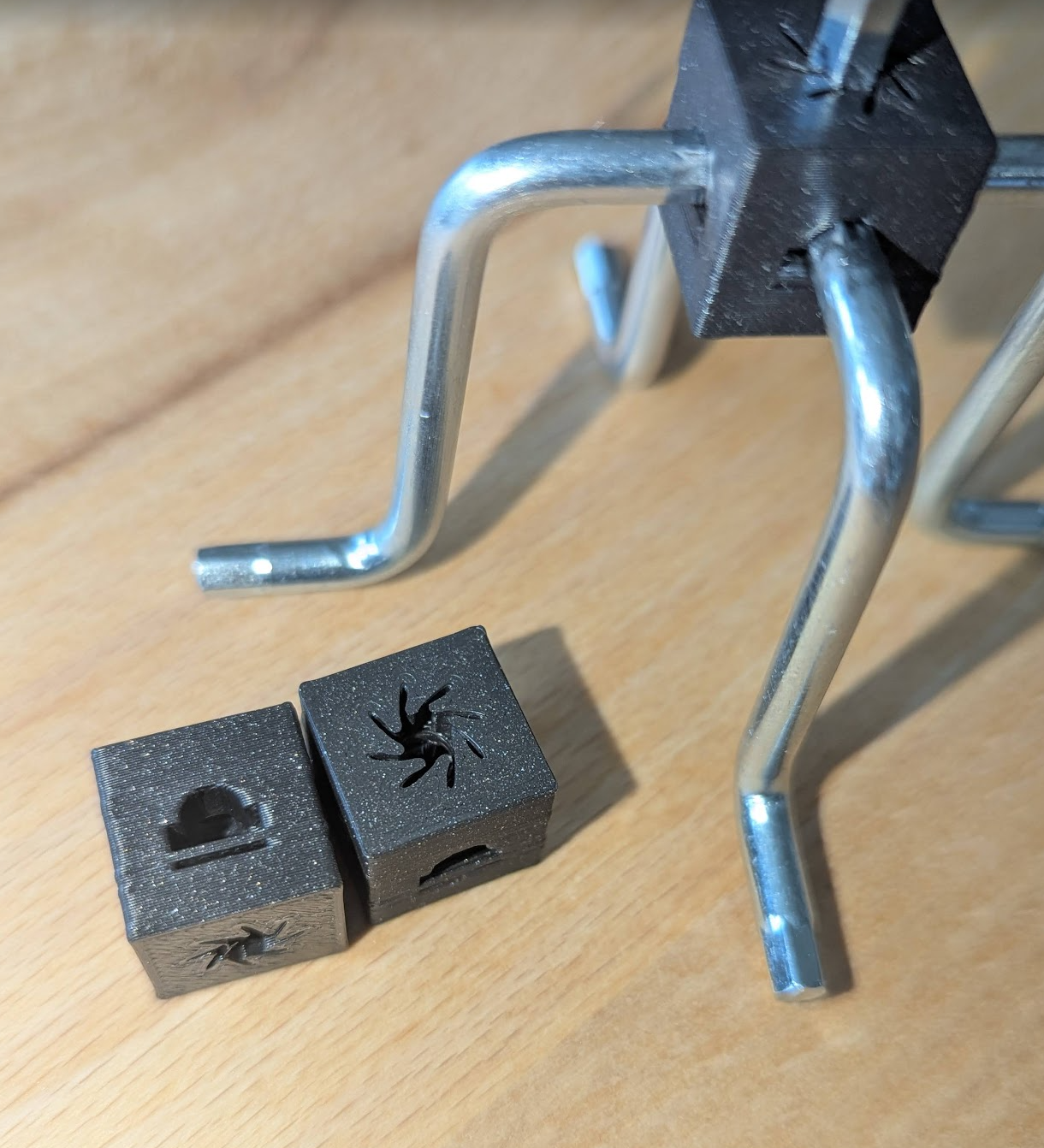
Tremate gente, egli sta arrivando.
Gloria all'immortale dio dei grandi antichi.
Giunge a noi come predetto nel Necronomicon.
Pentitevi peccatori
#Stampa3d
#3dprinting
#Cthulhu
#Mastocartolaio
#EoraToccaDipingerlo -
Tremate gente, egli sta arrivando.
Gloria all'immortale dio dei grandi antichi.
Giunge a noi come predetto nel Necronomicon.
Pentitevi peccatori
#Stampa3d
#3dprinting
#Cthulhu
#Mastocartolaio
#EoraToccaDipingerlo@Yaku so che dirlo non mi salverà ma è bellissimo
-
@Yaku so che dirlo non mi salverà ma è bellissimo
@sans_serif_girl AAAAHHHH così insulti sua bruttezza e sua malvagità. Sarai punitə con terribile scempio e degradazione, la tua anima sarà divorata dal teribbile mostroh!!!
-
@sans_serif_girl AAAAHHHH così insulti sua bruttezza e sua malvagità. Sarai punitə con terribile scempio e degradazione, la tua anima sarà divorata dal teribbile mostroh!!!
@Yaku sarebbe successo comunque 💀
-
@Yaku sarebbe successo comunque 💀
-
 undefined oblomov@sociale.network shared this topic on
 undefined lasolitalaura_@sociale.network shared this topic on
-
Tremate gente, egli sta arrivando.
Gloria all'immortale dio dei grandi antichi.
Giunge a noi come predetto nel Necronomicon.
Pentitevi peccatori
#Stampa3d
#3dprinting
#Cthulhu
#Mastocartolaio
#EoraToccaDipingerloEcco il risultato finale.
Sua pucciosità il demone del male
-
@Yaku @sans_serif_girl ciò che fa la differenza è convincerlo a divorarti per primo




Gli ultimi otto messaggi ricevuti dalla Federazione
-
Se vince er NO nun me dimetto!
È na minaccia! 😡💢
-
* The foundation of your project is a detailed plan and buying the right materials. I couldn't find normal plywood and being lazy led me to buy veneer plywood instead.
* And by everything holy, if you don't feel 100% sure about trim routing, don't risk it! A hand plane is always safer. Otherwise you'll end up with a wobbly edge.
-
The #mistral people keep doing cool open stuff. Among the ai labs, certainly the one I root for.
I hope they can be profitable
-
-
Lessons learned:
* Measure twice, cut once means much more. Compare your measurements, make sure you measure the right board on the right axis.
* Assemble first BEFORE gluing so you compare all the measurements and angles.
* It's easier to wait one week to repair one frame than wasting another month redoing all.
* Clamp first, wait for the glue to dry, THEN pocket screw.
* ALWAYS cover your edges with tape before gluing.
* Stain before gluing, too! It's safer.
-
Poor Yorik. I knew him, Horatio. 💀👷
-
I ruined a month-long project by screwing up the staining. Turns out the old approach of sanding where you got glue squeeze-out will NOT work on veneer plywood because the veneer is very thin. Also, veneer plywood has its own glue layer very close to the surface, so over sanding will expose the glue layer which CANNOT PHYSICALLY be stained.
Anyway, I made too many mistakes this project (mis-measuring, unsquaring) so I'll have to practically start over.
-
A Voltage Regulator Before Electronics
Did you ever wonder how the mechanical voltage regulator — that big black box wired up to the generator on a car from the ’60s or before — worked? [Jonelsonster] has some answers.
For most people in 2026 an old car perhaps means one from the 20th century, now that vehicles from the 1990s and 2000s have become the beloved jalopies of sallow youths with a liking for older cars and a low budget. But even a 1990s vehicle is modern in terms of its technology, because a computer controls the show. It has electronic fuel injection (EFI), anti-lock braking system (ABS), closed loop emissions control, and the like.
Go back in time to the 1970s, and you’ll find minimal electronics in the average car. The ABS is gone, and the closest thing you might find to EFI is an electronic ignition where the points in the distributor have been replaced with a simple transistor. Perhaps an electronic voltage regulator on the alternator. Much earlier than that and everything was mechanical, be that the ignition, or that regulator.
The video below the break has a pair of units, it seems from 1940s tractors. They would have had a DC generator, a spinning coil with a commutator and brushes, in a magnetic field provided by another coil. These things weren’t particularly powerful by today’s standards and sometimes their charging could be a little lackluster, but they did work. We get to see how, as he lifts the lid off to reveal what look like a set of relays.
We’re shown the functions of each of the three coils with the aid of a lab power supply; we have a reverse current relay that disconnects the generator if the battery tries to power it, an over-current relay that disconnects the field coil if the current is too high, and an over-voltage relay that does the same for voltage. The regulating comes down to the magnetic characteristics, and while it’s crude, it does the job.
We remember European devices with two coils and no field terminal, but the principle is the same. There is never a dull moment when you own an all mechanical car.