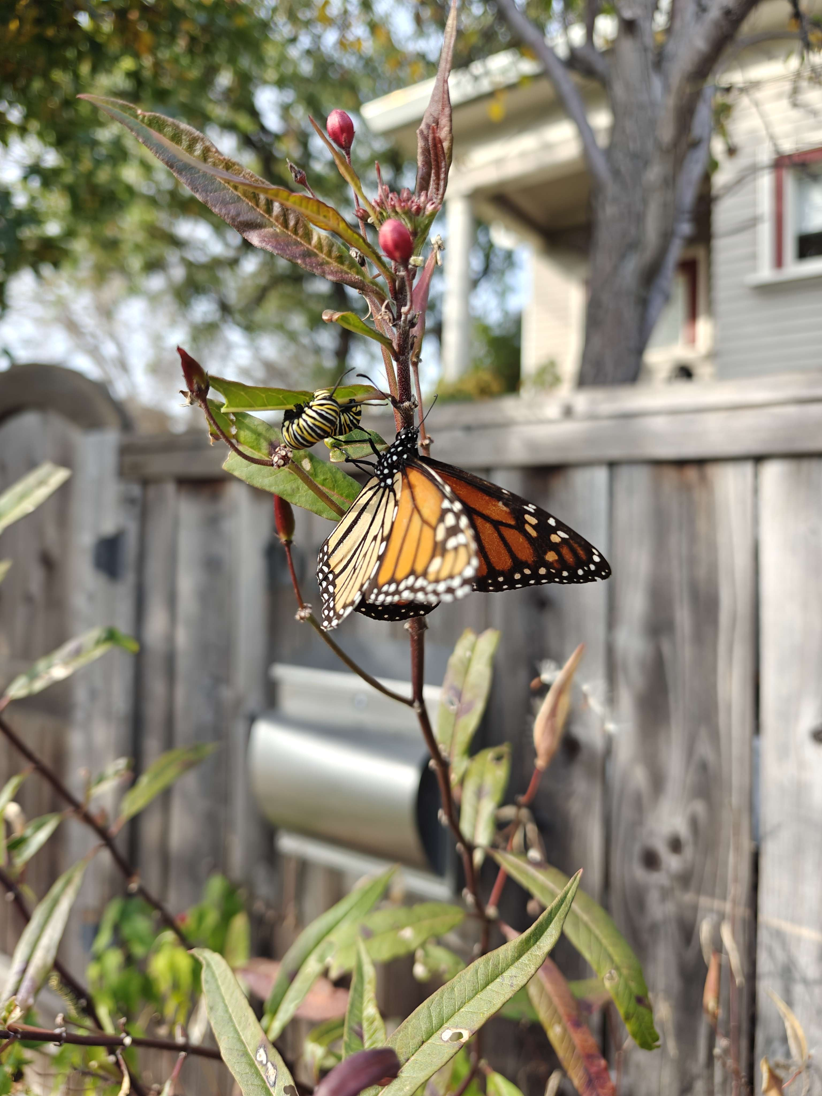
Hey, Fedi. I have a favour to ask you.
Uncategorized
232
Posts
131
Posters
5
Views
-
I am so glad I already knew this, because @mossesandbees taught me at the #39c3 🙂
@inj4n @ShaulaEvans guess I’m always excited to tell people about the coolest bugs ever! (Although I love them all :3)
-
@inj4n @ShaulaEvans guess I’m always excited to tell people about the coolest bugs ever! (Although I love them all :3)
Well, as we have started: What actually is a bug? And how to I distinguish it, let's say, from a fly?
-
Hey, Fedi. I have a favour to ask you. Help me help a friend. (Not financial!)
I have a friend who is all about cool bug facts. They're going through an intense patch in their life, so I would like to send them some bug facts to cheer them up. But this is really their thing, so basic search engine results aren't going to new to them.
If there is a cool bug fact that you genuinely love yourself, could you tell me? I'll save them to share with my friend over time.
@ShaulaEvans
Not probably what you're asking for, but:"Given enough eyeballs, all bugs are shallow."
-- Eric S. Raymond (Linus's law)
-
@ShaulaEvans the UK giant willow aphid is the UK's biggest aphid, entirely female and reproduces by parthenogenesis and lives on willow trees in the spring and summer but we still have no idea where they go in winter.
@afewbugs @ShaulaEvans that's a fun one.
Most aphids are unusual in reproducing by both parthenogenesis leading to live births *and* sexual reproduction with egg-laying. Eggs is how they typically overwinter. So clearly these giant willow aphids are especially unusual! -
Hey, Fedi. I have a favour to ask you. Help me help a friend. (Not financial!)
I have a friend who is all about cool bug facts. They're going through an intense patch in their life, so I would like to send them some bug facts to cheer them up. But this is really their thing, so basic search engine results aren't going to new to them.
If there is a cool bug fact that you genuinely love yourself, could you tell me? I'll save them to share with my friend over time.
@ShaulaEvans Maybe not as cool as some of the other responses you're getting but one bug I genuinely love is the cinnabar moth.
They lay their eggs on the ragwort plant, which then turn into really beautiful stripy caterpillars. The caterpillars can completely destroy the foliage of a whole plant.
Many people consider ragwort to be a weed (it can be toxic to horses) and pull it up, but I always let any in my garden grow.
-
Hey, Fedi. I have a favour to ask you. Help me help a friend. (Not financial!)
I have a friend who is all about cool bug facts. They're going through an intense patch in their life, so I would like to send them some bug facts to cheer them up. But this is really their thing, so basic search engine results aren't going to new to them.
If there is a cool bug fact that you genuinely love yourself, could you tell me? I'll save them to share with my friend over time.
@ShaulaEvans There's a type of caddisfly that lays eggs in starfish. https://en.wikipedia.org/wiki/Philanisus_plebeius
-
Hey, Fedi. I have a favour to ask you. Help me help a friend. (Not financial!)
I have a friend who is all about cool bug facts. They're going through an intense patch in their life, so I would like to send them some bug facts to cheer them up. But this is really their thing, so basic search engine results aren't going to new to them.
If there is a cool bug fact that you genuinely love yourself, could you tell me? I'll save them to share with my friend over time.
-
Hey, Fedi. I have a favour to ask you. Help me help a friend. (Not financial!)
I have a friend who is all about cool bug facts. They're going through an intense patch in their life, so I would like to send them some bug facts to cheer them up. But this is really their thing, so basic search engine results aren't going to new to them.
If there is a cool bug fact that you genuinely love yourself, could you tell me? I'll save them to share with my friend over time.
@ShaulaEvans Do "underwater bugs" count? If so: The invasive crabs in Europe know how to cut hooks off fishing lines. They also know how to remove the hooks from their bodies if they get caught. They chop the line, then use their claws to carefully remove the hook from their bodies. That means they feel the hook, know that the line is an issue but even cooler: they know that lines with hooks hanging into the ocean are potential dangers, having made the connection. Cool!
-
Hey, Fedi. I have a favour to ask you. Help me help a friend. (Not financial!)
I have a friend who is all about cool bug facts. They're going through an intense patch in their life, so I would like to send them some bug facts to cheer them up. But this is really their thing, so basic search engine results aren't going to new to them.
If there is a cool bug fact that you genuinely love yourself, could you tell me? I'll save them to share with my friend over time.
@ShaulaEvans My favorite bug fact is that earwigs display maternal behavior. :)
-
Well, as we have started: What actually is a bug? And how to I distinguish it, let's say, from a fly?
@inj4n we often call every small arthropod a “bug”, but actually that’s not true. Because taxonomically there is an order of insects that is commonly called true bugs, the order Hemiptera. Some groups that belong to Hemiptera are cicadas or shield bugs (Wanzen in German) for example.
To list the differences between “bugs” would be too much for this post, but when we stick with beetles and flies for example, we can say that beetles have two pairs of wings, of which one is hardened (elytra). Flies on the other hand have one pair of wings and a pair of reduced wings (halteres). This also distinguishes a fly from a bee, which has two pairs of wings.
(Of course, there are many more differences, but as I said, this would be too much to put in a post like this :D) -
Hey, Fedi. I have a favour to ask you. Help me help a friend. (Not financial!)
I have a friend who is all about cool bug facts. They're going through an intense patch in their life, so I would like to send them some bug facts to cheer them up. But this is really their thing, so basic search engine results aren't going to new to them.
If there is a cool bug fact that you genuinely love yourself, could you tell me? I'll save them to share with my friend over time.
This isn't a bug fact so much as a bug warm feeling.
Dog day cicadas at the end of a Summer day: https://youtube.com/shorts/mD6h6k2eal4?si=tR_aZ0xqKPc6lNcr
-
@ShaulaEvans the UK giant willow aphid is the UK's biggest aphid, entirely female and reproduces by parthenogenesis and lives on willow trees in the spring and summer but we still have no idea where they go in winter.
@afewbugs @ShaulaEvans On my houseplants.
-
Hey, Fedi. I have a favour to ask you. Help me help a friend. (Not financial!)
I have a friend who is all about cool bug facts. They're going through an intense patch in their life, so I would like to send them some bug facts to cheer them up. But this is really their thing, so basic search engine results aren't going to new to them.
If there is a cool bug fact that you genuinely love yourself, could you tell me? I'll save them to share with my friend over time.
@ShaulaEvans not really on topic/what you asked for, and since they have an interest in the subject they might well already know the youtube channel. but i recently discovered Privileged Bug Facts and have been loving it
might also be a decent source of facts for yourself to give out perhaps -
This isn't a bug fact so much as a bug warm feeling.
Dog day cicadas at the end of a Summer day: https://youtube.com/shorts/mD6h6k2eal4?si=tR_aZ0xqKPc6lNcr
-
Hey, Fedi. I have a favour to ask you. Help me help a friend. (Not financial!)
I have a friend who is all about cool bug facts. They're going through an intense patch in their life, so I would like to send them some bug facts to cheer them up. But this is really their thing, so basic search engine results aren't going to new to them.
If there is a cool bug fact that you genuinely love yourself, could you tell me? I'll save them to share with my friend over time.
-
@forse Amazing!
@ShaulaEvans @forse And they use their eyes like antlers to fight off other males. They rest on tree roots that hang over streams, so they fight one-on-one battles on these thin roots to control access to mates.
-
Hey, Fedi. I have a favour to ask you. Help me help a friend. (Not financial!)
I have a friend who is all about cool bug facts. They're going through an intense patch in their life, so I would like to send them some bug facts to cheer them up. But this is really their thing, so basic search engine results aren't going to new to them.
If there is a cool bug fact that you genuinely love yourself, could you tell me? I'll save them to share with my friend over time.
@ShaulaEvans do spiders and spider like critters count as bugs? :)
-
@stevegis_ssg @ShaulaEvans Something I've wondered for ages now is why do only certain insects buzz? Housefly's can be annoyingly loud whereas butterflies don't make a sound.
@KaraLG84 @stevegis_ssg @ShaulaEvans It has something to do with the frequency of the wing beats. Flies and bees move their wings very rapidly to fly, while butterflies flaps slower and tend to glide more. Some moths like hawk moths also have rapid wing beats, so they buzz quite a bit.
-
Hey, Fedi. I have a favour to ask you. Help me help a friend. (Not financial!)
I have a friend who is all about cool bug facts. They're going through an intense patch in their life, so I would like to send them some bug facts to cheer them up. But this is really their thing, so basic search engine results aren't going to new to them.
If there is a cool bug fact that you genuinely love yourself, could you tell me? I'll save them to share with my friend over time.
@ShaulaEvans I read recently on here that if you put red ants and black ants in a jar they will co-exist quite happily. But if you shake the jar, the black ants will blame the red ants and attack and kill them. Meanwhile the red ants blame the black ants and attack and kill them.
-
there is the gall wasp, a parasite of oak trees
it manipulates the oak to make galls, growths that its larvae eat and grow in
but there is a parasite, of this parasite
tiny and trippy looking
its larvae consume the gall wasp larvae, and when it is ready to leave, it manipulates its host to chew almost out of the gall, just the tip of its head exposed, then the parasite of the parasite chews through the head, and emerges
the crypt-keeper wasp
ghoulish
@benroyce @ShaulaEvans
"Big fleas have lesser fleas
Upon their backs to bite'em
Lesser fleas have lesser fleas
And so ad infinitem"Sorry I've forgotten the author

























Gli ultimi otto messaggi ricevuti dalla Federazione
-
you ever go wow i sucked at programming last year (but not anymore!) while fixing bugs
-
@liaizon https://the-federation.info/ disagrees but still shows a clear reprise since the lowest point past summer. Fingers crossed.
-
@aethernaut if it makes you feel any better, it does have a positive impact on my life when any of the comics I follow publishes am update, and this includes yours 8-)
-
@Elizafox (TBI being?)
-
@soapdog I would really like to give it a try, but my understanding is that it's not yet possible too manager s single account from multiple devices?
-
@liberotoncello
a giudicare da ciò che è successo a Valmontone, adesso si comincia già dalla tenera età.
https://www.osservatoriorepressione.info/a-valmontone-scuola-come-zona-occupata-il-modello-ice-e-israele-entra-nei-parchi-giochi/
-
Kinda awesome
https://www.belganewsagency.eu/passengers-to-start-riding-de-lijns-self-driving-buses-in-leuven