Hey, Fedi. I have a favour to ask you.
Uncategorized
232
Posts
131
Posters
5
Views
-
@stevegis_ssg @ShaulaEvans Something I've wondered for ages now is why do only certain insects buzz? Housefly's can be annoyingly loud whereas butterflies don't make a sound.
@KaraLG84 @stevegis_ssg @ShaulaEvans It has something to do with the frequency of the wing beats. Flies and bees move their wings very rapidly to fly, while butterflies flaps slower and tend to glide more. Some moths like hawk moths also have rapid wing beats, so they buzz quite a bit.
-
Hey, Fedi. I have a favour to ask you. Help me help a friend. (Not financial!)
I have a friend who is all about cool bug facts. They're going through an intense patch in their life, so I would like to send them some bug facts to cheer them up. But this is really their thing, so basic search engine results aren't going to new to them.
If there is a cool bug fact that you genuinely love yourself, could you tell me? I'll save them to share with my friend over time.
@ShaulaEvans I read recently on here that if you put red ants and black ants in a jar they will co-exist quite happily. But if you shake the jar, the black ants will blame the red ants and attack and kill them. Meanwhile the red ants blame the black ants and attack and kill them.
-
there is the gall wasp, a parasite of oak trees
it manipulates the oak to make galls, growths that its larvae eat and grow in
but there is a parasite, of this parasite
tiny and trippy looking
its larvae consume the gall wasp larvae, and when it is ready to leave, it manipulates its host to chew almost out of the gall, just the tip of its head exposed, then the parasite of the parasite chews through the head, and emerges
the crypt-keeper wasp
ghoulish
@benroyce @ShaulaEvans
"Big fleas have lesser fleas
Upon their backs to bite'em
Lesser fleas have lesser fleas
And so ad infinitem"Sorry I've forgotten the author
-
@ShaulaEvans woodlice/pillbugs are crustaceans.
They are more closely related to lobsters than anything else you might find in the garden. This is where they get their segmented exoskeleton and 14 legs.@jetlagjen @ShaulaEvans When I was a kid I knew these as "Mr Pills".
-
@ShaulaEvans Maybe not as cool as some of the other responses you're getting but one bug I genuinely love is the cinnabar moth.
They lay their eggs on the ragwort plant, which then turn into really beautiful stripy caterpillars. The caterpillars can completely destroy the foliage of a whole plant.
Many people consider ragwort to be a weed (it can be toxic to horses) and pull it up, but I always let any in my garden grow.
@statsguy @ShaulaEvans The moths are pretty too
-
Hey, Fedi. I have a favour to ask you. Help me help a friend. (Not financial!)
I have a friend who is all about cool bug facts. They're going through an intense patch in their life, so I would like to send them some bug facts to cheer them up. But this is really their thing, so basic search engine results aren't going to new to them.
If there is a cool bug fact that you genuinely love yourself, could you tell me? I'll save them to share with my friend over time.
@ShaulaEvans Not all dung beetles roll dung balls, in fact most species don't. A majority of dung beetles either live inside or under dung, collecting dung in tunnels or chambers. They shape the dung there into balls or sausage shapes, and lay a single egg inside. The developing larva is sometimes tended to by one or both parents. All its larval and pupal development happens in the nest, and it emerges as an adult.
-
Hej @lavievagabonde
I guess this is a call for #CoolBugFacts that you could easily help with. A friend of @ShaulaEvans could be cheered up by telling anything about bugs.
The only thing I could contribute that the term "bug" in computer science is based on an actual bug that had been found by Grace Hopper in the circuitry of one of the first computers ever. But you probably knew that. You'll find a picture on "Bug (engineering)" at wikipedia.
Not a very unknown bug, but the one I knew.
@inj4n @lavievagabonde @ShaulaEvans Grace Hopper?! That’s hilarious! 😄
-
@ShaulaEvans Not all dung beetles roll dung balls, in fact most species don't. A majority of dung beetles either live inside or under dung, collecting dung in tunnels or chambers. They shape the dung there into balls or sausage shapes, and lay a single egg inside. The developing larva is sometimes tended to by one or both parents. All its larval and pupal development happens in the nest, and it emerges as an adult.
@ShaulaEvans The ecologist Ilka Hanski once theorised that pre-pyramid Pharaoh tombs, called mastabah, are designed to resemble the nests of tunneling dung beetles. Which were a symbol of rebirth.
The tomb lies in a tunnel chamber, under a rectangular tomb structure. Hanski argued that the structure resembled the dung beetle's nest, tunnel and a dung pat.
-
Hey, Fedi. I have a favour to ask you. Help me help a friend. (Not financial!)
I have a friend who is all about cool bug facts. They're going through an intense patch in their life, so I would like to send them some bug facts to cheer them up. But this is really their thing, so basic search engine results aren't going to new to them.
If there is a cool bug fact that you genuinely love yourself, could you tell me? I'll save them to share with my friend over time.
@ShaulaEvans Bumble bees live in burrows
-
Hey, Fedi. I have a favour to ask you. Help me help a friend. (Not financial!)
I have a friend who is all about cool bug facts. They're going through an intense patch in their life, so I would like to send them some bug facts to cheer them up. But this is really their thing, so basic search engine results aren't going to new to them.
If there is a cool bug fact that you genuinely love yourself, could you tell me? I'll save them to share with my friend over time.
@ShaulaEvans I have some good bug stories - not so hot on facts.
Eg When I worked at Trading Standards Dept. a member of the public brought in a brand new cricket bat complaining about a noise coming from it. The bat was sealed in a plastic bag and sat next to my desk for several days before being shipped to a Laboratory for testing.
The result was a 7+cm grub from Pakistan that had tunnelled most of the inside of the cricket bat away! -
Hey, Fedi. I have a favour to ask you. Help me help a friend. (Not financial!)
I have a friend who is all about cool bug facts. They're going through an intense patch in their life, so I would like to send them some bug facts to cheer them up. But this is really their thing, so basic search engine results aren't going to new to them.
If there is a cool bug fact that you genuinely love yourself, could you tell me? I'll save them to share with my friend over time.
@ShaulaEvans And another one: an impressive example of moth long-distance navigation capability, and a lovely piece of research to track and analyze their flight strategy.
The navigation strategies of migrating death’s-head hawkmoths rival those of birds.
-
Hey, Fedi. I have a favour to ask you. Help me help a friend. (Not financial!)
I have a friend who is all about cool bug facts. They're going through an intense patch in their life, so I would like to send them some bug facts to cheer them up. But this is really their thing, so basic search engine results aren't going to new to them.
If there is a cool bug fact that you genuinely love yourself, could you tell me? I'll save them to share with my friend over time.
@ShaulaEvans The jellyfish Turritopsis dohrnii can reverse its aging process.
-
Hey, Fedi. I have a favour to ask you. Help me help a friend. (Not financial!)
I have a friend who is all about cool bug facts. They're going through an intense patch in their life, so I would like to send them some bug facts to cheer them up. But this is really their thing, so basic search engine results aren't going to new to them.
If there is a cool bug fact that you genuinely love yourself, could you tell me? I'll save them to share with my friend over time.
@ShaulaEvans there are lady bugs in the ocean. They live in and around tunicates etc.
-
@afewbugs @ShaulaEvans that's a fun one.
Most aphids are unusual in reproducing by both parthenogenesis leading to live births *and* sexual reproduction with egg-laying. Eggs is how they typically overwinter. So clearly these giant willow aphids are especially unusual!@jetlagjen @afewbugs @ShaulaEvans I think aphids using parthenogenesis can also have "telescoping generations", i.e., they are born already pregnant.
-
@statsguy @ShaulaEvans The moths are pretty too
@annehargreaves @ShaulaEvans Yes they are! Sadly I don't have a photo of any.
-
Hey, Fedi. I have a favour to ask you. Help me help a friend. (Not financial!)
I have a friend who is all about cool bug facts. They're going through an intense patch in their life, so I would like to send them some bug facts to cheer them up. But this is really their thing, so basic search engine results aren't going to new to them.
If there is a cool bug fact that you genuinely love yourself, could you tell me? I'll save them to share with my friend over time.
@ShaulaEvans here's one I learned yesterday: earwigs are harmless creatures, and they have beautiful wings that fold in super tiny elytra. When they unfold they look like they belong to some kind of unreal cristal butterfly.
-
Hey, Fedi. I have a favour to ask you. Help me help a friend. (Not financial!)
I have a friend who is all about cool bug facts. They're going through an intense patch in their life, so I would like to send them some bug facts to cheer them up. But this is really their thing, so basic search engine results aren't going to new to them.
If there is a cool bug fact that you genuinely love yourself, could you tell me? I'll save them to share with my friend over time.
@ShaulaEvans Male bees (and wasps, and ants) are _haploid_ and do not have fathers. They are not just the only animals, but the only _eukaryotes_ to evolve reproduction that differs from the normal alternation of haploid/diploid generations. (Reproduction is usually very strongly evolutionarily conserved, for obvious reasons: if a mutation messes it up somehow, there's no chance for it to get sorted out again in future generations, because there won't _be_ any future generations.) So euphemising sex ed as "the birds and the bees" is unhelpful, as "the bees" are literally _the_ worst available model organism for human reproduction.
-
Hey, Fedi. I have a favour to ask you. Help me help a friend. (Not financial!)
I have a friend who is all about cool bug facts. They're going through an intense patch in their life, so I would like to send them some bug facts to cheer them up. But this is really their thing, so basic search engine results aren't going to new to them.
If there is a cool bug fact that you genuinely love yourself, could you tell me? I'll save them to share with my friend over time.
@ShaulaEvans okay, here are some fun/gross/terrifying bug facts about polycheate worms (which live in the ocean):
1. The Bobbitt Worm is a marine ambush predator that burrows in ocean sediment and then shoots out to grab prey with its mandibles, the force of which sometimes cuts prey in half. It grows up to 3 meters long in extreme cases, although it's only about 25 millimeters in diameter. At least one article I read mentioned toxic bristles, but I wasn't able to find a legitimate source for that and suspect it was sensationalization.
2. The Bearded Fireworm does have toxic bristles (as do other fireworms). They can cause a painful sting that lasts for hours. They're also quite beautiful.
3. The Palolo Worm spawns by growing tail segments filled with sperm or eggs, and then on a specific night tied to the lunar & solar cycles, releasing these segments to float to the surface, where they disintegrate into a frothy mass. They're apparently delicious fried in coconut oil.
In case you want to do your own deep dive (😉) on segmented ocean worms: https://en.wikipedia.org/wiki/Polychaete
-
Not strictly “bugs”, but if broader entomology is their thing…
CW: spiders
Jumping spiders are some of the most intelligent of all spiders, but sadly their lifespans are shorter than their less intelligent relatives. It is thought that it might be due to the energetic demands of not only jumping but their evolution in developing this intelligence.
Bold jumping spiders (Phidippus audax) are named because of how they will happily (and peacefully) investigate a human if the human offers out a hand or something to explore. Other species are usually more cautious. They also have absolutely stunning iridescent chelicerae. And the white marks on the upper side of some individuals’ abdomens can look like a happy face, like this: :D
These spiders can also be trained and learn quickly. This is probably due to their style of attacking prey by jumping being very risky, so they use all their eyes, each pair being adapted to take in different information like distance or movement, and calculate how, where and when to jump… and whether it is safe! Some of their prey species use Batesian mimicry - where a harmless species evolved to look like another species that has dangerous defences, without actually evolving the dangerous defences.
These spiders are adorable (this is coming from me, a lifelong arachnophobe), especially when they make hilariously bad errors in their jumps, or turn to look at you when you’re around and talk to them. They’re not always “bold” as their name suggests, but just curious, and can often be very cautious and even get scared by their prey!
Lucas the Spider is a cartoon spider based on jumping spiders and goes a long way to show the cuteness and the trials and tribulations of these smol but impressive spoods. 💚
@AnAutieAtUni @ShaulaEvans As it happens, I was pointing to a tiny, delicate green-and-white jumping spider (most likely Epeus sp.) on a wooden railing just a few hours ago, and before I finished saying "look at this spider", it had hopped up on my finger, cool as you like. And after several seconds, I tapped lightly on the railing, and it hopped off again. Lovely.
-
Hey, Fedi. I have a favour to ask you. Help me help a friend. (Not financial!)
I have a friend who is all about cool bug facts. They're going through an intense patch in their life, so I would like to send them some bug facts to cheer them up. But this is really their thing, so basic search engine results aren't going to new to them.
If there is a cool bug fact that you genuinely love yourself, could you tell me? I'll save them to share with my friend over time.
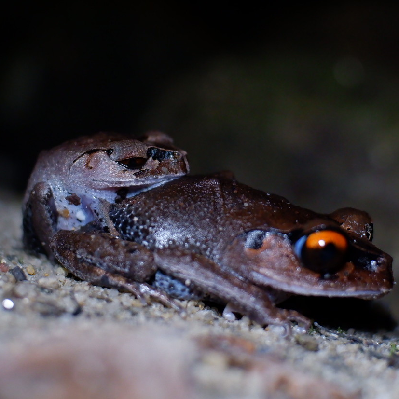
the cockchafer and the red-headed cockchafer exist



























Gli ultimi otto messaggi ricevuti dalla Federazione
-
you ever go wow i sucked at programming last year (but not anymore!) while fixing bugs
-
@liaizon https://the-federation.info/ disagrees but still shows a clear reprise since the lowest point past summer. Fingers crossed.
-
@aethernaut if it makes you feel any better, it does have a positive impact on my life when any of the comics I follow publishes am update, and this includes yours 8-)
-
@Elizafox (TBI being?)
-
@soapdog I would really like to give it a try, but my understanding is that it's not yet possible too manager s single account from multiple devices?
-
@liberotoncello
a giudicare da ciò che è successo a Valmontone, adesso si comincia già dalla tenera età.
https://www.osservatoriorepressione.info/a-valmontone-scuola-come-zona-occupata-il-modello-ice-e-israele-entra-nei-parchi-giochi/
-
Kinda awesome
https://www.belganewsagency.eu/passengers-to-start-riding-de-lijns-self-driving-buses-in-leuven