Hey, Fedi. I have a favour to ask you.
Uncategorized
232
Posts
131
Posters
912
Views
-
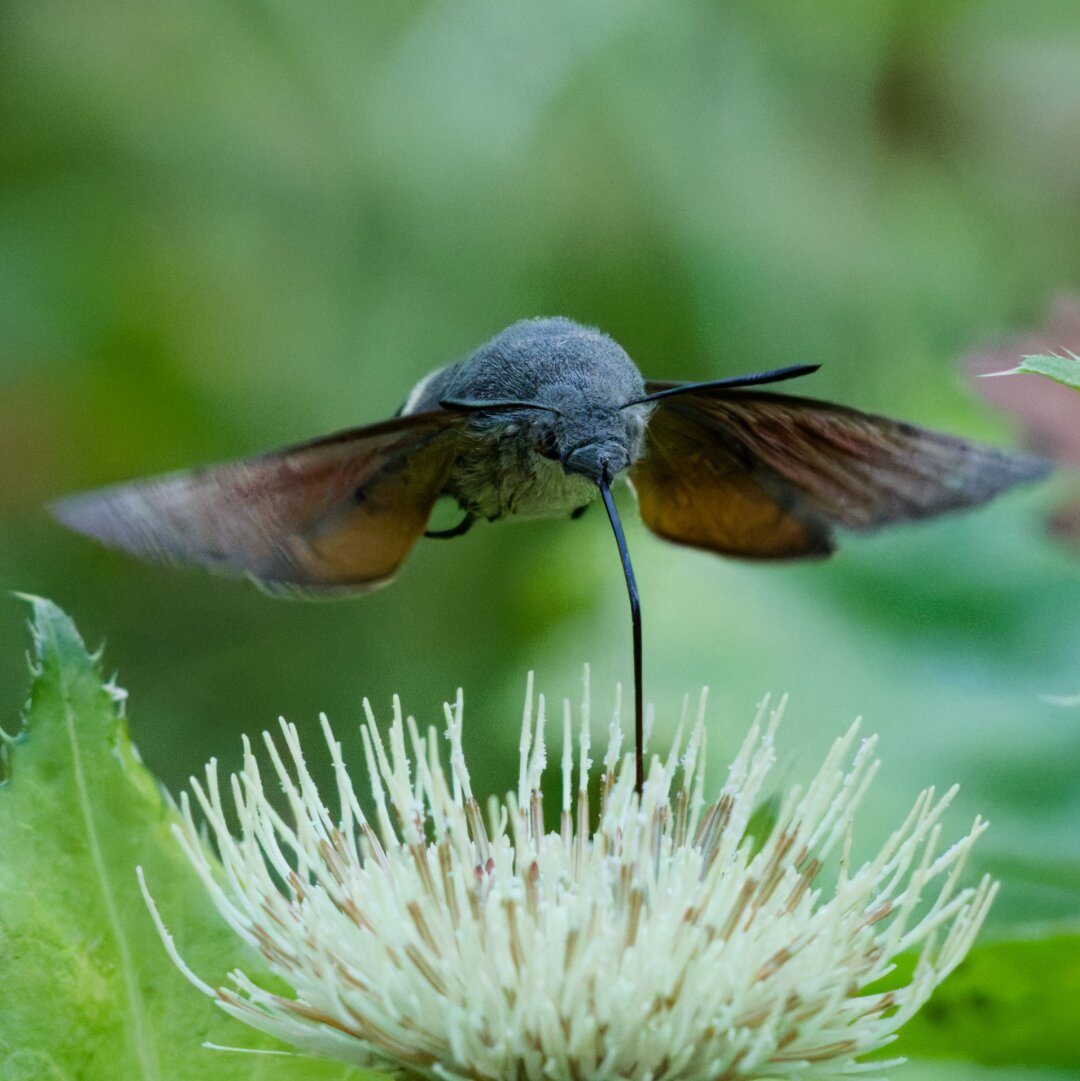
@statsguy @ShaulaEvans The moths are pretty too
@annehargreaves @ShaulaEvans Yes they are! Sadly I don't have a photo of any.
-
Hey, Fedi. I have a favour to ask you. Help me help a friend. (Not financial!)
I have a friend who is all about cool bug facts. They're going through an intense patch in their life, so I would like to send them some bug facts to cheer them up. But this is really their thing, so basic search engine results aren't going to new to them.
If there is a cool bug fact that you genuinely love yourself, could you tell me? I'll save them to share with my friend over time.
@ShaulaEvans here's one I learned yesterday: earwigs are harmless creatures, and they have beautiful wings that fold in super tiny elytra. When they unfold they look like they belong to some kind of unreal cristal butterfly.
-
Hey, Fedi. I have a favour to ask you. Help me help a friend. (Not financial!)
I have a friend who is all about cool bug facts. They're going through an intense patch in their life, so I would like to send them some bug facts to cheer them up. But this is really their thing, so basic search engine results aren't going to new to them.
If there is a cool bug fact that you genuinely love yourself, could you tell me? I'll save them to share with my friend over time.
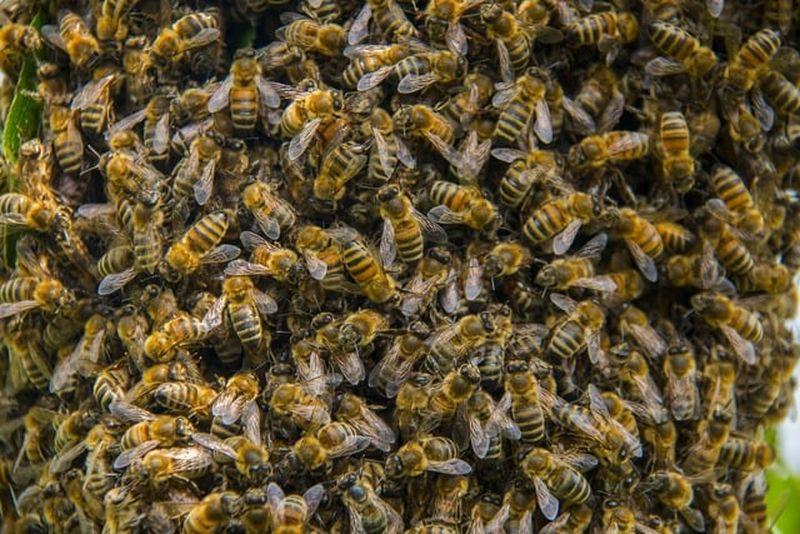
@ShaulaEvans Male bees (and wasps, and ants) are _haploid_ and do not have fathers. They are not just the only animals, but the only _eukaryotes_ to evolve reproduction that differs from the normal alternation of haploid/diploid generations. (Reproduction is usually very strongly evolutionarily conserved, for obvious reasons: if a mutation messes it up somehow, there's no chance for it to get sorted out again in future generations, because there won't _be_ any future generations.) So euphemising sex ed as "the birds and the bees" is unhelpful, as "the bees" are literally _the_ worst available model organism for human reproduction.
-
Hey, Fedi. I have a favour to ask you. Help me help a friend. (Not financial!)
I have a friend who is all about cool bug facts. They're going through an intense patch in their life, so I would like to send them some bug facts to cheer them up. But this is really their thing, so basic search engine results aren't going to new to them.
If there is a cool bug fact that you genuinely love yourself, could you tell me? I'll save them to share with my friend over time.
@ShaulaEvans okay, here are some fun/gross/terrifying bug facts about polycheate worms (which live in the ocean):
1. The Bobbitt Worm is a marine ambush predator that burrows in ocean sediment and then shoots out to grab prey with its mandibles, the force of which sometimes cuts prey in half. It grows up to 3 meters long in extreme cases, although it's only about 25 millimeters in diameter. At least one article I read mentioned toxic bristles, but I wasn't able to find a legitimate source for that and suspect it was sensationalization.
2. The Bearded Fireworm does have toxic bristles (as do other fireworms). They can cause a painful sting that lasts for hours. They're also quite beautiful.
3. The Palolo Worm spawns by growing tail segments filled with sperm or eggs, and then on a specific night tied to the lunar & solar cycles, releasing these segments to float to the surface, where they disintegrate into a frothy mass. They're apparently delicious fried in coconut oil.
In case you want to do your own deep dive (😉) on segmented ocean worms: https://en.wikipedia.org/wiki/Polychaete
-
Not strictly “bugs”, but if broader entomology is their thing…
CW: spiders
Jumping spiders are some of the most intelligent of all spiders, but sadly their lifespans are shorter than their less intelligent relatives. It is thought that it might be due to the energetic demands of not only jumping but their evolution in developing this intelligence.
Bold jumping spiders (Phidippus audax) are named because of how they will happily (and peacefully) investigate a human if the human offers out a hand or something to explore. Other species are usually more cautious. They also have absolutely stunning iridescent chelicerae. And the white marks on the upper side of some individuals’ abdomens can look like a happy face, like this: :D
These spiders can also be trained and learn quickly. This is probably due to their style of attacking prey by jumping being very risky, so they use all their eyes, each pair being adapted to take in different information like distance or movement, and calculate how, where and when to jump… and whether it is safe! Some of their prey species use Batesian mimicry - where a harmless species evolved to look like another species that has dangerous defences, without actually evolving the dangerous defences.
These spiders are adorable (this is coming from me, a lifelong arachnophobe), especially when they make hilariously bad errors in their jumps, or turn to look at you when you’re around and talk to them. They’re not always “bold” as their name suggests, but just curious, and can often be very cautious and even get scared by their prey!
Lucas the Spider is a cartoon spider based on jumping spiders and goes a long way to show the cuteness and the trials and tribulations of these smol but impressive spoods. 💚
@AnAutieAtUni @ShaulaEvans As it happens, I was pointing to a tiny, delicate green-and-white jumping spider (most likely Epeus sp.) on a wooden railing just a few hours ago, and before I finished saying "look at this spider", it had hopped up on my finger, cool as you like. And after several seconds, I tapped lightly on the railing, and it hopped off again. Lovely.
-
Hey, Fedi. I have a favour to ask you. Help me help a friend. (Not financial!)
I have a friend who is all about cool bug facts. They're going through an intense patch in their life, so I would like to send them some bug facts to cheer them up. But this is really their thing, so basic search engine results aren't going to new to them.
If there is a cool bug fact that you genuinely love yourself, could you tell me? I'll save them to share with my friend over time.
the cockchafer and the red-headed cockchafer exist
-
Hey, Fedi. I have a favour to ask you. Help me help a friend. (Not financial!)
I have a friend who is all about cool bug facts. They're going through an intense patch in their life, so I would like to send them some bug facts to cheer them up. But this is really their thing, so basic search engine results aren't going to new to them.
If there is a cool bug fact that you genuinely love yourself, could you tell me? I'll save them to share with my friend over time.
@ShaulaEvans oh, oh I have two:
isopods are one of my favourite creatures, but I can’t tell you about them because they’re not bugs - they’re actually crustaceans!
Jumping spiders are the only spiders that can look without turning their heads, but unlike most eyes which look left and right and the retinas stay put, the jumping spider has fixed eye lenses, while the retinas move around behind them!
-
@jetlagjen @afewbugs @ShaulaEvans I think aphids using parthenogenesis can also have "telescoping generations", i.e., they are born already pregnant.
-
Hey, Fedi. I have a favour to ask you. Help me help a friend. (Not financial!)
I have a friend who is all about cool bug facts. They're going through an intense patch in their life, so I would like to send them some bug facts to cheer them up. But this is really their thing, so basic search engine results aren't going to new to them.
If there is a cool bug fact that you genuinely love yourself, could you tell me? I'll save them to share with my friend over time.
@ShaulaEvans
Sign them up to https://mastodon.ie/@thebeeguy(I assume you're not talking about software ;))
-
@AnAutieAtUni @ShaulaEvans As it happens, I was pointing to a tiny, delicate green-and-white jumping spider (most likely Epeus sp.) on a wooden railing just a few hours ago, and before I finished saying "look at this spider", it had hopped up on my finger, cool as you like. And after several seconds, I tapped lightly on the railing, and it hopped off again. Lovely.
@AnAutieAtUni @ShaulaEvans Oh, and this is a jumping spider too. It might not exactly be a "fun fact", but still…
-
@ShaulaEvans requesting the help of ant aficionado @futurebird
-
@afewbugs @ghouston @ShaulaEvans they really are amazing little things!
Ants farm them on some of my fruit bushes, so at the right time of year I get to see babies, adults, and winged adults up close. It's fascinating to watch how the ants care for their herd. -
Hey, Fedi. I have a favour to ask you. Help me help a friend. (Not financial!)
I have a friend who is all about cool bug facts. They're going through an intense patch in their life, so I would like to send them some bug facts to cheer them up. But this is really their thing, so basic search engine results aren't going to new to them.
If there is a cool bug fact that you genuinely love yourself, could you tell me? I'll save them to share with my friend over time.
@ShaulaEvans The first computer bug was an actual bug
-
Hey, Fedi. I have a favour to ask you. Help me help a friend. (Not financial!)
I have a friend who is all about cool bug facts. They're going through an intense patch in their life, so I would like to send them some bug facts to cheer them up. But this is really their thing, so basic search engine results aren't going to new to them.
If there is a cool bug fact that you genuinely love yourself, could you tell me? I'll save them to share with my friend over time.
@ShaulaEvans I mostly love other kinds of animals, but this one is really interesting for me as a mathematician 🙂
https://en.wikipedia.org/wiki/Periodical_cicadas#Predator_satiation_survival_strategy
-
Hey, Fedi. I have a favour to ask you. Help me help a friend. (Not financial!)
I have a friend who is all about cool bug facts. They're going through an intense patch in their life, so I would like to send them some bug facts to cheer them up. But this is really their thing, so basic search engine results aren't going to new to them.
If there is a cool bug fact that you genuinely love yourself, could you tell me? I'll save them to share with my friend over time.
@ShaulaEvans Another bug related fact is New Zealand's competition to be elected as #NZBugOfTheYear!
Voting is done online so probably determined by humans but I guess New Zealand Entomological Society are open to any votes that meet their criteria.
🗳️ 🦋 🐛 🐜 🐞 🐝 🪲 🪰 🪳 🦗
https://bugoftheyear.ento.org.nz/2026-bug-of-the-year-nominees/ -
Hey, Fedi. I have a favour to ask you. Help me help a friend. (Not financial!)
I have a friend who is all about cool bug facts. They're going through an intense patch in their life, so I would like to send them some bug facts to cheer them up. But this is really their thing, so basic search engine results aren't going to new to them.
If there is a cool bug fact that you genuinely love yourself, could you tell me? I'll save them to share with my friend over time.
@ShaulaEvans BUG FACT: at least a few times a year I see a cool beetle, go "wow!!! Cool beetle!!!", grab it and let it walk all over my hands and arms for several minutes, and then realize I forgot what blister beetles look like yet again
-
Hey, Fedi. I have a favour to ask you. Help me help a friend. (Not financial!)
I have a friend who is all about cool bug facts. They're going through an intense patch in their life, so I would like to send them some bug facts to cheer them up. But this is really their thing, so basic search engine results aren't going to new to them.
If there is a cool bug fact that you genuinely love yourself, could you tell me? I'll save them to share with my friend over time.
@ShaulaEvans
Some leaf beetles produce toxins which they can secrete through glands on their back....other leaf beetles feed on poisonous plants, "collect" the toxins and secrete them (sometimes chemically modified).
... and *some* leaf beetle larvae keep the toxins of the plants inside their digestive tract making their feces toxic. Their anus is at a position where they shit on their own back producing a protective "fecal mask". No shit.
-
@ShaulaEvans The Scorpion fly has a tail that looks exactly like the stinger of a scorpion but there is no sting in this tail - only two claspers for use when mating.
@StevenLawsonPhotography @ShaulaEvans Male scorpion flies offer a piece of prey (smaller insects) to the females. The females feed on it while mating takes place.
-
@emmadavidson @ShaulaEvans oh wow we also have a blue butterfly symbiotic with ants in the UK! It never occurred to me that this sort of relationship could be happening with species across the world! https://www.dorsetbutterflies.com/species/chalkhill-blue/
-
I'm not sure if millipedes count, but if so:
In Japan there exists a species that lives in 8-year cycles, similar to cicadas. And when all the milipedes emerge at once they even stop trains.




















Gli ultimi otto messaggi ricevuti dalla Federazione
-
@GeorgeSfiladini ok, invitato nelle stanze italiane, ora puoi farti un giro, in alcune stanze nonvedrailo storico dei messaggi per motivi di privacy :) @Paoblog @devol @internet
-
Arcade Fire – Everything Now (2017)
Tutto adesso. Potrebbe esser il motto di una pubblicità di Netflix oppure la didascalia per quest’era frenetica del web 2.0, segnata dai social e dall’istante che diventa azione cristallizzata nel tempo, da consumare, però, nel momento stesso della sua messa in atto. Quindi, non solo tutto, ma anche adesso: un po’ come ca... https://noblogo.org/available/arcade-fire-everything-now-2017
Segui il blog e ascolta un album al giorno: @available
-
@stefano looking forward!
Enjoy your weekend and hopefully otherwise you can relax.🙂
-
I've just finished reviewing the new blog post for IT Notes.
I'll publish it on Monday morning.Stay tuned! 😊
-
@quinta Una bella lotta.
-
253 – Non buttate lo scontrino del bancomat. Lo usano per truffarvi https://www.camisanicalzolari.it/253-non-buttate-lo-scontrino-del-bancomat-lo-usano-per-truffarvi/?utm_source=dlvr.it&utm_medium=mastodon
-
@phastidio forse una delle persone più corrotte dell'amministrazione, se si potesse fare una graduatoria
-
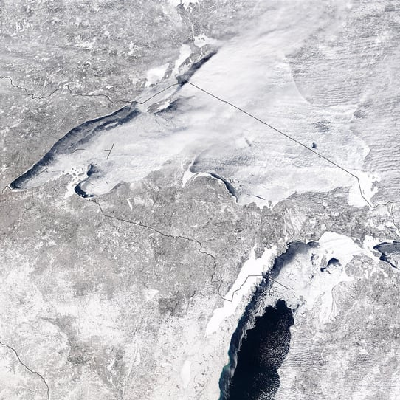
Current* conditions near Munising, MI: