This week is #CervicalCancerPreventionWeek.
Uncategorized
8
Posts
1
Posters
1
Views
-
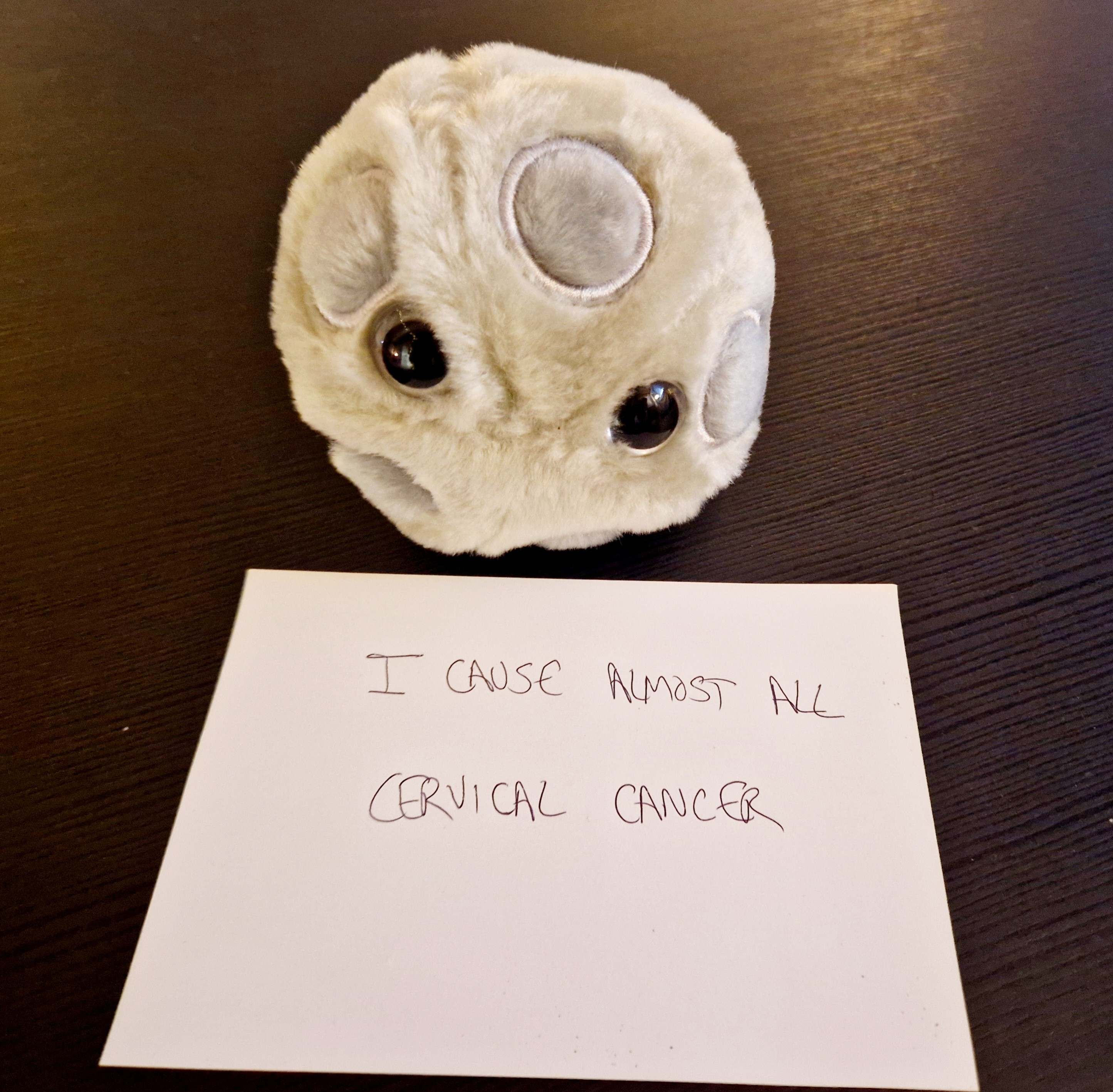
This week is #CervicalCancerPreventionWeek. This cancer is highly preventable in the present day, because we know a lot about its cause: this horrid little dude, human papillomavirus (HPV). With what we know about HPV and its link to cervical cancer, eliminating the disease is possible...
-
This week is #CervicalCancerPreventionWeek. This cancer is highly preventable in the present day, because we know a lot about its cause: this horrid little dude, human papillomavirus (HPV). With what we know about HPV and its link to cervical cancer, eliminating the disease is possible...
HPV is a very common infection. Many strains of it are completely harmless, but some are a risk factor for cancer. As well as cervical cancer, high-risk HPV strains are linked to cancers of the vulva, vagina, penis, anus and mouth.
These forms of HPV are transmitted during all sorts of sex - not just penis in vagina, but also via fingers, mouths and sex toys.
-
HPV is a very common infection. Many strains of it are completely harmless, but some are a risk factor for cancer. As well as cervical cancer, high-risk HPV strains are linked to cancers of the vulva, vagina, penis, anus and mouth.
These forms of HPV are transmitted during all sorts of sex - not just penis in vagina, but also via fingers, mouths and sex toys.
Most of us will have HPV at some point in our lives. Most of the time, if HPV is passed on, your body will clear the infection, and you won't even know you've had it. But sometimes the HPV sticks around, and high risk strains can cause cancer.
-
Most of us will have HPV at some point in our lives. Most of the time, if HPV is passed on, your body will clear the infection, and you won't even know you've had it. But sometimes the HPV sticks around, and high risk strains can cause cancer.
But in great news, we have two weapons at our disposal to fight cervical cancer caused by HPV - which is up to 97% of cervical cancers!
-
 undefined oblomov@sociale.network shared this topic
-
But in great news, we have two weapons at our disposal to fight cervical cancer caused by HPV - which is up to 97% of cervical cancers!
The first tool we have is cervical screening, AKA the smear test. This test takes a sample from cells on your cervix to test for high risk HPV, and if you have high-risk HPV, this sample will also be checked for any changes to cells in your cervix.
This enables any potential cancer to be caught very early and removed so it cannot spread!
-
The first tool we have is cervical screening, AKA the smear test. This test takes a sample from cells on your cervix to test for high risk HPV, and if you have high-risk HPV, this sample will also be checked for any changes to cells in your cervix.
This enables any potential cancer to be caught very early and removed so it cannot spread!
The other tool is vaccination. The vaccine is most effective and protective if given before you become sexually active, so in the UK it's offered at age 12 or 13 in schools. All young people are offered the jab.
-
The other tool is vaccination. The vaccine is most effective and protective if given before you become sexually active, so in the UK it's offered at age 12 or 13 in schools. All young people are offered the jab.
Screening and vaccination put together mean that HPV-related cervical cancer could be eliminated. The NHS aims to eliminate HPV-related cervical cancer by 2040 by using these tools.
-
Screening and vaccination put together mean that HPV-related cervical cancer could be eliminated. The NHS aims to eliminate HPV-related cervical cancer by 2040 by using these tools.
It's worth noting that vaccination is not 100% protective. If you're vaccinated, you'll still need to attend cervical screening.

Gli ultimi otto messaggi ricevuti dalla Federazione
-
@Dunpiteog i meccanismi populisti e di degrado culturale sono gli stessi ovunque, purtroppo.
-
È veramente triste essere testimoni attivi, ma impotenti, di fronte a questo sfacelo.
Anch'io, come altri, minoplongo al decadimento cognitivo ma sembra non esserci modo di evitarlo nonostante ci si provi in tutti i modi.
-
@fucinafibonacci @economia se i finlandesi sono rimasti gli stessi di 80anni fa, sono un boccone amaro anche per chi ha dimestichezza con l'ambiente.
-
@omar 😆
-
-
Lotta senza gualtiere
https://www.ilpost.it/2026/01/20/tar-annulla-citta-30-bologna/
-
-
Upside Down
#80x24