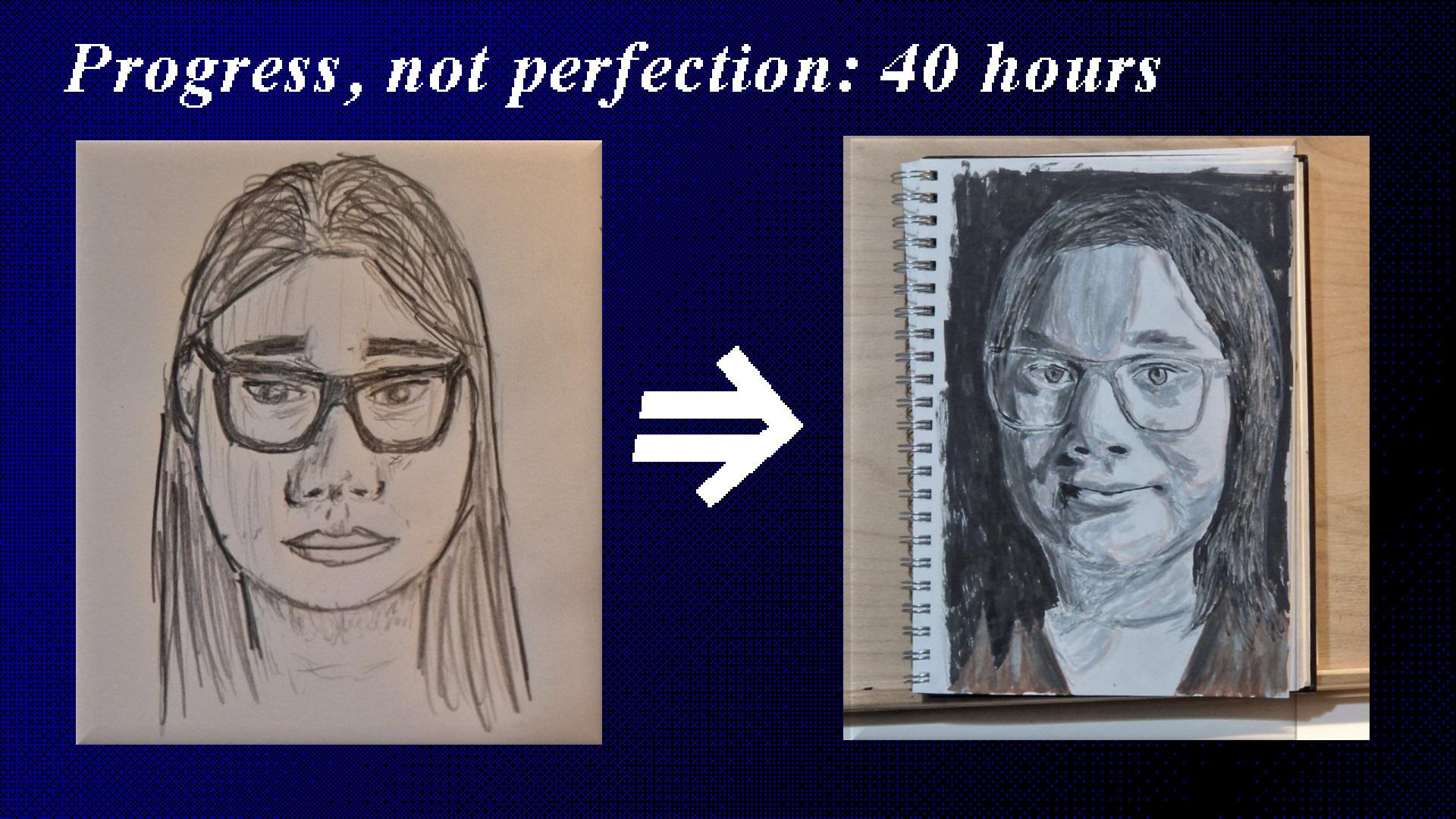
I wrote ~5000 words on what 40 hours of studying drawing can do.
Uncategorized
5
Posts
2
Posters
3
Views
-
I wrote ~5000 words on what 40 hours of studying drawing can do. I know my drawing is not great, but it has improved considerably, and I believe it is a story worth sharing.
-
 undefined aeva@mastodon.gamedev.place shared this topic
-
I wrote ~5000 words on what 40 hours of studying drawing can do. I know my drawing is not great, but it has improved considerably, and I believe it is a story worth sharing.
@nina_kali_nina it is my opinion, as a lapsed formally trained artist, that if you are motivated to work through a book like that in the pursuit of your need to connect with images on a deeper level, you've more than earned the right to call yourself an artist with pride. In most cases, the only thing someone you might see as being more skilled than you has over you is the benefit of more recent practice, not more total practice.
-
@nina_kali_nina it is my opinion, as a lapsed formally trained artist, that if you are motivated to work through a book like that in the pursuit of your need to connect with images on a deeper level, you've more than earned the right to call yourself an artist with pride. In most cases, the only thing someone you might see as being more skilled than you has over you is the benefit of more recent practice, not more total practice.
@nina_kali_nina I'll have to give your article a closer reading when I'm done with work, but I think you might find Lynda Barry's writings on teaching STEM college students how to draw again (and unlearn their trained fear of it) an interesting contrast to Betty Edwards's book.
In particular, the part you mention about drawing from memory to surface symbols is a common thread between the two, but it seems the two authors have very different conclusions about what the value of those symbols are.
-
@nina_kali_nina I'll have to give your article a closer reading when I'm done with work, but I think you might find Lynda Barry's writings on teaching STEM college students how to draw again (and unlearn their trained fear of it) an interesting contrast to Betty Edwards's book.
In particular, the part you mention about drawing from memory to surface symbols is a common thread between the two, but it seems the two authors have very different conclusions about what the value of those symbols are.
@aeva nod nod; thanks for the recommendation, I'll look it up! I've read and watched lots of advice after this book that made me convinced that the system of symbols is extremely important in both art and commercial illustration. It's just it seems like the system of symbols needs to be expanded and polished so it can be put to good use.
-
@aeva nod nod; thanks for the recommendation, I'll look it up! I've read and watched lots of advice after this book that made me convinced that the system of symbols is extremely important in both art and commercial illustration. It's just it seems like the system of symbols needs to be expanded and polished so it can be put to good use.
@nina_kali_nina I think Lynda's primary goal as a teacher is to help her students unlearn the destructive inhibition, shame, and fear of making imperfect works / of making art in general. Her philosophy is that "bad" drawings by naive hands are able to capture something fundamental that is a lot harder to reach as a practiced trained artist, and that fundamental something (she calls it an Image) is something to cherish and is worthy of study.

Gli ultimi otto messaggi ricevuti dalla Federazione
-
@francina1909 appunto, sei troppo giovane! 😁
-
@francina1909 @zipidog No ma poi Brigitte gli dà uno schiaffo.
-
@DarioZanette l'UE dovrebbe combatterlo con la sua stessa medicina: dazi su dazi su tutti i prodotti amerigrassi
-
@LeleGroot bravissimo
-
@chad Hey, Chad. I'm really sorry you're in this spot. I've got plans with my family tonight during the All Hands, but I might be able to help later. I'll follow the conversation carefully. You got this and we're here for you! #ElbowsUp
-
@zipidog credo sia più giovane di me di 3-4 anni.
Ed io non sono gelosa
-
@francina1909 AHAHAHA! È un uomo impegnato, e tu sei troppo giovane! 😎
-
@francina1909 @DarioZanette vivere di stent