Joulupukki is a Finnish Christmas figure whose name translates as Yule or Christmas Goat.
Uncategorized
5
Posts
2
Posters
0
Views
-
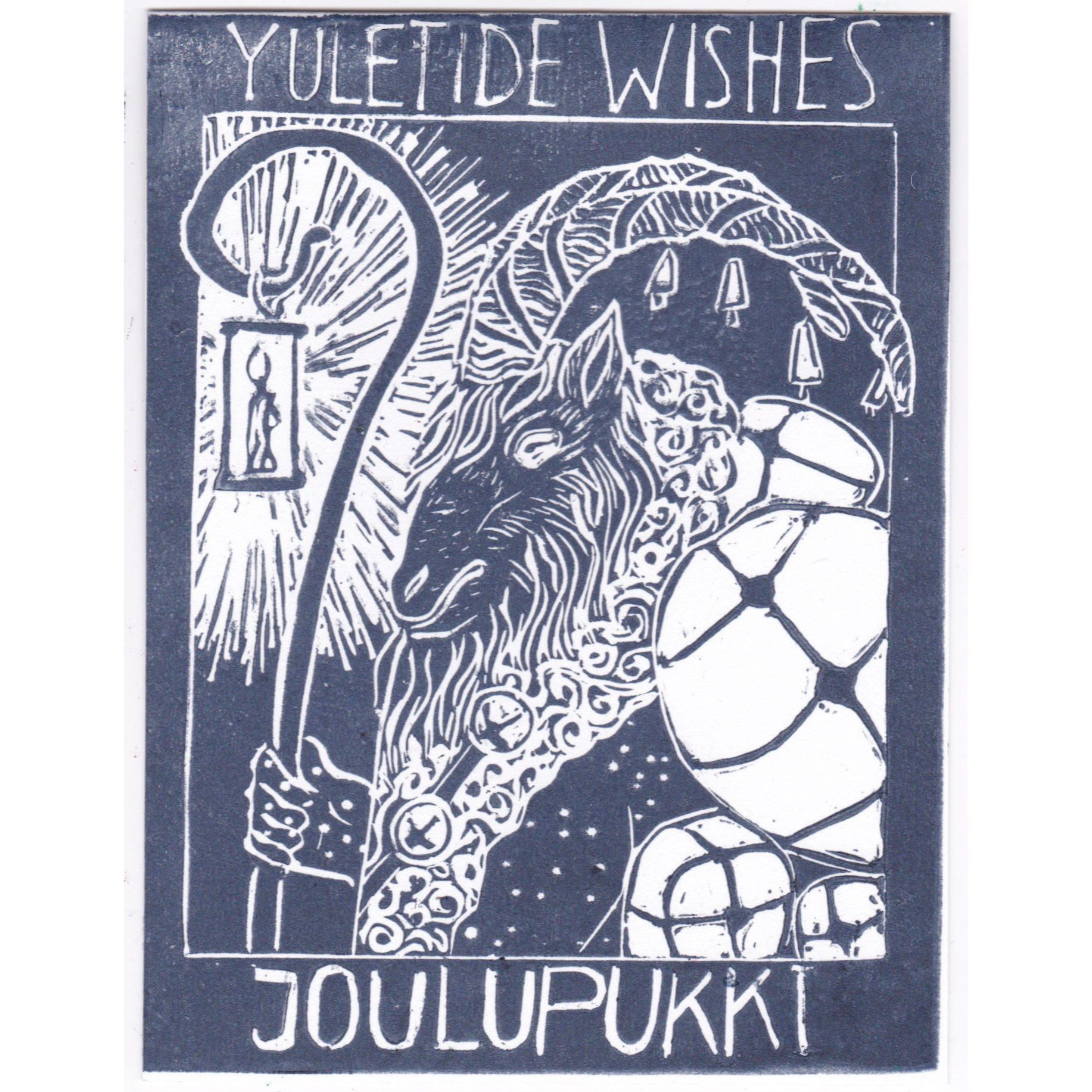
Joulupukki is a Finnish Christmas figure whose name translates as Yule or Christmas Goat. Pukki comes from the Teutonic root “bock”, which is a cognate of the English “buck”, and means “billy-goat”. There is an old tradition of men dressing as a goat at Yule in Finland. These nuuttipukki were evil spirits who would go from house to house demanding gifts and leftovers from the Yule feast. But over time the concept of nuutipukki merged with the idea of Santa Claus and became the 🧵
-
Joulupukki is a Finnish Christmas figure whose name translates as Yule or Christmas Goat. Pukki comes from the Teutonic root “bock”, which is a cognate of the English “buck”, and means “billy-goat”. There is an old tradition of men dressing as a goat at Yule in Finland. These nuuttipukki were evil spirits who would go from house to house demanding gifts and leftovers from the Yule feast. But over time the concept of nuutipukki merged with the idea of Santa Claus and became the 🧵
benevolent Joulupukki who gave out gifts, rather than claim them, to well-behaved children. But in some areas, nuuttipukki still make visits on Nuutinpäivä, or St. Knut’s Day, January 13.
Yule goats (Julbocken) are common in Nordic countries, as small decorative straw or wicker ornaments decorated with red ribbon or giant ones like the Gävle goat in Sweden, a frequent target of arson. Some argue they are linked to Thor, who rode in a goat-pulled chariot. 🧵2/3
-
benevolent Joulupukki who gave out gifts, rather than claim them, to well-behaved children. But in some areas, nuuttipukki still make visits on Nuutinpäivä, or St. Knut’s Day, January 13.
Yule goats (Julbocken) are common in Nordic countries, as small decorative straw or wicker ornaments decorated with red ribbon or giant ones like the Gävle goat in Sweden, a frequent target of arson. Some argue they are linked to Thor, who rode in a goat-pulled chariot. 🧵2/3
But others argue it is even more ancient and links to proto-Slavic beliefs where Koliada or Yule honors the god of the fertile sun and the harvest who was represented by a white goat. So Koliada festivals always had a person dressed as a goat, often demanding offerings in the form of presents.
#linocut #printmaking #folklore #StKnutsDay #Joulupukki #YuleGoat #Nuutinpäivä #nuttipukki 🧵3/3
-
Joulupukki is a Finnish Christmas figure whose name translates as Yule or Christmas Goat. Pukki comes from the Teutonic root “bock”, which is a cognate of the English “buck”, and means “billy-goat”. There is an old tradition of men dressing as a goat at Yule in Finland. These nuuttipukki were evil spirits who would go from house to house demanding gifts and leftovers from the Yule feast. But over time the concept of nuutipukki merged with the idea of Santa Claus and became the 🧵
@minouette Thank you! There's a song about Joulupukki on an album dear to my partner's family: Weihnacht in Europa. All the songs are sung in the original languages, and I never got around to searching them for meanings/cultural significance.
-
@minouette Thank you! There's a song about Joulupukki on an album dear to my partner's family: Weihnacht in Europa. All the songs are sung in the original languages, and I never got around to searching them for meanings/cultural significance.
@braxa26 oh that’s so sweet! Thanks!
-
 undefined oblomov@sociale.network shared this topic on

Gli ultimi otto messaggi ricevuti dalla Federazione
-
Oltre le macerie
@anarchia
Eccoci di nuovo qui. Riprendiamo le pubblicazioni dopo le consuete settimane di pausa, ma per le lotte non c’è stata sosta nella crescente stretta autoritaria e militarista. Multe, denunce, sgomberi. Questi sono i regali che si sono scambiati governo e...Vedi l'articolo
https://www.rivoluzioneanarchica.it/oltre-le-macerie/
-
Ha finito di vedere Un film Minecraft
-
@tasket@infosec.exchange an official protocol handler would help a lot. Today there is the option of introducing a web protocol handler but the UX for it is pretty dogshit (Piefed recently implemented it, and the number of dialogues was too damn high!)
That said I don't know if PWAs can register against non-web protocol handlers. That would be useful for sites like NodeBB.
-
@wgwz @IceClimate comes to mind.
-
Testing a Continuous Printing Mod for the Bambu Lab A1 Mini
There are a few types of continuous 3D printing with FDM printers, with a conveyer belt and automatic build plate swapping the most common types. The advantage of build plate swapping is that it automates the bit where normally a human would have to come in to remove finished parts from the build plate. A recent entry here is the Chitu PlateCycler C1M which the [Aurora Tech] YouTube channel had over for a review. This kit bolts onto the Bambu Lab A1 Mini FDM printer and comes with four extra PEI build plates for a not unreasonable $79 (€69).
As also noted in the review video, this is effectively a clone of the original swapmod A1m kit, but a big difference is that the Chitu kit comes with all of the parts and doesn’t require you to print anything yourself.
The different plates are prepared using a special tool that inserts G-code between the plate changes. Moving the bed in a specific way triggers the switch that lifts the finished plate off the magnetic bed by the plastic grip on the plate and loads a fresh plate from the stack. Here it was found that a small tolerance issue prevented the last plate from being used, but some sandpaper fixed this. Other than that it was a fairly painless experience, and for e.g. multi-color prints with separated colors – as demonstrated – it would seem to be a great way to churn out the entire model without manual intervention or a lot of wasted filament.
Perhaps the main issue that is central to all of these build plate swap mods is where the plates go after they’re pulled off the magnetic bed: the padded box is a great idea for the first one or two plates, but after that you get your PEI build plates with parts on them crashing on top of each other.
This is where perhaps something like a passive roller conveyer system could provide a nice gentle off-ramp, though this too would increase the footprint of the system. Regardless, the overall system seems to work well enough, allowing one to stack fresh plates in the chute and if you turn on build plate detection in the A1 you can even prevent the printer from trying to print on the magnetic bed.
-
> 'Veterans GO BALLISTIC on ICE: “Fight These Motherf*ckers!”'
#Trump #ice #minnesota #EU #SecondAmendment #antifa #DeathToAmerica #uspol
-
@fediversereport If they are smart they will fix a raft of fundamental UX pitfalls in current ActivityPub by defining a protocol handler for it.
Email needed its protocol handler spec while it was getting established – and arguably still does – and I do think this is one of the ways in which ActivityPub is "like email".
-
C’era una volta Repubblica – Intervista con Franco Recanatesi
@giornalismo
articolo21.org/2026/01/cera-un…
Cinquant’anni di Repubblica, con tanta nostalgia e un certo dolore. Nostalgia per lo straordinario quotidiano che fu, fondato e diretto da Eugenio Scalfari; dolore per ciò che ha smesso da tempo