Philco Bet the Farm on The Predicta… and Lost
Uncategorized
1
Posts
1
Posters
0
Views
-
Philco Bet the Farm on The Predicta… and Lost
Philco was a common household brand for many years. The company started in 1892, making street lights. Then they pivoted to batteries. This was big business when early radios were all battery-operated. But in the 1920s, line-powered radios threatened to shrink their customer base, so they pivoted again. This time, they started making radios. So what happened? [The Last Shift] has the story, and you can see the video below.
Philco used advanced manufacturing techniques to make radios more affordable. By 1930, they were the number one radio maker in the world. After World War II, they moved into everything electric: mostly appliances, but also the new king of the electronics market, the television.
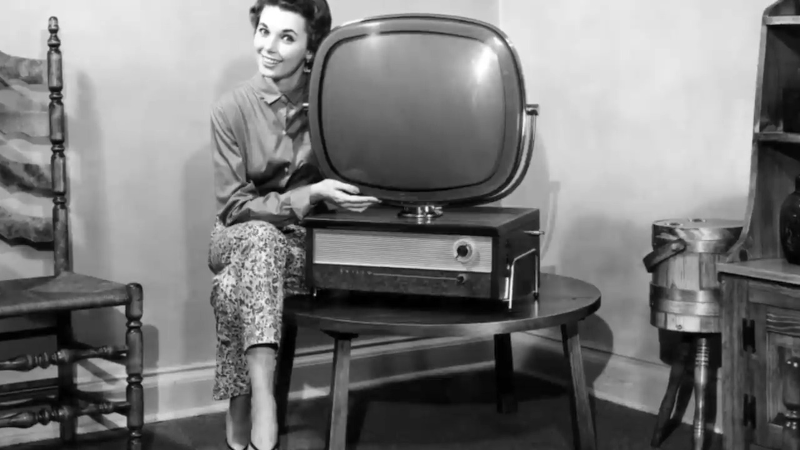
Philco faced much competition and wanted to stand out. The answer was the Predicta, a TV like no other at the time. It used an advanced semi-flat picture tube with a plastic coating. The 17-inch or 21-inch picture tube was detached from the TV itself. In one model, the tube sat on top of the TV with a swivel mount. In a pricier variant, the tube connected to the TV with a 25-foot cable. Who needs a remote control? Put the TV by your recliner and change channels while watching the screen across the room.
The physical design was unique and in demand. The problem was that the semi-flat tube was unreliable. It was also black-and-white in a time when color TV burst on the scene. They made the set from 1959 to 1960 and discontinued it due to lower demand and high warranty service costs. By 1962, Philco was bankrupt.
Ford (the motor company) bought the company and used it as a vehicle for defense work (including NASA) and car radios. By 1974, the company was sold again to GTE. The giant factory in Philadelphia was razed.
We know of at least one famous collector of Predictas. If you wanted real remote control, you could get a more conventional Philco Directa at about the same time. It used a mechanical ultrasonic remote similar to the Zenith Space Command system.
youtube.com/embed/K4URhB5JnBM?…

Gli ultimi otto messaggi ricevuti dalla Federazione
-
-
@rek they ARE nice!
-
@bri7 “now now, website. You already get a very generous JavaScript allowance, so spend it wisely. No ifs, ands, or buts about it”
-
-
-
i love the architecture and space of galleries.
The Clark was created in 1955 in association with Williams College by entrepreneur, soldier and prominent art collector Robert Sterling Clark, and his wife, Francine. After traveling in the Far East, Sterling settled in Paris in 1911 and used a considerable fortune inherited from his grandfather (a principal in the Singer Sewing Machine Company) to begin amassing a private art collection. Francine joined him in collecting works of art after their marriage in 1919.
The Clarks kept their collection largely private, rarely lending out any works. With the onset of the Cold War and rapid nuclear armament, they became increasingly worried about the safety of their artworks. They wanted to protect their collection from a possible attack on New York City, where they lived and where the expected heir of their collection, the Metropolitan Museum of Art, was located. As such, the Clarks began looking at sites in rural New York and Massachusetts with the intention of founding a museum for their art.
They visited Williamstown, Massachusetts in 1949 and began having conversations with town leaders and the administrators of Williams College and the Williams College Museum of Art. Sterling had ties to the college through his grandfather and father, both of whom had been trustees. A charter for the "Robert Sterling Clark Art Institute" was signed on March 14, 1950, incorporating the organization with the intention of becoming both a museum and educational institution. A special meeting was held by Sterling soon after the first cornerstone was laid in 1953 that changed the name to "the Sterling and Francine Clark Art Institute", as it is today. Sterling wrote that Francine's inclusion was because of "her constant enthusiasm for the Institute's objectives, her participation in the accumulation of the collections which the Institute will house and her contributions to the planning of the project."[3]
The Clark opened to the public on May 17, 1955, under its first director, former silver dealer Peter Guille.[4] The Clark has since become a destination for tourists, art lovers, and scholars, helping to establish the cultural reputation of the Berkshires.
-
@bri7 finally. good fucking software
-
@bri7 i was just looking at getting dogshit.software but it's taken...
but there are a shitload of other hilarious dogshit domains and it's taking a lot of self control not to rent a bunch of them