Machine translations are often brought up as a gotcha whenever I criticize LLMs.
Uncategorized
72
Posts
59
Posters
12
Views
-
Machine translations are often brought up as a gotcha whenever I criticize LLMs. It's worth pointing out two things: Machine translations existed decades before LLMs, and yes, machine translations are useful. However: I would never in my life read a machine translated book. Understanding what a social media post is talking about in rough terms? Sure. Literature? Absolutely not. Hell, have you ever seen machine translated subtitles? It's absolute garbage.
@Gargron I tried using Gemini to translate subtitles from Italian to French (so, two latin languages) for a TV Series, and let's say little G got lost in translation... (And after the first prompt it started to hallucinate tags, and it forgot to close other tags,.resulting in subs being shown for half of an episode on top of each others...). It's pretty bad, indeed!
-
Machine translations are often brought up as a gotcha whenever I criticize LLMs. It's worth pointing out two things: Machine translations existed decades before LLMs, and yes, machine translations are useful. However: I would never in my life read a machine translated book. Understanding what a social media post is talking about in rough terms? Sure. Literature? Absolutely not. Hell, have you ever seen machine translated subtitles? It's absolute garbage.
-
@Gargron plus doesn't everyone do the test of translate then translate back? They are garbage in a way that even a machine could recognize as garbage.
@virgilpierce @Gargron
There's an old joke from the 1960s about machine translation of the saying "the spirit is willing, but the flesh is weak" from English to Russian and then back again.
The result was "the vodka is good but the meat is rotten." -
I have the impression that primarily anglophone people don't read as much translated literature, because so much good literature already exists in their language, so this issue may not be as familiar within that demographic. As someone who did not grow up anglophone, I can tell you there is a world of difference between a good and a bad translation even when done by humans. Machine translations are not even on the scale.
@Gargron 💯 languages are usually not 1:1, and translation is impossible to automate without butchering the original meaning.
bad translation really sticks out when you understand both languages. even if it's serviceable enough to get the core meaning across, it might fail to capture the tone, the cultural references, and the full weight.
i have a lot of respect for people who create good subtitles that try to preserve the original intent, even when it sometimes feels impossible.
-
I have the impression that primarily anglophone people don't read as much translated literature, because so much good literature already exists in their language, so this issue may not be as familiar within that demographic. As someone who did not grow up anglophone, I can tell you there is a world of difference between a good and a bad translation even when done by humans. Machine translations are not even on the scale.
@Gargron Yes. My wife for years shunned Pratchett completely because she read a Dutch translation in the 90s.
-
I don't get the machine translation argument. LLMs do even that poorly, certainly noticeably worse than a purpose-trained translation model, which is I believe what at least Google Translate uses.
My pet peeve about machine translation is how someone at Google and Microsoft thought that it's a good idea to "helpfully" translate developer documentation into your system language by default. As in, you have to look for a button to read it in English. Who in their right mind could possibly want that?..
@grishka @Gargron Yeah, and at least when it comes to some types of documents you can end up learning the source language quirks or the machine translation quirks (like random gender assignments), but if it's an unknown/random source language then you're out of luck.
(Hence why I always want the source material as well whenever machine translation has been used, so at least the obviously broken parts can be fixed, potentially with a dictionary, or could ask someone who knows the source language) -
I have the impression that primarily anglophone people don't read as much translated literature, because so much good literature already exists in their language, so this issue may not be as familiar within that demographic. As someone who did not grow up anglophone, I can tell you there is a world of difference between a good and a bad translation even when done by humans. Machine translations are not even on the scale.
@Gargron I am an anglophone, but read in French from time to time. I tend to have a machine translator nearby to augment my poor vocabulary. Last book I read it told me nineteenth century Breton people had horses hoofs on their feet. The actual translation should have been clogs.
This stuff is constant, that's just one I remember
-
Machine translations are often brought up as a gotcha whenever I criticize LLMs. It's worth pointing out two things: Machine translations existed decades before LLMs, and yes, machine translations are useful. However: I would never in my life read a machine translated book. Understanding what a social media post is talking about in rough terms? Sure. Literature? Absolutely not. Hell, have you ever seen machine translated subtitles? It's absolute garbage.
on the plus side, machine translation illuminated me as to the involvement of the presbyterian church in the famous movie "backstroke of the west"
-
@Gargron I'm willing to guess that machine translation of prose may serve two uses: firstly, as an assist for human translators (by preparing a very rough first cut, which they then have to refine), and secondly, as an assist for human editors in figuring out which foreign-language-works to pay a human translator (with or without AI assistance) to work on (translation costs money: knowing where to spend it is important). But those are assistive roles, not human-replacing ones.
I feel pretty dumb telling this to the master, but translating a literary work is much more than changing one word for another. Even it you keep all the meaning, it gets weird and doesn't flow; each language has its own rhythm and cadence. A good translator frequently has to completely rewrite a paragraph to keep the sense, the emotions and the flow of the story. Even worse, he needs to make it faithful to the original, which having intermediate versions can make harder.
I'm not a professional translator, but I have tried to translate some public domain stories, and found that automatic translation is a hindrance. I had to rewrite nearly all, looking always to the original version. It was too easy to drift far from it and get the text and the author absolutely distorted.
It is a work of art and love, not something a machine can do at all. Not even a part of it.
-
I have the impression that primarily anglophone people don't read as much translated literature, because so much good literature already exists in their language, so this issue may not be as familiar within that demographic. As someone who did not grow up anglophone, I can tell you there is a world of difference between a good and a bad translation even when done by humans. Machine translations are not even on the scale.
@Gargron In addition a lot of anglophone people speak only one language, so they've never been able to compare the translation of a book between two languages they speak.
-
on the plus side, machine translation illuminated me as to the involvement of the presbyterian church in the famous movie "backstroke of the west"
-
 undefined _elena@mastodon.social shared this topic
-
-
I have the impression that primarily anglophone people don't read as much translated literature, because so much good literature already exists in their language, so this issue may not be as familiar within that demographic. As someone who did not grow up anglophone, I can tell you there is a world of difference between a good and a bad translation even when done by humans. Machine translations are not even on the scale.
@Gargron
And it's not just expressions and turns of phrase, which are unique not only to each language but easily to each region.It's words. There is often no exact match. Many words in one language are not a precise correspondence to those in another.
So an elegant turn of phrase in one becomes a wordy explanation in the other. Or a misinterpretation.
Only someone fluent in both languages can convey the true meaning accurately and eloquently.
-
Machine translations are often brought up as a gotcha whenever I criticize LLMs. It's worth pointing out two things: Machine translations existed decades before LLMs, and yes, machine translations are useful. However: I would never in my life read a machine translated book. Understanding what a social media post is talking about in rough terms? Sure. Literature? Absolutely not. Hell, have you ever seen machine translated subtitles? It's absolute garbage.
@Gargron and worth repeating the quality directly depends on the quality of actual human translated text corpus.
-
I have the impression that primarily anglophone people don't read as much translated literature, because so much good literature already exists in their language, so this issue may not be as familiar within that demographic. As someone who did not grow up anglophone, I can tell you there is a world of difference between a good and a bad translation even when done by humans. Machine translations are not even on the scale.
Well said. 👍
-
@Shunra @cstross @Gargron
My go-to example is the Esperanto translation of Alice Through The Looking Glass published by Evertype, which has 5 different translations of "Jabberwocky", each of which is absolutely "correct" and each of which is totally different from each other. Even the names of the poem differ.
In each case one can see the decisions the translator made balancing meter, rhyme, meaning, implications & nuance of the text, based on what it meant to them; how can a computer do that? -
Machine translations are often brought up as a gotcha whenever I criticize LLMs. It's worth pointing out two things: Machine translations existed decades before LLMs, and yes, machine translations are useful. However: I would never in my life read a machine translated book. Understanding what a social media post is talking about in rough terms? Sure. Literature? Absolutely not. Hell, have you ever seen machine translated subtitles? It's absolute garbage.
@Gargron Many years ago, while on holiday in Amsterdam, I bought a Dutch translation of a book by one of my favourite authors, Terry Pratchett.
In it, there was an essay, in English, by Terry, about his struggles to find a translator for the book, which was only accomplished when he realised that it wasn't just a case of taking the text and replacing it with Dutch.
No, large sections would have to be entirely re-written by the translator, to use concepts that a Dutch audience would find familiar.
And not just in Dutch, but every language.
The example he gave was one character who was experiencing the feeling of being stuck in traffic on a busy road on a Sunday afternoon, and after miles of driving, finding that the cause of the tailback was a little old lady out for her weekly drive to church in her trusty old Morris Marina, never getting above 20 MPH becuase it felt too fast.
This is something that British people are well acquanted with, but the Dutch translator had to come up with a completely different way of explaining this, because it's not something particularly prevalant over there.
It's not just about translating the words, its translating the feelings, the emotions, to something readers in another place will understand.
And LLM's fail spectacularly at that. -
I have the impression that primarily anglophone people don't read as much translated literature, because so much good literature already exists in their language, so this issue may not be as familiar within that demographic. As someone who did not grow up anglophone, I can tell you there is a world of difference between a good and a bad translation even when done by humans. Machine translations are not even on the scale.
@Gargron I think anglophones experience start difference between good and bad translations more often through video games
-
Machine translations are often brought up as a gotcha whenever I criticize LLMs. It's worth pointing out two things: Machine translations existed decades before LLMs, and yes, machine translations are useful. However: I would never in my life read a machine translated book. Understanding what a social media post is talking about in rough terms? Sure. Literature? Absolutely not. Hell, have you ever seen machine translated subtitles? It's absolute garbage.
@Gargron and then there's the question on how it's used
see firefox that generated new translations and threw awai human written ones -
Machine translations are often brought up as a gotcha whenever I criticize LLMs. It's worth pointing out two things: Machine translations existed decades before LLMs, and yes, machine translations are useful. However: I would never in my life read a machine translated book. Understanding what a social media post is talking about in rough terms? Sure. Literature? Absolutely not. Hell, have you ever seen machine translated subtitles? It's absolute garbage.
@Gargron As an LLM would say to a translator: "All your job are belong to us".




















Gli ultimi otto messaggi ricevuti dalla Federazione
-
@Space_Burger_Steve @afreytes no, thank you for the explanation! I love culinary cultural exchanges!
-
From my trip to #Florida, a blossom from a #silktree (#kapok). Huge, red, almost waxy… the tree is leafless this time of year and covered with these massive blooms that fall all over below. #bloomscrolling
-
@nina_kali_nina I just mean trolling in the sense of being antagonistic. shock art is usually intended to challenge the viewer through a negative emotional response. sometimes it's meant to be thought provoking, like getting the viewer fixated on why an object they think shouldn't be in a museum is in the museum. but not always
-
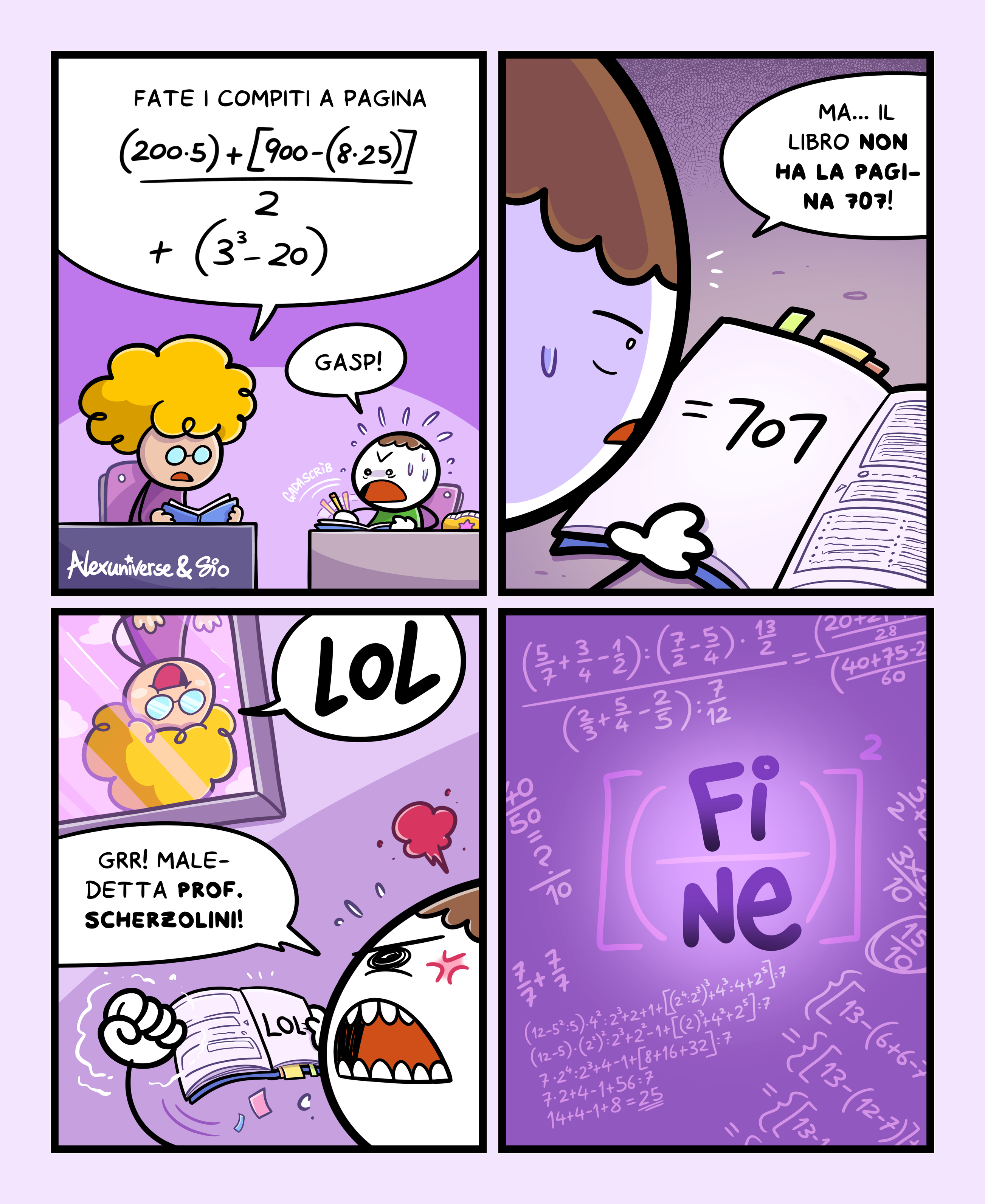
@sio la matematica che ci piace
-
@sknob @paul aw Tweetbot! RIP. I was recently cleaning up my old Mac and I had to reluctantly delete it from there (the MacOS version). Longtime fan of Tapbots 🥲
-
-
@galaxis @Gargron Or Google. Last week I stumbled upon an Google admin interface where the checkbox with the English label "Enforcement" was translated in French with the equivalent of "Activation". It was about 2FA, and those both words doesn't mean at all the same thing in that context!
-
@Gargron I worked with subtitle translations for years... I need to comment on this!
The main issue people working with machine translated subtitles is that people take models for translating things in a single modal – text – and applying to a multimodal media – video. Of course the results are horrible!
There are research on improving that, sure, I did some, even, but even we are FAAAR from getting them any good. Translating "The nurse aided the doctor take care of the patient." to many languages require guessing the gender of three people! LLMs will often default to male, female and male, due to bias.
But, the sad thing we have to admit: many works of art are so unpopular the only translations people will have are machine ones, from weird anime like Sazae-san, to Mastodon toots.