Skip to content

Piero Bosio Social Web Site Personale Logo Fediverso

Social Forum federato con il resto del mondo. Non contano le istanze, contano le persone

The VPS is still down

Uncategorized
7 3 93

Gli ultimi otto messaggi ricevuti dalla Federazione
Post suggeriti
  • 0 Votes
    1 Posts
    0 Views
    https://www.quotidiano.net/ultimaora/gb-autorizza-gli-usa-a-e9255008 Starmer verso la guerra Il governo britannico ha dato il via libera agli Stati Uniti per l'utilizzo delle proprie basi militari al fine di lanciare attacchi contro obiettivi iraniani che minacciano lo Stretto di Hormuz. In precedenza era stato autorizzato l'uso delle basi solo per operazioni difensive. Tuttavia, l'esecutivo del premier Keir Starmer ha deciso in una riunione odierna di ampliare il raggio delle operazioni aeree.#Iran #UK #Starmer #guerra
  • @attualita

    Uncategorized
    1
    1
    0 Votes
    1 Posts
    2 Views
    @attualita
  • 0 Votes
    1 Posts
    0 Views
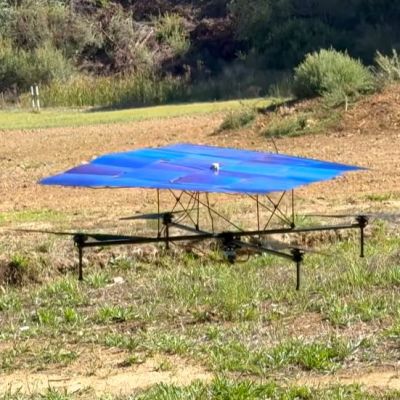
    How Long Can a Quadcopter Drone Fly on Just Solar?The final second prototype flying. (Credit: Luke Maximo Bell, YouTube)The dream of fully powering everything from aircraft to cars on just the power generated from solar panels attached to the machine remains a tempting one, but always seems to require some serious engineering including putting the machine on a crash diet. The quadcopter that [Luke Maximo Bell] tried to fly off just solar power is a good case in point, as the first attempt crashed after three minutes and wrecked its solar panels. Now he’s back with a second attempt that ought to stay airborne for as long as the sun is shining.Among the flaws with the first prototype were poor support for the very thin and fragile PV panels, requiring much better support on the carbon fiber frame of the drone. To support the very large solar array, the first drone’s arms were made to be very long, but this interfered with maneuvering, so the second version got trimmed down and the array raised above the frame. This saved 70 grams of weight from the shortened tubs, which could then be added to the new panel supports.After an initial test flight resulted in a crash when the PV output dropped, the need for a small battery buffer was clear, so this was added, along with a reduction of the array to 4×7 panels to get the same 20V as the battery. The array also had to be reinforced, as the thin array was very wobbly in addition to making it impossible to fly with any significant wind.The power circuit as implemented on the second prototype. (Credit: Luke Maximo Bell, YouTube)During the subsequent five hours long test flight it was clear that the resulting PV-powered drone was at the limits of its performance, with even some mild cloud cover forcing the battery to provide backup power.For the test location a tree-sheltered site far away from windy Cape Town was also selected to provide the best possible shot, as keeping position with this drone was very hard. With the low weight and the big surface area of the solar panel array catching any little bit of wind, the GPS-based position keeping was essential. Unfortunately a few hours into the test this feature failed.Manual position keeping is definitely possible, but [Luke] had to constantly counteract the drone wanting to drift off somewhere else. Ultimately the test flight ended when it was still very much a sunny South African summer’s day, due to the current provided by the array no longer keeping up with the power demands of the motors.What this perhaps demonstrates best is that if you want to use PV solar power for your flying drone – especially with a significant payload – it’s probably best to use it for recharging while idle, or to extend the battery life by an appreciable amount. That said, props to [Luke] for persevering and making it work in the end.youtube.com/embed/gx5DA8qEfHY?…hackaday.com/2026/03/20/how-lo…
  • @strypey @pfefferle

    Uncategorized
    3
    0 Votes
    3 Posts
    3 Views
    @DePemig @strypey …and you have to enable them in the reactions block!