Reading the World’s Smallest Hard Drive
Uncategorized
1
Posts
1
Posters
0
Views
-
Reading the World’s Smallest Hard Drive
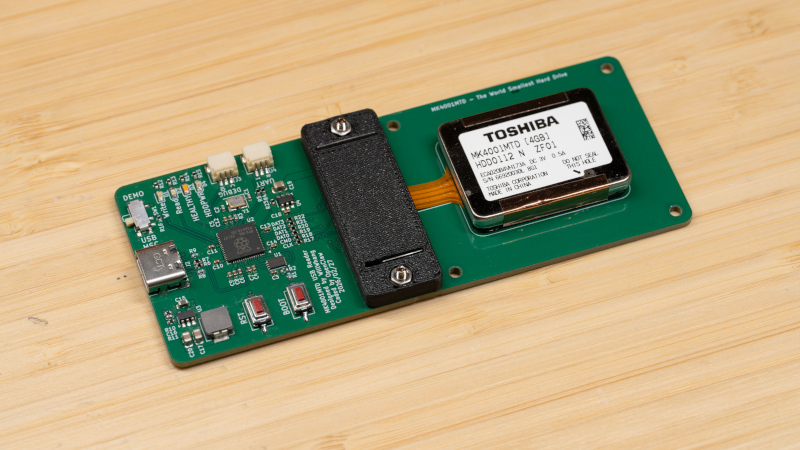
You have a tiny twenty-year-old hard drive with a weird interface. How do you read it? If you’re [Will Whang], by reverse engineering, and building an interface board.
In many of our portable, mobile, and desktop computers, we’re used to solid-state storage. It’s fast and low power, and current supply-chain price hikes notwithstanding, affordable in the grand scheme of things. It wasn’t always this way though, a couple of decades ago a large flash drive was prohibitively expensive. Hard drive manufacturers did their best to fill the gap with tiny spinning-rust storage devices which led to the smallest of them all: the Toshiba MK4001MTD. It crammed 4 GB onto a 0.85″ platter, and could be found in a few devices such as high-end Nokia phones.
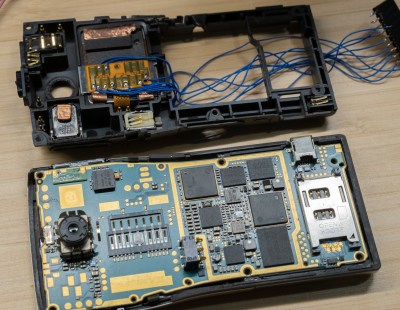
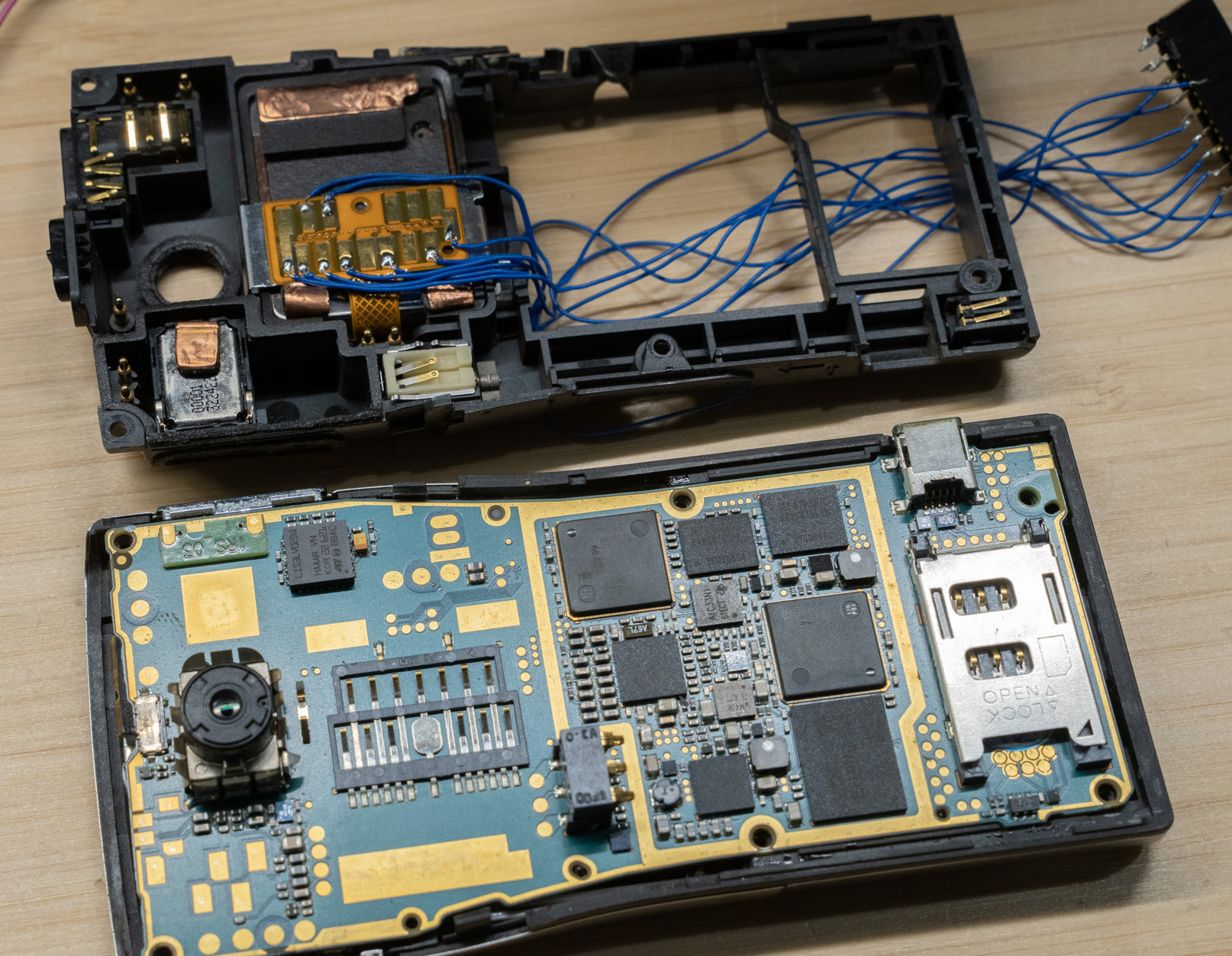
Breaking out the Nokia’s hard drive interface.
The drive’s connector is a pattern of pads on a flexible PCB, one he couldn’t help noticing had a striking resemblance to an obscure SD card variant. Hooking it up to an SD reader didn’t work unfortunately, so a battered Nokia was called into service. It was found to be using something electrically similar to the SD cards, but with the ATA protocol familiar from the world of full-size hard drives.The interface uses the PIO capability of the RP2040, and the board makes a tidy peripheral in itself. We’re guessing not many of you have one of these drives, but perhaps if you do, those early 2000s phone pics aren’t lost for good after all.
These drives are rare enough that this is the first time we’ve featured one here at Hackaday, but we’ve certainly ventured into hard drive technology before.

Gli ultimi otto messaggi ricevuti dalla Federazione
-
-
@francina1909 un pó se la sono cercata.
-
More from the TechCrunch article:
"The addition of another crypto-oriented VC firm may give some Bluesky users pause, however, especially since, so far, the company has not integrated cryptocurrencies into its offering..."
"As Graber once told Wired in an interview, “the term Web3 got very associated with cryptocurrency, so it’s not a good word to use for what we’re doing..."
-
Retro Weather Display Acts Like It’s Windows 95
Sometimes you really need to know what the weather is doing, but you don’t want to look at your phone. For times like those, this neat weather display from [Jordan] might come in handy with its throwback retro vibe.
The build is based around the ESP32-2432S028—also known as the CYD, or Cheap Yellow Display, for the integrated 320 x 240 LCD screen. [Jordan] took this all-in-one device and wrapped it in an attractive 3D-printed housing in the shape of an old-school CRT monitor, just… teenier. A special lever mechanism was built in to the enclosure to allow front panel controls to activate the tactile buttons on the CYD board. The ESP32 is programmed to check Open-Meteo feeds for forecasts and current weather data, while also querying a webcam feed and satellite and radar JPEGs from available weather services. These are then displayed on screen in a way that largely resembles the Windows 95 UI design language, with pages for current conditions, future forecasts, wind speeds, and the like.
We’ve seen some fun weather displays over the years, from graphing types to the purely beautiful. If you’ve found a fun way to display the weather (or change it) don’t hesitate to notify the tipsline. Particularly in the latter case.
-
Here is the TechCruch article on the announcement:
"Social network Bluesky is gearing up for big changes with today’s news that the company raised $100 million in Series B funding. The round, led by Bain Capital Crypto, was closed in April 2025 but had not been disclosed until now."
https://techcrunch.com/2026/03/19/bluesky-announces-100m-series-b-after-ceo-transition/
-
Um, @Tutanota why do you need a webgl context?
-
The Chateau is connected to my home network via wifi. The rb5009 is using the Chateau as gateway.
The home network is now decently connected.It's a little more complex than this, but it works.
-
Bluesky Reveals Massive Hidden Investment
Today #Bluesky revealed that in April 2025 they received a whopping $100M venture capital investment and that they KEPT IT A SECRET.
https://bsky.social/about/blog/03-19-2026-series-b
So the answer to the big mystery Who Owns Bluesky? (https://mastodon.online/@mastodonmigration/116025246450023071) is finally out.
Now, we should be asking why did this company that prides itself on transparency and "decentralization" decide they needed to hide who owned the company?