@sigue @masukomi
Uncategorized
4
Posts
3
Posters
0
Views
-
-
@weekend_editor @sigue Had to go hunt down wtf the "Harlequin" Dylan was.
Discovered Harlequin was a company? Does that mean there was a company that actually used Dylan for its regular production code?!
That's 🤯 if true. I had NO idea.
[edit: even more 🤯 than discovering a company that uses Smalltalk in production.]
-
@weekend_editor @sigue Had to go hunt down wtf the "Harlequin" Dylan was.
Discovered Harlequin was a company? Does that mean there was a company that actually used Dylan for its regular production code?!
That's 🤯 if true. I had NO idea.
[edit: even more 🤯 than discovering a company that uses Smalltalk in production.]
We (Harlequin) were the *other* company making a Dylan system, after Apple. It was a very weird company, but a good place to work for the 4 years or so I was there.
In fact, when Apple shut down their Dylan project, we hired most of the developers to come finish Harlequin Dylan. They were in the building more or less next door, and were mostly old friends who had worked previously at Symbolics.
Cambridge was like that in those days.
We also had Harlequin Lispworks, which was a Common Lisp system that *was* used in production code, and sold to customers who used it in production code.
We also had Harlequin MLWorks, an ML system that was similarly used.
Dylan was just coming on-stream, so it never quite got used in production before everything was more or less destroyed, sold, or scattered to the winds.
OpenDylan is more or less what survived, which turns out to be quite a lot!
-
We (Harlequin) were the *other* company making a Dylan system, after Apple. It was a very weird company, but a good place to work for the 4 years or so I was there.
In fact, when Apple shut down their Dylan project, we hired most of the developers to come finish Harlequin Dylan. They were in the building more or less next door, and were mostly old friends who had worked previously at Symbolics.
Cambridge was like that in those days.
We also had Harlequin Lispworks, which was a Common Lisp system that *was* used in production code, and sold to customers who used it in production code.
We also had Harlequin MLWorks, an ML system that was similarly used.
Dylan was just coming on-stream, so it never quite got used in production before everything was more or less destroyed, sold, or scattered to the winds.
OpenDylan is more or less what survived, which turns out to be quite a lot!
@weekend_editor I knew about Harlequin Dylan but not MLWorks. Was MLWorks a shipped product or only a prototype?


Feed RSS
Gli ultimi otto messaggi ricevuti dalla Federazione
-
@bassoonwrath feel free to read it as "who will control Congress after Nov 2026"
-
NEW: U.S. insurance giant Aflac says its June data breach affected 22.6 million people.
The hackers, the company says, stole data such as Social Security numbers, government IDs, and health information.
-
@evan I’m not convinced these elections will even happen.
-
@lorenzofb marketing
-
@lorenzofb Trying too hard.
-
What's up with all these "secret location" Barcelona offensive cybersecurity conferences?
-
When the mail carrier rings the doorbell for a signature, it can be either great or terrible news. Today, it was great.
Thank you, @mwl
-
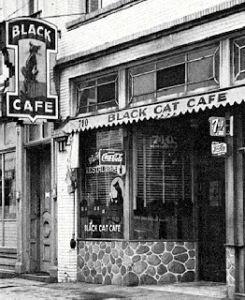
Classic Gay Men 🏳️🌈🏳️🌈🏳️🌈🏳️🌈🏳️🌈 (@classicgaymen.bsky.social)
https://bsky.app/profile/classicgaymen.bsky.social/post/3mao5qa7pn22g
> #onthisdayingayhistory: December 23 1959 The Ca. Supreme Court upholds the right of LGBT people to congregate in Vallerga v. ABC Board. The Court rules that a 1955 statute allowing the Dept. of ABC to revoke the liquor license of any establishment that was a “resort…for sexual perverts.”