It’s #STFUfriday!
Uncategorized
6
Posts
1
Posters
8
Views
-
It’s #STFUfriday!
When cops ask you questions, ask for a lawyer and then STFU:
- I am not discussing how I’m doing or where I’m going.
- Am I free to leave?
- I am not answering any questions.
- If they ask to search anything: "I do not consent to a search."
- I want to speak to a lawyer.
Let’s talk about sandwiches and jurors. Do jurors have to talk about what they did? /🧵
-
It’s #STFUfriday!
When cops ask you questions, ask for a lawyer and then STFU:
- I am not discussing how I’m doing or where I’m going.
- Am I free to leave?
- I am not answering any questions.
- If they ask to search anything: "I do not consent to a search."
- I want to speak to a lawyer.
Let’s talk about sandwiches and jurors. Do jurors have to talk about what they did? /🧵
Jurors acquitted Sean Dunn of assaulting ICE agents with a sandwich. It sure looked like, under the letter of the law, he was guilty. He threw a sandwich. It hit the guy.
But applying that law here was stupid and unjust. So jurors probably did what’s called “jury nullification.” Jurors are the absolute judges of the facts under US law. So if they think the facts don’t justify a conviction, they can vote not guilty and no one can do anything about it. /2
-
Jurors acquitted Sean Dunn of assaulting ICE agents with a sandwich. It sure looked like, under the letter of the law, he was guilty. He threw a sandwich. It hit the guy.
But applying that law here was stupid and unjust. So jurors probably did what’s called “jury nullification.” Jurors are the absolute judges of the facts under US law. So if they think the facts don’t justify a conviction, they can vote not guilty and no one can do anything about it. /2
If you’re being picked for a jury, you will be told you have to follow the law. That’s true. You have to follow the judge’s instructions. And you can’t lie about it. Don’t do that.
But no one can tell if you did follow the law or if you acquitted because the law was unjust. Why? Because jurors don’t have to tell anyone how they decided the case. More importantly, judges and lawyers are *forbidden* from asking jurors how they decided a case. /3
-
If you’re being picked for a jury, you will be told you have to follow the law. That’s true. You have to follow the judge’s instructions. And you can’t lie about it. Don’t do that.
But no one can tell if you did follow the law or if you acquitted because the law was unjust. Why? Because jurors don’t have to tell anyone how they decided the case. More importantly, judges and lawyers are *forbidden* from asking jurors how they decided a case. /3
And testimony about how jurors decided a case is normally inadmissible as evidence.
There are really only two exceptions to this rule. Jurors can be asked if, in convicting, they considered (1) things that were not evidence at trial - “extraneous” influences - like google searches or talking to friends about the case, or (2) racism. /4
https://www.oyez.org/cases/2016/15-606 -
And testimony about how jurors decided a case is normally inadmissible as evidence.
There are really only two exceptions to this rule. Jurors can be asked if, in convicting, they considered (1) things that were not evidence at trial - “extraneous” influences - like google searches or talking to friends about the case, or (2) racism. /4
https://www.oyez.org/cases/2016/15-606But when jurors acquit, the case is over and jurors answer to no one. That’s the good old U.S. Constitution’s Double Jeopardy Clause. Jury nullification has been used for evil (racist jurors acquitting racists) and for good (e.g., acquitting peace activists). But it will remain part of the US system because of the unique role of jurors.
Let’s say you sat on a jury that convicted someone, though. /5
-
But when jurors acquit, the case is over and jurors answer to no one. That’s the good old U.S. Constitution’s Double Jeopardy Clause. Jury nullification has been used for evil (racist jurors acquitting racists) and for good (e.g., acquitting peace activists). But it will remain part of the US system because of the unique role of jurors.
Let’s say you sat on a jury that convicted someone, though. /5
In Massachusetts and most US states, you are *allowed* to say anything you want about deliberations after the trial is over. And anyone (reporters, friends) can ask you about deliberations, you just don’t have to answer.
But judges and lawyers may not ask you about deliberations except for extraneous influences and racism. In Massachusetts, you aren’t *required* to answer even those questions unless you’re called back into court. /6
-
 undefined oblomov@sociale.network shared this topic on

Feed RSS
Gli ultimi otto messaggi ricevuti dalla Federazione
-
@DismalManorGang Johnny Mandel wrote the music for it. Definitely no amateur.
-
-
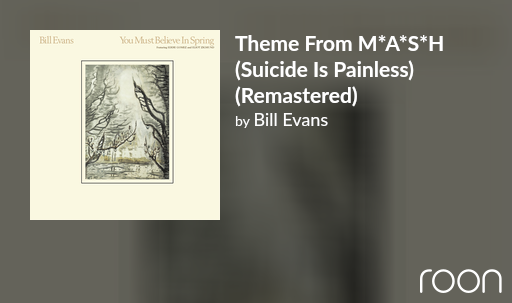
Bill’s arrangement has a bit more passion than the movie version. The song does have an interesting back story — “the stupidest song ever” was written by the director’s 14 year old son. Don’t know who did the original melody. It’s almost an ear worm. #music #nowlistening.
-
I personally like the 'gamify' approach:
Gamify Literacy: Boost Comprehension, Collaboration and Learning by Michele Haiken, 2017
Literacy is at the heart of education — and what better way to teach this important subject than through the motivational techniques built into gamification? With Gamify Literacy, teacher Michele Haiken brings together top educators and gaming professionals to share gamification strategies...
-
You may find this of interest:
Developing Literacy by Timothy G. Morrison, 2012
Here is a comprehensive view of all of the elements that are essential to developing effective literacy and providing the necessary gradual release of responsibility for reading and writing from teachers to students.
-
@RoRo I have been a high school English teacher for 30 years and am happy to talk! I’ve done a lot of this kind of work. What’s your goal? Where / how are you starting?
-
@RoRo hashtags for the win!
-
@Bumblefish I also don’t teach where my qualifications are from. I work at an international school in Japan, at an IB school, but got my certification in the states (MA). My focus right now is on the primary (elementary) school, US grades k-5 (UK/Aus/etc entry (reception, foundation, etc - 6). When I arrived at the school last year they were using the Readers and Writers program, which means they are not using best practices. Helping them phase out RW and learn best practices!