@glyph Did you quote post something?
Uncategorized
903
Posts
312
Posters
9.5k
Views
-
Something I posted the other day which relates to this:
The Friends of Eliza can help you overcome your AI/LLM prompt-query compulsion syndrome.
Endorphins are the hardest to resist. Work together and we can beat this.
The first meeting is in the Chinese Room at 11:00am.
Coffee and Cake will be available 🙂☕️🧁Lovely choice of location there...
-
@bjorndown @_L1vY_ @glyph @xgranade I go to work by bus, and I've made a habit of always carrying a book with me, so I can read on my commute. *Very* highly recommended.
(This morning it felt like me and the woman sitting next to me were a kind of cozy time travellers. I was reading my book and she was doing some knitting; almost everyone else were doomscrolling on their phones.)
-
@mitsuhiko @dragonfi @glyph Poking around, I’d say it’s a competent sophomore game. Too much game logic mixed in with engine logic for my taste, but that can be a fine choice for write-only apps like simple games.
At the limit of complexity? Hardly. That claim is puffery. There’s nothing evidently innovative that I saw, just a competent assembly of others’ ideas.
@donaldball @dragonfi @glyph not sure where you have the “limit of complexity” from or what you mean by that. It’s a codebase that’s very adequate for what I need.
-
@donaldball @dragonfi @glyph not sure where you have the “limit of complexity” from or what you mean by that. It’s a codebase that’s very adequate for what I need.
@mitsuhiko @dragonfi @glyph Your own words: https://hachyderm.io/@mitsuhiko/115839413349363341
I’ll leave you the last word, I’ve said my piece.
-
@mitsuhiko @dragonfi @glyph Your own words: https://hachyderm.io/@mitsuhiko/115839413349363341
I’ll leave you the last word, I’ve said my piece.
@donaldball @dragonfi @glyph I said that this is beyond what I would have been able to push out myself over Christmas.
-
@datarama @xgranade I have other anxiety issues (OCD does not really resonate broadly, but anxiety+ADHD can produce a similar effect) and I sometimes feel waves of INTENSE rage when I open up my Apple TV and it's playing a loud trailer for a show I don't really want to get into, or launch Steam and find that it's forgotten the preference to open to the Library and not Store tab. We need strict regulation for ALL of these attractive "algorithmic" nuisances
@glyph @datarama @xgranade Aside: Steam Big Picture mode drives me into an absolute rage. I never ever EVER want my laptop UI completely hijacked and for some weird reason Valve won't let people disable it from accidentally starting. It's not like Valve is following the standard enshittification playbook of forcing it to be enabled (see AI features in Firefox, Windows, etc.) but there's no way to just simply disable it from being inadvertently activated. It's maddenly difficult to turn off if you've never used it before (like exiting vi) and - aside from git or pre-commit or Word mulching a report at 3pm on the Friday it needs to go out - Steam Big Picture mode is one of the few immediate rage-inducing things that can happen with any of my computers. It's completely gratuitous and it's infuriating that I can't ever prevent it from accidentally running.
My reaction is a bit extreme but it is completely reasonable to not want certain software to ever run on a device you own, period.
-
@gloriouscow I am just facing AI summaries everywhere and it can't even be turned off. It is really like plastic pollution.
Even from these summaries it is easy to spot the pattern: for example, I sometimes do typo in search prompt and the AI summary works with this typo, generating nonse (while even normal search results try to guess "Did you mean ...?")
-
Needless to say, if somebody time traveled back to the 1950s and tried to explain this to the people back then, they would have thought you were crazy...
-
@glyph I have a friend who spent the last year+ battling a kratom addiction. I get the analogy, and why you chose it, but using an addiction framing to talk about LLM usage is an analogy that risks really trivializing addiction (Is there a biological, genetic component to LLM usage? Is LLM usage linked to underlying psychological disorders like anxiety and depression?). I understand how you got here, and don’t think you’re wrong exactly, but I do wish you hadn’t made this argument.
-
@smacintyre@mastodon.social @glyph
You forgot to start with "Well, actually..."
-
@FediThing @glyph LLMs are trained on human-created material in much the same way a person learns by reading books and then acting on what they've learned. They don't directly reproduce that material.
As I mentioned I strongly believe that broad sharing of knowledge is a net benefit to humanity. Questions of credit and attribution are a separate issue and to discuss them meaningfully, you first have to be clear about what you consider reasonable attribution in the first place.
You can take for instance the tankgame and then tell me which part should be attributed and is not, and what you would be attributing it to.
On the "against the will": I want you to use the code I wrote, it's definitely not against my will that LLMs are trained on the code I wrote over the years.
@mitsuhiko @FediThing @glyph On "against the will" and open source and such - You do realise not everything that's public (by some definition of public, because these DDoSing jerks at Perplexity etc. think anything with an open HTTP port is "public") is free to use, right?
That *you in particular* are happy to offer *your* works to train LLMs is, well, that's nice, but it's also pretty irrelevant in the big scope of the rest of the internet.
-
@mitsuhiko @FediThing @glyph On "against the will" and open source and such - You do realise not everything that's public (by some definition of public, because these DDoSing jerks at Perplexity etc. think anything with an open HTTP port is "public") is free to use, right?
That *you in particular* are happy to offer *your* works to train LLMs is, well, that's nice, but it's also pretty irrelevant in the big scope of the rest of the internet.
@phl @FediThing @glyph the reason I stated this is to be explicit about my stance towards IP in isolation to AI. It’s my strong belief that we should share more and that copyrights are too strong. AI has in my mind the nice side effect that it pushes us potentially closer to that.
-
It really reminds me of tarot card readers. It's not about the cards, it's about how the person reading the cards interacts with the other person. They could be actually helpful. Or performing a grift. The latter is far more common.
Just like snake oil was useful, but there were so many traveling con men selling counterfeit fake stuff that the bad experiences were applied to the real thing too.
@cainmark @nyrath @glyph Yes, and another interesting one is astrology columns.
The ELIZA effect was surprising to its naive computer programmers, because they thought it should be obvious ELIZA was just a "parlor trick" because anyone could see how it worked.
But astrology columns were equally obvious. When a mass printed column is read by thousands of readers, it's obviously impossible for it to be a personal message to you specifically. And yet ...
-
@phl @FediThing @glyph the reason I stated this is to be explicit about my stance towards IP in isolation to AI. It’s my strong belief that we should share more and that copyrights are too strong. AI has in my mind the nice side effect that it pushes us potentially closer to that.
@mitsuhiko @FediThing @glyph It's as much a nice side-effect as the redistribution of personal items acquired from unlocked sheds and yards on the aftermarket is.
Keep in mind there's a huge swath of grey between open source and large corporate lawyer-backed death+90yr IP copyrights
-
@cainmark @nyrath @glyph Yes, and another interesting one is astrology columns.
The ELIZA effect was surprising to its naive computer programmers, because they thought it should be obvious ELIZA was just a "parlor trick" because anyone could see how it worked.
But astrology columns were equally obvious. When a mass printed column is read by thousands of readers, it's obviously impossible for it to be a personal message to you specifically. And yet ...
@cainmark @nyrath @glyph I mean - if tarot card reading or crystal ball reading was a 1-on-1 person to person experience, the astrology column was a mechanized mass produced machine version.
Or those gumball machines with astrology scrolls. Or fortune cookies. It should have been obvious they were just mechanistic devices, just like ELIZA.
And yet ...
-
-
@bjorndown @_L1vY_ @glyph @xgranade I go to work by bus, and I've made a habit of always carrying a book with me, so I can read on my commute. *Very* highly recommended.
(This morning it felt like me and the woman sitting next to me were a kind of cozy time travellers. I was reading my book and she was doing some knitting; almost everyone else were doomscrolling on their phones.)
@bjorndown @_L1vY_ @glyph @xgranade A semi-related observation: I'm often the only bus passenger reading a book - but when I'm not, the other book-readers are almost always young. I almost never see my fellow middle-ageds reading books, but it's not *that* unusual to see a teenager or two reading something.
-
@mttaggart my suspicion is that when this happens we are going to find out that there is a huge predisposition component. there will be people who say "ah well. guess I'm a little rusty writing unit tests now, but time to get back at it" and we will have people who will go to sleep crying tears of frustration for the rest of their lives as they struggle to reclaim the feeling of being predictably productive again
@glyph @mttaggart this is why I don't play MMOs or gatchas and I don't touch LLMs and I mask in public.
I. Am. Vulnerable. To. These. Things. They. Are. Dangerous.
-
@cainmark @nyrath @glyph Yes, and another interesting one is astrology columns.
The ELIZA effect was surprising to its naive computer programmers, because they thought it should be obvious ELIZA was just a "parlor trick" because anyone could see how it worked.
But astrology columns were equally obvious. When a mass printed column is read by thousands of readers, it's obviously impossible for it to be a personal message to you specifically. And yet ...
However, non computer programmers were not just unaware that ELIZA was just a pathetic couple of pages of code, they had no feelings for how many pages of code was enormous or miniscule. All they saw was what ELIZA outputed.
-
@mitsuhiko @FediThing @glyph It's as much a nice side-effect as the redistribution of personal items acquired from unlocked sheds and yards on the aftermarket is.
Keep in mind there's a huge swath of grey between open source and large corporate lawyer-backed death+90yr IP copyrights
@phl @FediThing @glyph digital goods cannot be stolen. They can only be duplicated.



















Gli ultimi otto messaggi ricevuti dalla Federazione
-
@mos_8502 that can backfire. It'll invent bugs if there aren't any to find. Somebody blogged about prompting "improve the quality of the code in this project" over and over, and it ended up adding hundreds of thousands of lines of code. It doesn't know how to say "no" or "I don't know". Gotta be specific. "Check for common security bugs" is probably not dangerous, but I'd still feel better about telling it to use all available static analysis tools to find common security bugs.
-
I saw this image all day long. Although the place was not the most cheerful, it gave me serenity and peace.
Sometimes it really takes very little to make a big difference.
-
Put your feet up you've earned it.
-
The Barista is back home.
Extremely tired.
But home.Now, time to decompress.
-
@tml TBF getting your computer PWNED *is* something you couldn't do with Notepad before
-
Aggiornamenti sulla #limatrice (vi mancavano, eh?).
Ho risolto l'inguacchio dell'avanzamento tavola.
Nella foto in https://mastodon.cisti.org/@GustavinoBevilacqua/116109639675080635 si vede l'ingranaggio sull'avanzamento X, come la maggior parte delle macchine su Youtube.
Il coso fatto a ancora capovolta invece deve andare sull'ingranaggio dell'asse Z, che ho levato pensando non servisse… e invece serviva 🤬
Ah, le boccole sono tutte di misura diversa (grande fiducia dei dirigenti negli skill delle maestranze all'assemblaggio).
>>
-
I guess that is one way to put it.
-
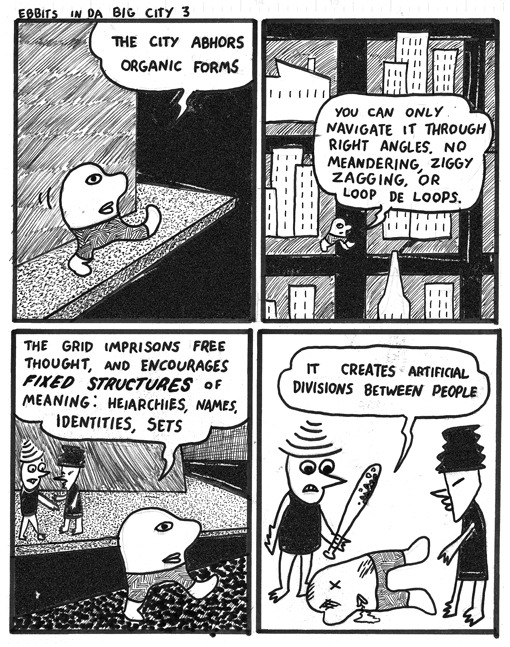
@dantescanline as far as i know i'm the only person with an ebbits tattoo