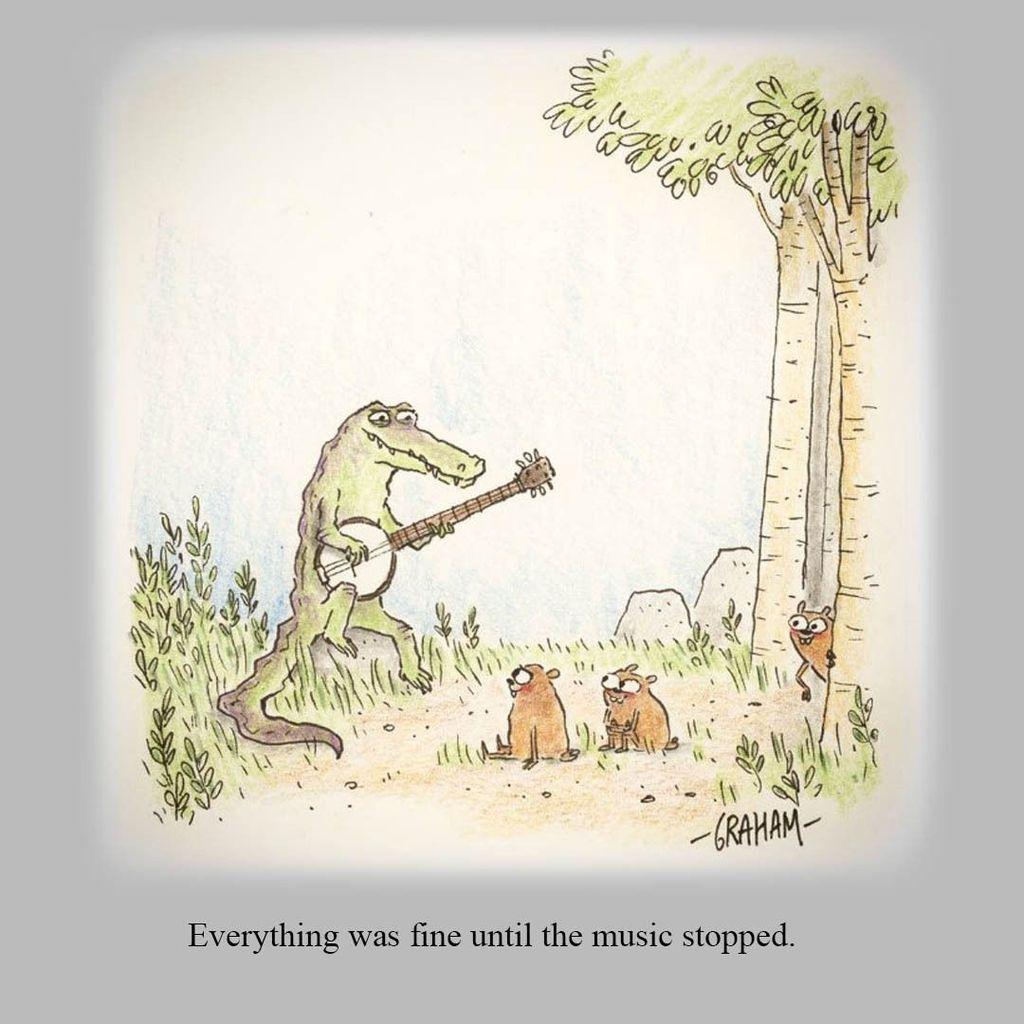
#agile #scrum #tech #softwaredevelopment #meme #funny
Uncategorized
34
Posts
21
Posters
64
Views

-
@kwramm @ahltorp @crazyeddie @PavelASamsonov I understand very little of what's being said here, but it gives some context to the scene where the newly vampiric quant scrum sits in front of a whiteboard with post-its, listing traditional vampire powers and weaknesses, developing an action plan and assigning members to test them out.
@mwshook sounds like Kanban @kwramm @ahltorp @crazyeddie
-
@mwshook sounds like Kanban @kwramm @ahltorp @crazyeddie
@PavelASamsonov @mwshook @kwramm @ahltorp A kanban like board is used. Pretty much all the agile methodologies use them. Scrum adds a bunch of other stuff that made it acceptable to PM types when Agile was newer. Now Agile is fairly well recognized as a valid approach to PM.
Most teams are probably better off going more the LEAN route than Scrum. LEAN is basically, KanBan+ whatever works--the object to whittle down your process to the bare essentials so you can just make stuff.
-
@ahltorp @crazyeddie @mwshook @PavelASamsonov Velocity has nothing to do with Scrum. It's mentioned exactly 0 times in the Scrum guide. And that is really where the problem with "Scrum" starts... the Scrum-Industrial-Complex tries to sell you all this extra crap on top... (Jira, story points, planning poker, and whatever crap you can turn into a paid-for training...or book!)
@kwramm @ahltorp @crazyeddie @mwshook @PavelASamsonov for the record, "rock solid velocity" was the end-goal of James Shore's version of Agile (not Scrum), which I have always appreciated.
-
@mwshook @PavelASamsonov It's actually not that bad as a starting point. One of the heavier agile process systems but it's workable and it works within a large business that expects a bunch of process. Has established roles that are well described, which is pretty important if you are required to work within the bounds of a QMS.
People love to hate on it but it's better than a lot of the alternatives. Provides some structure for leaders who can't seem to come up with any otherwise.
@crazyeddie @mwshook @PavelASamsonov as process, it's tolerable(ish), but the trap is that it is entirely agnostic to the rigorous technical practices that made early XP teams successful—so it's up to the people doing the actual work to maintain internal quality in the face of pressure from clueless MBA types to "make number go up."
But hey, let's tag in @jamesshore for fun. Hi, Jim! 👋🏻
-
@PavelASamsonov Wow. I haveread Charles Stross's "The Rhesus Chart", the 5th book of the Laundry Files, where a scrum of amoral investment bank quants turn into vampires. I figured scrum was generic British slang for an office team. Now after 30 seconds of googling for agile scrum I am truly chilled to the bone.
The Laundry books are like that, a nice Lovecraftian (or other) horror story spliced with Cold War bureaucracy and IT.
This moose got nowhere near "death march" programming and Agile, but did have to endure ISO9000/BS5750 and "Lean", plus "Race to the bottom" Outsourcing/Offshoring, "Everything at the cheapest possible price", and every problem/change management system being worse than the one before.
I'm retired now. I have no regrets.
-
@PavelASamsonov Wow. I haveread Charles Stross's "The Rhesus Chart", the 5th book of the Laundry Files, where a scrum of amoral investment bank quants turn into vampires. I figured scrum was generic British slang for an office team. Now after 30 seconds of googling for agile scrum I am truly chilled to the bone.
@mwshook I always thought the collective noun for a group of bankers should be „a wunch“.
-
@PavelASamsonov @cstross SCRUM were a nice common sense idea once. Then management and consultants got hold of it.
-
@crazyeddie @mwshook @PavelASamsonov There are some things that are useful in Scrum, but those things are usually what gets thrown out first.
Then there are things like ”velocity” that is some real bullshit.
And once you have ”leaders” imposing Scrum, it’s not self-organised anymore. So in practice it probably only works when the team is self-organised to begin with, which makes the whole framework have very limited value.
@ahltorp @crazyeddie @mwshook @PavelASamsonov It's all just "we suck at gathering requirements and writing specifications so we're going to dress that up as a virtue and give it a fancy name".
-
@kwramm @ahltorp @crazyeddie @mwshook @PavelASamsonov for the record, "rock solid velocity" was the end-goal of James Shore's version of Agile (not Scrum), which I have always appreciated.
@travisfw @kwramm The ”immutable” Scrum Guide has been updated(!) many times since I was doing anything called Scrum more than 15 years ago, and conveniently that version of the document seems hard to find, but I believe you. But even the current Scrum Guide says that ”Other sources provide patterns, processes, and insights that complement the Scrum framework”.
-
@travisfw @kwramm The ”immutable” Scrum Guide has been updated(!) many times since I was doing anything called Scrum more than 15 years ago, and conveniently that version of the document seems hard to find, but I believe you. But even the current Scrum Guide says that ”Other sources provide patterns, processes, and insights that complement the Scrum framework”.
-
@ahltorp @crazyeddie @mwshook @PavelASamsonov It's all just "we suck at gathering requirements and writing specifications so we're going to dress that up as a virtue and give it a fancy name".
@woe2you It’s not only ”we suck at gathering requirements”, it’s also ”it’s often not meaningful to gather requirements in a vacuum”. Those are actually among the good parts, having stakeholder representation in the team. ”Fancy name” is among the bad parts.
-
-
The Laundry books are like that, a nice Lovecraftian (or other) horror story spliced with Cold War bureaucracy and IT.
This moose got nowhere near "death march" programming and Agile, but did have to endure ISO9000/BS5750 and "Lean", plus "Race to the bottom" Outsourcing/Offshoring, "Everything at the cheapest possible price", and every problem/change management system being worse than the one before.
I'm retired now. I have no regrets.
@Cadbury_Moose @mwshook If you liked Laundry Files you might like The Rook, Antimemetics Division, and Monday Begins on Saturday.
-
@Cadbury_Moose @mwshook If you liked Laundry Files you might like The Rook, Antimemetics Division, and Monday Begins on Saturday.
@PavelASamsonov @Cadbury_Moose @mwshook
+1 for antimemetics division -
@PavelASamsonov this happened to me about as literally as possible on this plane
-
@PavelASamsonov @Cadbury_Moose @mwshook
+1 for antimemetics division@jaystephens @PavelASamsonov @Cadbury_Moose @mwshook
There is no antimemetics division -
@ahltorp @travisfw The oldest book I have in my library is Schwaber's "Software Development with Scrum" from 2002, which is quite interesting. It's a lot more people / culture focused than even the Scrum guide (there's just so much you can write on 11 pages). They do have burndowns there, but even their they put in bold that it's (delivered) "results" that matter. The burndown shows how much work remains so you can plan. That's it. Overall the book feels very close to the Agile Manifesto
-
@ahltorp @travisfw well, yes, it's been part of the Scrum "story" just like certifications, trainers and whatnot. But it's not integral to Scrum.
You can do Scrum without "Velocity". You can use any other method to a) track how much work you do (better = track how much value is delivered and realized) and b) how much you can commit and reliably deliver at the end of the sprint (overcommitting = disappointed client).
You could track man-hours instead, and it works. -
@travisfw @kwramm The ”immutable” Scrum Guide has been updated(!) many times since I was doing anything called Scrum more than 15 years ago, and conveniently that version of the document seems hard to find, but I believe you. But even the current Scrum Guide says that ”Other sources provide patterns, processes, and insights that complement the Scrum framework”.
@ahltorp @travisfw I read the Scrum guide first in 2014 or so, after starting off with all kinds of books that add tons of extra complexity.
It's kinda liberating how simple Scrum can be. I feel the simpler you keep it, the more powerful it is.
And if in doubt between the Scrum guide and what helps your team: Talk to your team FIRST about what works for them - that's what Retrospectives are for - that's pretty much in line with Schwaber's book that I mentioned in my other reply. People first!














Gli ultimi otto messaggi ricevuti dalla Federazione
-
@spraoi la Fête d'hiver!
-
En Suisse Romande les journaux disent « les réseaux » soit « les réseaux sociales ». Pour Fedi on dit Fedi, soit « fair social ».
-
Il mio s'è rotto. Avevo Hello Kitty.
Comunque qualche mese fa, sistemando un cassetto, ho trovato uno dei quei portachiavi che 𝘵𝘦𝘰𝘳𝘪𝘤𝘢𝘮𝘦𝘯𝘵𝘦 suonavano quando battevi le mani o fischiavi. Ancora sigillato nella sua confezione.
-
La speranza è quella cosa piumata
che si posa sull’anima
canta melodie senza parole ... https://cctm.website/emily-dickinson-da-sillabe-di-seta/Emily Dickinson
#EmilyDickinson #poesia #cctmwebsite #anoipiaceleggere #leggere
-
@evan Web Royale
-
Ma che fine hanno fatto quei portachiavi che si illuminavano quando partivano le chiamate?
-
-
@OKdad I already got my daughter to be completely turned off by Barbie dolls at age 3, totally rejecting them (after I explained to her that they have impossible dimensions that do not exist IRL and if a real woman looked like a Barbie she wouldn't be able to engage in a lot of fun sports, because she'd be too frail). Gotta do the same with Big Tech tools