Cool History Fact of the night
Uncategorized
19
Posts
12
Posters
0
Views
-
Cool History Fact of the night
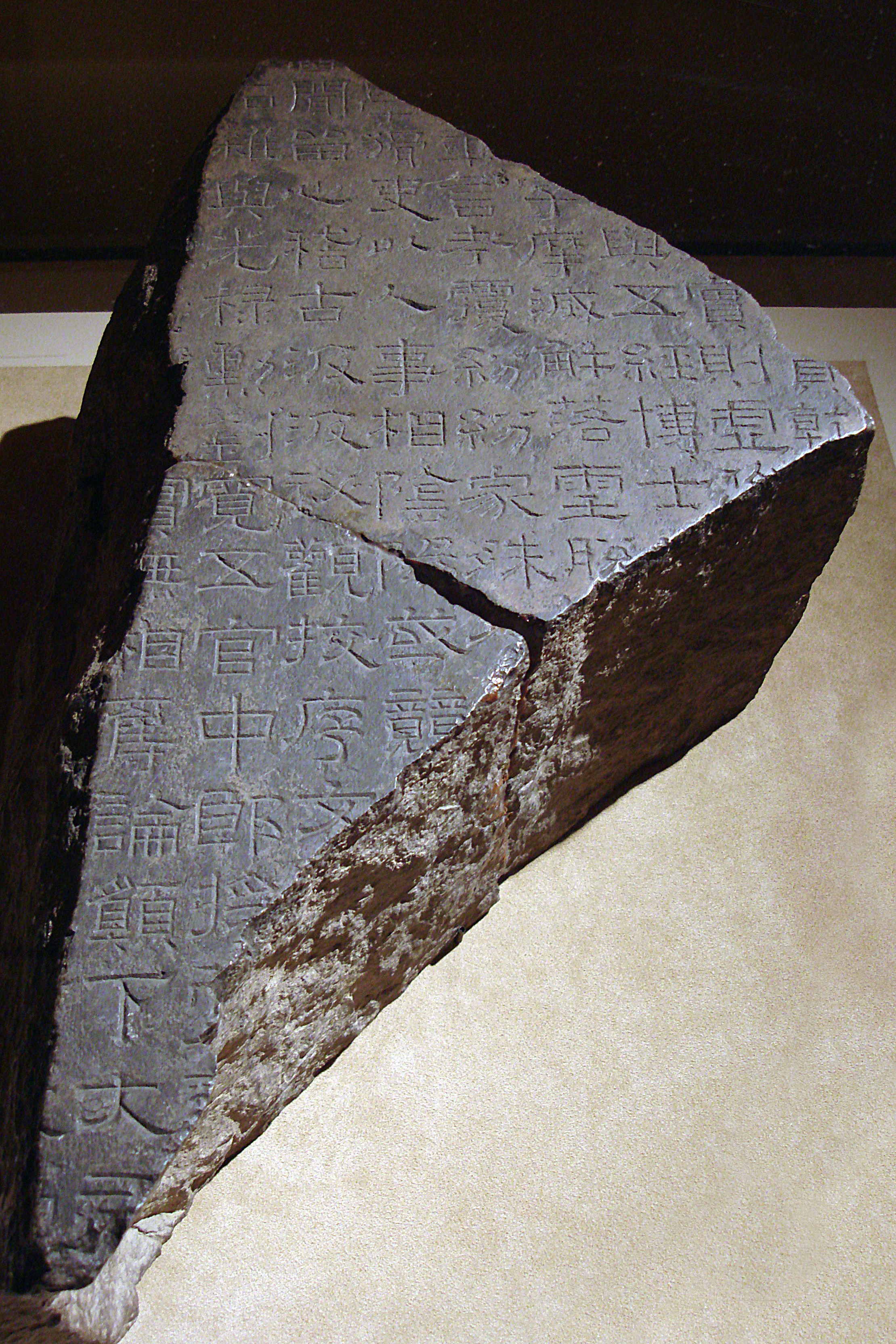
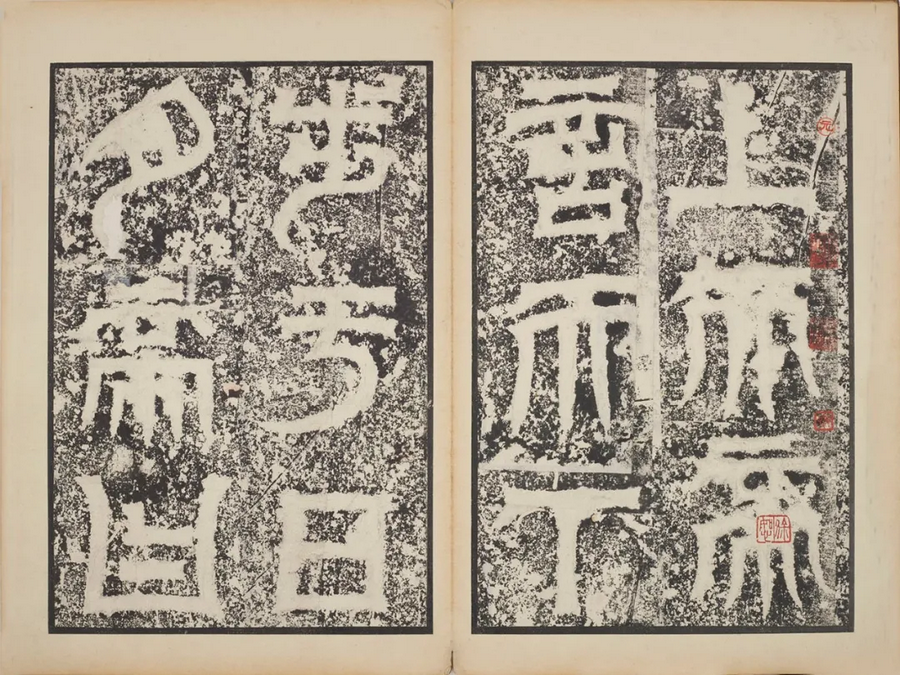
Before woodblock printing (which was extensively used in China well before the west), there was a very clever, effective way to mass-reproduce the most important texts.
A few different times in imperial China, stone tablets of the most important books were commissioned. Anyone could walk up and look at them, but more importantly: anyone could lay a wet piece of paper over them and then gently rub ink over the paper, which would create a copy of white text on a black background.(And unlike printing, nothing needs to be done backwards.)
And if you were a famous enough calligrapher, you'd be asked to write onto a stone so someone else could chisel out your handwriting exactly, and then copies could be mass-reproduced as teaching examples.
(and I'm fascinated by how the stone fragment here is 1800 years old but the writing style is already extremely legible to me. It still uses the X-style 五 but is otherwise very Normal)
-
Cool History Fact of the night
Before woodblock printing (which was extensively used in China well before the west), there was a very clever, effective way to mass-reproduce the most important texts.
A few different times in imperial China, stone tablets of the most important books were commissioned. Anyone could walk up and look at them, but more importantly: anyone could lay a wet piece of paper over them and then gently rub ink over the paper, which would create a copy of white text on a black background.(And unlike printing, nothing needs to be done backwards.)
And if you were a famous enough calligrapher, you'd be asked to write onto a stone so someone else could chisel out your handwriting exactly, and then copies could be mass-reproduced as teaching examples.
(and I'm fascinated by how the stone fragment here is 1800 years old but the writing style is already extremely legible to me. It still uses the X-style 五 but is otherwise very Normal)
@0xabad1dea never heard about this practice thanks! Do you have few sources or famous examples to share please?
-
@0xabad1dea never heard about this practice thanks! Do you have few sources or famous examples to share please?
https://en.wikipedia.org/wiki/Xiping_Stone_Classics
https://en.wikipedia.org/wiki/Kaicheng_Stone_Classics
image search "Chinese rubbings" for many many examples of the paper transfer
-
Cool History Fact of the night
Before woodblock printing (which was extensively used in China well before the west), there was a very clever, effective way to mass-reproduce the most important texts.
A few different times in imperial China, stone tablets of the most important books were commissioned. Anyone could walk up and look at them, but more importantly: anyone could lay a wet piece of paper over them and then gently rub ink over the paper, which would create a copy of white text on a black background.(And unlike printing, nothing needs to be done backwards.)
And if you were a famous enough calligrapher, you'd be asked to write onto a stone so someone else could chisel out your handwriting exactly, and then copies could be mass-reproduced as teaching examples.
(and I'm fascinated by how the stone fragment here is 1800 years old but the writing style is already extremely legible to me. It still uses the X-style 五 but is otherwise very Normal)
@0xabad1dea there is the exact same thing in one piece. If you are not familiar, one of the plot device are poneglyph, indestructible stone cube with character written on them. Some when put together make a map so the pirates fight each other over it. But as they are big stones, it's easier to make paper copy than stealing one
-
Cool History Fact of the night
Before woodblock printing (which was extensively used in China well before the west), there was a very clever, effective way to mass-reproduce the most important texts.
A few different times in imperial China, stone tablets of the most important books were commissioned. Anyone could walk up and look at them, but more importantly: anyone could lay a wet piece of paper over them and then gently rub ink over the paper, which would create a copy of white text on a black background.(And unlike printing, nothing needs to be done backwards.)
And if you were a famous enough calligrapher, you'd be asked to write onto a stone so someone else could chisel out your handwriting exactly, and then copies could be mass-reproduced as teaching examples.
(and I'm fascinated by how the stone fragment here is 1800 years old but the writing style is already extremely legible to me. It still uses the X-style 五 but is otherwise very Normal)
@0xabad1dea I remember doing grave rubbings as a kid, but I didn't realise something similar had a practical use
-
https://en.wikipedia.org/wiki/Xiping_Stone_Classics
https://en.wikipedia.org/wiki/Kaicheng_Stone_Classics
image search "Chinese rubbings" for many many examples of the paper transfer
@0xabad1dea thanks! do we know the purpose of the texts concerned by this practice? Was it a “Mr nobody” thing?
-
@0xabad1dea thanks! do we know the purpose of the texts concerned by this practice? Was it a “Mr nobody” thing?
@simon_lepuissant I don’t know what “Mr. Nobody” means in this context but we’re talking, like, the top five most famous and important books in the ancient Chinese cultural sphere, such as the Analects of Confucius. Calligraphy exemplars could be anything.
-
@simon_lepuissant I don’t know what “Mr. Nobody” means in this context but we’re talking, like, the top five most famous and important books in the ancient Chinese cultural sphere, such as the Analects of Confucius. Calligraphy exemplars could be anything.
@0xabad1dea i said mr nobody referring to the people coming to duplicate the text. Do we know if it was a kind of « take away » printed literature or smthg. Sorry if I’m unclear.
-
Cool History Fact of the night
Before woodblock printing (which was extensively used in China well before the west), there was a very clever, effective way to mass-reproduce the most important texts.
A few different times in imperial China, stone tablets of the most important books were commissioned. Anyone could walk up and look at them, but more importantly: anyone could lay a wet piece of paper over them and then gently rub ink over the paper, which would create a copy of white text on a black background.(And unlike printing, nothing needs to be done backwards.)
And if you were a famous enough calligrapher, you'd be asked to write onto a stone so someone else could chisel out your handwriting exactly, and then copies could be mass-reproduced as teaching examples.
(and I'm fascinated by how the stone fragment here is 1800 years old but the writing style is already extremely legible to me. It still uses the X-style 五 but is otherwise very Normal)
It’s very interesting.. I’d be curious at this point how accessible paper and even ink was to the population. It still required some minimal wealth.
-
It’s very interesting.. I’d be curious at this point how accessible paper and even ink was to the population. It still required some minimal wealth.
@GhostOnTheHalfShell aiui paper was much cheaper in China than in Europe. And ink was (and is) just charcoal+glue. You can get a traditional handmade ink stick for like $2 and the videos of their manufacture are very satisfying, it looks like black taffy candy
-
@GhostOnTheHalfShell aiui paper was much cheaper in China than in Europe. And ink was (and is) just charcoal+glue. You can get a traditional handmade ink stick for like $2 and the videos of their manufacture are very satisfying, it looks like black taffy candy
I’m thinking historically.
-
Cool History Fact of the night
Before woodblock printing (which was extensively used in China well before the west), there was a very clever, effective way to mass-reproduce the most important texts.
A few different times in imperial China, stone tablets of the most important books were commissioned. Anyone could walk up and look at them, but more importantly: anyone could lay a wet piece of paper over them and then gently rub ink over the paper, which would create a copy of white text on a black background.(And unlike printing, nothing needs to be done backwards.)
And if you were a famous enough calligrapher, you'd be asked to write onto a stone so someone else could chisel out your handwriting exactly, and then copies could be mass-reproduced as teaching examples.
(and I'm fascinated by how the stone fragment here is 1800 years old but the writing style is already extremely legible to me. It still uses the X-style 五 but is otherwise very Normal)
@0xabad1dea This is a (partial photo) of a Korean ink rubbing from a stone the method you described. Made by a relative, it's supposed to be a part of a saying by Confucius.
-
Cool History Fact of the night
Before woodblock printing (which was extensively used in China well before the west), there was a very clever, effective way to mass-reproduce the most important texts.
A few different times in imperial China, stone tablets of the most important books were commissioned. Anyone could walk up and look at them, but more importantly: anyone could lay a wet piece of paper over them and then gently rub ink over the paper, which would create a copy of white text on a black background.(And unlike printing, nothing needs to be done backwards.)
And if you were a famous enough calligrapher, you'd be asked to write onto a stone so someone else could chisel out your handwriting exactly, and then copies could be mass-reproduced as teaching examples.
(and I'm fascinated by how the stone fragment here is 1800 years old but the writing style is already extremely legible to me. It still uses the X-style 五 but is otherwise very Normal)
@0xabad1dea this is such a cool fact, I want to tell everyone!
-
Cool History Fact of the night
Before woodblock printing (which was extensively used in China well before the west), there was a very clever, effective way to mass-reproduce the most important texts.
A few different times in imperial China, stone tablets of the most important books were commissioned. Anyone could walk up and look at them, but more importantly: anyone could lay a wet piece of paper over them and then gently rub ink over the paper, which would create a copy of white text on a black background.(And unlike printing, nothing needs to be done backwards.)
And if you were a famous enough calligrapher, you'd be asked to write onto a stone so someone else could chisel out your handwriting exactly, and then copies could be mass-reproduced as teaching examples.
(and I'm fascinated by how the stone fragment here is 1800 years old but the writing style is already extremely legible to me. It still uses the X-style 五 but is otherwise very Normal)
@0xabad1dea huh, yeah, that is Just Chinese Writing. I wouldn't blink if a modern font just looked like that
-
@0xabad1dea huh, yeah, that is Just Chinese Writing. I wouldn't blink if a modern font just looked like that
a modern computer font which looks similar as this ancient writing (it's sorta "artistic" and not used for professional documents though):
-
@pounce @0xabad1dea yes, it's documented on wikipedia:
https://zh.wikipedia.org/wiki/%E6%B3%A8%E9%9F%B3%E7%AC%A6%E8%99%9F
-
a modern computer font which looks similar as this ancient writing (it's sorta "artistic" and not used for professional documents though):
@bootlegrydia @pikhq @0xabad1dea
It's a style called clerical script. Very popular in signs and calligraphy all over the sinosphere. I've even been given a note written in ballpoint pen in a style that was visibly clerical.
One characteristic is the occasional use of archaic forms, like the x-form 五 OP mentioned.
-
Cool History Fact of the night
Before woodblock printing (which was extensively used in China well before the west), there was a very clever, effective way to mass-reproduce the most important texts.
A few different times in imperial China, stone tablets of the most important books were commissioned. Anyone could walk up and look at them, but more importantly: anyone could lay a wet piece of paper over them and then gently rub ink over the paper, which would create a copy of white text on a black background.(And unlike printing, nothing needs to be done backwards.)
And if you were a famous enough calligrapher, you'd be asked to write onto a stone so someone else could chisel out your handwriting exactly, and then copies could be mass-reproduced as teaching examples.
(and I'm fascinated by how the stone fragment here is 1800 years old but the writing style is already extremely legible to me. It still uses the X-style 五 but is otherwise very Normal)
Really cool tech.
-
Cool History Fact of the night
Before woodblock printing (which was extensively used in China well before the west), there was a very clever, effective way to mass-reproduce the most important texts.
A few different times in imperial China, stone tablets of the most important books were commissioned. Anyone could walk up and look at them, but more importantly: anyone could lay a wet piece of paper over them and then gently rub ink over the paper, which would create a copy of white text on a black background.(And unlike printing, nothing needs to be done backwards.)
And if you were a famous enough calligrapher, you'd be asked to write onto a stone so someone else could chisel out your handwriting exactly, and then copies could be mass-reproduced as teaching examples.
(and I'm fascinated by how the stone fragment here is 1800 years old but the writing style is already extremely legible to me. It still uses the X-style 五 but is otherwise very Normal)
@0xabad1dea
They do it with fish too -
 undefined oblomov@sociale.network shared this topic











Feed RSS
Gli ultimi otto messaggi ricevuti dalla Federazione
-
Domani sarà un altro giorno… e che giornata… supereremo i 2M di download con @ufficiozero e poi? Sempre a lavoro per voi. Ah il numero di download è reale e facilmente dimostrabile tramite la piattaforma Source Forge 😉
-
Lettura della strategia informatica del presidente Trump per l'America alla Casa Bianca. L'analisi di @securityaffairs
La strategia riflette un cambiamento più ampio: il cyberspazio non è più visto semplicemente come un ambito tecnico da difendere, ma come un'arena strategica in cui il potere nazionale viene esercitato, protetto e proiettato.
-
"Quando non siamo più in grado
di cambiare una situazione,
siamo sfidati a cambiare
noi stessi."— Viktor E. Frankl
-
molti umani divagano quando parlano, spesso anche quando scrivono.
...uhm.
Oppure ho preso per buoni contenuti che non erano human made?Ancora per quanto avremo ragione di manifestare questi dubbi? Quanto impiegherà la bolla economica a esplodere e allora dovremmo preoccuparci di cose pure più importanti?
-
@informapirata @katttivizzima @aitech Una delle mie descrizioni è "matematto divagatore". Ma appunto torno poi sempre a casa...
-
ULTRA🧊BLAST (@ultrakillblast.bsky.social)
https://bsky.app/profile/ultrakillblast.bsky.social/post/3mgn2xxnc4k22
-
> gli autori umani non divaghino troppo
io, beh... tendo a divagare in maniera abnorme, eh...
-
@katttivizzima se un LLM mi mette una fonte che non esiste continuerò a rivelarlo come tale. Se mi cita una fonte che dice tutt'altro, butto via comunque il testo. (Purtroppo anche molta gente fa finta di citare una fonte ma dice tutt'altro...)




Post suggeriti
-
A nice array of newspaper mastheads in blackletter type (Simon Garfield, "Just My Type")
Uncategorized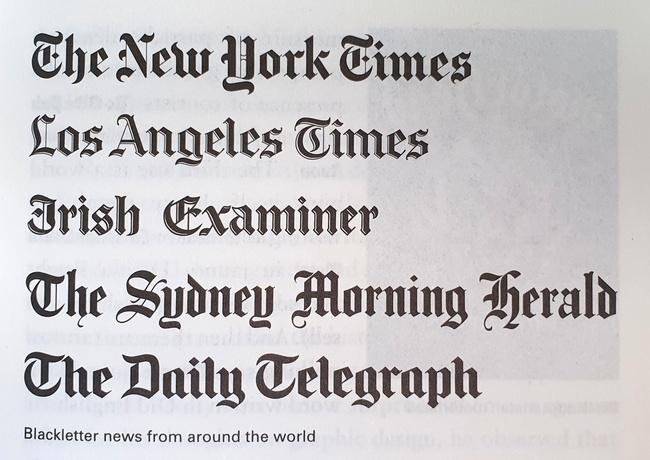 1
1
-
I'm a bit of a typography nerd but I need the help of better nerds, please and thank you:
Uncategorized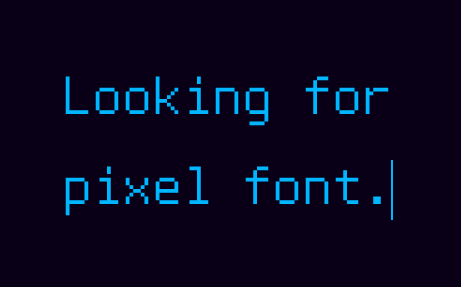 1
1
-
-
Today on New Living Internet Translations:Do not post in anger, do not get mired in a flamewar because you’re mad online.
Uncategorized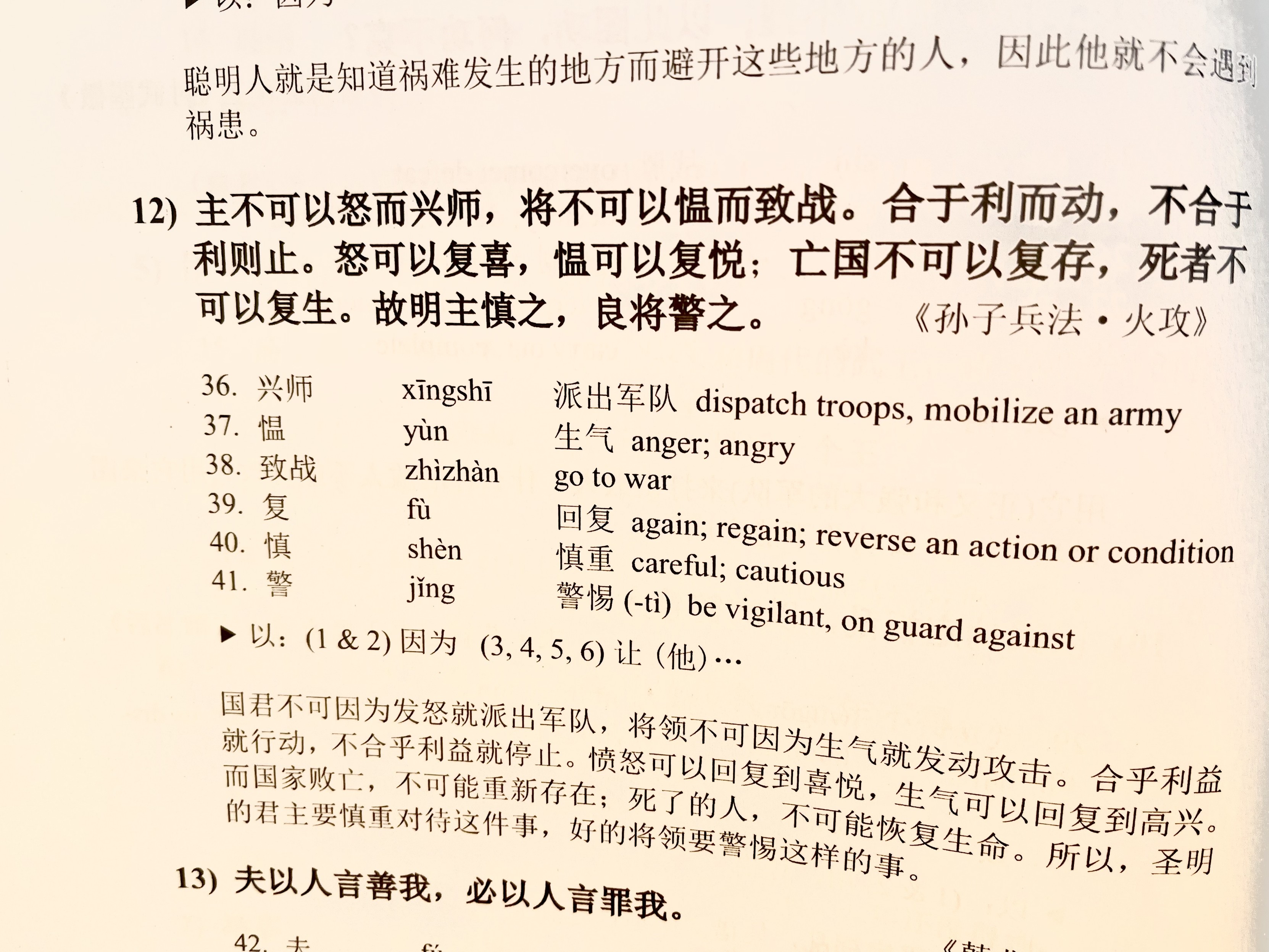 1
1