Skip to content

Piero Bosio Social Web Site Personale Logo Fediverso

Social Forum federato con il resto del mondo. Non contano le istanze, contano le persone

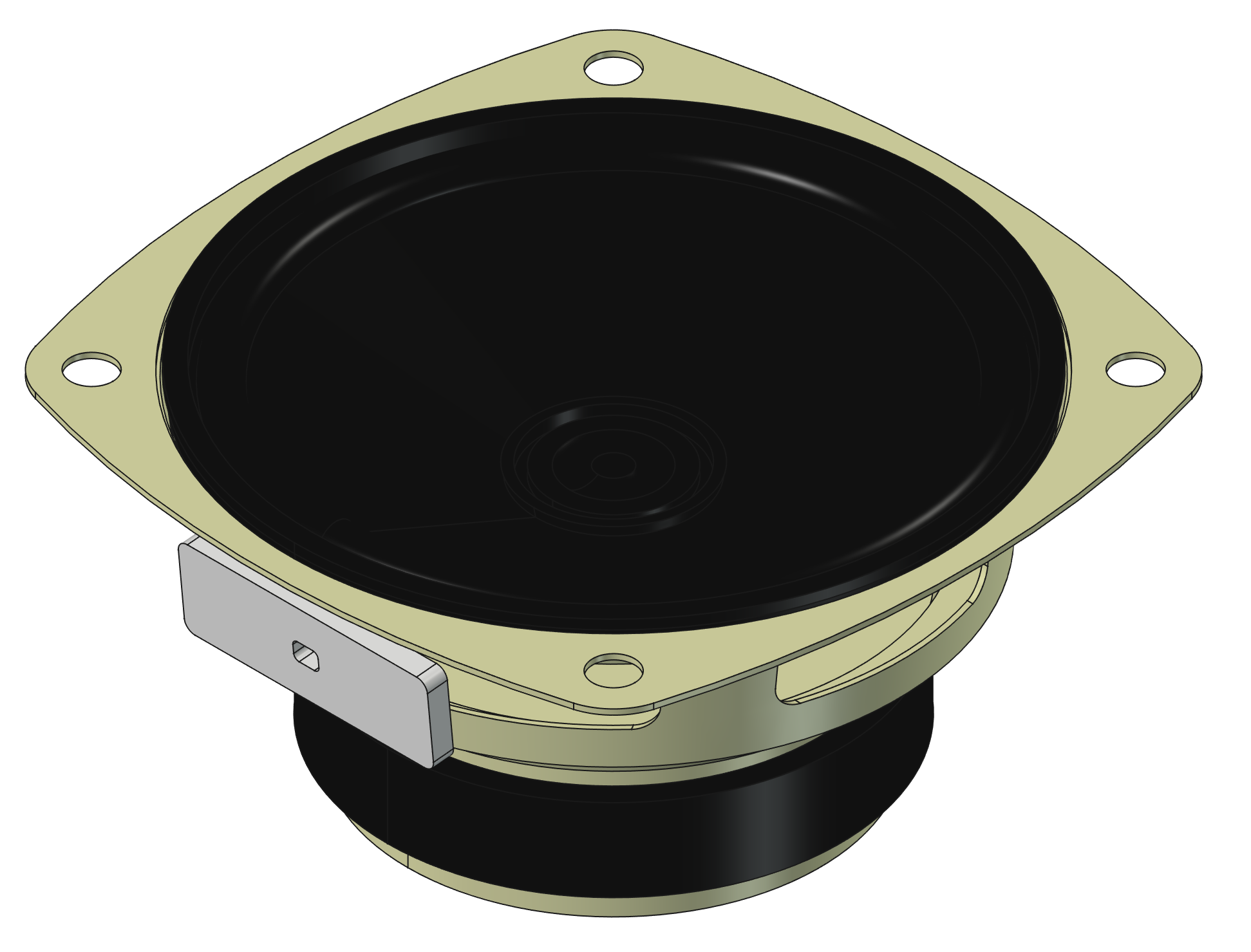
In order to 3d print a little amplified speaker box to use for #HamRadio SSB 2-operator POTA with my wife, I want to model components and then model the box to go around them.

Uncategorized
1 1 8
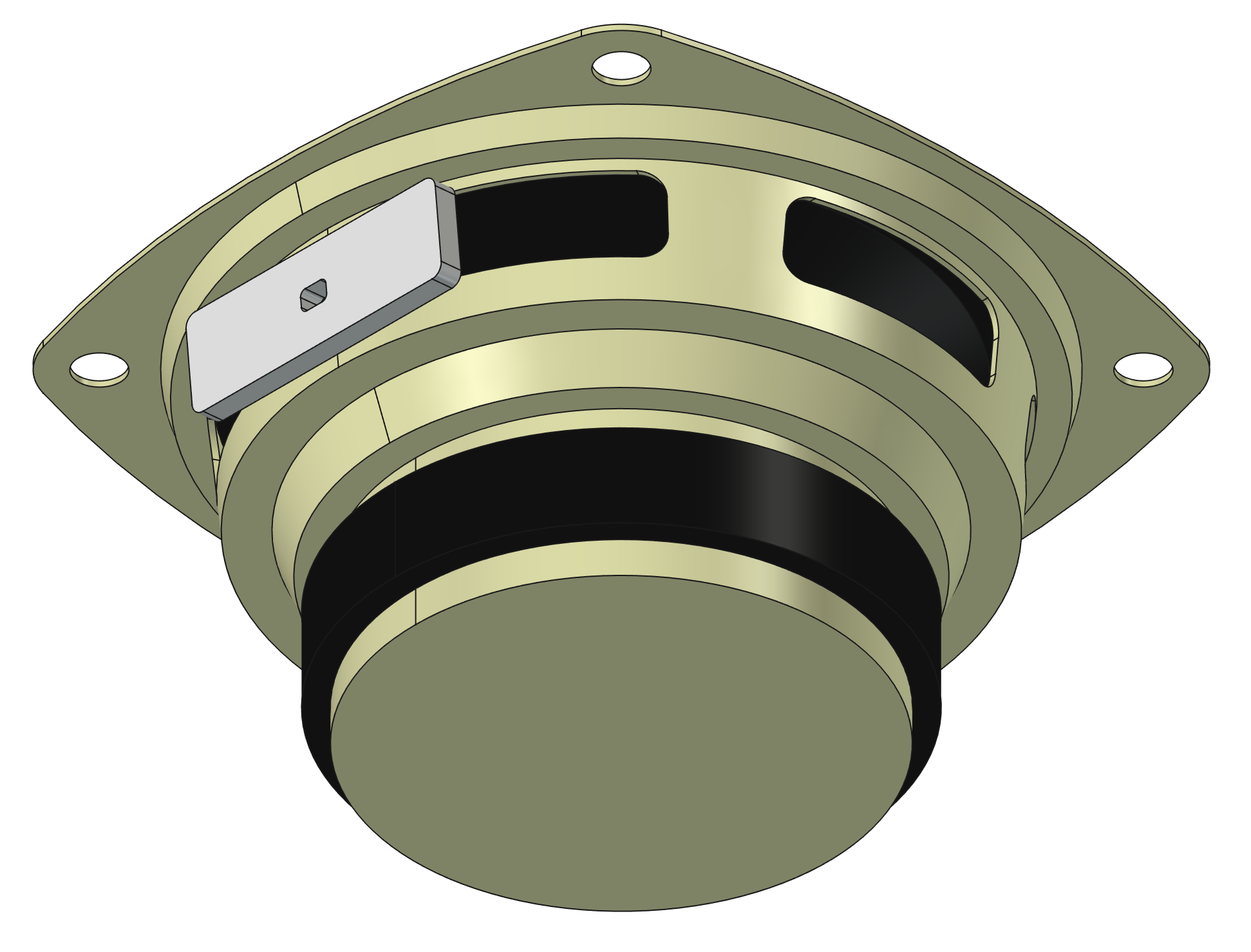
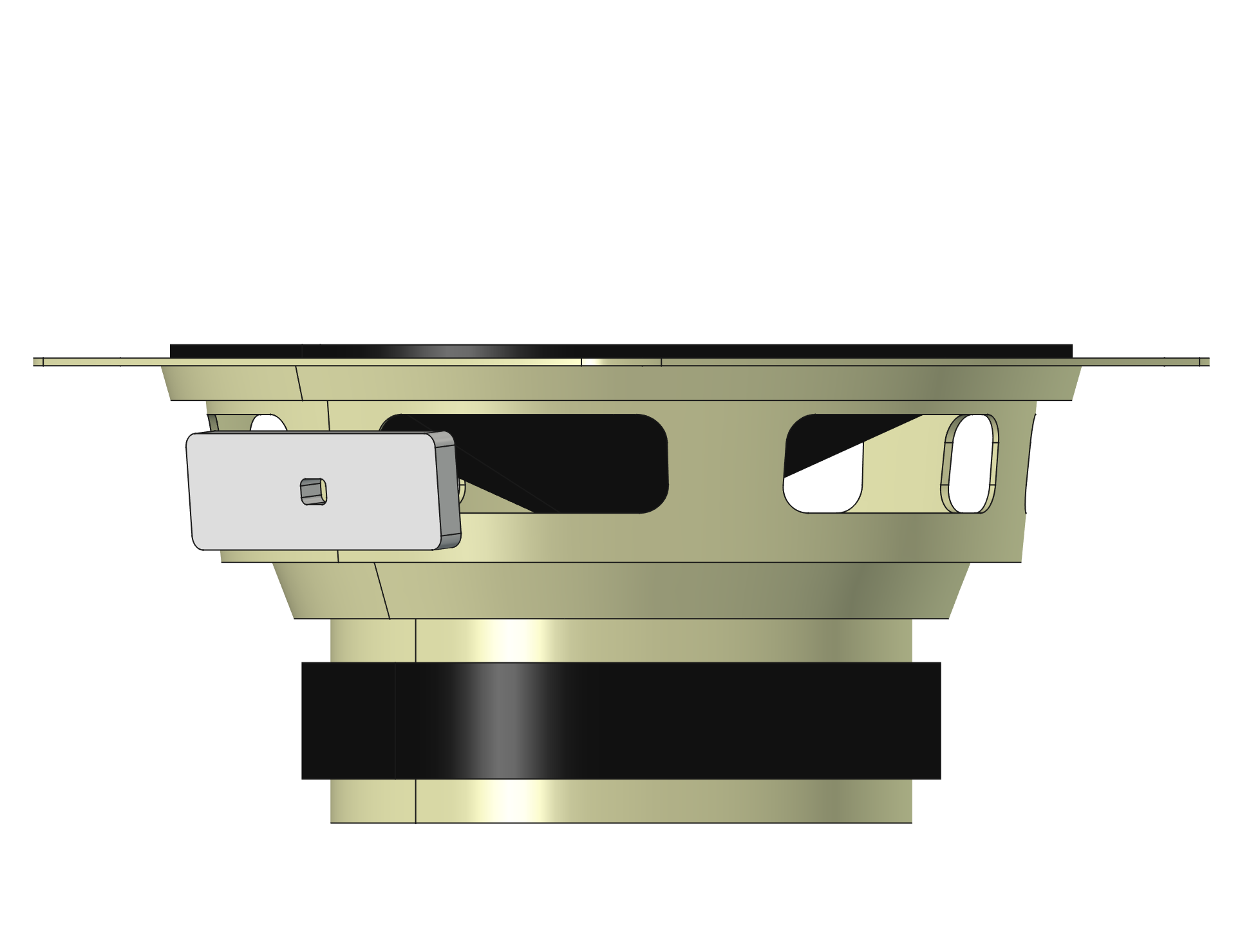
  • In order to 3d print a little amplified speaker box to use for SSB 2-operator POTA with my wife, I want to model components and then model the box to go around them. I found a speaker on grabcad that is only a few mm different from the speaker I found in my bin. Just different enough that I need to start over to create a good basis for my box model. I didn't bother constraining everything perfectly when modeling the steps in the metal shell, and I didn't model the cone accurately because those really don't matter that much. It's good enough to check for interference.

    I have barrel and XT60 power connectors already modeled from my last project to choose from here, but I need to add models for the 3.5" phono jacks and the TDA2050 amplifier board I bought from Amazon. Trying to decide whether to use that completely as-is or desolder the potentiometer for the volume control and use wires to re-route it to a more convenient place. A model might help answer that question.

    Not quite unless you give me about 22 hours of grace. 😀

  • oblomov@sociale.networkundefined oblomov@sociale.network shared this topic on
    77nn@goto.77nn.itundefined 77nn@goto.77nn.it shared this topic on

Gli ultimi otto messaggi ricevuti dalla Federazione
Post suggeriti
  • 0 Votes
    1 Posts
    5 Views
    Dear listening community, what are your thoughts about the Malahit DSP2 radio ? And compared to Belka (DX model with of course reduced freq range).Besides wide range and NR that is said to be great, what would you say about the product ?(Informed already on the origin of the product, speaking tech only)#swl #shortwave #shortwaveradio #malahit #belka #sdr #hamradio
  • 0 Votes
    1 Posts
    3 Views
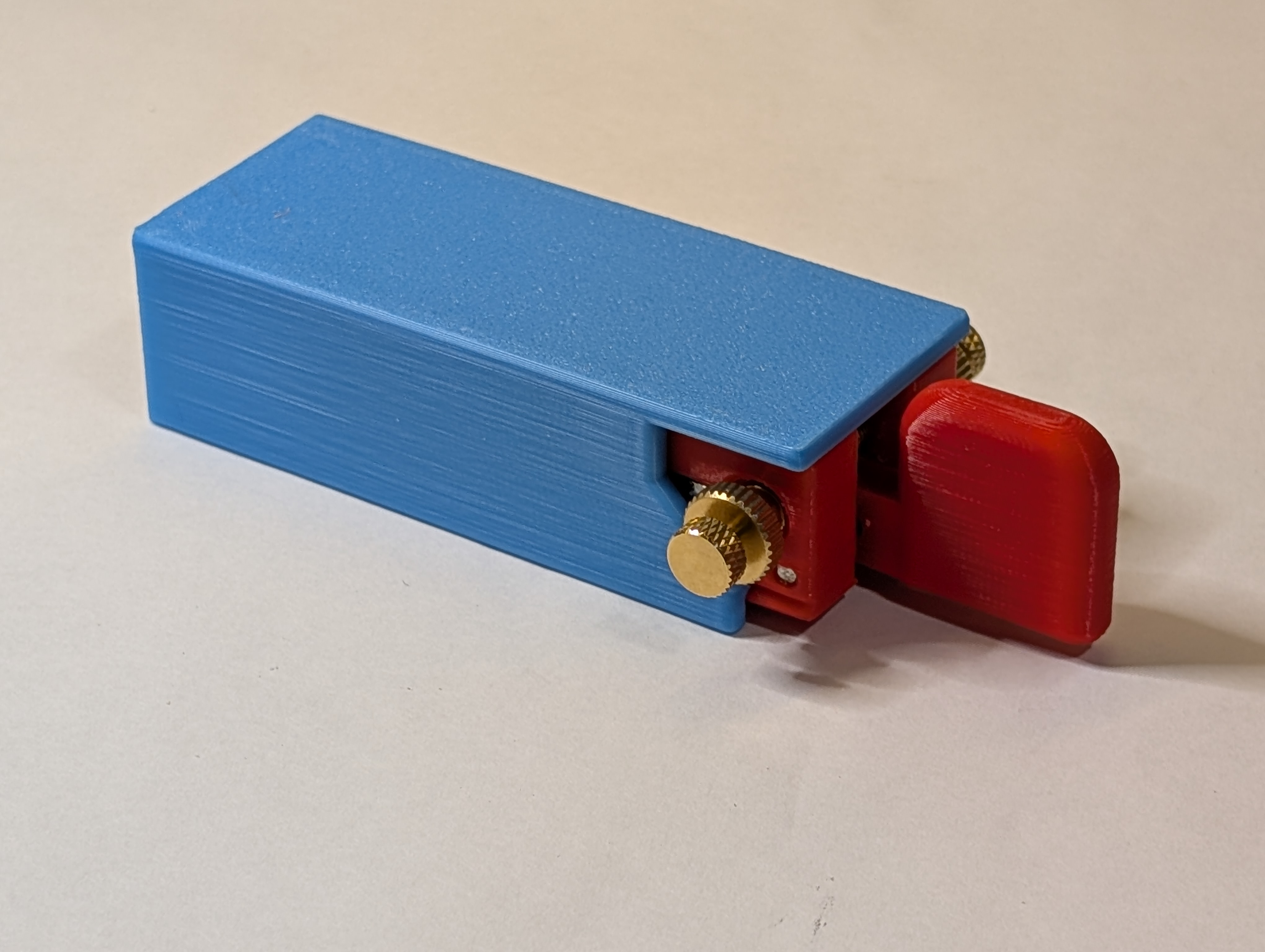
    Today I released version 0.7 of my print-in place single-paddle Morse code key.This will function as release notes:The most important practical change is that the slot in the lever for the stabilizer bar is taller, so that it doesn't bind. Previously, it sometimes bound depending on luck, and when it didn't bind, needed to be greased with a light lubricant.The most important user-facing change is updated build instructions, now with pictures. Previously, the instructions were just text.The most important developer-facing change is that it was rebuilt with FreeCAD 1.1RC, and all recalculation errors and warnings were removed. previously, it had quit building correctly due to changes in FreeCAD.The side contacts are better aligned with the common/ground screw in the lever when using thin ring terminals. (It was previously optimized for thick terminals.)The rear stabilizing bar was never necessary and was just extra weight and ugly complexity, so it has been removed.The spring radius is no longer an explicit parameter.I added more links to sources for hardware.This is getting close to what I would consider a polished, 1.0 release.As always, I crave feedback. If you build this, I want to hear what went well and what, if anything did not.#MorseCode #HamRadio
  • 0 Votes
    2 Posts
    6 Views
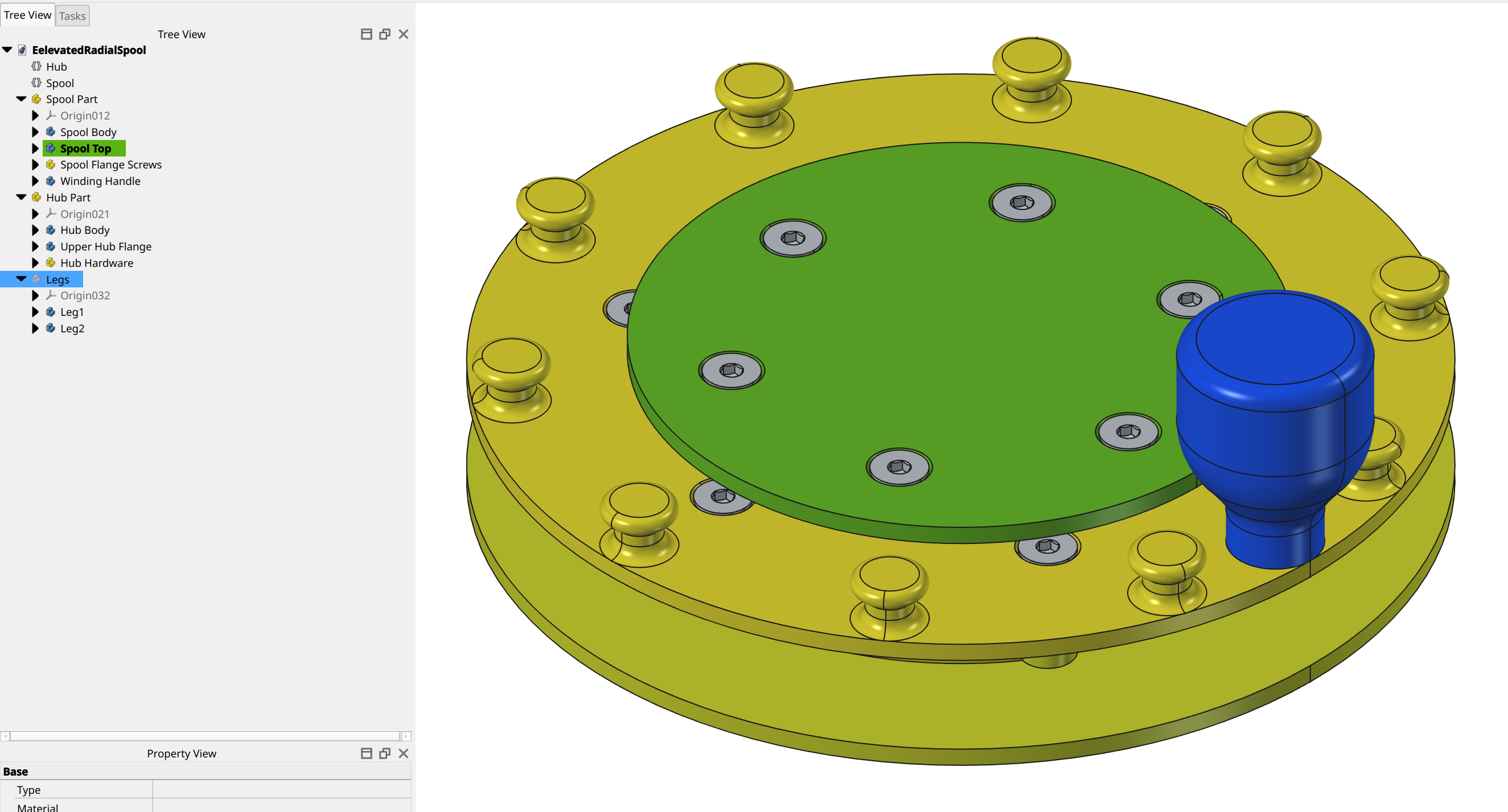
    The prototype worked well enough that I'll proceed on to another iteration. Leaning it out with two legs held up by the radial wire worked well, and the little knobs on the top of the spool to hold the wire in place work fine. I'll made them a touch larger to be more robust, but the concept works.I want to be able to fit 12m of wire on the spool, because I want radials that work well as flat radials on 40m, which might take up to 28%λ instead of the nominal ¼λ which would be appropriate in the "discone" setup with 45° radials. However, with this wire, 8m barely fits on this spool. So I need to add a generous allowance for more wire.I need a handle for the hub at the bottom so that I can wind it up with the legs removed. It's unwieldy with two 6' long fiberglass stakes.According to DJØIP, 1 elevated, tuned radial is roughly equivalent to 8 ground radials. Two of these should give me the performance of 16 ground radials. According to his table, I can expect 3.76dB gain over my usual 4 radials on the ground, or even more if I'm using a shortened antenna.With these just leaning, if someone inadvertently walks into my bright pink wire, they'll probably just knock over the leaning posts, which is unlikely to cause a big problem. I'll probably use bullet connectors for the other end of the wire so that they can pop out and not knock the antenna over.
  • 0 Votes
    1 Posts
    14 Views
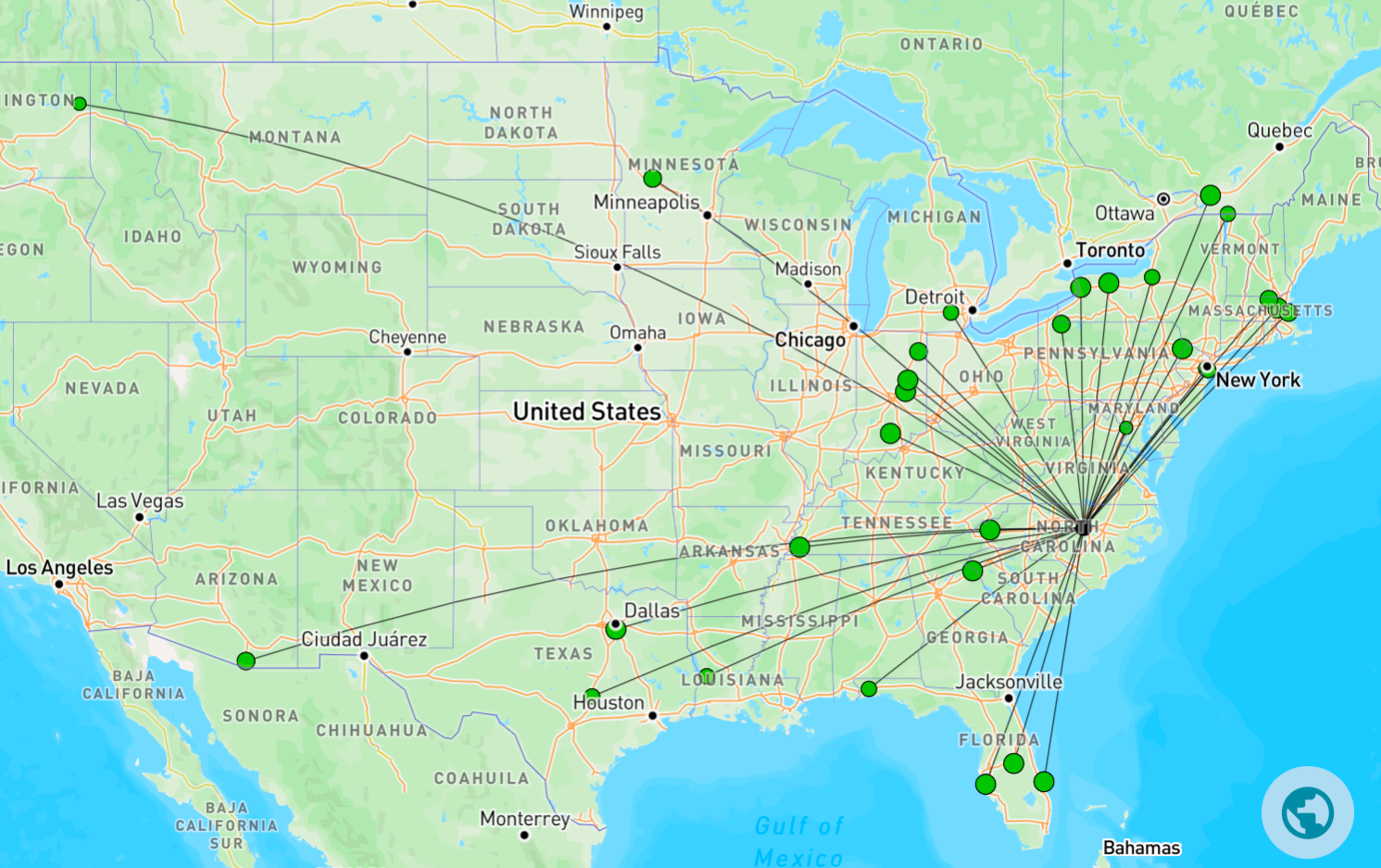
    Today's #HamRadio #POTA (Parks On The Air) adventure. Absolutely gorgeous, couldn't-be-better fall weather on a Saturday, so that it was a little surprising that we found parking space and that all the picnic tables were empty. Used my spiderbeam push-up mast to hold my inverted-v linked dipole up, tied the ends out to some trees, and got on the air on 20 meters, using CW (morse code) as usual. I first hunted operators in other parks and got 4 QSOs, but the pileups were deep, so I found a quiet frequency and called CQ. I didn't have to wait for responses, either! Some pileups were so deep they sounded like modem noise (showing my age here). A little intimidating for the new CW operator, but the other operators were patient with me.AZ is one of the states I haven't gotten in my hunter logs yet, so I was happy to see AZ pop up for one call sign. However, that operator reported IL, so I still don't have AZ. I'll have to keep hunting!By the end, I was getting a lot of QRM (interference from human sources). That's the curse of operating QRP (low power) — I'm sure they couldn't hear my measly 5W and weren't intentionally operating on top of me. That was OK, though; I had 31 QSOs and I was ready to QRT (quit) for the day.