What did people use back in the days to make games and stuff on an Amiga?
Uncategorized
16
Posts
12
Posters
19
Views
-
What did people use back in the days to make games and stuff on an Amiga? Every tutorial I see uses modern PC-based stack.
And I don't mean what did the big guys use. I mean, what could an average Amiga Joe with a stock A600 and no hard drive easily get their hands on and use at home on the TV? The poor-man's stack.
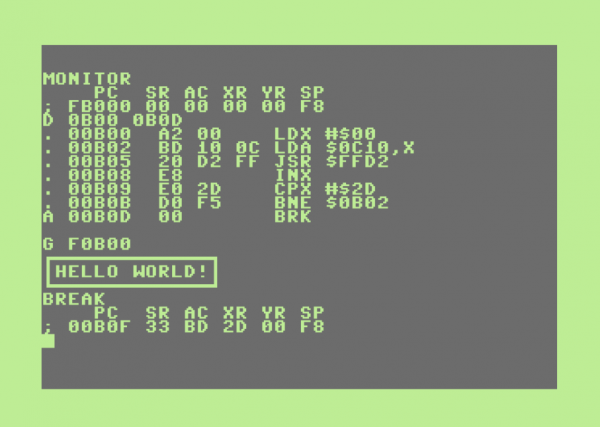
As in, what is the Amiga equivalent of typing assembly code directly into a machine code monitor on a C64?
-
What did people use back in the days to make games and stuff on an Amiga? Every tutorial I see uses modern PC-based stack.
And I don't mean what did the big guys use. I mean, what could an average Amiga Joe with a stock A600 and no hard drive easily get their hands on and use at home on the TV? The poor-man's stack.
As in, what is the Amiga equivalent of typing assembly code directly into a machine code monitor on a C64?
@sos The Aztec and Lattice C compilers were popular among developers back then.
-
What did people use back in the days to make games and stuff on an Amiga? Every tutorial I see uses modern PC-based stack.
And I don't mean what did the big guys use. I mean, what could an average Amiga Joe with a stock A600 and no hard drive easily get their hands on and use at home on the TV? The poor-man's stack.
As in, what is the Amiga equivalent of typing assembly code directly into a machine code monitor on a C64?
@sos There is a good tutorial series by Scoopex on Youtube, using an editor and assembler on the machine.
https://youtube.com/playlist?list=PLc3ltHgmiidpK-s0eP5hTKJnjdTHz0_bW
-
@sos The Aztec and Lattice C compilers were popular among developers back then.
@amoroso Oh that's suprising! I was under the impression that everyone wrote ASM by hand
-
@sos There is a good tutorial series by Scoopex on Youtube, using an editor and assembler on the machine.
https://youtube.com/playlist?list=PLc3ltHgmiidpK-s0eP5hTKJnjdTHz0_bW
@xtof Oh yes! Thanks for this!
-
@amoroso Oh that's suprising! I was under the impression that everyone wrote ASM by hand
@sos Those C compilers also came with assemblers, I had the Lattice one.
-
@amoroso Oh that's suprising! I was under the impression that everyone wrote ASM by hand
@sos @amoroso I think full asm was just demo scene and really hectic arcade style stuff. From the little code I’ve seen open sourced, it seems a mixed route was popular, like on PC. Performance critical stuff in asm and the rest in C/Cpp/Pascal. On Amiga you could then even go a step further and code everything by hand and bypass Intuition ( the kickstart/WB supplied routines) to access the different chips directly
-
What did people use back in the days to make games and stuff on an Amiga? Every tutorial I see uses modern PC-based stack.
And I don't mean what did the big guys use. I mean, what could an average Amiga Joe with a stock A600 and no hard drive easily get their hands on and use at home on the TV? The poor-man's stack.
As in, what is the Amiga equivalent of typing assembly code directly into a machine code monitor on a C64?
@sos mostly Assembler, especially for games and demos.
I remember Devpac and SEKA having very strong advocates!
-
What did people use back in the days to make games and stuff on an Amiga? Every tutorial I see uses modern PC-based stack.
And I don't mean what did the big guys use. I mean, what could an average Amiga Joe with a stock A600 and no hard drive easily get their hands on and use at home on the TV? The poor-man's stack.
As in, what is the Amiga equivalent of typing assembly code directly into a machine code monitor on a C64?
@sos first, they were having a second disk drive. Life with Workbench is way easier with a small hard drive (especially on a A600, you have IDE/PCMCIA slots). Most people were using AMOS or Blitz basic. In France, GFA Basic was a thing. Some friend were using asm, but I can't remember which program. Maybe check old magazines archives.
-
@sos @amoroso I think full asm was just demo scene and really hectic arcade style stuff. From the little code I’ve seen open sourced, it seems a mixed route was popular, like on PC. Performance critical stuff in asm and the rest in C/Cpp/Pascal. On Amiga you could then even go a step further and code everything by hand and bypass Intuition ( the kickstart/WB supplied routines) to access the different chips directly
@kwramm @sos @amoroso I remember some division about this on the Amiga side of my circle of friends back then. Some were really into squeezing every drop of performance out of the system, insisting that as opposed to the x86, 68k assembly is an utter joy to write. Coupled with superior editors like GoldEd / CygnusEd. Also the faction that didn't like bloated frameworks like MUI.
The other part was quite content with C/C++/Amiga E or even Amos Basic.
Quite often the latter owned more performant systems, like souped up 1200s or 4000s.
-
@xtof Oh yes! Thanks for this!
-
What did people use back in the days to make games and stuff on an Amiga? Every tutorial I see uses modern PC-based stack.
And I don't mean what did the big guys use. I mean, what could an average Amiga Joe with a stock A600 and no hard drive easily get their hands on and use at home on the TV? The poor-man's stack.
As in, what is the Amiga equivalent of typing assembly code directly into a machine code monitor on a C64?
@sos I did lots of CyguysEd for Amige E and assembler. I think I had an ARexx to glue it together. When I’m into coding my Amiga today I use Vim 5 and GCC 2.9
-
What did people use back in the days to make games and stuff on an Amiga? Every tutorial I see uses modern PC-based stack.
And I don't mean what did the big guys use. I mean, what could an average Amiga Joe with a stock A600 and no hard drive easily get their hands on and use at home on the TV? The poor-man's stack.
As in, what is the Amiga equivalent of typing assembly code directly into a machine code monitor on a C64?
@sos For me assembly programming was AsmOne or Devpac. C programming was SAS/C or DICE compiler and edited with CygnusEd.
-
What did people use back in the days to make games and stuff on an Amiga? Every tutorial I see uses modern PC-based stack.
And I don't mean what did the big guys use. I mean, what could an average Amiga Joe with a stock A600 and no hard drive easily get their hands on and use at home on the TV? The poor-man's stack.
As in, what is the Amiga equivalent of typing assembly code directly into a machine code monitor on a C64?
@sos Everyone in my circle had a HDD - it was hard to do more serious stuff on floppies. AsmOne for assembler, AMOS for games, CygnusEd for C and Pascal. Also first contact with Emacs :) (microEmacs was on one of Workbench disks).
My first 'computer money' was for article in 'Magazyn Amiga' about using Intuition library from Pascal :) -
@sos The Aztec and Lattice C compilers were popular among developers back then.
-
@cmackenzie I used Lattice C too.












Gli ultimi otto messaggi ricevuti dalla Federazione
-
Edit: by the way, when I saw the comic it kept in my mind the idea of "this bikini seems too conservative for the character, no?"... then I remember that I live in Brazil where woman use quite revealing clothes in the beach.
-
@caosorganizzato sto ridendo come un coglione immaginando uno che lava la biancheria nella friggitrice ad aria, ma ho il sospetto che non sia quella la battuta, è un semplice non sequitur?
-
This post did not contain any content.
-
We know constant plugs are annoying, but please try to take a different perspective here:
Although millions of people read our comics every week, it's still difficult for creators to make a living. We don't get any money directly from Instagram or any other platform we post on.
If we wouldn’t have a Patreon page, we’d have to get real jobs and couldn't make comics at all.
-
So when you see plugs from us or any other artist, please be kind and remember we're just trying to keep creating. Thank you for understanding!
-
@georgetakei@universeodon.com
How do you lose an election, and why is Democracy failing in America?" If it is not progressive, it will be conservative. "
I have been saying this for years because I understand that the voting mentality, wants, and needs of the population have changed. To spell it out: if you're a wishy-washy moderate, you're unelectable — only people who focus on politics instead of people believe otherwise.
The Governor of California, Gavin Newsom, is one of those wishy-washy moderates — or, as I call them, corporate conservative Democrats. This is the man, for example, who wants to add age verification in every OS (operating system), including Linux. That is not the only problem with him, but it is the most recent one I can recall. The point is, he is not a progressive, and he is not going to win reelection.
Many people don't vote anymore. I do, I assume you do, and perhaps many people on the Fediverse do — but many don't. My sister and her husband, for example, don’t. I sometimes question the value of doing so if the end result is the same. Yes, I said the same — and we can argue about the differences, because there are differences — but at the end of the day, we still end up in the same place we don’t want to go. The only difference is whether we get there fast or slow.
MAGA is simply awful — there is no denying that — but they are giving their supporters exactly what they want. Meanwhile, you have a wishy-washy moderate who will work with these people while claiming unity is more important than change or accountability. So ultimately, we go down that same path by different means, and that’s the path we want to avoid.
People argue that we have to block that awful outcome — but block what? We're still going there. These people will compromise with Nazi pedophiles and tell us it is for the good of the country. And so many people no longer feel enthusiastic or motivated to support any of this.
And we know “next time” is a lie that never comes. It’s what they told my grandpa his whole life, and he passed away at 103 years old waiting for that make-believe “next time.” My parents are in their 70s and late 60s, I’m in my 40s, most people's kids are in their 20s, and the next generation to come is being told the same lie. We’ve all caught on by now.
We need someone who truly is one of us and represents the will of the people. The will of the people is both conservative and progressive at this time in history. Conservatives are being told they can have exactly what they want — when they want it, how they want it — and those corporate conservative Democrats, who are not progressive, will give it to them because they claim unity is more important than change and accountability.
If it is not progressive, it will be conservative. I guarantee it.
-
@existentialcomics late bronze age kids collectively shudder