working on the scene just before the finale of Paisiello's Barber.
Uncategorized
22
Posts
3
Posters
1
Views
-
worth noting that Paisiello's Count does not ask Rosina to marry him, he just tells her to marry him and she requires no coersion because she was about to be forced to marry an old doctor so marrying a young aristocrat is a big upgrade. she had no choice but is happy because the new situation somebody else picked for her is better than the prior existing one. if you think there's a lot to unpack there I have great news: female agency within this system is a central focus of the sequel
BARTOLO: io perdei per poca cura!
FIGARO: dite pur per poca testa -
BARTOLO: io perdei per poca cura!
FIGARO: dite pur per poca testaThe narrative trajectory
The Count wants to test Rosina's worthiness by winning her love as a commoner
He attempts to anonymously use the levers of institutional power to gain access (the forged billet) but this fails
He attempts to use the social power of a gentleman of the same rank as Rosina (as "Don Alonso") to gain access, but this fails
He physically breaks in but Rosina rejects him
He goes fuck this and as his true self easily bulldozes all obstacles and takes what he wants -
The narrative trajectory
The Count wants to test Rosina's worthiness by winning her love as a commoner
He attempts to anonymously use the levers of institutional power to gain access (the forged billet) but this fails
He attempts to use the social power of a gentleman of the same rank as Rosina (as "Don Alonso") to gain access, but this fails
He physically breaks in but Rosina rejects him
He goes fuck this and as his true self easily bulldozes all obstacles and takes what he wantsin this case the failures are not a standard narrative arc of the hero slowly making progress while facing adversity, the narrative purpose of the Count's repeated failures is to show the idea of his succeeding by merit alone is a joke, the very system from which he derives his power makes success by merit impossible. all his pointless incognito make-believe did was indulge his vanity and waste everyone's else's time
-
in this case the failures are not a standard narrative arc of the hero slowly making progress while facing adversity, the narrative purpose of the Count's repeated failures is to show the idea of his succeeding by merit alone is a joke, the very system from which he derives his power makes success by merit impossible. all his pointless incognito make-believe did was indulge his vanity and waste everyone's else's time
it is also significant to Beaumarchais's satire that the story involves the whims of a count and not a prince in the manner of a more fairy tale/allegorical treatment. a prince is special. a count is the lowest tier of nobleman. the fact that the count isn't even special or important is central to the point: just the fact that he's some random noble gives him free license to fuck everyone over with no consequences
-
it is also significant to Beaumarchais's satire that the story involves the whims of a count and not a prince in the manner of a more fairy tale/allegorical treatment. a prince is special. a count is the lowest tier of nobleman. the fact that the count isn't even special or important is central to the point: just the fact that he's some random noble gives him free license to fuck everyone over with no consequences
point of interest: in Rossini's Barber, Bartolo sends for the notary, and since Figaro is a trickster, he intercepts the notary and gets him to prep paperwork for the Count and Rosina instead. it's not the marriage the Count would have picked but the situation forces it
in Beaumarchais's/Paisiello's Barber, the Count sends for the notary. He gives no shits about religion or love, he just wants to acquire a high value asset (Rosina), and the marriage proceeds exactly per his plan
-
point of interest: in Rossini's Barber, Bartolo sends for the notary, and since Figaro is a trickster, he intercepts the notary and gets him to prep paperwork for the Count and Rosina instead. it's not the marriage the Count would have picked but the situation forces it
in Beaumarchais's/Paisiello's Barber, the Count sends for the notary. He gives no shits about religion or love, he just wants to acquire a high value asset (Rosina), and the marriage proceeds exactly per his plan
rossini's count: our marriage, oh dearest, is the work of love. that love which made you my wife will tie me to you until death (il nostro nodo, o cara, opra è d'amore. amoooooooooooreeeeee che ti fe' mia consorte a te mi stringerà fino alla morte)
paisiello's count: the contract is already signed, who would want to dispute it? (il contratto è già firmato, disputarlo chi vorrei?)
-
rossini's count: our marriage, oh dearest, is the work of love. that love which made you my wife will tie me to you until death (il nostro nodo, o cara, opra è d'amore. amoooooooooooreeeeee che ti fe' mia consorte a te mi stringerà fino alla morte)
paisiello's count: the contract is already signed, who would want to dispute it? (il contratto è già firmato, disputarlo chi vorrei?)
other point of interest: Rosina is not a commoner per se, she is a gentlewoman. the fictional "Lindoro" is in fact a lower social rank than her, which she draws attention to when outraged that the low-born Lindoro would betray her when she was so nice to him despite his being below her station. the Count is hypocritically testing Rosina's virtue by seeing if she can love someone of a social rank he would not himself consider marrying into
-
other point of interest: Rosina is not a commoner per se, she is a gentlewoman. the fictional "Lindoro" is in fact a lower social rank than her, which she draws attention to when outraged that the low-born Lindoro would betray her when she was so nice to him despite his being below her station. the Count is hypocritically testing Rosina's virtue by seeing if she can love someone of a social rank he would not himself consider marrying into
in modern narratives, being attracted to someone on looks alone is considered shallow and a real hero wants the girl based on her personality. something interesting here that I think points to the incompleteness of this concept: Paisiello's Count believes having Rosina as a wife will flatter him due to her intelligence and "fire". Rossini's Count is desperate to be with Rosina and secure her happiness because she is really really pretty you guys. Which of the two counts is the more shallow?
-
in modern narratives, being attracted to someone on looks alone is considered shallow and a real hero wants the girl based on her personality. something interesting here that I think points to the incompleteness of this concept: Paisiello's Count believes having Rosina as a wife will flatter him due to her intelligence and "fire". Rossini's Count is desperate to be with Rosina and secure her happiness because she is really really pretty you guys. Which of the two counts is the more shallow?
I actually think Rossini's Count is in such a pathetic state of wibbling lovesick sadbrains because he loves a lot more than just Rosina's beauty but he's too stupid to articulate exactly what it is that drives his longing, but that still points to how a weird element of many modern love stories (particularly of the "family friendly" variety) is that a heroic character must be able to have the eloquence and self-awareness to verbally express morally virtuous rationales for their attraction
-
I actually think Rossini's Count is in such a pathetic state of wibbling lovesick sadbrains because he loves a lot more than just Rosina's beauty but he's too stupid to articulate exactly what it is that drives his longing, but that still points to how a weird element of many modern love stories (particularly of the "family friendly" variety) is that a heroic character must be able to have the eloquence and self-awareness to verbally express morally virtuous rationales for their attraction
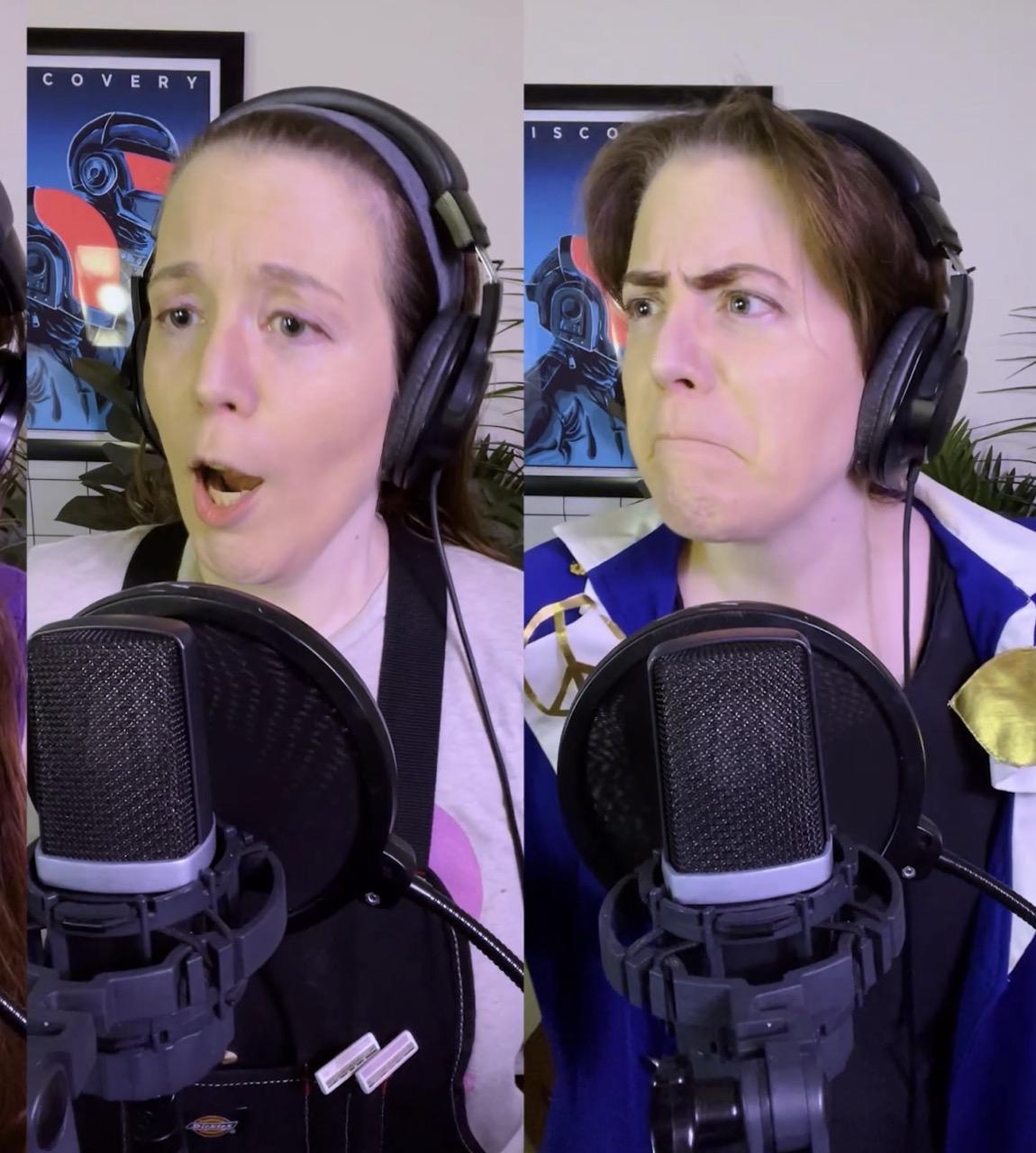
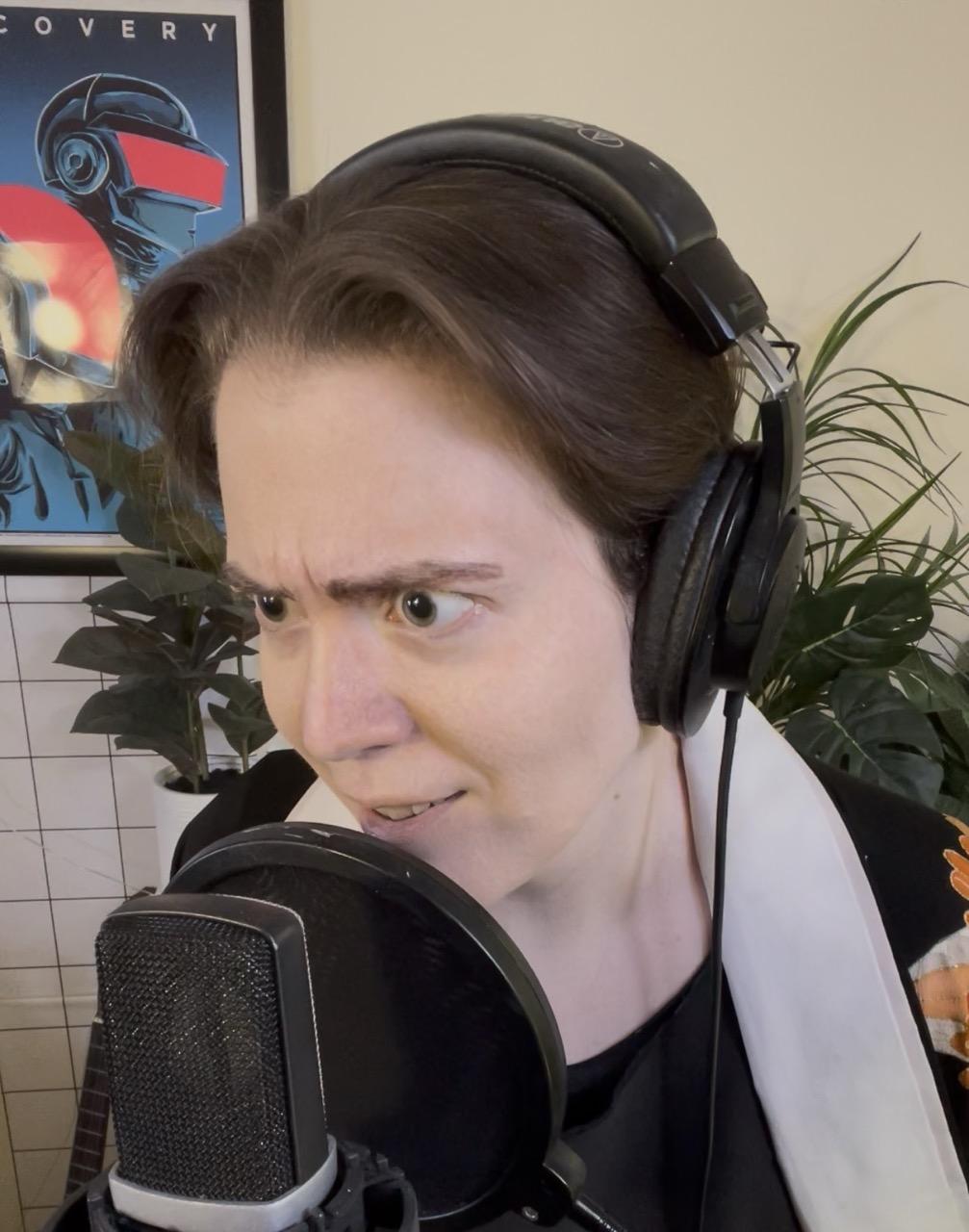
unrelated: it is still wild to me what a drastic effect really small differences in mouth/jaw placement make in the shape of a face. i drew eyebrows and a nose bridge on the count and the characters have different shades of lipstick but the makeup is otherwise the same. it's my own dumb face ive seen a million times and it still seems like distinguishing these characters this drastically with so little shouldn't be possible
-
unrelated: it is still wild to me what a drastic effect really small differences in mouth/jaw placement make in the shape of a face. i drew eyebrows and a nose bridge on the count and the characters have different shades of lipstick but the makeup is otherwise the same. it's my own dumb face ive seen a million times and it still seems like distinguishing these characters this drastically with so little shouldn't be possible
@Xibanya glasses off, straighten up: Superman. So yeah.
-
unrelated: it is still wild to me what a drastic effect really small differences in mouth/jaw placement make in the shape of a face. i drew eyebrows and a nose bridge on the count and the characters have different shades of lipstick but the makeup is otherwise the same. it's my own dumb face ive seen a million times and it still seems like distinguishing these characters this drastically with so little shouldn't be possible
@Xibanya
The hair and the towel - and the body language - makes a big difference too, I think.Wonder what it'd look like if you swapped accessories?
-
@Xibanya
The hair and the towel - and the body language - makes a big difference too, I think.Wonder what it'd look like if you swapped accessories?
@jannem it isn't a towel it is an unfastened kimono 😂


Gli ultimi otto messaggi ricevuti dalla Federazione
-
@Yaku a leggere ste cose mi sento un pochino meno capra
-
-
-
@Freddure @ALFA @DigiDavidex tutti sanno che la terra è ciambella!
-
@FraEmme in silenzio e pure fermi 😂 comunque sembra la mia vecchia classe di secondo liceo, come fanno ad assomigliarsi tutte?
-
@macfranc @ALFA
Certo, per tanti questo periodo è terribile, psicologicamente. Pochi giorni fa ho donato una ventina di Euri a qualcuno che manco conosco per permetterle di fare il Natale lontano da casa, a pochi mesi dalla perdita del marito. Solo perché stare lì le avrebbe fatto malissimo, viste le circostanze (la campagna ha avuto successo, ha potuto organizzare il viaggio in tempi brevissimi).Però, ripeto, il malessere psicologico individuale non mi basta, come spiegazione. Che si allacci in alcuni casi a certe ideologie radicali, in un momento in cui queste vengono pompate urbi et orbi forzosamente e artificialmente, mi sembra un effetto voluto e funzionale a un certo tipo di deriva.
-
@Otttoz
E se fosse emiquadrato? 🤔
-
FFS STOP USING #substack