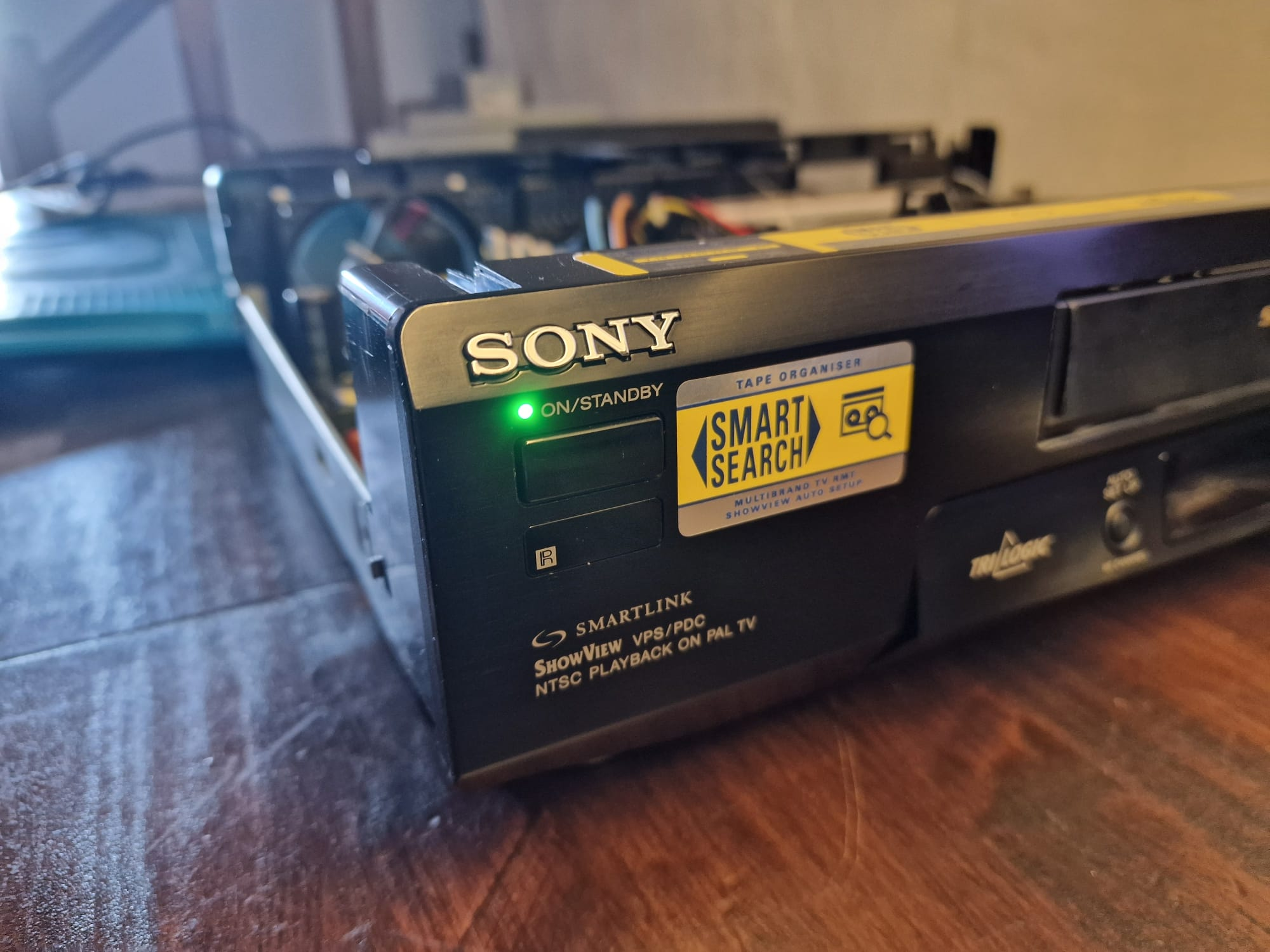
Hrmm due to filling up my database allocation I have had to increase my Masto
Uncategorized
50
Posts
15
Posters
1
Views
-
@dtl I was kinda thinking run it at home tbh. I have fairly stable power and gigabit internet. And real IPv4/6 etc.
@bloor I don't have the networking chops to keep it sufficiently away from anything else on the Lan.
-
@bloor I don't have the networking chops to keep it sufficiently away from anything else on the Lan.
@dtl I'd probably put it on a a separate "hosting block" tbh.
-
@dtl I'd probably put it on a a separate "hosting block" tbh.
@bloor I could probably magic up a VLAN, but I don't know if that's enough.
-
@eigen Masto.Host control panel says 10GB. Although the dump/backup is far less.
-
-
@dtl I was kinda thinking run it at home tbh. I have fairly stable power and gigabit internet. And real IPv4/6 etc.
FWIW, I quite happily run it at home on a NUC.
Although I've got gigabit internet, it turns out it'd probably have been fine on ADSL too
I have moved media to object storage though, which helps a lot
-
-
-
-
-
-
I am self-hosted, on an N100 Intel NUC.
I am not using docker.
I do not do anything fancy to keep it going (and it gets a fair workout :)).
It is not the most trivial installation, but not is it too bad.
-
-
-
I am more than happy to go through it with you remotely at some point, should you wish!
-
fair. Easiest way to think of it is a small prebuilt vm image but without a kernel and (usually) designed to run a single app.
Running a docker container is generally easy, but troubleshooting docker issues can be a pain (though rarely needed IME), so I guess a native install might end up being less burden if you're not already doing that anyway
-
-
fair. Easiest way to think of it is a small prebuilt vm image but without a kernel and (usually) designed to run a single app.
Running a docker container is generally easy, but troubleshooting docker issues can be a pain (though rarely needed IME), so I guess a native install might end up being less burden if you're not already doing that anyway
-
Sure!
Personally, I am not using a VM, although there may be some value to that. I dedicated the whole machine to Mastodon, but then I, erm, use it rather a lot!
So just a normal Debian installation for me.
-
@bloor @wishy @dtl The answer to that depends a bit on exact needs, but
Scalability - I can run far more containers than I can VMs because containers don't usually bring userspace and kernel overhead
Ease of deployment: containers ship with all their deps in there, so there's no screwing about with dep hell (or incompatible deps being required by different apps). That also makes support easier if you're shipping
upgrades are also much easier - you just change the tag and pull the new image.




Gli ultimi otto messaggi ricevuti dalla Federazione
-
Fuuuuuuuuuuuuuuuuuuuuuuuu
-
Trump manda nave sanitaria in Groenlandia
-
@jennyrozema wat super naar :(
-
@evan who are playing?
-
@eniko Yeah, that one is *really* expensive even on simple geometry. Unless you have some shading magic that doesn't work in Eevee, you probably should give that one a shot - it's a lot closer to "real time".
-
@ratsnakegames cycles
-
@Bishop @HurricaneWeasel @gmarcosanti @borgqueen
Ha vinto il blu, anche perché mi faceva fatica fare il cambio di nuovo 🤣
-
@snow avevo letto del progetto LoRa, infatti mi sarebbe piaciuto realizzare una mia stazione, però non lavorando evito di spendere soldi per una cosa che non mi serve