Bases.
Uncategorized
48
Posts
29
Posters
1
Views
-
I will use any damn thing like a number, watch me go.
-
@futurebird Symbol. It means “stands for”. The trouble comes because are reusing 1 and 0 together to mean something different. Somehow you need to convey that the symbol “represents” a concept, it is itself not the concept. The symbol alone carries no meaning except that which we agree to assign it.
@meltedcheese @futurebird this is good
one thing that isn't taught nearly enough (and some religious or reactionary parents might even actively obstruct such learning) is the arbitrariness of the signifier's relationship to the signified and how you need to learn to be able to untangle that to get to higher levels of thinking about anything
...this is kinda starting to feel like that previous discussion https://brain.worm.pin... -
@meltedcheese @futurebird this is good
one thing that isn't taught nearly enough (and some religious or reactionary parents might even actively obstruct such learning) is the arbitrariness of the signifier's relationship to the signified and how you need to learn to be able to untangle that to get to higher levels of thinking about anything
...this is kinda starting to feel like that previous discussion https://brain.worm.pin...@apophis @futurebird Thanks. Understanding the concept of symbol reallly does unlock a lot of reasoning.
-
Bases. (decimal, binary etc) are best explained through examples.
"You can only write three symbols in base 3. These are: 0, 1, 2"
So you count: 0, 1, 2, 10, 11, 12 ...
I think the word "symbols" is confusing, but so is "characters"? Students don't think of numbers or letters as "symbols" or characters. The card sorting puzzle helps with this. But I'm always refining the language:
How would you put this as plainly as possible?
@futurebird In German we have a useful word: Ziffer (single digit number) - as opposed to Zahl (any number)
-
Bases. (decimal, binary etc) are best explained through examples.
"You can only write three symbols in base 3. These are: 0, 1, 2"
So you count: 0, 1, 2, 10, 11, 12 ...
I think the word "symbols" is confusing, but so is "characters"? Students don't think of numbers or letters as "symbols" or characters. The card sorting puzzle helps with this. But I'm always refining the language:
How would you put this as plainly as possible?
@futurebird maybe you could start by introducing the concept of character sets (ASCII probably being the most “obvious” one to start with) so that the students get familiar /comfortable with the idea that even “simple” things like numbers & letters are encoded in computer-land, which could then flow into a discussion of both bases & variables 🤔
^ I’d suggest also the Unicode emoticons / emoji block for the fun factor but then you’re into multi-byte encodings & modifiers which seems you’d probably be throwing students into the deep end waaay too soon -
Bases. (decimal, binary etc) are best explained through examples.
"You can only write three symbols in base 3. These are: 0, 1, 2"
So you count: 0, 1, 2, 10, 11, 12 ...
I think the word "symbols" is confusing, but so is "characters"? Students don't think of numbers or letters as "symbols" or characters. The card sorting puzzle helps with this. But I'm always refining the language:
How would you put this as plainly as possible?
@futurebird I go with "symbols" in Yr10 when I teach it. Certainly avoid "number", because one of the big ideas is to separate the notion of "number" from its representation.
Fun if I have Arabic or Korean or Chinese students. I ask them to write up their digits. -
@futurebird @dancingtreefrog i think at that point the upset about learning something new that violates a socially constructed rule is unavoidable and possibly even harmful to shield the kids from
...i remember the first time in english class when the teacher told us the author we were studying was gay...@apophis @futurebird Hmm, never bothered me, but I went to high school in the late 1960s and studied English in university through the 1970s. I guess I'm just weird.
-
Bases. (decimal, binary etc) are best explained through examples.
"You can only write three symbols in base 3. These are: 0, 1, 2"
So you count: 0, 1, 2, 10, 11, 12 ...
I think the word "symbols" is confusing, but so is "characters"? Students don't think of numbers or letters as "symbols" or characters. The card sorting puzzle helps with this. But I'm always refining the language:
How would you put this as plainly as possible?
@futurebird maybe don't use letters or numbers, use emojis for example
Base 2: 😀😭
Base 3: 😀😅😭 -
They don't have place value. And they use... subtraction. But our students are very familiar with roman numerals for some reason (I think the PE staff uses them a lot?)
I want to bring them out when it can be more obvious how strange they are.
Change the symbols and I don't even know if you could do a sorting problem with them.
@futurebird @merms @graydon I once saw a demonstration (by some maths guy on TV) of doing long division with Roman numerals. It was indeed strange.
-
 undefined oblomov@sociale.network shared this topic
-
Thing is then when we get to hex they are upset that A and F are not "digits" but ... maybe.
@futurebird @dancingtreefrog I vote for digits too. And you can make an example of weird digits even before getting to base 16 if you want to try your luck at teach them about balanced ternary after showing them the classic unbalanced version (use the the upper-side down 1 for the -1 value in writing, or T if typing: «why T?» «Because the Setun never gained commercial success»).
-
@futurebird @dancingtreefrog I vote for digits too. And you can make an example of weird digits even before getting to base 16 if you want to try your luck at teach them about balanced ternary after showing them the classic unbalanced version (use the the upper-side down 1 for the -1 value in writing, or T if typing: «why T?» «Because the Setun never gained commercial success»).
@futurebird @dancingtreefrog BTW I've done this with my kids and their cousins, age 10-16. I have a writeup in Italian about it, called «Twenty twenties» (twenty different ways of writing twenty):
https://wok.oblomov.eu/mathesis/venti-venti/









Feed RSS
Gli ultimi otto messaggi ricevuti dalla Federazione
-
-
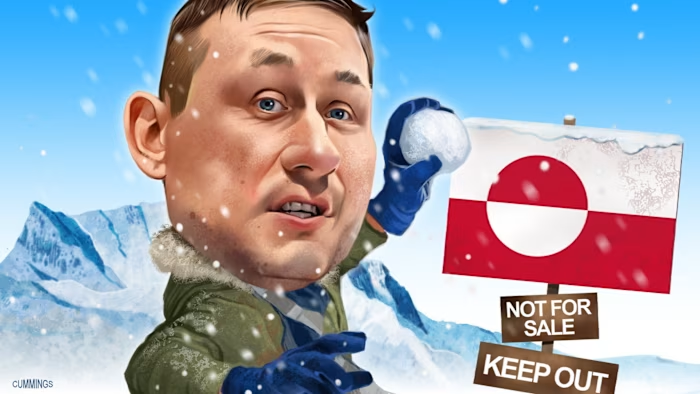
"La sinistra riparta da Jens Frederik Nielsen" è stato già detto? 🤣
#sischerza #greenland #JensFrederikNielsen #Danimarca #Groenlandia
-
Ma sono sicuro che i #PPP avranno un'interpretazione diversa. Che spero non esprimano sotto questo post perché poi mi tocca fingere di essere interessato alle loro teorie. Putin - Anatomia di uno Zar - Ezio Mauro puntata del 12/1/2026 https://www.la7.it/speciali-ezio-mauro/rivedila7/putin-anatomia-di-uno-zar-12-01-2026-627748
-
@stefano niiiiiiice
-
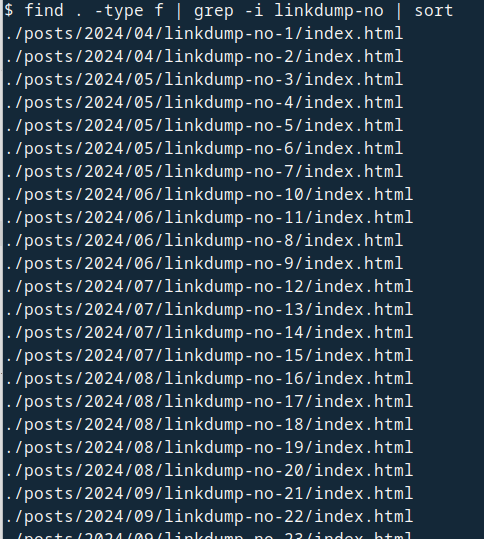
Linux question:
When I go to the output folder of my website and I search for all files with "linkdump-no-*" in the path, which are numbered from 1 through 89, and then I sort this list, the output is ordered, but 10 and 11 appear between 7 and 8, see screenshot. The rest is sorted correctly.
Any idea why sorting fails like this?
-
-
#anno2026 15.01 #Pensiero #mattutino
ACC! Piove!
La mia neve in saldo si rovinerà! 🤷🤐🔞
-
@cicciobaudo Certo che sì! Al momento non ho nulla in programma, ma se conosci posti interessati fagli pure il mio nome!