Skip to content

Piero Bosio Social Web Site Personale Logo Fediverso

Social Forum federato con il resto del mondo. Non contano le istanze, contano le persone

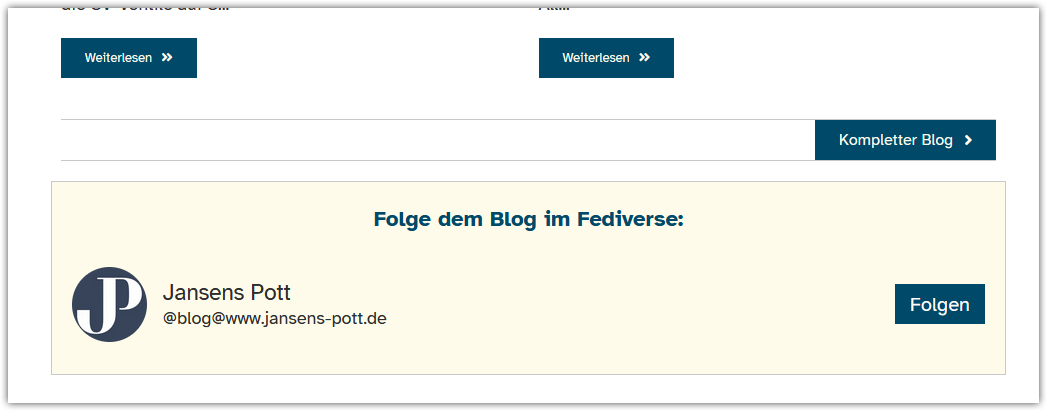
So, ein bisschen CSS später passt der Folgen-Button vom Activity-Pub auch zur Optik des Blogs.
General Discussion
7 3 0

Gli ultimi otto messaggi ricevuti dalla Federazione
  • @pixelschubsi @tris Yes, agreed. Tremendous value in reusing identities and login credentials. Big skepticism with regards to using AP as a protocol. One can probably kinda make it work… But why? What’s the benefit?

    read more

  • @daniel @tris I'm also genuinely surprised that people believe that ActivityPub, a protocol even named after its purpose, to publish activities, is a good protocol to pursue private instant messaging. The goals of those two couldn't be more detrimental.

    I do see a purpose of being able to reuse your "ActivityPub identities", which actually are just WebFinger identities. Maybe someone should specify how to discover XMPP accounts via WebFinger and push that as a solution for AP messaging?

    read more

  • @tris Soatak is an expert in cryptography. I’m not. I’m more than happy to stand on the shoulder of giants when it comes to E2EE. That’s why we used the Signal Protocol 10+ years ago for and are now looking towards . However, good, interoperable protocol design is so much more than just E2EE. And maybe I've learned a thing or two about protocol design in my career that they don’t necessarily know.

    read more

  • @tris there are three actively developed protocols for federated instant messaging (XMPP, Matrix, Deltachat). At least one of them is very open to new developers and new ideas and has a structure in place to collaboratively work on those ideas and bring various stake holders together. With no disrespect to that individual I don't see why there needs to be a forth protocol loosely based on ActivityPub.

    read more

  • @daniel Ah, fair, their work for E2EE Fedi looks interesting: https://github.com/fedi-e2ee/public-key-directory-specification

    read more

  • @tris two things: I already said in my follow up post that if someone wants to build their own clients on top of XMPP and prefers MLS over OMEMO, the XMPP community is very open to that. A protocol is much more than just the encryption. They would still benefit from all the other things XMPP has solved.

    A lot of what's in that blog post is ill-informed and bordering on disinformation and fear mongering.

    read more

  • @daniel Someone have to solve https://soatok.blog/2024/08/04/against-xmppomemo/ issues first

    read more

  • @jansenspott @mthie ich will mich nicht aus der Affäre ziehen, aber alles was wir mit dem Plugin machen ist: wir schicken eine Überschrift, eine summary, den content mit inline images und die Images nochmal als attachment. Dadurch kann jedes empfangende Netzwerk entscheiden was es am besten anzeigen. Ich schau mir das aber gerne im neuen Jahr nochmal an. Vielleicht finden wir ja mit den gotosocial devs eine schöne Lösung!

    read more
Post suggeriti
  • 0 Votes
    1 Posts
    8 Views
    Alguém aqui conhece algum editor da @wikimediafoundation ?Quero editar o artigo sobre o #activitypub em #ptbr, ele está MUITO POBRE
  • 0 Votes
    1 Posts
    9 Views
    Mastodonを運営している管理者の方ですか?⚠️ バージョン4.5にアップグレードしてください! ⚠️古いバージョンのMastodonには既知のセキュリティ脆弱性があります。また、古いインスタンスでは、最新バージョンで導入された特定のコンテンツ(引用など)が正しく表示・通信されない場合があります。ユーザーのセキュリティ、互換性、利便性を確保するために、Mastodonインスタンスをバージョン4.5にアップグレードすることをお勧めします。#Mastodon #Fediverse #ActivityPub #Fedi #FediAdmin #Administrator #Admin #MastoAdmin
  • 0 Votes
    18 Posts
    66 Views
    @evilworld @tizianomattei @filippodb ti ha spiegato che adesso deve essere rinnovato lo strato tecnologico che ne è alla base, ma prima di allora non si può intervenire sul resto
  • 0 Votes
    1 Posts
    15 Views
    We were excited to see the recent release of Ghost 6 with ActivityPub features. The Ghost team have been an active participant in our Long-form Text project. John O’Nolan, founder and CEO of Ghost.org, was kind enough to answer our questions about the software and its community.SWF: For our readers who don’t know Ghost, how would you describe the platform?JO: Ghost is an independent publishing platform for people who take writing seriously. We’re open source, non-profit, and built to give creators complete ownership of their content and their audience. We’ve helped indie publishers generate over $100 million in revenue from sustainable modern media businesses like 404Media, Platformer and Tangle News.SWF: Tell us about your user community. Can you paint a picture of them with a broad brush? What kind of people choose Ghost?JO: Ghost attracts people who care about owning their home on the internet, rather than having another profile on a social media platform. Our publishers range from solo journalists and creators, to established news outlets and large businesses. They value independence, and they’re willing to do the work to maintain control of their brand, distribution, data, and relationship with readers.SWF: What is it like to be a Ghost user in 2025? What kind of problems are your users facing today?JO: The big challenge today is the same one that’s haunted independent publishers for two decades: discovery. You can own your platform and serve your audience beautifully, but if people can’t find you, none of it matters. Email newsletters have been a solid answer, but they’re still dependent on deliverability and inbox placement. Algorithms on social platforms actively suppress links now, so sharing your work there is like shouting into a hurricane.SWF: Tell us about your experience with ActivityPub. Why did you decide to add ActivityPub support to your software?JO: Ghost has had support for delivering content by email newsletters for a number of years, and email has remained an unassailable distribution platform for publishers because it’s an open protocol. No company controls your email list except you, so it’s one of the best investments you can make. ActivityPub is now doing the same thing for social technology. It allows publishers to own and control a distribution channel that allows their work to spread and be discovered by others. For the first time, you can publish independently and grow faster than ever before.SWF: What stack is Ghost built on? What development tools does your team use?JO: Ghost is all built in modern JavaScript; mainly Node and React. Our ActivityPub service is built on Fedify, and everything we build is released under an open source MIT license. Our development tools are constantly evolving, and now more quickly than ever before with the advent of AI tools, which seem to change on a near weekly basis.SWF: What was the development process like?JO: Challenging, honestly. ActivityPub is beautifully designed but the spec leaves room for interpretation, and when you’re building something new, there’s no roadmap. Building interoperability between other platforms, who’ve all interpreted the spec in their own unique ways, has been a real challenge. The approach we took was to ship early versions as quickly as possible to beta testers so we could learn as we go, using real-world data and issues to guide our process. We’re in a good spot, now, but there’s still a lot to do!SWF: Ghost produces long-form blog posts, articles and newsletters. How was the experience adapting Ghost articles to the microblogging interfaces of Mastodon and Threads?JO: In some ways really easy, and in other ways quite tricky. We’re at a pretty early stage for long-form content on ActivityPub, and the majority of other products out there don’t necessarily have interfaces for supporting it yet. The easy part is that we can provide fallbacks, so if you’re scrolling on Mastodon you might see an article title and excerpt, with a link to read the full post – and that works pretty well! The dream, though, is to make it so you can just consume the full article within whatever app you happen to be using, and doing that requires more collaboration between different platforms to agree on how to make that possible.SWF: You’ve been an active participant in the ActivityPub community since you decided to implement the standard. Why?JO: ActivityPub is a movement as much as a technology protocol, and behind it is a group of people who all believe in making the web a weird, wonderful open place for collaboration. Getting to know those humans and being a part of that movement has been every bit as important to the success of our work as writing the code that powers our software. We’ve received incredible support from the Mastodon team, AP spec authors, and other platforms who are building ActivityPub support. Without actively participating in the community, I don’t know if we would’ve gotten as far as we have already. SWF: Ghost has implemented not only a publishing interface, but also a reading experience. Why?JO: The big difference between ActivityPub and email is that it’s a 2-way protocol. When you send an email newsletter, that’s it. You’re done. But with ActivityPub, it’s possible to achieve what – in the olden days – we fondly referred to as ‘the blogosphere’. People all over the world writing and reading each other’s work. If an email newsletter is like standing on a stage giving a keynote to an audience, participating in a network is more like mingling at the afterparty. You can’t just talk the whole time, you have to listen, too. Being successful within the context of a network has always involved following and engaging with others, as peers, so it felt really important to make sure that we brought that aspect into the product.SWF: Your reader is, frankly, one of the most interesting UIs for ActivityPub we’ve seen. Tell us about why you put the time and effort into making a beautiful reading experience for Ghost.JO: We didn’t want to just tick the “ActivityPub support” checkbox – we wanted to create something that actually feels great to use every day. The idea was to bring some of the product ideas over from RSS readers and kindles, where people currently consume long-form content, and use them as the basis for an ActivityPub-native reading experience. We experimented with multiple different approaches to try and create an experience with a mix of familiarity and novelty. People intuitively understand a list of articles and a view for opening and reading them, but then when you start to see inline replies and live notifications happening around those stories – suddenly it feels like something new and different. SWF: If people want to get a taste of the kind of content Ghost publishers produce, what are some good examples to follow?JO: Tough question! There are so many out there, and it really depends on what you’re into. The best place to start would be on ghost.org/explore – when you can browse through all sorts of different categories of creators and content, and explore the things that interest you the most. SWF: If I’m a Fediverse enthusiast, what can I do to help make Ghost 6 a success?JO: Follow Ghost publishers and engage with their content – likes, replies, reposts all help! Most importantly, help us spread the word about what’s possible when platforms collaborate rather than compete. And if you’re technical, our ActivityPub implementation is entirely open source on GitHub – contributions, bug reports, and feedback make the whole ecosystem stronger.