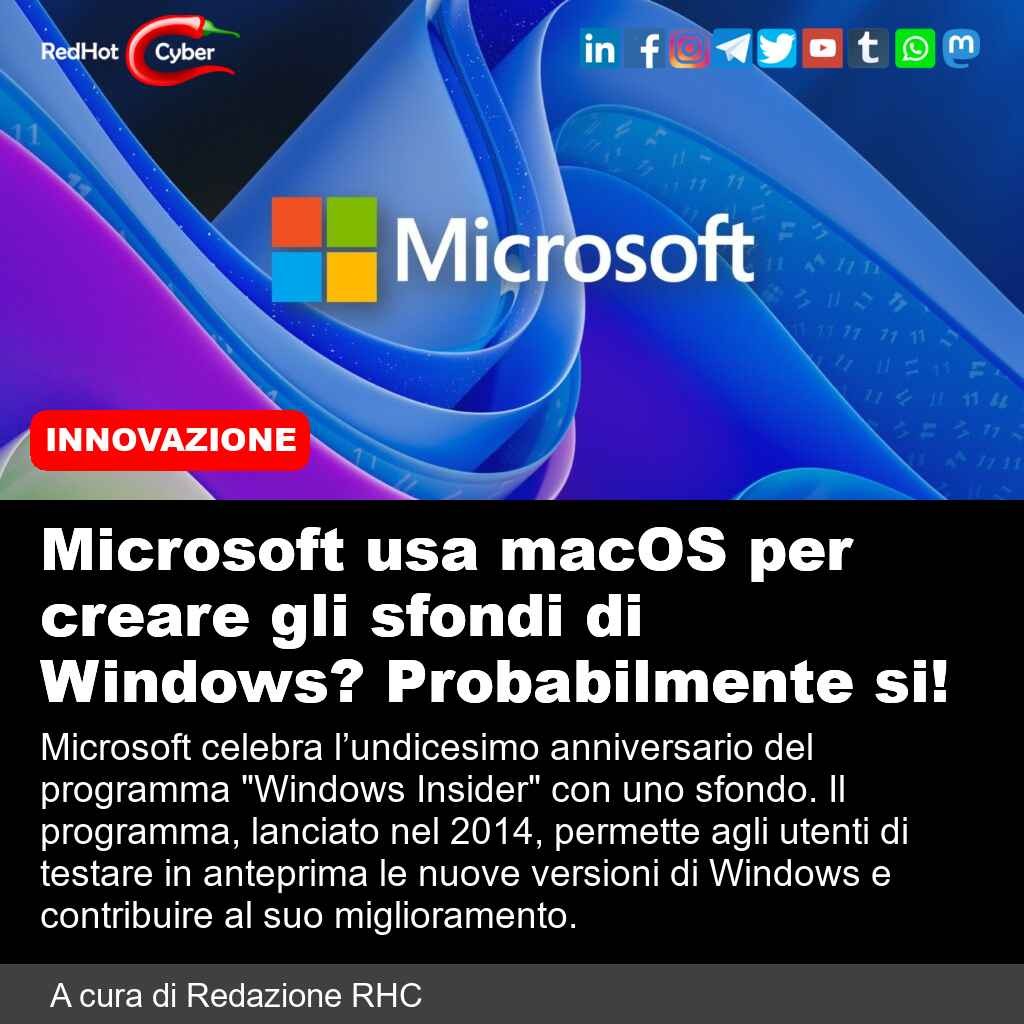
Microsoft usa macOS per creare gli sfondi di Windows?
Uncategorized
1
Posts
1
Posters
11
Views
-
Microsoft usa macOS per creare gli sfondi di Windows? Probabilmente si!
📌 Link all'articolo : https://www.redhotcyber.com/post/microsoft-usa-macos-per-creare-gli-sfondi-di-windows-probabilmente-si/
#redhotcyber #hacking #cti #ai #online #it #cybercrime #cybersecurity #technology #news #cyberthreatintelligence #innovation #privacy
-
 undefined cybersecurity@poliverso.org shared this topic on

Gli ultimi otto messaggi ricevuti dalla Federazione
-
@ricardo ahah sure. That's the only point of the house where I can get some weak 5G signal
-
@af I think they're using one of those agents, unattended. I've already experienced it - companies claiming, proudly, that they don't need first level anymore as they have AI agents. That's why I tried to escalate, but I'm starting to think they're refusing (better - ignoring) as there's nobody to escalate to...
-
Aggiunto allo starter pack dedicato ai disegnatori anche @saio, Benvenuto!
Qui trovate lo starter pack con gli account del Fediverso dedicati ai disegnatori e alla satira:
https://fedidevs.com/s/NzY0/Messaggio rilanciato anche nel gruppo attualità e satira: @attualita
-
@stranobiovolta
O tra imprenditore e parlamentare?
@attualita
-
Giustizzia a orologgeria pe attaccà er governo!!!!
Dimmi te se devono attaccà a Delmastro cà fatto na cosa normalissima: fondà na società de ristoranti co una de 18 anni senza annà a vedé da dove pijava li sordi e che poi se scopre esse na prestanome daa mafia fija de un pregiudicato
Poteva capità a tutti! Daje va!
https://www.ilpost.it/2026/03/20/andrea-delmastro-societa-mauro-caroccia-roma/
-
-
@generalespecifico anche loro pe 20 giorni? 🤔
-
@th Great Pic of the Kölner Dom... have a lovely time in Cologne – the weather’s just perfect for sightseeing ;-)