“Attacco contro Kaefer: sabotare l’industria nucleare!”.
Uncategorized
1
Posts
1
Posters
2
Views
-
“Attacco contro Kaefer: sabotare l’industria nucleare!”. Rivendicazione dell’attacco incendiario contro KAEFER Group (Brema, Germania, 1° marzo 2026)
@anarchia
“Attacco contro Kaefer: sabotare l’industria nucleare!”. Rivendicazione dell’attacco incendiario contro KAEFER Group (Brema, Germania, 1° marzo

Gli ultimi otto messaggi ricevuti dalla Federazione
-
@stefano a bullet you dodged. possibly two of them. but in typical stefano form, a professional
-
-
@ccohanlon @yngmar Sciacca was surprisingly nice.
Anyway, if you happen to come off the way over to the eastern side and happen to pass by Catania, let me know. We can swap head colds.
-
@rygorous as a straw anarchist I believe well defined behavior is inherently authoritarian and should also be abolished
-
@alien089 Grande! Io ovviamente sarò lì entrambi i giorni
-
https://blog.fabiomanganiello.com/reply/the-local-tech-neighbourhood
A corollary to the concept of small tech neighbourhood is the idea of local tech communities.
It's easy for folks like me, who have been self-hosting on computers in our closets since high school, to lose track with the common non-tech person.
It's easy for us to say "just self-host your Nextcloud, Matrix, XMPP, Mastodon, Searxng, Wallabag etc.", adding a "it's just a docker run command".
I've also seen "just run your f*cking website" articles get to the top of HackerNews.
But then I thought: imagine if it was, say, the bakery industry rather than the software industry to go through a process of #enshittification.
Imagine that buying your bread or croissant tomorrow requires a $100/month Bread+ subscription with plenty of upsells, an age verification process that requires you to send your passport or retina scan to the Big Bread consortium, a tracking system that measures exactly how much bread you eat at home, and that keeps selling your eating habits to whoever wants to purchase them - all while your bread quality gets progressively worse over time, and the oligopoly that holds it, after acquiring or putting out of business any credible competitors, starts experimenting also with selling expired products, wrapped in paper littered with ads that you have to spend at least 30 seconds reading before you can make your sandwich.
Of course people would be outraged.
But many, no matter how outraged they are, will just swallow the bitter pill and stick with the Bread+ subscription (perhaps because they don't care enough yet to trigger a change in their habits, perhaps because they have other priorities and battles to fight), hoping that the next change to the T&C won't make it even worse.
And some will instead start looking for alternatives.
Would it make sense for a professional baker who's been in the business for decades to tell those folks "just bake your own f*cking bread" - and then complain that not enough are moving out of the Bread+ walled garden?
Or perhaps would it make more sense for that baker to volunteer for a competitive price to sell their bread to its friends, family and local community?
We all know that running your own stuff on your own machines is the best way to avoid enshittification. Just like wisely selecting and mixing your wheat and butter to bake your bread and cakes is the best way to make those products the way you like them. But not everyone will do it, nor they are supposed to do it.
People live different lives, have different priorities and choose different battles. Any pragmatic human must at some point delegate some tasks - that's how modern societies were born. We don't judge those outside of our area of competencies for not being able or willing to perform a certain task, no matter how trivial that looks to us.
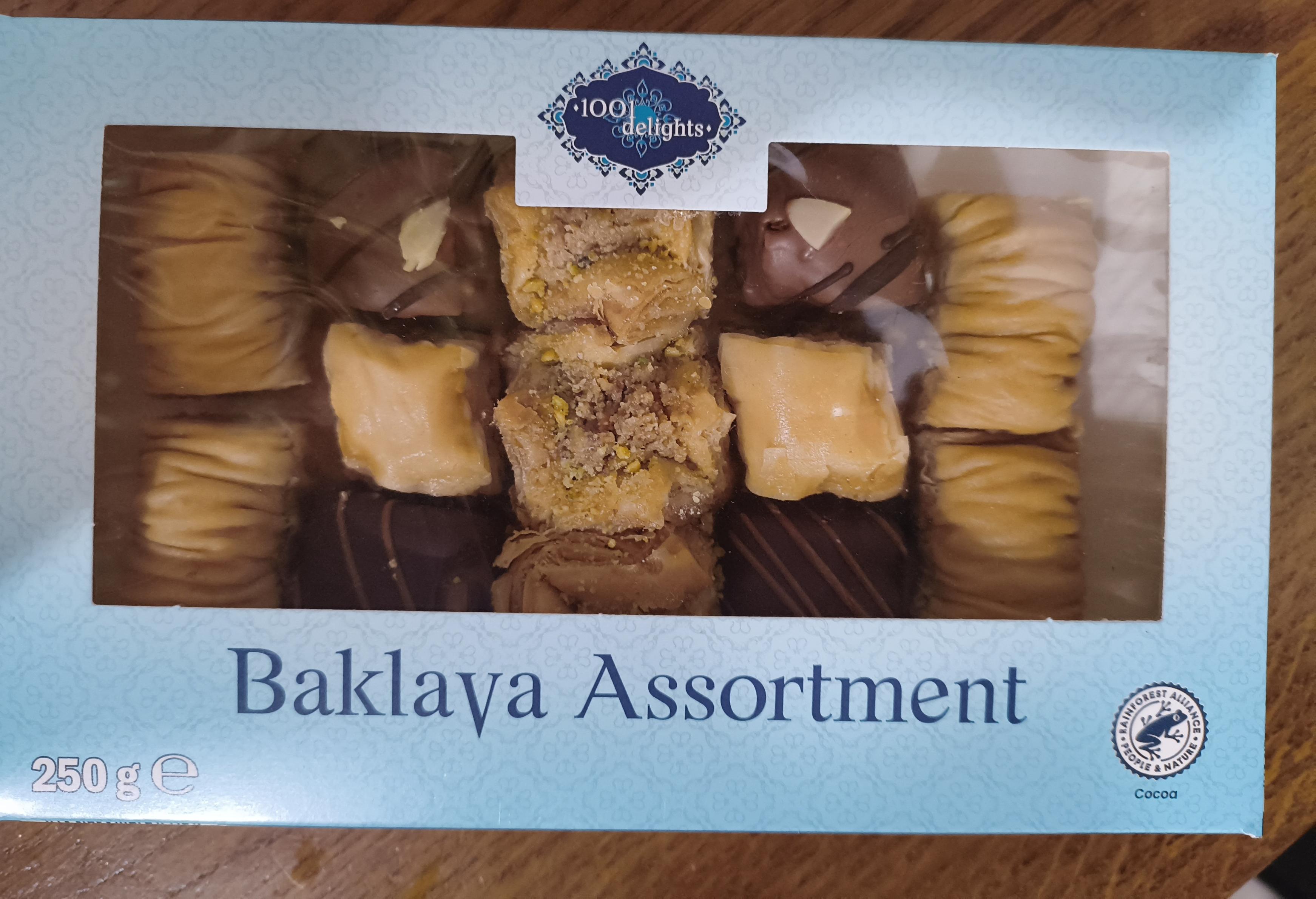
An average neighbourhood has someone good enough at baking that they can sell their products to their local community.
And nowadays perhaps it also has someone good enough with computers that they can probably run on an old laptop or unused VPS stuff like a small Matrix server, a GoToSocial instance, a Nextcloud instance or an Immich server.
And they could probably serve that to small local groups of 10-20 people for something like $10/month (and at low volumes those services usually don't even require much maintenance).
It can be $100/200 month that can abundantly cover the cost of a small VPS, let alone the cost of running a miniPC at home.
It'd be a bargain for the subscribers too - nowadays for $10/month you don't even get a Netflix subscription, let alone a complete cloud alternative with no trackers and no ads.
It can even be a reliable source of income for IT folks in areas that would otherwise not provide other viable employment solutions.
In a healthy society with a high level of immunity against enshittification, your local self-hoster should probably become the digital equivalent of your local baker or your local pub.
-
@aeva see people like Tom Duff invented Duff's Device and then a bunch of neckbeards convened and asked themselves "is this something a C compiler would allow" and decided YES and that is how things worked back then
-
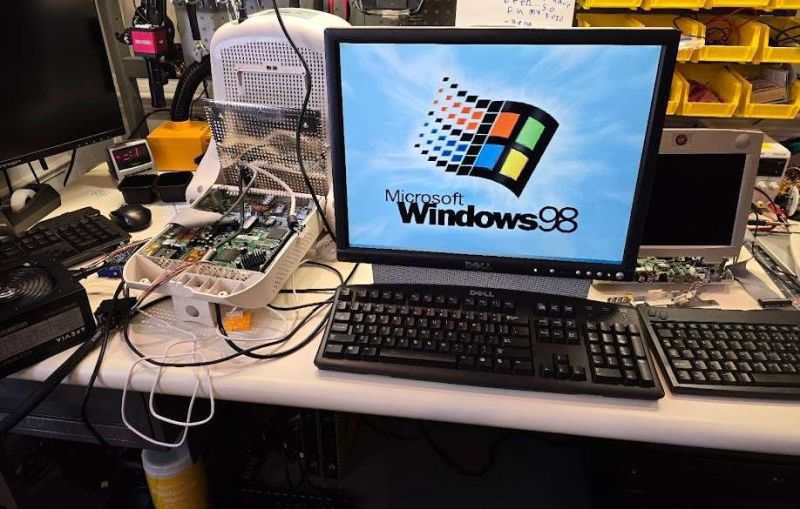
Running Windows 98 on the iPAQ IA-2 Internet Appliance
Devices that were limited to only run a web browser were relatively common around 2000, as many people wanted to surf the Information Super Highway, but didn’t quite want to get a regular PC — being in many ways the retro equivalent of a Chromebook. The Compaq iPAQ IA-2 from 2000 that [Dave Luna] got is no exception, with a Microsoft CE-based OS that is meant to be used with Microsoft Network (MSN) dial-up, which amusingly is still available today.
In order to get a more useful OS on it, like Windows 98, you have to jump through quite a few hoops, as [Dave] found out. Although there is an IDE connection on the mainboard, this cannot be booted from, likely due to BIOS limitations. This means that he had to chain boot via the 16 MB NAND Flash drive that the original OS booted from, which was done by writing MS-DOS to the Flash drive using another workaround as it’s not a standard IDE device either.
From this you can then boot Windows 98 from an IDE drive by pretending that it’s an ATAPI IDE device to dodge a limitation on IDE devices. The system’s hardware isn’t really going to make it into a blazing fast retro computer. It only has a 266 MHz Geode GX1 CPU and supports up to 256 MB of SDRAM. The IA-2 is also limited to 800×600, which required the use of an external monitor (as seen above) hooked up to the internal VGA port to set the proper resolution in the OS.
But at least it can run DOOM, so that bare minimum requirement can be ticked off.