Frogblight threatens you with a court case: a new Android banker targets Turkish users
Uncategorized
1
Posts
1
Posters
0
Views




-
Frogblight threatens you with a court case: a new Android banker targets Turkish users
In August 2025, we discovered a campaign targeting individuals in Turkey with a new Android banking Trojan we dubbed “Frogblight”. Initially, the malware was disguised as an app for accessing court case files via an official government webpage. Later, more universal disguises appeared, such as the Chrome browser.
Frogblight can use official government websites as an intermediary step to steal banking credentials. Moreover, it has spyware functionality, such as capabilities to collect SMS messages, a list of installed apps on the device and device filesystem information. It can also send arbitrary SMS messages.
Another interesting characteristic of Frogblight is that we’ve seen it updated with new features throughout September. This may indicate that a feature-rich malware app for Android is being developed, which might be distributed under the MaaS model.
This threat is detected by Kaspersky products as HEUR:Trojan-Banker.AndroidOS.Frogblight.*, HEUR:Trojan-Banker.AndroidOS.Agent.eq, HEUR:Trojan-Banker.AndroidOS.Agent.ep, HEUR:Trojan-Spy.AndroidOS.SmsThief.de.
Technical details
Background
While performing an analysis of mobile malware we receive from various sources, we discovered several samples belonging to a new malware family. Although these samples appeared to be still under development, they already contained a lot of functionality that allowed this family to be classified as a banking Trojan. As new versions of this malware continued to appear, we began monitoring its development. Moreover, we managed to discover its control panel and based on the “fr0g” name shown there, we dubbed this family “Frogblight”.Initial infection
We believe that smishing is one of the distribution vectors for Frogblight, and that the users had to install the malware themselves. On the internet, we found complaints from Turkish users about phishing SMS messages convincing users that they were involved in a court case and containing links to download malware. versions of Frogblight, including the very first ones, were disguised as an app for accessing court case files via an official government webpage and were named the same as the files for downloading from the links mentioned above.While looking for online mentions of the names used by the malware, we discovered one of the phishing websites distributing Frogblight, which disguises itself as a website for viewing a court file.
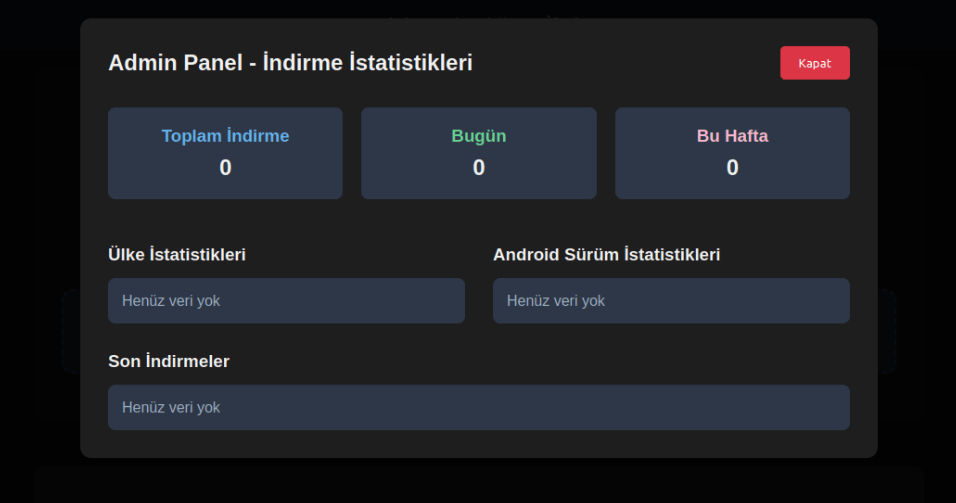
The phishing website distributing FrogblightWe were able to open the admin panel of this website, where it was possible to view statistics on Frogblight malware downloads. However, the counter had not been fully implemented and the threat actor could only view the statistics for their own downloads.
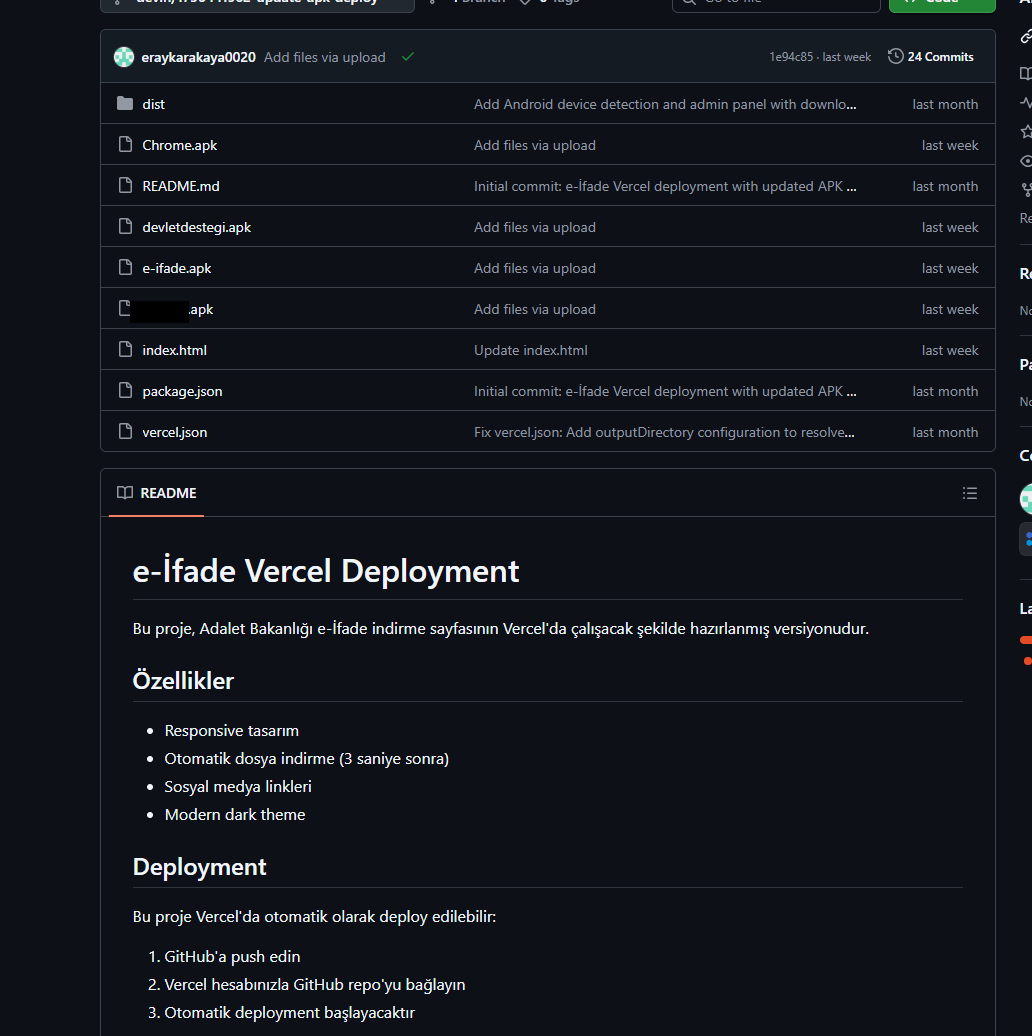
The admin panel interface of the website from which Frogblight is downloadedAdditionally, we found the source code of this phishing website available in a public GitHub repository. Judging by its description, it is adapted for fast deployment to Vercel, a platform for hosting web apps.
The GitHub repository with the phishing website source codeApp features
As already mentioned, Frogblight was initially disguised as an app for accessing court case files via an official government webpage. Let’s look at one of the samples using this disguise (9dac23203c12abd60d03e3d26d372253). For analysis, we selected an early sample, but not the first one discovered, in order to demonstrate more complete Frogblight functionality.After starting, the app prompts the victim to grant permissions to send and read SMS messages, and to read from and write to the device’s storage, allegedly needed to show a court file related to the user.
The full list of declared permissions in the app manifest file is shown below:
- MANAGE_EXTERNAL_STORAGE
- READ_EXTERNAL_STORAGE
- WRITE_EXTERNAL_STORAGE
- READ_SMS
- RECEIVE_SMS
- SEND_SMS
- WRITE_SMS
- RECEIVE_BOOT_COMPLETED
- INTERNET
- QUERY_ALL_PACKAGES
- BIND_ACCESSIBILITY_SERVICE
- DISABLE_KEYGUARD
- FOREGROUND_SERVICE
- FOREGROUND_SERVICE_DATA_SYNC
- POST_NOTIFICATIONS
- QUICKBOOT_POWERON
- RECEIVE_MMS
- RECEIVE_WAP_PUSH
- REQUEST_IGNORE_BATTERY_OPTIMIZATIONS
- SCHEDULE_EXACT_ALARM
- USE_EXACT_ALARM
- VIBRATE
- WAKE_LOCK
- ACCESS_NETWORK_STATE
- READ_PHONE_STATE
After all required permissions are granted, the malware opens the official government webpage for accessing court case files in WebView, prompting the victim to sign in. There are different sign-in options, one of them via online banking. If the user chooses this method, they are prompted to click on a bank whose online banking app they use and fill out the sign-in form on the bank’s official website. This is what Frogblight is after, so it waits two seconds, then opens the online banking sign-in method regardless of the user’s choice. For each webpage that has finished loading in WebView, Frogblight injects JavaScript code allowing it to capture user input and send it to the C2 via a REST API.
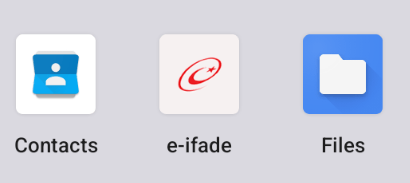
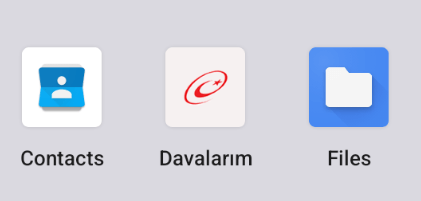
The malware also changes its label to “Davalarım” if the Android version is newer than 12; otherwise it hides the icon.
The app icon before (left) and after launching (right)
In the sample we review in this section, Frogblight uses a REST API for C2 communication, implemented using the Retrofit library. The malicious app pings the C2 server every two seconds in foreground, and if no error is returned, it calls the REST API client methodsfetchOutboxand getFileCommands. Other methods are called when specific events occur, for example, after the device screen is turned on, thecom.capcuttup.refresh.PersistentServiceforeground service is launched, or an SMS is received. The full list of all REST API client methods with parameters and descriptions is shown below.REST API client method Description Parameters fetchOutbox Request message content to be sent via SMS or displayed in a notification device_id: unique Android device ID ackOutbox Send the results of processing a message received after calling the API method fetchOutbox device_id: unique Android device ID
msg_id: message ID
status: message processing status
error: message processing errorgetAllPackages Request the names of app packages whose launch should open a website in WebView to capture user input data action: same as the API method name getPackageUrl Request the website URL that will be opened in WebView when the app with the specified package name is launched action: same as the API method name
package: the package name of the target appgetFileCommands Request commands for file operations
Available commands:
● download: upload the target file to the C2
● generate_thumbnails: generate thumbnails from the image files in the target directory and upload them to the C2
● list: send information about all files in the target directory to the C2
● thumbnail: generate a thumbnail from the target image file and upload it to the C2device_id: unique Android device ID pingDevice Check the C2 connection device_id: unique Android device ID reportHijackSuccess Send captured user input data from the website opened in a WebView when the app with the specified package name is launched action: same as the API method name
package: the package name of the target app
data: captured user input datasaveAppList Send information about the apps installed on the device device_id: unique Android device ID app_list: a list of apps installed on the device
app_count: a count of apps installed on the devicesaveInjection Send captured user input data from the website opened in a WebView. If it was not opened following the launch of the target app, the app_name parameter is determined based on the opened URL device_id: unique Android device ID app_name: the package name of the target app
form_data: captured user input datasavePermission Unused but presumably needed for sending information about permissions device_id: unique Android device ID permission_type: permission type
status: permission statussendSms Send information about an SMS message from the device device_id: unique Android device ID sender: the sender’s/recipient’s phone number
message: message text
timestamp: received/sent time
type: message type (inbox/sent)sendTelegramMessage Send captured user input data from the webpages opened by Frogblight in WebView device_id: unique Android device ID
url: website URL
title: website page title
input_type: the type of user input data
input_value: user input data
final_value: user input data with additional information
timestamp: the time of data capture
ip_address: user IP address
sms_permission: whether SMS permission is granted
file_manager_permission: whether file access permission is grantedupdateDevice Send information about the device device_id: unique Android device ID
model: device manufacturer and model
android_version: Android version
phone_number: user phone number
battery: current battery level
charging: device charging status
screen_status: screen on/off
ip_address: user IP address
sms_permission: whether SMS permission is granted
file_manager_permission: whether file access permission is grantedupdatePermissionStatus Send information about permissions device_id: unique Android device ID
permission_type: permission type
status: permission status
timestamp: current timeuploadBatchThumbnails Upload thumbnails to the C2 device_id: unique Android device ID
thumbnails: thumbnailsuploadFile Upload a file to the C2 device_id: unique Android device ID
file_path: file path
download_id: the file ID on the C2
The file itself is sent as an unnamed parameteruploadFileList Send information about all files in the target directory device_id: unique Android device ID
path: directory path
file_list: information about the files in the target directoryuploadFileListLog Send information about all files in the target directory to an endpoint different from uploadFileList device_id: unique Android device ID
path: directory path
file_list: information about the files in the target directoryuploadThumbnailLog Unused but presumably needed for uploading thumbnails to an endpoint different from uploadBatchThumbnails device_id: unique Android device ID
thumbnails: thumbnailsRemote device control, persistence, and protection against deletion
The app includes several classes to provide the threat actor with remote access to the infected device, gain persistence, and protect the malicious app from being deleted.capcuttup.refresh.AccessibilityAutoClickService
This is intended to prevent removal of the app and to open websites specified by the threat actor in WebView upon target apps startup. It is present in the sample we review, but is no longer in use and deleted in further versions.capcuttup.refresh.PersistentService
This is a service whose main purpose is to interact with the C2 and to make malicious tasks persistent.capcuttup.refresh.BootReceiver
This is a broadcast receiver responsible for setting up the persistence mechanisms, such as job scheduling and setting alarms, after device boot completion.
Further development
In later versions, new functionality was added, and some of the more recent Frogblight variants disguised themselves as the Chrome browser. Let’s look at one of the fake Chrome samples (d7d15e02a9cd94c8ab00c043aef55aff).In this sample, new REST API client methods have been added for interacting with the C2.
REST API client method Description Parameters getContactCommands Get commands to perform actions with contacts
Available commands:
● ADD_CONTACT: add a contact to the user device
● DELETE_CONTACT: delete a contact from the user device
● EDIT_CONTACT: edit a contact on the user devicedevice_id: unique Android device ID sendCallLogs Send call logs to the C2 device_id: unique Android device ID
call_logs: call log datasendNotificationLogs Send notifications log to the C2. Not fully implemented in this sample, and as of the time of writing this report, we hadn’t seen any samples with a full-fledged implementation of this API method action: same as the API method name
notifications: notification log dataAlso, the threat actor had implemented a custom input method for recording keystrokes to a file using the
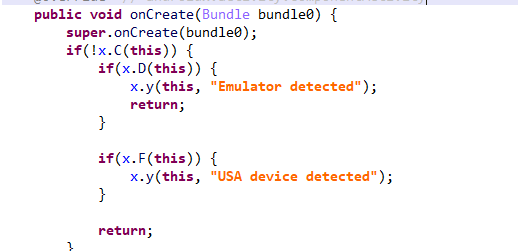
com.puzzlesnap.quickgame.CustomKeyboardServiceservice.Another Frogblight sample we observed trying to avoid emulators and using geofencing techniques is
115fbdc312edd4696d6330a62c181f35. In this sample, Frogblight checks the environment (for example, device model) and shuts down if it detects an emulator or if the device is located in the United States.
Part of the code responsible for avoiding Frogblight running in an undesirable environmentLater on, the threat actor decided to start using a web socket instead of the REST API. Let’s see an example of this in one of the recent samples (
08a3b1fb2d1abbdbdd60feb8411a12c7). This sample is disguised as an app for receiving social support via an official government webpage. The feature set of this sample is very similar to the previous ones, with several new capabilities added. Commands are transmitted over a web socket using the JSON format. A command template is shown below:
{
"id": <command ID>,
"command_type": <command name>
"command_data": <command data>
}
It is also worth noting that some commands in this version share the same meaning but have different structures, and the functionality of certain commands has not been fully implemented yet. This indicates that Frogblight was under active development at the time of our research, and since no its activity was noticed after September, it is possible that the malware is being finalized to a fully operational state before continuing to infect users’ devices. A full list of commands with their parameters and description is shown below:Command Description Parameters connect Send a registration message to the C2 – connection_success Send various information, such as call logs, to the C2; start pinging the C2 and requesting commands – auth_error Log info about an invalid login key to the Android log system – pong_device Does nothing – commands_list Execute commands List of commands sms_send_command Send an arbitrary SMS message recipient: message destination
message: message text
msg_id: message IDbulk_sms_command Send an arbitrary SMS message to multiple recipients recipients: message destinations
message: message textget_contacts_command Send all contacts to the C2 – get_app_list_command Send information about the apps installed on the device to the C2 – get_files_command Send information about all files in certain directories to the C2 – get_call_logs_command Send call logs to the C2 – get_notifications_command Send a notifications log to the C2. This is not fully implemented in the sample at hand, and as of the time of writing this report, we hadn’t seen any samples with a full-fledged implementation of this command – take_screenshot_command Take a screenshot. This is not fully implemented in the sample at hand, and as of the time of writing this report, we hadn’t seen any samples with a full-fledged implementation of this command – update_device Send registration message to the C2 – new_webview_data Collect WebView data. This is not fully implemented in the sample at hand, and as of the time of writing this report, we hadn’t seen any samples with a full-fledged implementation of this command – new_injection Inject code. This is not fully implemented in the sample at hand, and as of the time of writing this report, we hadn’t seen any samples with a full-fledged implementation of this command code: injected code
target_app: presumably the package name of the target appadd_contact_command Add a contact to the user device name: contact name
phone: contact phone
email: contact emailcontact_add Add a contact to the user device display_name: contact name
phone_number: contact phone
email: contact emailcontact_delete Delete a contact from the user device phone_number: contact phone contact_edit Edit a contact on the user device display_name: new contact name
phone_number: contact phone
email: new contact emailcontact_list Send all contacts to the C2 – file_list Send information about all files in the specified directory to the C2 path: directory path file_download Upload the specified file to the C2 file_path: file path
download_id: an ID that is received with the command and sent back to the C2 along with the requested file. Most likely, this is used to organize data on the C2file_thumbnail Generate a thumbnail from the target image file and upload it to the C2 file_path: image file path file_thumbnails Generate thumbnails from the image files in the target directory and upload them to the C2 folder_path: directory path health_check Send information about the current device state: battery level, screen state, and so on – message_list_request Send all SMS messages to the C2 – notification_send Show an arbitrary notification title: notification title
message: notification message
app_name: notification subtextpackage_list_response Save the target package names packages: a list of all target package names.
Each list element contains:
package_name: target package name
active: whether targeting is activedelete_contact_command Delete a contact from the user device. This is not fully implemented in the sample at hand, and as of the time of writing this report, we hadn’t seen any samples with a full-fledged implementation of this command contact_id: contact ID
name: contact namefile_upload_command Upload specified file to the C2. This is not fully implemented in the sample at hand, and as of the time of writing this report, we hadn’t seen any samples with a full-fledged implementation of this command file_path: file path
file_name: file namefile_download_command Download file to user device. This is not fully implemented in the sample at hand, and as of the time of writing this report, we hadn’t seen any samples with a full-fledged implementation of this command file_url: the URL of the file to download
download_path: download pathdownload_file_command Download file to user device. This is not fully implemented in the sample at hand, and as of the time of writing this report, we hadn’t seen any samples with a full-fledged implementation of this command file_url: the URL of the file to download
download_path: downloading pathget_permissions_command Send a registration message to the C2, including info about specific permissions – health_check_command Send information about the current device state, such as battery level, screen state, and so on – connect_error Log info about connection errors to the Android log system A list of errors reconnect Send a registration message to the C2 – disconnect Stop pinging the C2 and requesting commands from it – Authentication via WebSocket takes place using a special key.
The part of the code responsible for the WebSocket authentication logicAt the IP address to which the WebSocket connection was made, the Frogblight web panel was accessible, which accepted the authentication key mentioned above. Since only samples using the same key as the webpanel login are controllable through it, we suggest that Frogblight might be distributed under the MaaS model.
The interface of the sign-in screen for the Frogblight web panelJudging by the menu options, the threat actor can sort victims’ devices by certain parameters, such as the presence of banking apps on the device, and send bulk SMS messages and perform other mass actions.
Victims
Since some versions of Frogblight opened the Turkish government webpage to collect user-entered data on Turkish banks’ websites, we assume with high confidence that it is aimed mainly at users from Turkey. Also, based on our telemetry, the majority of users attacked by Frogblight are located in that country.Attribution
Even though it is not possible to provide an attribution to any known threat actor based on the information available, during our analysis of the Frogblight Android malware and the search for online mentions of the names it uses, we discovered a GitHub profile containing repos with Frogblight, which had also created repos with Coper malware, distributed under the MaaS model. It is possible that this profile belongs to the attackers distributing Coper who have also started distributing Frogblight.
GitHub repositories containing Frogblight and Coper malwareAlso, since the comments in the Frogblight code are written in Turkish, we believe that its developers speak this language.
Conclusions
The new Android malware we dubbed “Frogblight” appeared recently and targets mainly users from Turkey. This is an advanced banking Trojan aimed at stealing money. It has already infected real users’ devices, and it doesn’t stop there, adding more and more new features in the new versions that appear. It can be made more dangerous by the fact that it may be used by attackers who already have experience distributing malware. We will continue to monitor its development.Indicators of Compromise
More indicators of compromise, as well as any updates to these, are available to the customers of our crimeware reporting service. If you are interested, please contact crimewareintel@kaspersky.com.APK file hashes
8483037dcbf14ad8197e7b23b04aea34
105fa36e6f97977587a8298abc31282a
e1cd59ae3995309627b6ab3ae8071e80
115fbdc312edd4696d6330a62c181f35
08a3b1fb2d1abbdbdd60feb8411a12c7
d7d15e02a9cd94c8ab00c043aef55aff
9dac23203c12abd60d03e3d26d372253C2 domains
1249124fr1241og5121.sa[.]com
froglive[.]netC2 IPs
45.138.16.208[:]8080URL of GitHub repository with Frogblight phishing website source code
https://github[.]com/eraykarakaya0020/e-ifade-vercelURL of GitHub account containing APK files of Frogblight and Coper
https://github[.]com/ChromeapkDistribution URLs
https://farketmez37[.]cfd/e-ifade.apk
https://farketmez36[.]sbs/e-ifade.apk
https://e-ifade-app-5gheb8jc.devinapps[.]com/e-ifade.apk

Gli ultimi otto messaggi ricevuti dalla Federazione
-
IL LAGO MAGGIORE
#ILLAGOMAGGIORE #LakeMaggiore #Switzerland #Italian #Swiss #Locarno #Arona #Gavirate #Varese #Italy #Longoborio #Lombardy #photography #FerroCandilera
-
@ajlewis2 oh no. I hope this will be sorted out. It looks like a neverending story...
-
It looks like the permit is lost. The permitting place checked the database and our address does not show up. I was asked for the permit number, called the company that is to do the work. They applied for the permit. They did not have the number. Sweet mysteries of life. Someone is looking into it.
-
Estratto dal programma elettorale della Lega Salvini Premier, 2022: abolizione della c.d. Tobin Tax
-
Post relativamente tecnico, tradotto dalla version in inglese che ho pubblicato sul mio blog.
Che cosa significa davvero “macroscopico” nella teoria quantistica?Una delle difficoltà persistenti nel discutere l’emergenza dell’irreversibilità macroscopica a partire dalla dinamica quantistica microscopica è che spesso parliamo di “stati macroscopici”, “operazioni macroscopiche” o “correlazioni macroscopiche” senza una definizione pienamente soddisfacente di che cosa significhino davvero questi termini.
Questo lavoro nasce da un problema molto concreto legato alla seconda legge della termodinamica. In un lavoro precedente abbiamo mostrato che, per un sistema quantistico isolato, l’entropia macroscopica non aumenta se e solo se il sistema rimane in uno stato macroscopico durante tutta l’evoluzione. Il problema era che, a quel punto, “stato macroscopico” era definito solo in modo implicito. Questo rendeva difficile spingere oltre la discussione, perché non era chiaro quali fossero le proprietà strutturali, algebriche o operative di tali stati.
L’obiettivo di questo lavoro non è quindi introdurre un’ennesima entropia, ma capire la macroscopicità in sé in modo preciso. Volevamo una definizione che fosse al tempo stesso algebrica, costruttiva e operativa, e che potesse fungere da base solida per discutere l’emergenza.
Macroscopicità come confine inferenzialeUno dei messaggi principali dell’articolo è che la distinzione tra “macro” e “micro” non è assoluta. Dipende dall’osservatore. Questa affermazione va presa in un senso molto letterale e sobrio.
Per osservatore non intendiamo nulla che abbia a che fare con il problema della misura o con la coscienza. Intendiamo semplicemente una specificazione di quali grandezze fisiche possono essere misurate simultaneamente. Queste sono ciò che già von Neumann chiamava osservabili macroscopiche. Prima di discutere di emergenza, è necessario chiarire quali variabili si stanno effettivamente considerando.
Una volta fatta questa scelta, la distinzione tra gradi di libertà macroscopici e microscopici coincide esattamente con un confine tra ciò che può essere inferito e ciò che non può essere inferito. Date le variabili misurate e una certa informazione a priori, alcuni dettagli microscopici possono essere retrodedotti dai dati macroscopici, mentre altri sono irrimediabilmente persi. Ciò che conta come macroscopico è determinato da questo confine inferenziale.
Non è che le variabili macroscopiche emergano per prime e quelle microscopiche siano nascoste sotto. Al contrario, è la scelta delle variabili macroscopiche che decide che cosa è macro e che cosa è micro.
È interessante notare che questa prospettiva inferenziale e retrodittiva non è stata imposta dall’esterno. È emersa naturalmente dalla matematica. A posteriori, questo è stato particolarmente significativo, soprattutto alla luce di lavori recenti sul ruolo di predizione e retrodizione nelle relazioni di fluttuazione.
Dall’entropia osservazionale al deficit osservazionaleL’entropia osservazionale cattura già una parte importante di questa storia. Spiega come l’entropia possa aumentare sotto dinamiche unitarie quando ci si limita a osservazioni macroscopiche. Tuttavia, nella sua formulazione standard, essa si basa su una distribuzione a priori uniforme.
Questa è una limitazione seria. In contesti termodinamici, una distribuzione termica è spesso la scelta naturale. In sistemi di dimensione infinita, lo stato uniforme può addirittura non esistere. Per questo motivo abbiamo introdotto la nozione di deficit osservazionale, definita rispetto a un prior arbitrario.
Concettualmente, il deficit osservazionale misura quanta informazione su uno stato viene persa quando si passa da una descrizione microscopica ai dati macroscopici, tenendo conto della conoscenza a priori dell’osservatore.
Gli stati macroscopici sono allora esattamente quelli per cui questo deficit si annulla. Sono gli stati che possono essere perfettamente retrodedotti dai soli dati macroscopici.
Sistemi di riferimento inferenziali e MPPPUn risultato tecnico centrale dell’articolo è l’esistenza e unicità di quello che chiamiamo il massimo post-processing proiettivo (MPPP) di una misura, rispetto a un dato prior. Questo oggetto ha un ruolo concettuale fondamentale.
Il risultato mostra che ogni osservatore, definito da una misura e da un prior, può essere rappresentato da una misura proiettiva appropriata. Questa misura proiettiva cattura esattamente l’informazione che è inferenzialmente accessibile. Per questo motivo la interpretiamo come un sistema di riferimento inferenziale.
Così come un sistema di riferimento di simmetria determina quali sovrapposizioni sono fisicamente significative, un sistema di riferimento inferenziale determina quali distinzioni tra stati sono significative a livello macroscopico. È questa struttura che decide che cosa conta come macroscopico e che cosa conta come microscopico per un dato osservatore.
Una teoria delle risorse della microscopicitàUna volta identificati chiaramente gli stati macroscopici, è naturale chiedersi che cosa renda uno stato più microscopico di un altro. Rispondere a questa domanda richiede più di una semplice classificazione. Richiede un quadro operativo.
Per questo abbiamo sviluppato una teoria delle risorse della microscopicità. In questa teoria, gli stati macroscopici sono gli stati liberi e la microscopicità è la risorsa. Il quadro costringe a pensare in termini di operazioni che non generano microscopicità e a chiarire che cosa sia realmente in gioco quando i dettagli microscopici diventano rilevanti.
Un risultato importante è che diverse teorie delle risorse ben note emergono come casi particolari. Coerenza, atermicità e asimmetria si inseriscono naturalmente in questo quadro una volta fatte opportune scelte di misure e prior. Vedere queste teorie come istanze della microscopicità fornisce un’interpretazione operativa unificata e chiarisce, per esempio, il significato fisico della distinzione tra coerenza “speakable” e “unspeakable”.
Correlazioni dipendenti dall’osservatoreLa stessa prospettiva può essere applicata alle correlazioni. Entanglement, discord e nozioni affini sono spesso trattate come proprietà assolute degli stati. I nostri risultati supportano una visione diversa. La visibilità e l’utilità delle correlazioni dipendono dal sistema di riferimento inferenziale dell’osservatore.
Questo non è particolarmente sorprendente, ma è importante. Molta della discussione sul ruolo dell’osservatore nella teoria quantistica riguarda le relazioni tra osservatori diversi. Prima di affrontare quel problema, è necessario capire come appaiono le correlazioni dal punto di vista di un singolo osservatore con accesso limitato.
Il nostro quadro fornisce un punto di partenza per questa analisi e potrebbe, in prospettiva, portare a qualcosa come una teoria della relatività dei sistemi di riferimento inferenziali.
Che cosa rende possibile questo lavoroA un livello generale, questo lavoro fornisce una soluzione rigorosa a un problema matematico di base: che cosa significa che uno stato, un’operazione o una correlazione siano macroscopici?
Senza una risposta precisa a questa domanda, le discussioni sull’emergenza del comportamento macroscopico rischiano di rimanere vaghe. Con questa risposta, possiamo finalmente dire di che cosa stiamo parlando. Questo non risolve da solo il problema dell’emergenza, ma chiarisce il linguaggio e la struttura necessari per affrontarlo in modo significativo.
L’articolo si intitola Macroscopicity and observational deficit in states, operations, and correlations ed è apparso su Reports on Progress in Physics un mese fa. L'articolo è disponibile gratis su arXiv.
@fisica
@scienze
-
confesso che l'ho apprezzato per un lungo periodo, ma negli ultimi anni i suoi silenzi sono stati inascoltabili. Sarà l'età, bo.
-
@misantropo70 l'avrei scritta anche in inglese, ma ammetto di non aver trovato un'espressione che rendesse bene l'idea allo stesso modo.
-
@RainbowRemedy I chose an instance that matches one of my major interests, is hosted in Europe, and provides additional features such as Markdown support and long posts.