Restoring a Commodore PET 3032 in Rough Condition
Uncategorized
1
Posts
1
Posters
0
Views
-
Restoring a Commodore PET 3032 in Rough Condition
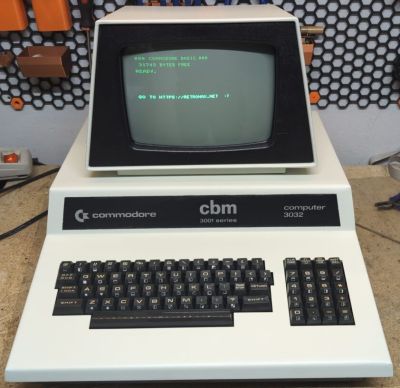
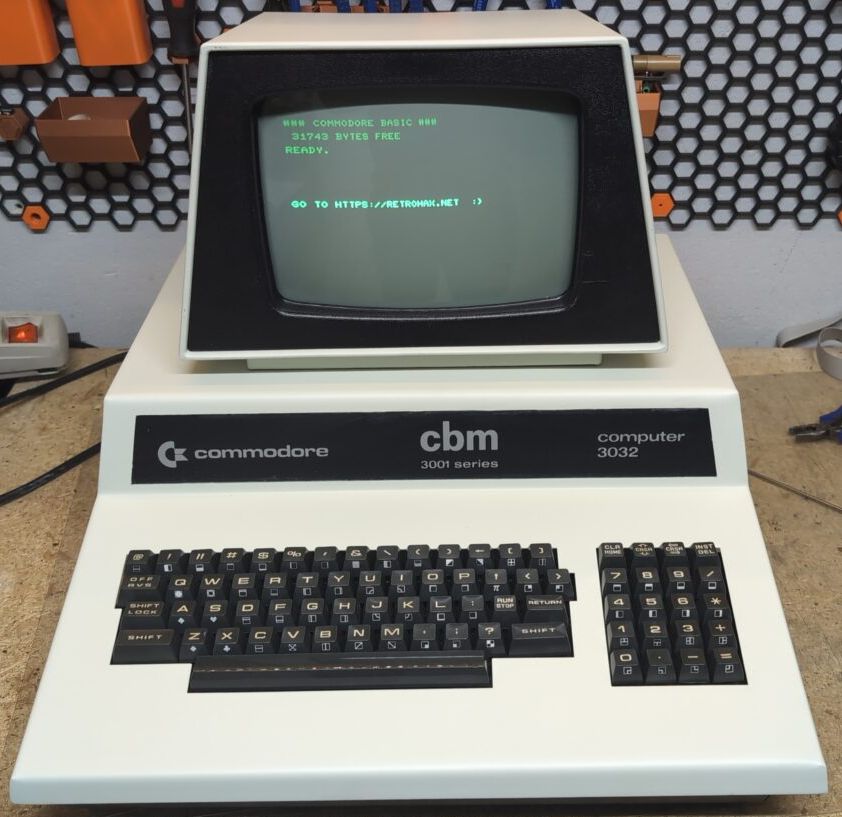
The restored PET/CBM 3032. (Credit: Drygol, retrohax.net)
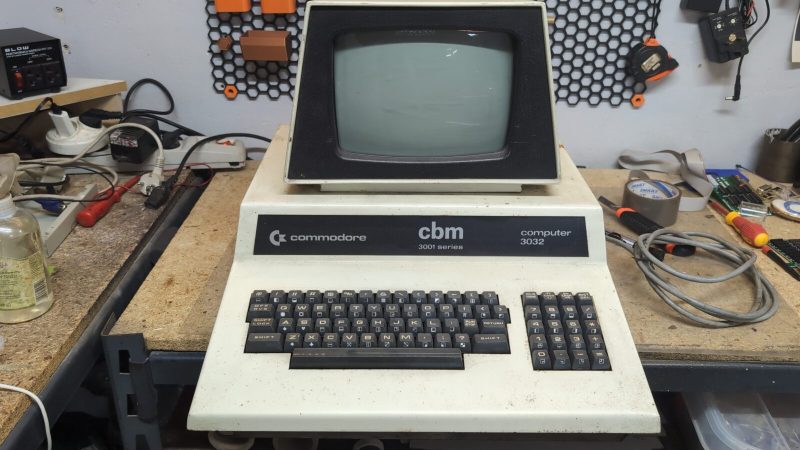
The Commodore CBM 3032 is a successor to the original Commodore PET 2001, yet due a conflicting trademark issue with Philips these first European PETs were called ‘CBM’ instead. Hence the labeling on the CBM 3032 that [Drygol] had in for a restoration, which would have been produced somewhere between 1979 and the cessation of its manufacturing a few years later. This former machine of the University of Szcezecin in Poland had languished in a basement until a local demoscene group came across it and wanted to use it, after a restoration.Although at first glance from just the front it didn’t look too shabby, problems were apparent from just a walkaround, including rusty and buckled paneling, showing that the time spent in storage had not done it any favors. Internally there was decades worth of dust, along with a dodgy potentiometer, cold joints and some PCB-level bodges that may or may not have been there from the factory.
The main case was disassembled by drilling out the rivets to gain full access to every nook and cranny, allowing for a good cleaning and repainting prior to putting in fresh rivets. On the PCB side of things, a potentiometer and an LM340KC-12 linear regulator in a TO-3 package had to be replaced, after which the system managed to boot reliably once in every three attempts.
Fixing this took basically cleaning all contacts and IC sockets, as well as refurbishing the keyboard, with corrosion and the occasional broken trace causing a lot of grief. Ultimately the system was restored and ready to be put into demoscene service.

Gli ultimi otto messaggi ricevuti dalla Federazione
-
@Alberto @electricsheep @matz @simone @marcoboh @bradipo eh sì infatti l'ho scritto, a questo punto se proprio serve piuttosto Alipay (e non è che sia tanto meglio, ma piuttosto che i tecnonazisti americani)
-
@ilsimoneviaggiatore grazie, ho capito. Quindi è un argomento di scarso interesse per l'utente comune, ma di alto interesse per le PMI
-
@Zambunny lavati i denti, sentirsi la bocca fresca può far passare la voglia di sporcarla
Se non funziona mangia il dentifricio 😅
-
Compagnie petrolifere Usa al presidente: “Probabile che la crisi peggiori"
Repubblica
-
Perché questo servizio è destinato principalmente alle aziende.
https://www.ilsoftware.it/office-eu-la-suite-cloud-open-source-europea-sfida-microsoft-365/
Cito una parte interessante:
Se Office EU si basa su Nextcloud Hub, che senso ha installarlo? Nextcloud Hub è una soluzione che si installa on-premises su server propri (Linux, Docker, macchine virtuali), offrendo pieno controllo e privacy senza dipendenze cloud esterne. Office EU ha senso per chi non vuole gestire installazioni, aggiornamenti, backup o scalabilità in autonomia, specialmente PMI e utenti con poche competenze nel settore IT. Si propone come una versione di Nextcloud Hub “pronta all’uso” europea, con integrazioni ottimizzate e zero complicazioni, mantenendo piena conformità con il GDPR.
-
Come comico indubbiamente un fuoriclasse. Come persona probabilmente meno, anche se aver creato Telethon è un bonus a suo favore (qui citavo la reunion con #DeanMartin avvenuta in quell'occasione https://mastodon.uno/@fucinafibonacci/115779836904620380). Ma anche come attore aveva il suo perché. #JerryLewis nasceva 100 anni fa. Re per una notte (1983) - TokyVideo https://www.tokyvideo.com/it/video/re-per-una-notte-1983
-
Ho una fame nervosa che sto per urlare. Credo che potrei addentare il braccio di qualcuno.
-
Benvenuto Peter, speriamo che te ne torni a casa in fretta... e magari freddo.