A 1988 keynote by Gordon Bell on the history of personal workstations.
Uncategorized
32
Posts
6
Posters
91
Views
-
A 1988 keynote by Gordon Bell on the history of personal workstations. The concept of personal workstation he covers is broader than machines like Suns and has deeper roots.
What's remarkable is Bell was fully aware that PCs were soon going to make workstations extinct.
@amoroso It is a great keynote, and to his credit Gordon saw minicomputers making mainframes "extinct" (which isn't precisely true but certainly knocked them off the top of the food pyramid) and saw how Sun was eating DEC's lunch with workstations, and that would lead to PCs eating the workstations. I don't think anyone had phones eating the PC on their bingo card but may be mistaken on that.
-
My first too! (Might have been an LM-2 a few months earlier, I forget.)
Everything else since then has been a disappointment.
Faster, sure. But also persistently stupider.
@weekend_editor While you guys were playing with those toys my very first personal workstation was this.
-
@amoroso It is a great keynote, and to his credit Gordon saw minicomputers making mainframes "extinct" (which isn't precisely true but certainly knocked them off the top of the food pyramid) and saw how Sun was eating DEC's lunch with workstations, and that would lead to PCs eating the workstations. I don't think anyone had phones eating the PC on their bingo card but may be mistaken on that.
@ChuckMcManis Maybe Alan Kay came close to envisioning handheld devices doing most of what PCs did. As for Gordon, his vision was remarkably deep.
-
@weekend_editor While you guys were playing with those toys my very first personal workstation was this.
Well... you had a color display before we did?
-
Well... you had a color display before we did?
@weekend_editor That's why yours were toys.
-
Well... you had a color display before we did?
@weekend_editor @amoroso Probably, but vision was also a topic in the AI lab. I've seen a researcher doing 3d video analysis using a 3640. Night long runs to compute 3d filters over videos. That machine also had a color board, IIRC.
-
@weekend_editor @amoroso Probably, but vision was also a topic in the AI lab. I've seen a researcher doing 3d video analysis using a 3640. Night long runs to compute 3d filters over videos. That machine also had a color board, IIRC.
There was (eventually) a color board, which would either do full 32-bit color or pack things into 8-bit color with the colors looked up in a color map.
It was *very* expensive, even the monitor was north of $10k as I recall.
It was geared at Hollywood types, with gen locking and all that.
https://en.wikipedia.org/wiki/Stanley_and_Stella_in:_Breaking_the_Ice
-
There was (eventually) a color board, which would either do full 32-bit color or pack things into 8-bit color with the colors looked up in a color map.
It was *very* expensive, even the monitor was north of $10k as I recall.
It was geared at Hollywood types, with gen locking and all that.
https://en.wikipedia.org/wiki/Stanley_and_Stella_in:_Breaking_the_Ice
@weekend_editor What timeframe was that? Interlisp-D supported color on secondary displays no later than 1990, but probably not much earlier than a couple of years.
-
@weekend_editor What timeframe was that? Interlisp-D supported color on secondary displays no later than 1990, but probably not much earlier than a couple of years.
Late 1984.
Definitely by 1985. That was the year Scientific American had the Mandelbrot set on the cover. I had a color display & color board for some reason, probably because I write a demo for sales. Since I was a physics grad student on hiatus, everybody wanted me to show them how to map the complex plane onto the color display and "do mandelbrots".
That was fun!
-
Late 1984.
Definitely by 1985. That was the year Scientific American had the Mandelbrot set on the cover. I had a color display & color board for some reason, probably because I write a demo for sales. Since I was a physics grad student on hiatus, everybody wanted me to show them how to map the complex plane onto the color display and "do mandelbrots".
That was fun!
@weekend_editor I found a couple of Interlisp-D source files for color support timestamped 1986.
-
@weekend_editor I found a couple of Interlisp-D source files for color support timestamped 1986.
@weekend_editor The 1983 edition of the Interlisp Reference Manual has a section on color graphics on Xerox 11xx machines.
https://bitsavers.org/pdf/xerox/interlisp/Interlisp_Reference_Manual_Oct_1983.pdf#page=576
-
@weekend_editor The 1983 edition of the Interlisp Reference Manual has a section on color graphics on Xerox 11xx machines.
https://bitsavers.org/pdf/xerox/interlisp/Interlisp_Reference_Manual_Oct_1983.pdf#page=576
@amoroso @weekend_editor very cool, I wonder if there are any infos/images of those machines with a color board & screen?
-
@amoroso @weekend_editor very cool, I wonder if there are any infos/images of those machines with a color board & screen?
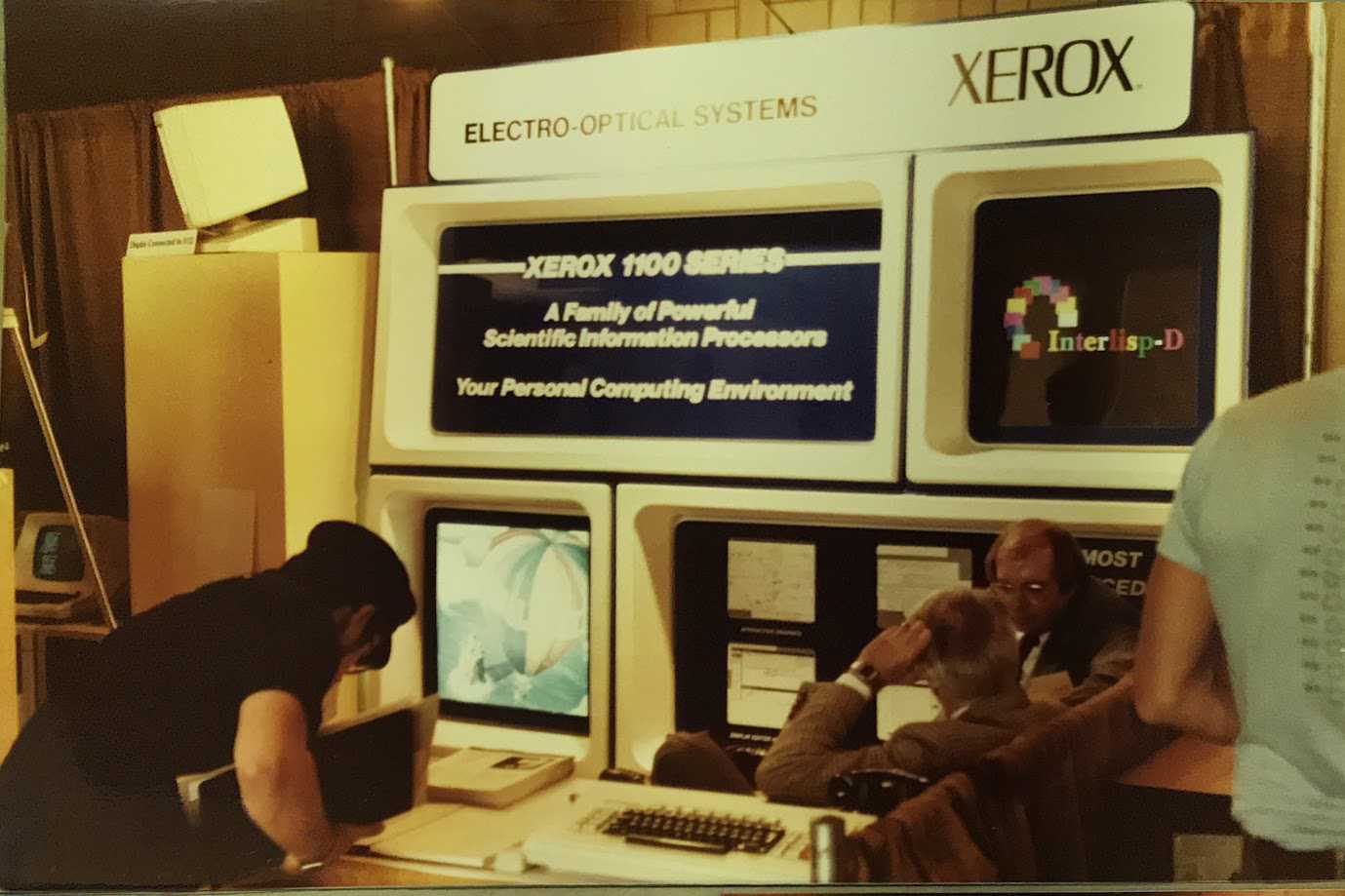
@symbolics I've never seen a screenshot of Interlisp-D in color. I'm not sure whether the color logo in this AAAI 82 photo is an actual monitor or just a sign.
https://interlisp.org/photos/AAAI82/AAAI82_9_hu_4a14d9fb5d0b6063.jpg
-
@symbolics I've never seen a screenshot of Interlisp-D in color. I'm not sure whether the color logo in this AAAI 82 photo is an actual monitor or just a sign.
https://interlisp.org/photos/AAAI82/AAAI82_9_hu_4a14d9fb5d0b6063.jpg
@symbolics Here is Interlisp-D in color:
https://groups.google.com/g/lispcore/c/yCTSn6IxQ8Q/m/dxrQpUBQAQAJ
-
@symbolics Here is Interlisp-D in color:
https://groups.google.com/g/lispcore/c/yCTSn6IxQ8Q/m/dxrQpUBQAQAJ
@amoroso @weekend_editor I wonder, when did main color screens appear? In ancient times it was typical (on a Symbolics) that it could have an additional color board, but that was not a screen for the usual applications (listener, ...), but a color screen dedicated for displaying/drawing in color. I think the capability to run the main console on a native color screen appeared late, for example because drawing on a color screen was slow or because the system was hosted.
-
@amoroso @weekend_editor I wonder, when did main color screens appear? In ancient times it was typical (on a Symbolics) that it could have an additional color board, but that was not a screen for the usual applications (listener, ...), but a color screen dedicated for displaying/drawing in color. I think the capability to run the main console on a native color screen appeared late, for example because drawing on a color screen was slow or because the system was hosted.
@symbolics For context the screenshot I linked was likely taken on a Unix workstation running the Medley version of Interlisp-D, the first for Unix.
-
@amoroso @weekend_editor I wonder, when did main color screens appear? In ancient times it was typical (on a Symbolics) that it could have an additional color board, but that was not a screen for the usual applications (listener, ...), but a color screen dedicated for displaying/drawing in color. I think the capability to run the main console on a native color screen appeared late, for example because drawing on a color screen was slow or because the system was hosted.
@amoroso @weekend_editor I would guess that a color screen was added on an Interlisp machine in the early days (!) just like that: on an external screen dedicated to color drawing with some UI features - but not as a main console.. Since the manual had Interlisp functions for example like a color demo, that code should be available somewhere.
-
@symbolics For context the screenshot I linked was likely taken on a Unix workstation running the Medley version of Interlisp-D, the first for Unix.
@amoroso @weekend_editor that's interesting. It looks like each of the Medley windows were X windows? That's different from using one big X window and Interlisp-D windows inside?
-
@amoroso @weekend_editor I would guess that a color screen was added on an Interlisp machine in the early days (!) just like that: on an external screen dedicated to color drawing with some UI features - but not as a main console.. Since the manual had Interlisp functions for example like a color demo, that code should be available somewhere.
@symbolics Right, D-machines with Interlisp-D supported color on an external screen. The Medley repo still has code for color demos:
https://files.interlisp.org/medley/lispusers
-
@amoroso @weekend_editor that's interesting. It looks like each of the Medley windows were X windows? That's different from using one big X window and Interlisp-D windows inside?
@symbolics No, they're actually not X windows but native Interlisp-D windows on the window holding the Medley screen. The title bars may give the impression of X windows but you can set the same bar shading on black&white Medley too.



Gli ultimi otto messaggi ricevuti dalla Federazione
-
@aeva well it does help to be able to play the role convincingly that the other one wants to see. it is possible to do that only through plausible omission. any lawyer would clear this.
-
@EUCommission
More than a plan, a slop, an #aislop
Let's simplify rules so that companies can find more efficient and convenient ways to steal our health data and sell them to... Just to say... Insurances?
-
@lritter to be fair this is my triage policy still https://mastodon.gamedev.place/@aeva/114612264992461462 but i'm just a wittle smol bean volunteer deweloper tho
-
@Sar yay! wishing you all the best... and keep me posted on how it goes
-
-
I don't know why I wrote this
-
@aeva but no shit; i realize as a dev i would always take a ticket more seriously if the person in it spoke of "we". not so much because profit, but because it meant that multiple people had this problem and a professional need for it, which just generally elevates the project and increases its public value.
-
È allo studio.
Pare che ci sia pervenuto un appunto olografo di Cher che recita: "ore 6:00 PM appuntamento con Dr. K. per informazioni su nuova tecnica di chirurgia ringiovanente".
Note to self: se non è una bufala, perché non provarci? C'è una prima volta per tutto.






Post suggeriti
-
It's a rainy Monday here in Bradford, but a happy one - despite the fact I was working all weekend.
Uncategorized 3
3
-
Picked up this Apple 20SC external SCSI drive from the free pile at the last swap meet.
Uncategorized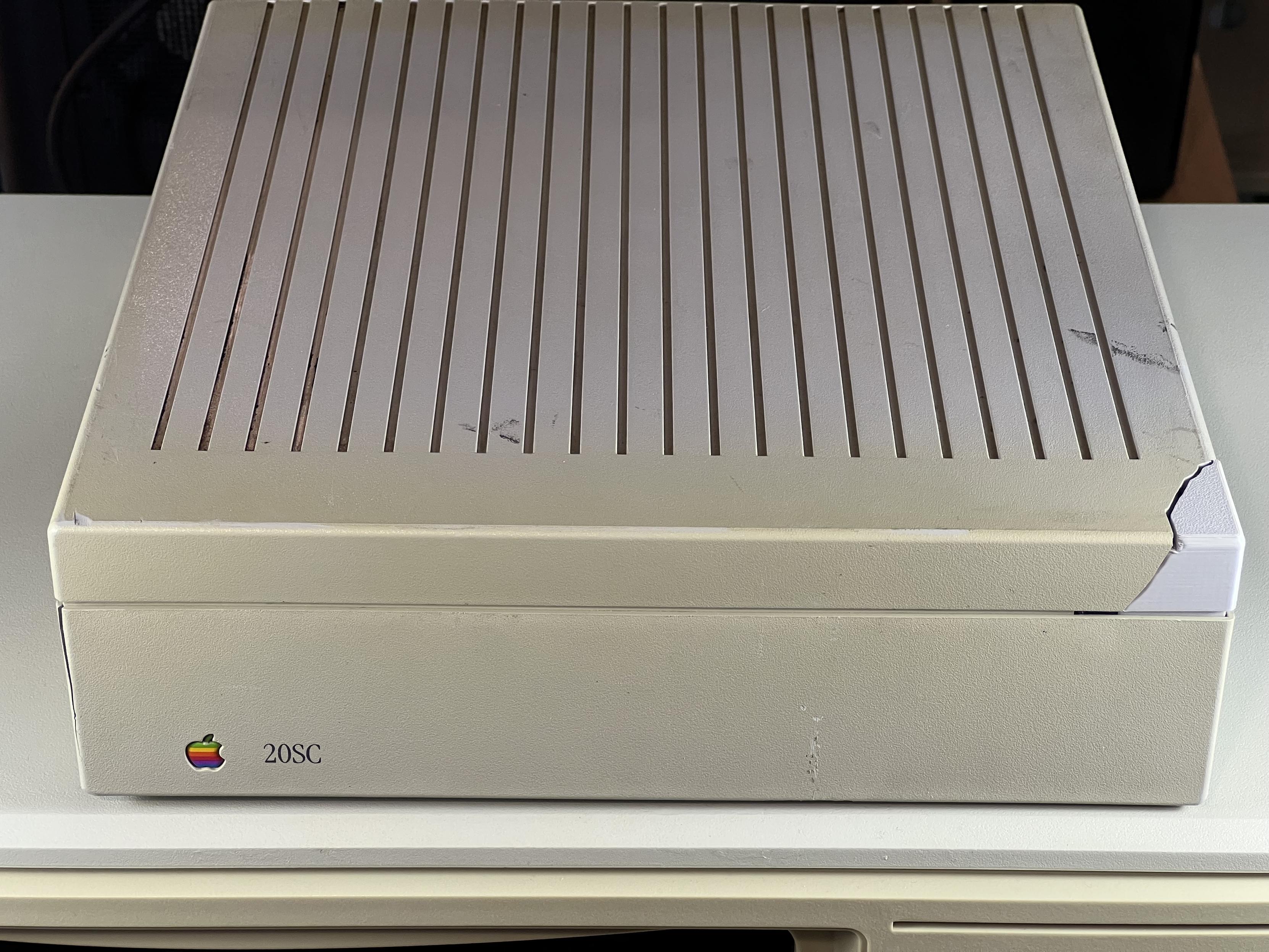 2
2
-
I'm going to be participating at the next Interim Computer Festival in Seattle in two weeks.
Uncategorized 1
1
-