things humans are bad at: memorising specific sequences of words
Uncategorized
85
Posts
11
Posters
60
Views
-
@bri7 @kirtai i was honestly actually surprised that bash *had* a manpage because i thought that they were for, like, relatively quick guides for stuff because you couldn't be expected to just... remember all that, hit Q and do your thing
but i guess this was made for folks who had a better affordance for writing things down in physical notebooks or printing stuff out -
@bri7 @kirtai i was honestly actually surprised that bash *had* a manpage because i thought that they were for, like, relatively quick guides for stuff because you couldn't be expected to just... remember all that, hit Q and do your thing
but i guess this was made for folks who had a better affordance for writing things down in physical notebooks or printing stuff out -
-
-
@lispi314 @oblomov @apophis none of these is really the point i am getting at with OP.
Text adventure games have an interface in which the goal of a puzzle is often “guess the exact correct word”
point and click adventure games are a slight improvement but often it just replaces guess the word with guess which pixel to click, or guess which item to use on which pixel
these are examples of *pointless* difficulty. we gain
nothing
in terms of expressivity or power by forcing people to play guessing games with the UI
The alternative is to make all affordances visible, discoverable, and reliably findable within a space; Don’t make people guess what is possible: sh
show users the list of possibilities, as objects that suggest visibly what their function is.
let people interact directly with those objects.
the efficiency you think you get from a CLI is an illusion
-
@lispi314 @oblomov @apophis none of these is really the point i am getting at with OP.
Text adventure games have an interface in which the goal of a puzzle is often “guess the exact correct word”
point and click adventure games are a slight improvement but often it just replaces guess the word with guess which pixel to click, or guess which item to use on which pixel
these are examples of *pointless* difficulty. we gain
nothing
in terms of expressivity or power by forcing people to play guessing games with the UI
The alternative is to make all affordances visible, discoverable, and reliably findable within a space; Don’t make people guess what is possible: sh
show users the list of possibilities, as objects that suggest visibly what their function is.
let people interact directly with those objects.
the efficiency you think you get from a CLI is an illusion
-
@lispi314 @oblomov @apophis none of these is really the point i am getting at with OP.
Text adventure games have an interface in which the goal of a puzzle is often “guess the exact correct word”
point and click adventure games are a slight improvement but often it just replaces guess the word with guess which pixel to click, or guess which item to use on which pixel
these are examples of *pointless* difficulty. we gain
nothing
in terms of expressivity or power by forcing people to play guessing games with the UI
The alternative is to make all affordances visible, discoverable, and reliably findable within a space; Don’t make people guess what is possible: sh
show users the list of possibilities, as objects that suggest visibly what their function is.
let people interact directly with those objects.
the efficiency you think you get from a CLI is an illusion
-
-
-
@kirtai @bri7 @oblomov @apophis That being said, there's a limit to expressivity of features that can be had without some degree of user-internalized model of operations.
At some point actually explaining all the things at once becomes sensory overload and explaining them separately in sequence becomes in itself overwhelming or overly tedious.
Dynamic systems have a much easier time of things here for obvious reasons, but user model & skill has to develop at some point for some things. -
@kirtai @bri7 @oblomov @apophis That being said, there's a limit to expressivity of features that can be had without some degree of user-internalized model of operations.
At some point actually explaining all the things at once becomes sensory overload and explaining them separately in sequence becomes in itself overwhelming or overly tedious.
Dynamic systems have a much easier time of things here for obvious reasons, but user model & skill has to develop at some point for some things. -
@bri7 @lispi314 @oblomov @apophis
Actually here they are.- Rigel's Revenge: Text adventure: Required the exact phrase "introduce bomb".
- The Price of Magik: Text adventure: Required the exact phrase "Bat, take wheel". Get does not work here despite being a synonym of "take" for the entire rest of the game.
- Beneath a Steel Sky: Point and click: Required you to notice a single pixel lightswitch in a textured background in order to pass one of the last rooms in the game.
It's been, what, thirty years since I even looked at any of these and I still remember them with annoyance.
-
@bri7 @lispi314 @oblomov @apophis
Actually here they are.- Rigel's Revenge: Text adventure: Required the exact phrase "introduce bomb".
- The Price of Magik: Text adventure: Required the exact phrase "Bat, take wheel". Get does not work here despite being a synonym of "take" for the entire rest of the game.
- Beneath a Steel Sky: Point and click: Required you to notice a single pixel lightswitch in a textured background in order to pass one of the last rooms in the game.
It's been, what, thirty years since I even looked at any of these and I still remember them with annoyance.
-
@kirtai@tech.lgbt @bri7@social.treehouse.systems @oblomov@sociale.network @apophis@yourwalls.today Regarding the following:
show users the list of possibilities, as objects that suggest visibly what their function is.
let people interact directly with those objects.
which-key-mode (github) kinda does that, it even has full mouse-over description without requiring configuration and click interaction.
It isn't enabled by default but I think that this suggestion might address that.
It's a bit unfortunate it took this long for these to come into existence (they are not perfect, and some limitations in rendering cannot be fixed without something like this), but they have.
-
@bri7 @lispi314 @oblomov @apophis
Actually here they are.- Rigel's Revenge: Text adventure: Required the exact phrase "introduce bomb".
- The Price of Magik: Text adventure: Required the exact phrase "Bat, take wheel". Get does not work here despite being a synonym of "take" for the entire rest of the game.
- Beneath a Steel Sky: Point and click: Required you to notice a single pixel lightswitch in a textured background in order to pass one of the last rooms in the game.
It's been, what, thirty years since I even looked at any of these and I still remember them with annoyance.
@kirtai @bri7 @lispi314 @apophis I remember pixel hunting being the bane of some classic LucasArts game too! Compounded by the need to use a specific Look command to do it, too.
And I remember Heart of the Alien (sequel to Another World/Out of this World), a platformer, also had a bomb placement that require a specific sequence of movement keys to do. Reading the manual was the only way to know.
(“bat, take the wheel” is a specific idiomatic expressions, I'll allow it.)
-
@kirtai @bri7 @oblomov @apophis That being said, there's a limit to expressivity of features that can be had without some degree of user-internalized model of operations.
At some point actually explaining all the things at once becomes sensory overload and explaining them separately in sequence becomes in itself overwhelming or overly tedious.
Dynamic systems have a much easier time of things here for obvious reasons, but user model & skill has to develop at some point for some things.@lispi314 @bri7 @kirtai @apophis
this is true for any physical tool as well. Even a hammer requires learning to use correctly. There's a trope that claims that the only intuitive interface is that tit, and even THAT is wrong, as anyone who has experienced motherhood knows: babies do not, in fact, latch and start suckling automatically. It's just that mothers* generally** make all efforts to ensure that that baby learns within the first hours
1/n
*usually
**not always, sadly -
@lispi314 @bri7 @kirtai @apophis
this is true for any physical tool as well. Even a hammer requires learning to use correctly. There's a trope that claims that the only intuitive interface is that tit, and even THAT is wrong, as anyone who has experienced motherhood knows: babies do not, in fact, latch and start suckling automatically. It's just that mothers* generally** make all efforts to ensure that that baby learns within the first hours
1/n
*usually
**not always, sadly@lispi314 @bri7 @kirtai @apophis
2/n
because it's essential for the baby's survival.
The idea that this can be magically avoided on a computer is preposterous.
Microsoft has inveted decades of UX research to make the UI of Word as accessible as possible and the best they could come up is the Ribbon interface, which is a clusterfuck of sensory overload where nothing is where you would expect it to be *unless you already have a mental model of where things should be*.
-
@lispi314 @bri7 @kirtai @apophis
2/n
because it's essential for the baby's survival.
The idea that this can be magically avoided on a computer is preposterous.
Microsoft has inveted decades of UX research to make the UI of Word as accessible as possible and the best they could come up is the Ribbon interface, which is a clusterfuck of sensory overload where nothing is where you would expect it to be *unless you already have a mental model of where things should be*.
@lispi314 @bri7 @kirtai @apophis
3/n
The net result is that SOME things are where SOME people expect it, but nothing is where everyone would expect it and no one will find all things “automagically”.
And people still do centering by adding “an adequate number of spaces in front of the text” as if they were working with a typewriter. Even among the younger generation that have never seen a typewriter in their life.
-
@lispi314 @bri7 @kirtai @apophis
3/n
The net result is that SOME things are where SOME people expect it, but nothing is where everyone would expect it and no one will find all things “automagically”.
And people still do centering by adding “an adequate number of spaces in front of the text” as if they were working with a typewriter. Even among the younger generation that have never seen a typewriter in their life.
@lispi314 @bri7 @kirtai @apophis
4/n
(Heck, I still remember when they tried to make progressive discovery a thing, by hiding less common menu entries by default, with the only result that they broke everybody's muscle memory. Meanwhile, WordPerfect had had a sensible menu system for *years* and even less tech inclined people could find anything they needed simply because it had a more accessible model through and through.)
-
@lispi314 @bri7 @kirtai @apophis
4/n
(Heck, I still remember when they tried to make progressive discovery a thing, by hiding less common menu entries by default, with the only result that they broke everybody's muscle memory. Meanwhile, WordPerfect had had a sensible menu system for *years* and even less tech inclined people could find anything they needed simply because it had a more accessible model through and through.)
@lispi314 @bri7 @kirtai @apophis
5/n
And by the way, we do not have ridiculous amounts of screen estate compared to the old days. Even if most people at a computer (i.e. not using a tablet) will have a larger monitor than the 12" or 13" of lore, they still rarely have more than a 16", and the higher resolution is better used for crispter text at the same visual size than to cram more information on screen.




Gli ultimi otto messaggi ricevuti dalla Federazione
-
@quinta formalmente non per i festini, ma per diffusione di documenti riservati
-
Daily Digest | 19 February 2026
Your daily dose of Privacy, Data Protection, AI & Cybersecurity news.
5 stories you should not miss.
Read more: https://www.nicfab.eu/daily-digest/
-
@muffa posso confermare, avendo tartarughe. Penso che possa in effetti essere confermato da chiunque abbia tartarughe
-
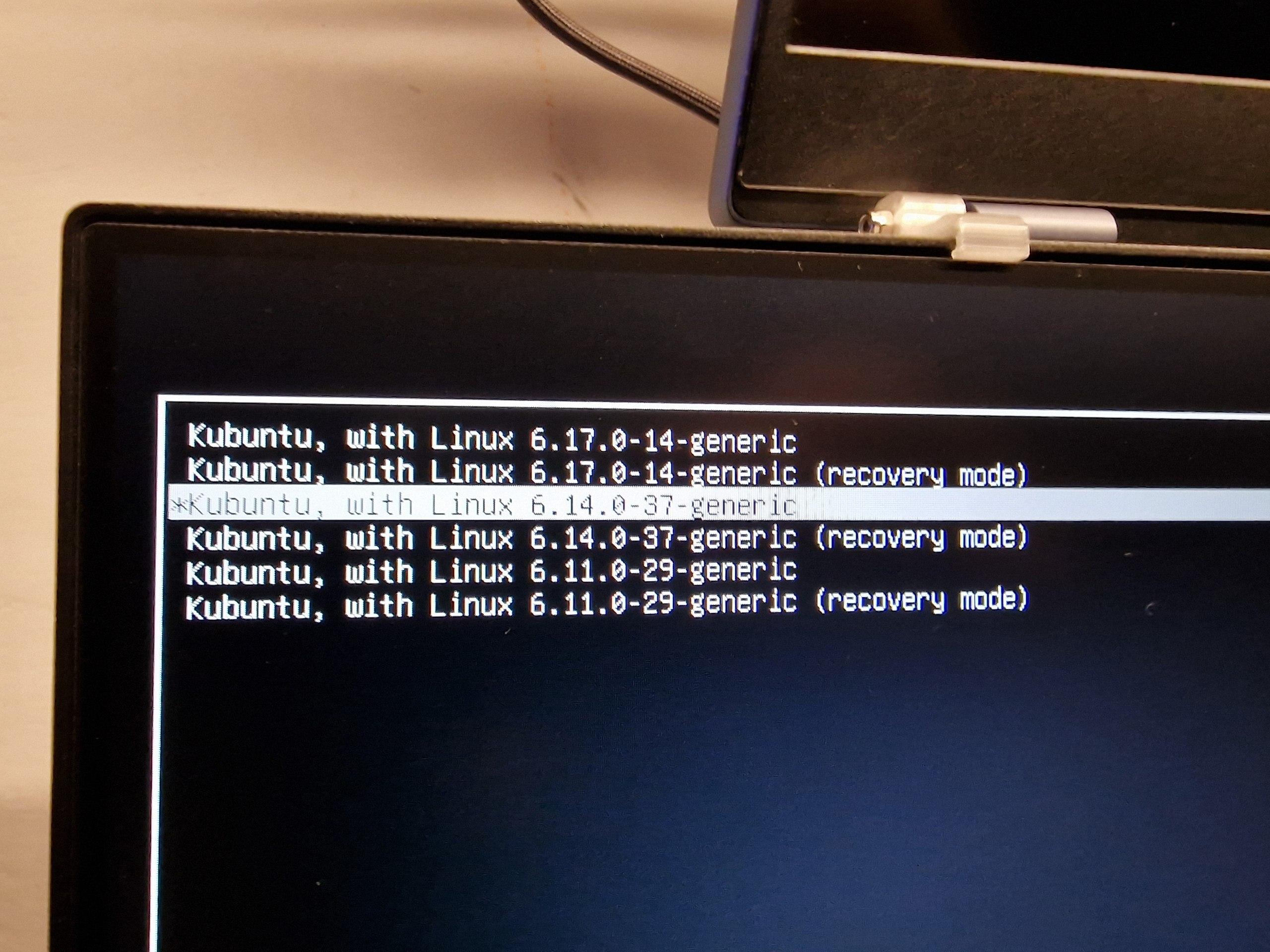
Avviando col 6.17 mi va in kernel panic. Come posso eliminarlo?
-
Laboratorio Palestina. La creazione dell’esercito digitale a Gaza
@anarchia
Dalla digitalizzazione dell’esercito al primo campo di concentramento smart previsto a Rafah, la striscia di Gaza è ormai un laboratorio mondiale della repressione e delle carneficine high tech. Oppurtunamente testate, queste ritornano nelle metropoli in cui vengono finanziate e progettate:...
-
@sebzuen @andypiper the interface is one - as all the apps - but supports the snac variation of Mastodon API implementation
-
Arrestato il principe Andrea per i festini da Epstein.
a volte la monarchia...
-
@VanityFairItaly @news-VanityFairItaly ma ci sono indagati per omicidio?
Perché buttare un cuore è ammazzare due volte