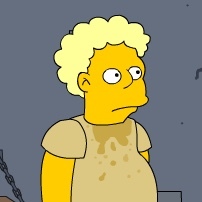
working on the scene just before the finale of Paisiello's Barber.
Uncategorized
22
Posts
3
Posters
4
Views
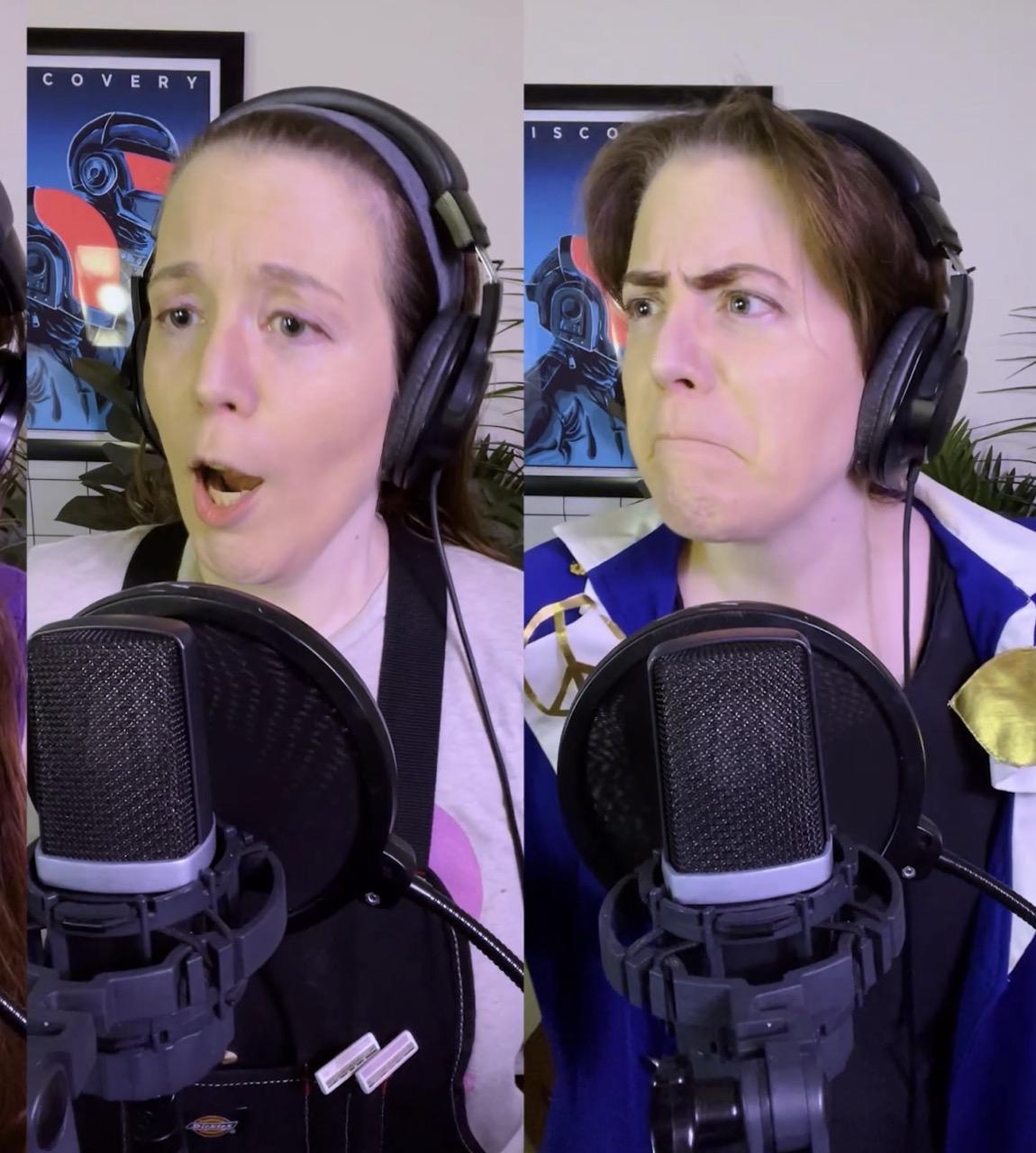
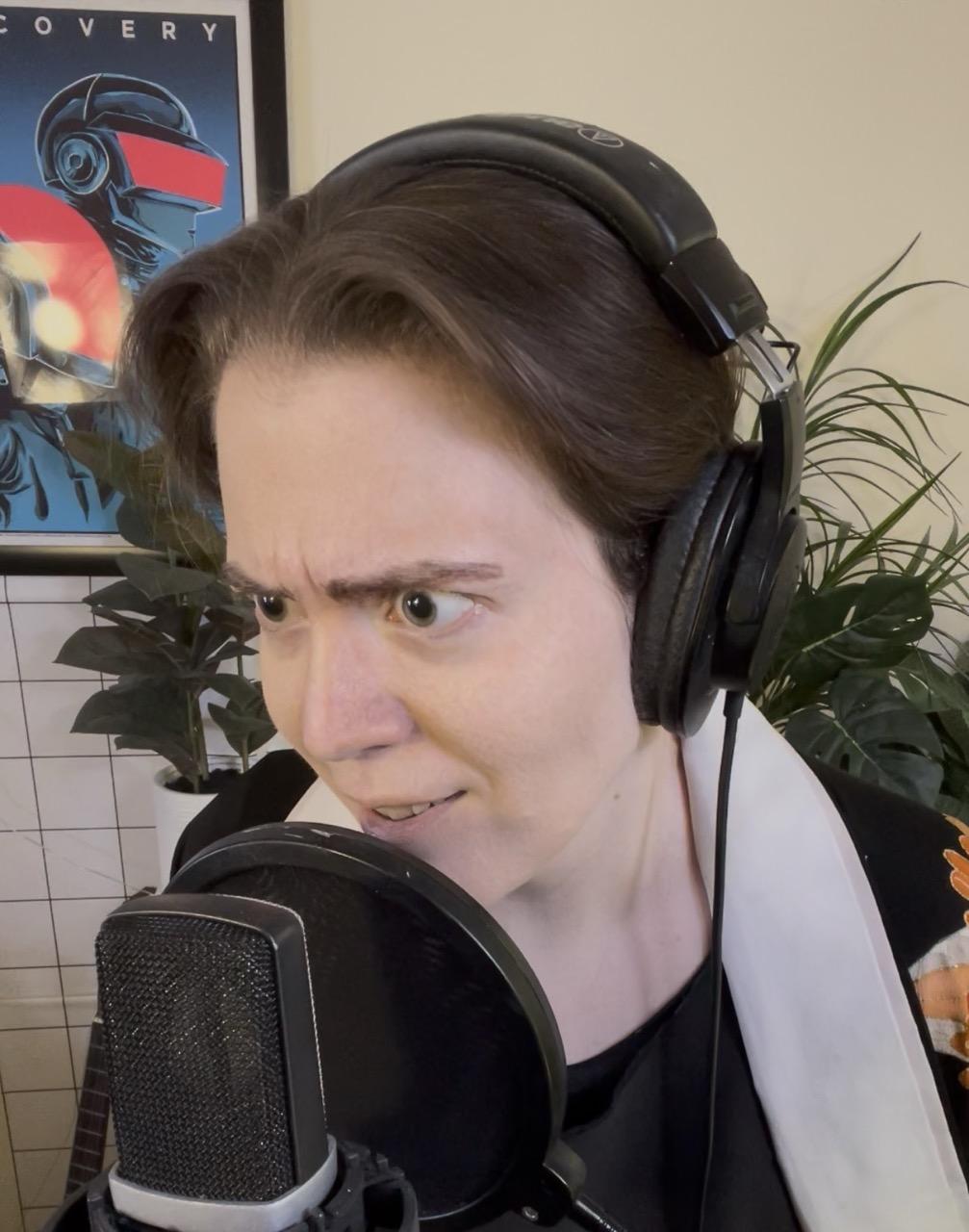
-
working on the scene just before the finale of Paisiello's Barber. My acting principle when performing Rossini's Count is that when he's angry he's doing his best to not burst into tears, and when performing Paisiello's Count, when he's angry he's doing his best to not tear off his fleshy mammal disguise to reveal his true lizard form
-
working on the scene just before the finale of Paisiello's Barber. My acting principle when performing Rossini's Count is that when he's angry he's doing his best to not burst into tears, and when performing Paisiello's Count, when he's angry he's doing his best to not tear off his fleshy mammal disguise to reveal his true lizard form
Figaro at the end of Paisiello's Barber: okay holy shit. good thing i picked the right side, right?
Figaro:
Figaro: right?FIGARO WILL RETURN IN
THE MARRIAGE OF FIGARO -
Figaro at the end of Paisiello's Barber: okay holy shit. good thing i picked the right side, right?
Figaro:
Figaro: right?FIGARO WILL RETURN IN
THE MARRIAGE OF FIGAROi kind of feel like i need to redo my Nozze videos with the canon Count as intended by Beaumarchais/Da Ponte because while it was fun to perform Figaro effortlessly running circles around a pathetically inept room temperature IQ Rossini Count-turned-villain, after spending this much time with the canon Count, boy would i like to see him get his ass kicked
-
i kind of feel like i need to redo my Nozze videos with the canon Count as intended by Beaumarchais/Da Ponte because while it was fun to perform Figaro effortlessly running circles around a pathetically inept room temperature IQ Rossini Count-turned-villain, after spending this much time with the canon Count, boy would i like to see him get his ass kicked
the count is really out here without even bothering to speak in euphemisms being like "yes i just stole ur property (rosina) the fuck u gonna do about it"
-
the count is really out here without even bothering to speak in euphemisms being like "yes i just stole ur property (rosina) the fuck u gonna do about it"
rossini's Count: waaah im super in love with rosina but im shyyyyyy what do i do u have to help me figaro please help me pretty pretty please
rossini's figaro: shut uppaisiello's figaro: can i go home now
paisiello's count: shut up -
rossini's Count: waaah im super in love with rosina but im shyyyyyy what do i do u have to help me figaro please help me pretty pretty please
rossini's figaro: shut uppaisiello's figaro: can i go home now
paisiello's count: shut upno but seriously in Rossini's Barber Figaro does actually tell the Count to shut up at least four times I can think of offhand. lmao
I think Paisiello's Count tells Figaro to shut up twice?
Rossini's Figaro meeting Paisiello's Count would be some "unstoppable force meets immovable object" shit. possibly too much flamboyant ham for the stage to handle
-
no but seriously in Rossini's Barber Figaro does actually tell the Count to shut up at least four times I can think of offhand. lmao
I think Paisiello's Count tells Figaro to shut up twice?
Rossini's Figaro meeting Paisiello's Count would be some "unstoppable force meets immovable object" shit. possibly too much flamboyant ham for the stage to handle
it's worth noting that after Paisiello's Count gets married to Rosina he does not speak to her again for the rest of the opera, which still has ~7 mins to go til the end, and when he talks about her it is entirely in terms of property rights (that is, his rights to her, as property). This is not an oversight but rather very very intentional. Finding it fucked up is exactly the reaction Beaumarchais intended
-
 undefined oblomov@sociale.network shared this topic on
-
it's worth noting that after Paisiello's Count gets married to Rosina he does not speak to her again for the rest of the opera, which still has ~7 mins to go til the end, and when he talks about her it is entirely in terms of property rights (that is, his rights to her, as property). This is not an oversight but rather very very intentional. Finding it fucked up is exactly the reaction Beaumarchais intended
here's the real meat of Beaumarchais's/Paisiello's satire. Bartolo has committed no crimes, he's been a dick entirely within legal bounds - except in a system designed to cater to the whims of the elite, the law is whatever the Count says it is, and the instruments of its implementation, here the mayor of Seville, know who their masters are. the idea of "consent" is a bitter joke. Bartolo is coerced by the Count just as Figaro and Basilio were
-
here's the real meat of Beaumarchais's/Paisiello's satire. Bartolo has committed no crimes, he's been a dick entirely within legal bounds - except in a system designed to cater to the whims of the elite, the law is whatever the Count says it is, and the instruments of its implementation, here the mayor of Seville, know who their masters are. the idea of "consent" is a bitter joke. Bartolo is coerced by the Count just as Figaro and Basilio were
worth noting that Paisiello's Count does not ask Rosina to marry him, he just tells her to marry him and she requires no coersion because she was about to be forced to marry an old doctor so marrying a young aristocrat is a big upgrade. she had no choice but is happy because the new situation somebody else picked for her is better than the prior existing one. if you think there's a lot to unpack there I have great news: female agency within this system is a central focus of the sequel
-
worth noting that Paisiello's Count does not ask Rosina to marry him, he just tells her to marry him and she requires no coersion because she was about to be forced to marry an old doctor so marrying a young aristocrat is a big upgrade. she had no choice but is happy because the new situation somebody else picked for her is better than the prior existing one. if you think there's a lot to unpack there I have great news: female agency within this system is a central focus of the sequel
BARTOLO: io perdei per poca cura!
FIGARO: dite pur per poca testa -
BARTOLO: io perdei per poca cura!
FIGARO: dite pur per poca testaThe narrative trajectory
The Count wants to test Rosina's worthiness by winning her love as a commoner
He attempts to anonymously use the levers of institutional power to gain access (the forged billet) but this fails
He attempts to use the social power of a gentleman of the same rank as Rosina (as "Don Alonso") to gain access, but this fails
He physically breaks in but Rosina rejects him
He goes fuck this and as his true self easily bulldozes all obstacles and takes what he wants -
The narrative trajectory
The Count wants to test Rosina's worthiness by winning her love as a commoner
He attempts to anonymously use the levers of institutional power to gain access (the forged billet) but this fails
He attempts to use the social power of a gentleman of the same rank as Rosina (as "Don Alonso") to gain access, but this fails
He physically breaks in but Rosina rejects him
He goes fuck this and as his true self easily bulldozes all obstacles and takes what he wantsin this case the failures are not a standard narrative arc of the hero slowly making progress while facing adversity, the narrative purpose of the Count's repeated failures is to show the idea of his succeeding by merit alone is a joke, the very system from which he derives his power makes success by merit impossible. all his pointless incognito make-believe did was indulge his vanity and waste everyone's else's time
-
in this case the failures are not a standard narrative arc of the hero slowly making progress while facing adversity, the narrative purpose of the Count's repeated failures is to show the idea of his succeeding by merit alone is a joke, the very system from which he derives his power makes success by merit impossible. all his pointless incognito make-believe did was indulge his vanity and waste everyone's else's time
it is also significant to Beaumarchais's satire that the story involves the whims of a count and not a prince in the manner of a more fairy tale/allegorical treatment. a prince is special. a count is the lowest tier of nobleman. the fact that the count isn't even special or important is central to the point: just the fact that he's some random noble gives him free license to fuck everyone over with no consequences
-
it is also significant to Beaumarchais's satire that the story involves the whims of a count and not a prince in the manner of a more fairy tale/allegorical treatment. a prince is special. a count is the lowest tier of nobleman. the fact that the count isn't even special or important is central to the point: just the fact that he's some random noble gives him free license to fuck everyone over with no consequences
point of interest: in Rossini's Barber, Bartolo sends for the notary, and since Figaro is a trickster, he intercepts the notary and gets him to prep paperwork for the Count and Rosina instead. it's not the marriage the Count would have picked but the situation forces it
in Beaumarchais's/Paisiello's Barber, the Count sends for the notary. He gives no shits about religion or love, he just wants to acquire a high value asset (Rosina), and the marriage proceeds exactly per his plan
-
point of interest: in Rossini's Barber, Bartolo sends for the notary, and since Figaro is a trickster, he intercepts the notary and gets him to prep paperwork for the Count and Rosina instead. it's not the marriage the Count would have picked but the situation forces it
in Beaumarchais's/Paisiello's Barber, the Count sends for the notary. He gives no shits about religion or love, he just wants to acquire a high value asset (Rosina), and the marriage proceeds exactly per his plan
rossini's count: our marriage, oh dearest, is the work of love. that love which made you my wife will tie me to you until death (il nostro nodo, o cara, opra è d'amore. amoooooooooooreeeeee che ti fe' mia consorte a te mi stringerà fino alla morte)
paisiello's count: the contract is already signed, who would want to dispute it? (il contratto è già firmato, disputarlo chi vorrei?)
-
rossini's count: our marriage, oh dearest, is the work of love. that love which made you my wife will tie me to you until death (il nostro nodo, o cara, opra è d'amore. amoooooooooooreeeeee che ti fe' mia consorte a te mi stringerà fino alla morte)
paisiello's count: the contract is already signed, who would want to dispute it? (il contratto è già firmato, disputarlo chi vorrei?)
other point of interest: Rosina is not a commoner per se, she is a gentlewoman. the fictional "Lindoro" is in fact a lower social rank than her, which she draws attention to when outraged that the low-born Lindoro would betray her when she was so nice to him despite his being below her station. the Count is hypocritically testing Rosina's virtue by seeing if she can love someone of a social rank he would not himself consider marrying into
-
other point of interest: Rosina is not a commoner per se, she is a gentlewoman. the fictional "Lindoro" is in fact a lower social rank than her, which she draws attention to when outraged that the low-born Lindoro would betray her when she was so nice to him despite his being below her station. the Count is hypocritically testing Rosina's virtue by seeing if she can love someone of a social rank he would not himself consider marrying into
in modern narratives, being attracted to someone on looks alone is considered shallow and a real hero wants the girl based on her personality. something interesting here that I think points to the incompleteness of this concept: Paisiello's Count believes having Rosina as a wife will flatter him due to her intelligence and "fire". Rossini's Count is desperate to be with Rosina and secure her happiness because she is really really pretty you guys. Which of the two counts is the more shallow?
-
in modern narratives, being attracted to someone on looks alone is considered shallow and a real hero wants the girl based on her personality. something interesting here that I think points to the incompleteness of this concept: Paisiello's Count believes having Rosina as a wife will flatter him due to her intelligence and "fire". Rossini's Count is desperate to be with Rosina and secure her happiness because she is really really pretty you guys. Which of the two counts is the more shallow?
I actually think Rossini's Count is in such a pathetic state of wibbling lovesick sadbrains because he loves a lot more than just Rosina's beauty but he's too stupid to articulate exactly what it is that drives his longing, but that still points to how a weird element of many modern love stories (particularly of the "family friendly" variety) is that a heroic character must be able to have the eloquence and self-awareness to verbally express morally virtuous rationales for their attraction
-
I actually think Rossini's Count is in such a pathetic state of wibbling lovesick sadbrains because he loves a lot more than just Rosina's beauty but he's too stupid to articulate exactly what it is that drives his longing, but that still points to how a weird element of many modern love stories (particularly of the "family friendly" variety) is that a heroic character must be able to have the eloquence and self-awareness to verbally express morally virtuous rationales for their attraction
unrelated: it is still wild to me what a drastic effect really small differences in mouth/jaw placement make in the shape of a face. i drew eyebrows and a nose bridge on the count and the characters have different shades of lipstick but the makeup is otherwise the same. it's my own dumb face ive seen a million times and it still seems like distinguishing these characters this drastically with so little shouldn't be possible
-
unrelated: it is still wild to me what a drastic effect really small differences in mouth/jaw placement make in the shape of a face. i drew eyebrows and a nose bridge on the count and the characters have different shades of lipstick but the makeup is otherwise the same. it's my own dumb face ive seen a million times and it still seems like distinguishing these characters this drastically with so little shouldn't be possible
@Xibanya glasses off, straighten up: Superman. So yeah.


Gli ultimi otto messaggi ricevuti dalla Federazione
-
Me browsing the book store at the airport knowing full well that my attention span could never.
-
Anyone can make a hashtag, and so anyone can co-opt a hashtag just as easily.
-
You have the advantage of sharing a wide range of things on your stream that makes it likely that you are a real person, and not just a scammer.
Also, I don't ever recall you asking Internet Strangers for money, which is another big hint.
-
I've been on the other end of this, and requested to follow people. Not sure what my success rate is on that.
-
Some people can follow me without a problem, some instead "Request to Follow", I suspect some local instance thing that flags some Follows as questionable & asks me to confirm or deny them. Sometimes the requests look legitimate and I grant them, other times they look spammy, either attractive women w/o much content (which makes me suspect they want me to subscribe to their naughty webcam) or like you describe, & both types are rejected.
-
Okay, I am going to say it:
Whether or not the people of #GazaVerified truly are who they say they are (and I am withholding judgement on that), quite a few are behaving in a manner that is indistinguishable from scammers.
There is the mass following of Fediverse users. If someone follows me, I assume that there is actual interest in what I have to say, not because they want money from me.
And first following me, then immediately sending me Direct Messages asking me for money is something I have otherwise only seen from scammers. This does not build trust in me.
Hence, I will use the block button more frequently in the future.
-
It seems unlikely I’m responsible for my own actions. Looking into who is responsible, and hope to know more soon
-
Annie Rauwerda has built a career exploring Wikipedia’s weirdest corners 🌐
The creator of Depths of Wikipedia says, “If Wikipedia is worth anything at all, it’s because of the citations.” She’s had a “simultaneous love affair with the Internet Archive and Wikipedia” as she embraces the spirit of the open web & the community of people who support this work.