Oh, serendipity!
Uncategorized
89
Posts
41
Posters
0
Views

-
I guess one really cool thing about Ubuntu is that it comes with Windows goodies on the CD: AbiWord, Audacity, Firefox (!!), GNU IMP, OpenOffice, GhostScript...
But because of this, it doesn't have nearly as many goodies _in the system_ itself.
( screenshots 🧵 cont)
Well, let's check out the experience of the original Morphix and compare it with Ubuntu, then?
I choose Morphix 0.4 instead of Morphix 0.5 so it'd be a bit more fun to see what we could have had, if Ubuntu became a thing a bit earlier, or relied on Morphix a bit more...
This version is a few months older than Ubuntu 4.10, so it has an older Gnome.
Looking at this splash screen, I wonder if THIS was the reason normies got Ubuntu instead of Morphix...
( screenshots 🧵 cont)
-
@nina_kali_nina ok, where the hell did you find the stack of old CDs (or img thereof) for all that?
@faraiwe Ubuntu images come from ubuntu.com; Morphix comes from sourceforge.net. Ancient Knoppix? I'll share it a biiiit later :)
-
Well, let's check out the experience of the original Morphix and compare it with Ubuntu, then?
I choose Morphix 0.4 instead of Morphix 0.5 so it'd be a bit more fun to see what we could have had, if Ubuntu became a thing a bit earlier, or relied on Morphix a bit more...
This version is a few months older than Ubuntu 4.10, so it has an older Gnome.
Looking at this splash screen, I wonder if THIS was the reason normies got Ubuntu instead of Morphix...
( screenshots 🧵 cont)
Morphix 0.4 doesn't even try to pretend it isn't Debian. Debian's start page still works; XChat happily loads and connects us to FreeNode. Imagine this: you boot your 20+ year old computer, and it just connects to the Internet as normal, and the chat apps work as normal, and... uh... it just works.
Except for Google, Google doesn't work anymore, they broke the support for "old" browsers. Lame. Boooooo!
( screenshots 🧵 cont)
-
@faraiwe Ubuntu images come from ubuntu.com; Morphix comes from sourceforge.net. Ancient Knoppix? I'll share it a biiiit later :)
@nina_kali_nina suspense is KILLING me
-
I guess I'll start with the conclusion: Ubuntu Live CD, at least 4.10, is a Knoppix derivative.
"No, that can't be right, Ubuntu is based on Debian!"
And so is Knoppix. And so is Knoppix fork called Morphix that was used as a LiveCD builder for Ubuntu 4.10. I have irrefutable evidence of this, and I am surprised that no one on the Internet seemingly ever mentioned that before.
That is not to say that Ubuntu is not based on Debian - it is. I am not trying to say that it does not come with its own packages and kernel, either. But it is _also_ based on Morphix, at least in LiveCD 4.10.
First, I'll share a few screenshots hinting at the similarities. Then I'll show you the solid proof I'm talking about. And then I'll just share a bunch of screenshots of old Linuxes just for fun!
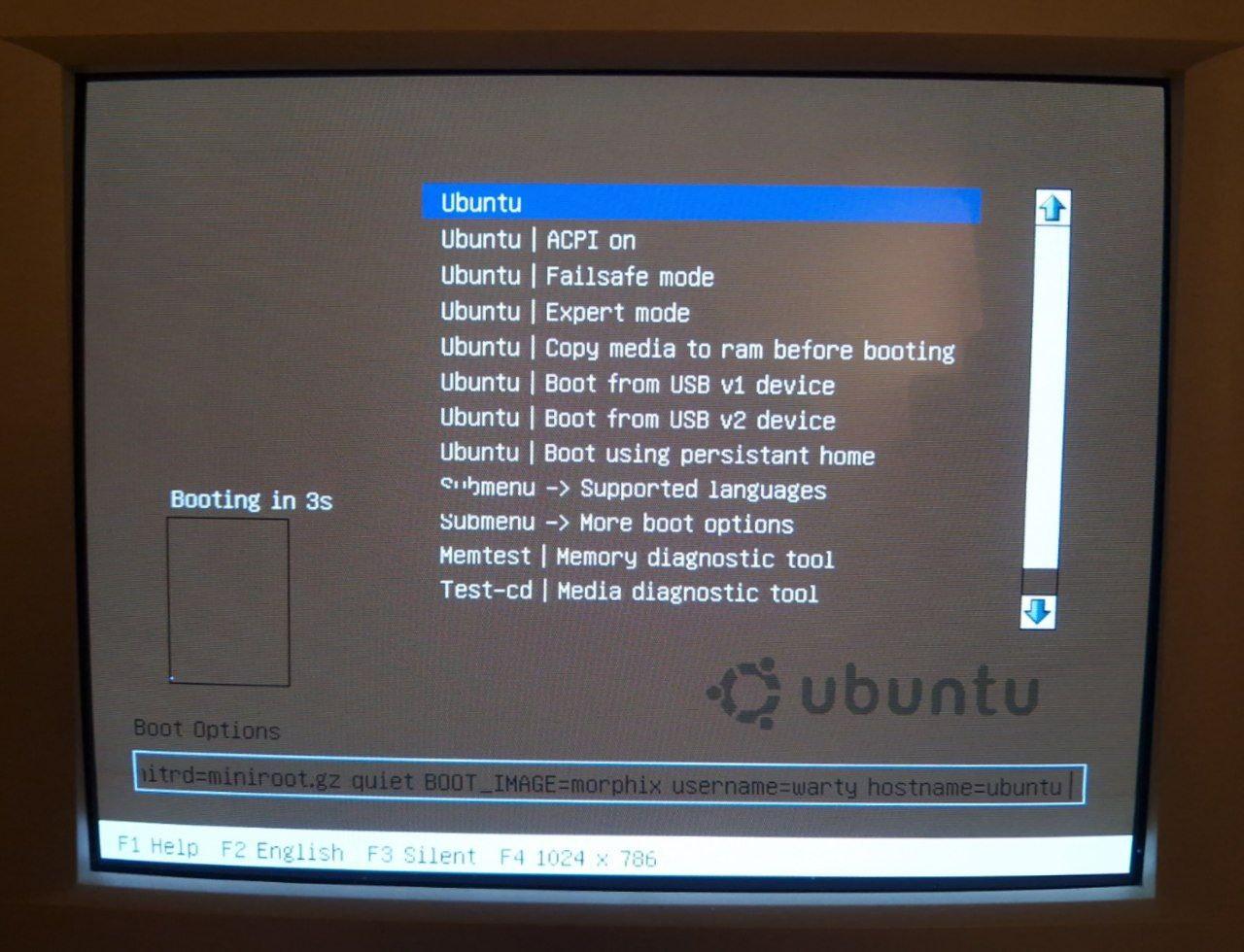
GRUB and splash screens are not a smoking gun, but consider how similar Ubuntu 4.10 Live and Morphix 0.5 boot experiences are (both circa October 2004).
( 🧵 cont)
@nina_kali_nina ah, Knoppix!
-
Morphix 0.4 doesn't even try to pretend it isn't Debian. Debian's start page still works; XChat happily loads and connects us to FreeNode. Imagine this: you boot your 20+ year old computer, and it just connects to the Internet as normal, and the chat apps work as normal, and... uh... it just works.
Except for Google, Google doesn't work anymore, they broke the support for "old" browsers. Lame. Boooooo!
( screenshots 🧵 cont)
So, in this thread I just must say a few words about Knoppix. Back in the days, Knoppix was a ground-breaking Linux Live CD that spawned many other Linux Live CDs. It ended up being so influential that it is almost an expectation today for a Linux distribution to have a Live CD/DVD.
Of course, nothing ever stopped people from building a Linux system capable of using a CD disk as its root file system. In fact, one of the early Linux systems, Yggdrasil, did exactly that for the installer CD. So, how Knoppix was different from Yggdrasil or DemoLinux?
The secret sauce was in a special kernel module implementing CD-ROM friendly compressed block device. Without it, the Live CD experience was subpar, and the amount of software that was shipped on the LiveCD was minuscule. Compare 1999's DemoLinux 1.1 shipping Mandrake 6 with basically just Netscape and Gimp, and Knoppix 3.2 that comes with hundreds of tools, _two_ full office suites, and even WINE - all on one CD.
( screenshots 🧵 cont)
-
So, in this thread I just must say a few words about Knoppix. Back in the days, Knoppix was a ground-breaking Linux Live CD that spawned many other Linux Live CDs. It ended up being so influential that it is almost an expectation today for a Linux distribution to have a Live CD/DVD.
Of course, nothing ever stopped people from building a Linux system capable of using a CD disk as its root file system. In fact, one of the early Linux systems, Yggdrasil, did exactly that for the installer CD. So, how Knoppix was different from Yggdrasil or DemoLinux?
The secret sauce was in a special kernel module implementing CD-ROM friendly compressed block device. Without it, the Live CD experience was subpar, and the amount of software that was shipped on the LiveCD was minuscule. Compare 1999's DemoLinux 1.1 shipping Mandrake 6 with basically just Netscape and Gimp, and Knoppix 3.2 that comes with hundreds of tools, _two_ full office suites, and even WINE - all on one CD.
( screenshots 🧵 cont)
@nina_kali_nina This reminds me how amazing the QNX demo floppy was. TCP/IP stack, Full GUI and a graphical browser on a 1.44MB floppy.
-
So, in this thread I just must say a few words about Knoppix. Back in the days, Knoppix was a ground-breaking Linux Live CD that spawned many other Linux Live CDs. It ended up being so influential that it is almost an expectation today for a Linux distribution to have a Live CD/DVD.
Of course, nothing ever stopped people from building a Linux system capable of using a CD disk as its root file system. In fact, one of the early Linux systems, Yggdrasil, did exactly that for the installer CD. So, how Knoppix was different from Yggdrasil or DemoLinux?
The secret sauce was in a special kernel module implementing CD-ROM friendly compressed block device. Without it, the Live CD experience was subpar, and the amount of software that was shipped on the LiveCD was minuscule. Compare 1999's DemoLinux 1.1 shipping Mandrake 6 with basically just Netscape and Gimp, and Knoppix 3.2 that comes with hundreds of tools, _two_ full office suites, and even WINE - all on one CD.
( screenshots 🧵 cont)
Knoppix 3.2 from 2003 works great on this Pentium 3. But only when I can boot it; by default it tries to set the resolution to 1280x1024, and my CRT just cannot handle it. Going through the "expert mode" to select the resolution on each boot is such a pain.
This Knoppix comes with KDE, XFCE, and WindowMaker, but it boots into KDE 3 by default. It is quite an experience. The UI is a bit toy-like, but it is a fairly consistent experience.
The help page, among other things, has a "making of" article for the wallpaper.
( screenshots 🧵 cont)
-
I've been using Ubuntu since version 6.06, and I had the impression that Ubuntu is fairly stable and versatile. I have been very surprised to discover today that Ubuntu 4.10 did not compare to other LiveCD Linuxes all that favourably.
Morphix 0.5 booted on my Pentium 3 machine just fine, and found the internets, and had OpenOffice working (a bit later on that). But Ubuntu required me to run DHCP client manually, and its OpenOffice never fully loaded, even after I played a long match in Solitaire.
( screenshots 🧵 cont)
@nina_kali_nina I started with Ubuntu 6.06 as well. It was the first version that really ran well in my experience. Prior versions were indeed not so strong from what I remember. I had been mainly using SuSE before that, but it's package manager in newer versions was very slow, so I started looking around. I also ran Slackware for a while then.
-
@nina_kali_nina This reminds me how amazing the QNX demo floppy was. TCP/IP stack, Full GUI and a graphical browser on a 1.44MB floppy.
@trezzer @nina_kali_nina Hah, I remember that one.
-
Oh, serendipity! A few things line up together, creating opportunities for rare discoveries. This time it's a thing that probably will require someone to go and edit the Wikipedia page for Ubuntu...
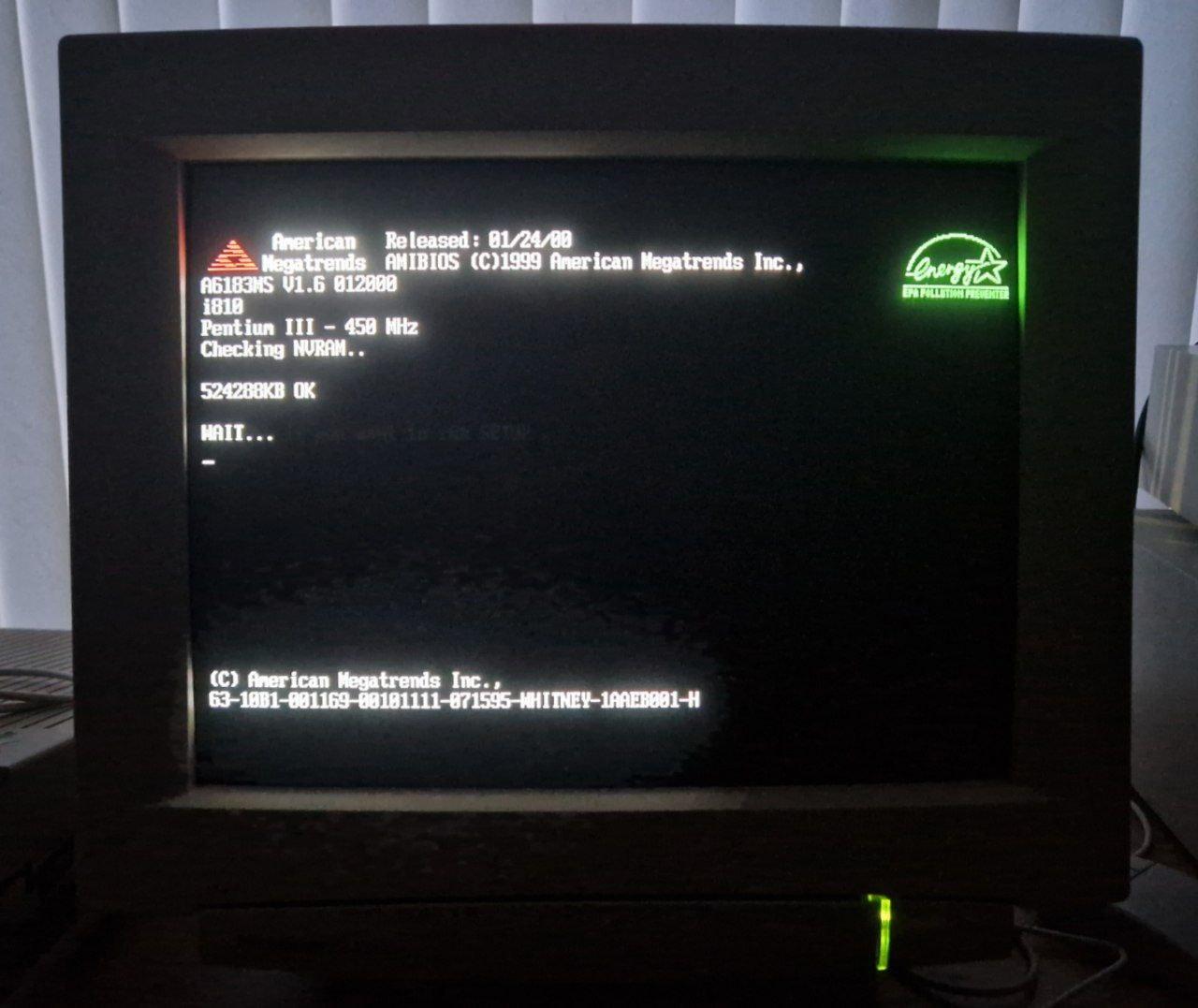
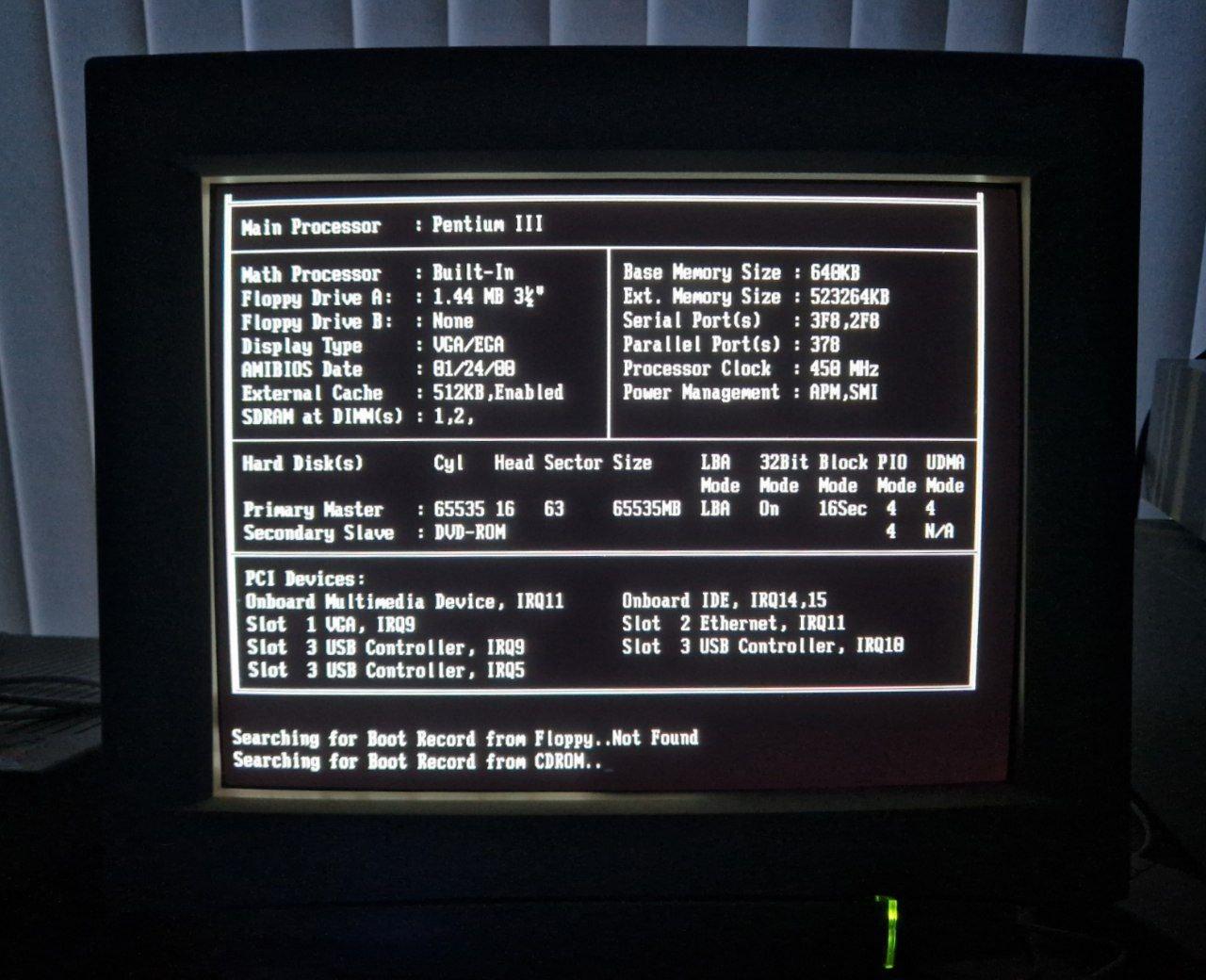
How did we end up here? Well, first, I've been meaning to play with an old Ubuntu for a long time. Second, Atsuko unpacked out our Pentium III desktop last week. Third, Atsuko left me alone for half a day, and the only thing I could bring myself to do was trying out different Linuxes on this Pentium III machine.
Buckle up, I'm about to share many screenshots of old Live CDs, and some of them might surprise you (a little bit?).
Thread 🧵
@nina_kali_nina I remember those! That looks like some of my old first Ubuntu CDs in the mail. Like 6.04-ish era. It was awesome just having something take care of the install back then. I feel old haha.
-
I guess I'll start with the conclusion: Ubuntu Live CD, at least 4.10, is a Knoppix derivative.
"No, that can't be right, Ubuntu is based on Debian!"
And so is Knoppix. And so is Knoppix fork called Morphix that was used as a LiveCD builder for Ubuntu 4.10. I have irrefutable evidence of this, and I am surprised that no one on the Internet seemingly ever mentioned that before.
That is not to say that Ubuntu is not based on Debian - it is. I am not trying to say that it does not come with its own packages and kernel, either. But it is _also_ based on Morphix, at least in LiveCD 4.10.
First, I'll share a few screenshots hinting at the similarities. Then I'll show you the solid proof I'm talking about. And then I'll just share a bunch of screenshots of old Linuxes just for fun!
GRUB and splash screens are not a smoking gun, but consider how similar Ubuntu 4.10 Live and Morphix 0.5 boot experiences are (both circa October 2004).
( 🧵 cont)
@nina_kali_nina live cds weren't really a thing that distros did before knoppix; whatever the actual relationship between knoppix and livecd versions of other distros, I think people already know that knoppix is where everybody got the idea of a fully dynamic hotplug-ified linux system
-
Knoppix 3.2 from 2003 works great on this Pentium 3. But only when I can boot it; by default it tries to set the resolution to 1280x1024, and my CRT just cannot handle it. Going through the "expert mode" to select the resolution on each boot is such a pain.
This Knoppix comes with KDE, XFCE, and WindowMaker, but it boots into KDE 3 by default. It is quite an experience. The UI is a bit toy-like, but it is a fairly consistent experience.
The help page, among other things, has a "making of" article for the wallpaper.
( screenshots 🧵 cont)
I'm showing you images of Knoppix 3.2 because it is, generally, the oldest Knoppix you can find online. Most popular mirrors don't even have 3.2, and start with 3.4 (or even 7.0). But I have even an older version to share with you (patience, please).
Knoppix 3.2 Wine refuses to start out of the box because of some issue with the fonts, but it shows that Wine can emulate Windows 3.1 window style, and it has an adorable penguin opening a wine bottle.
Knoppix 3.2 doesn't have Firefox yet; instead, it has Mozilla. To my surprise, it loaded Knoppix home page just fine. It also can handle my home page just as easily. Reminder: we're running on Pentium 3 450 from a CD, folks.
( screenshots 🧵 cont)
-
Knoppix 3.2 from 2003 works great on this Pentium 3. But only when I can boot it; by default it tries to set the resolution to 1280x1024, and my CRT just cannot handle it. Going through the "expert mode" to select the resolution on each boot is such a pain.
This Knoppix comes with KDE, XFCE, and WindowMaker, but it boots into KDE 3 by default. It is quite an experience. The UI is a bit toy-like, but it is a fairly consistent experience.
The help page, among other things, has a "making of" article for the wallpaper.
( screenshots 🧵 cont)
@nina_kali_nina Been tempted to try old Linux on some of my retro PCs (My oldest Linux experience is Ubuntu 10.04) but hearing stuff like boot issues and such makes you considerably braver than me.
-
Knoppix 3.2 from 2003 works great on this Pentium 3. But only when I can boot it; by default it tries to set the resolution to 1280x1024, and my CRT just cannot handle it. Going through the "expert mode" to select the resolution on each boot is such a pain.
This Knoppix comes with KDE, XFCE, and WindowMaker, but it boots into KDE 3 by default. It is quite an experience. The UI is a bit toy-like, but it is a fairly consistent experience.
The help page, among other things, has a "making of" article for the wallpaper.
( screenshots 🧵 cont)
@nina_kali_nina Very cool, thanks for sharing! Say do you still use Ubuntu? I did for a long time because I liked Unity a lot but then I switched to Debian when they made Snap a big thing.
-
@nina_kali_nina live cds weren't really a thing that distros did before knoppix; whatever the actual relationship between knoppix and livecd versions of other distros, I think people already know that knoppix is where everybody got the idea of a fully dynamic hotplug-ified linux system
@rakslice oh, but they were. There was a Debian Live CD and a Mandrake Live CD by DemoLinux, both prior to Knoppix, and then there was Yggdrasil from 1994. I talk about it in the thread.
-
@nina_kali_nina Been tempted to try old Linux on some of my retro PCs (My oldest Linux experience is Ubuntu 10.04) but hearing stuff like boot issues and such makes you considerably braver than me.
@SHODAN it can be a very rewarding experience; but depending on your machine, you might even want to get a new OS on it.
-
@nina_kali_nina Very cool, thanks for sharing! Say do you still use Ubuntu? I did for a long time because I liked Unity a lot but then I switched to Debian when they made Snap a big thing.
@floriantfw I'm using Ubuntu for work quite a lot; I personally prefer Debian. And, regrettably, I'm using MacOS as my daily driver - for now.
-
So, in this thread I just must say a few words about Knoppix. Back in the days, Knoppix was a ground-breaking Linux Live CD that spawned many other Linux Live CDs. It ended up being so influential that it is almost an expectation today for a Linux distribution to have a Live CD/DVD.
Of course, nothing ever stopped people from building a Linux system capable of using a CD disk as its root file system. In fact, one of the early Linux systems, Yggdrasil, did exactly that for the installer CD. So, how Knoppix was different from Yggdrasil or DemoLinux?
The secret sauce was in a special kernel module implementing CD-ROM friendly compressed block device. Without it, the Live CD experience was subpar, and the amount of software that was shipped on the LiveCD was minuscule. Compare 1999's DemoLinux 1.1 shipping Mandrake 6 with basically just Netscape and Gimp, and Knoppix 3.2 that comes with hundreds of tools, _two_ full office suites, and even WINE - all on one CD.
( screenshots 🧵 cont)
@nina_kali_nina I really prefer desktops with a clean "2D" look. I recently left modern kde for cinnamon with zero regrets.
-
Knoppix 3.2 from 2003 works great on this Pentium 3. But only when I can boot it; by default it tries to set the resolution to 1280x1024, and my CRT just cannot handle it. Going through the "expert mode" to select the resolution on each boot is such a pain.
This Knoppix comes with KDE, XFCE, and WindowMaker, but it boots into KDE 3 by default. It is quite an experience. The UI is a bit toy-like, but it is a fairly consistent experience.
The help page, among other things, has a "making of" article for the wallpaper.
( screenshots 🧵 cont)
@nina_kali_nina I vaguely remember that early Knoppix was the first time I saw a framebuffer on booting – it started using the computer’s own chargen then ‘flipped’ over to the more dense smaller fonted fb. Then everyone started doing that. I think. How am I remembering any of this old technical shit, I thought I’d gladly forgotten all of that.












Feed RSS
Gli ultimi otto messaggi ricevuti dalla Federazione
-
Rojava: nominato il governatore di hasakah. è un esponente dell amministrazione autonoma della siria del nord-est
@anarchia
In Siria prosegue l’implementazione del cessate il fuoco firmato dal cosiddetto governo di transizione di Damasco e l’Amministrazione autonoma del Rojava. In questo quadro, ieri sera, mercoledì 4 febbraio,
-
@quinta #Firefox ha l'opzione "Copia link pulito". Ho una vaga memoria di un'applicazione analoga per #Android, ma non riesco più a ritrovarla
-
@lazysupper @dahukanna so, in a long conversation, the number of people who can see the responses gets smaller and smaller over time?
-
Just visible to Alice unless she accepts the post. And she controls the visibility on her posts.
-
@dahukanna
Oh... I need to change my answer. 😅
Other: the dark blue-grey.
@evan
-
@ori I think this is where I got on the merry-go-round.
-
@monnier you replied in the wrong thread!
-
@evan I think so. I think in an ideal world, I would prefer an audience that expands, but in the real world where people use followers-only to feel safe online, it is important that only followers appear downstream of a followers-only post. At least, that’s what I would expect absent some other cue.