Consider the best job that you've had recently.
Uncategorized
59
Posts
48
Posters
1
Views
-
Consider the best job that you've had recently.
Let's call "recently" in the past 10 years. (What makes a job "best" is up to you.)
Regardless of how you applied, online, in person, etc. did you:
@futurebird I've *never* got the job through the "cold process" in my career except for my very first job out of college - which I didn't like and only stayed at for four months.
I'm currently unemployed, and in my state a condition of unemployment insurance is to record three 'search activities' each week, which usually means applications.
Over nearly sixteen weeks, exactly one cold application has received a *reply* (that one at least I'm optimistic about right now) -
CVs matter since it’s what the hiring committee will squint at while they try to figure out what to do.
Introduction letters are not as important in my limited experience with small companies colleges and schools.
Absolutely.
And there's an obvious part to it: Showing how you fit the requirements of the job and how the company would profit from having you.
There's a less obvious part in adressing worries and risks the employer might have. (Unless you are applying for a large international company, speaking German is one such aspect.)
And then there's the voodoo stuff. Appearing highly motivated, but not desperate. Appearing very capable, but not out of reach. Etc.
-
Consider the best job that you've had recently.
Let's call "recently" in the past 10 years. (What makes a job "best" is up to you.)
Regardless of how you applied, online, in person, etc. did you:
@futurebird @JeniParsons In my vase it was starting my own company. We grew by personal recommendations and have transitioned to being employee owned
-
Absolutely.
And there's an obvious part to it: Showing how you fit the requirements of the job and how the company would profit from having you.
There's a less obvious part in adressing worries and risks the employer might have. (Unless you are applying for a large international company, speaking German is one such aspect.)
And then there's the voodoo stuff. Appearing highly motivated, but not desperate. Appearing very capable, but not out of reach. Etc.
In a lot of cases, "knowing someone at the company" doesn't give the person a higher score in competence.
But it's seen as a protection against "We missed that this person is a lazy jerk".
-
Consider the best job that you've had recently.
Let's call "recently" in the past 10 years. (What makes a job "best" is up to you.)
Regardless of how you applied, online, in person, etc. did you:
@futurebird
I have been working for the same company for more than 20 years. The last 10y I've worked at the same position. And I am very glad and proud of having managed to establish a very stable IT team. Which means no one have left for more than 6y now. In my opinion the most valuable items are trust in each other and appreciation for each other.
Personally speaking I did only apply formally, I was offered the job beforehand and had to move to another country. I did a contraction job there the year before. -
Consider the best job that you've had recently.
Let's call "recently" in the past 10 years. (What makes a job "best" is up to you.)
Regardless of how you applied, online, in person, etc. did you:
@futurebird It was a cold application because I was desperate to get away from a former boss who was a bit of an asshole. After a bunch of auto-rejections all over the place, I saw a company I actually like who had a position open and it just happened to cross my LinkedIn feed (LinkedIn was never good, btw).
What really helped is the guy who was doing the hiring/vetting was really weird and disorganized (just like me). We hit it off instantly.
Up to that point, no prior connections.
-
Consider the best job that you've had recently.
Let's call "recently" in the past 10 years. (What makes a job "best" is up to you.)
Regardless of how you applied, online, in person, etc. did you:
@futurebird I literally replied to a Craigslist ad, for an out of state job. This was c. 2008; I was living in Boston, and the job was in DC at a major, global brand.
This is probably not a realistic scenario anymore…
-
Consider the best job that you've had recently.
Let's call "recently" in the past 10 years. (What makes a job "best" is up to you.)
Regardless of how you applied, online, in person, etc. did you:
@futurebird I'm retired and only worked part-time and temporary for the last few years of employment, so none of these really fit...
However, I am able to take the long view of my working life, in retrospect, so I will again say that none of these fit, but for a different reason. The "best" job I ever had ("best" meaning most satisfying and morally best) I got by starting as a volunteer. After almost two months I was hired in a paid role.
-
That sounds like a weird reason.
At small and medium organizations “hiring” is extra work pawned off on already busy people and simply being the easiest to locate person who those tasked with the hire can trust won’t cause them embarrassment is the process rather than reading 100 CVs
Calls to previous employers matter a great deal.
This is because smaller orgs don’t budget any time to do this work.
At small and medium organizations “hiring” is extra work pawned off on already busy people
Often this pressure works the other way around. At a small organisation, the person who is going to be responsible for the work that the person does is also responsible for all steps in hiring. This can cause issues with bias, but at least the incentives are aligned.
In a larger organisation, CVs are typically filtered by HR / recruiters. At Microsoft, they had an annoying habit of filtering out the most qualified candidates because they lacked a traditional educational background (because they'd spent their time doing exactly the thing you were hiring for instead). You had to work quite closely with them to avoid this.
The problem is that you get a lot of applicants for some posts, but you get very few good ones. Someone has to do a deselection pass so that the selection pass isn't overwhelmed.
LinkedIn now has an AI thing that does this. For an LLVM compiler rôle, it filtered out 80% of applicants who had worked on LLVM previously and hid them in the default view. Utterly useless. And, at the same time, their one-button-apply thing meant that I was flooded with unqualified people.
-
At small and medium organizations “hiring” is extra work pawned off on already busy people
Often this pressure works the other way around. At a small organisation, the person who is going to be responsible for the work that the person does is also responsible for all steps in hiring. This can cause issues with bias, but at least the incentives are aligned.
In a larger organisation, CVs are typically filtered by HR / recruiters. At Microsoft, they had an annoying habit of filtering out the most qualified candidates because they lacked a traditional educational background (because they'd spent their time doing exactly the thing you were hiring for instead). You had to work quite closely with them to avoid this.
The problem is that you get a lot of applicants for some posts, but you get very few good ones. Someone has to do a deselection pass so that the selection pass isn't overwhelmed.
LinkedIn now has an AI thing that does this. For an LLVM compiler rôle, it filtered out 80% of applicants who had worked on LLVM previously and hid them in the default view. Utterly useless. And, at the same time, their one-button-apply thing meant that I was flooded with unqualified people.
@david_chisnall @futurebird @billiglarper “filtering out the most qualified candidates because they lacked a traditional educational background (because they'd spent their time doing exactly the thing you were hiring for instead)” over and over, I’ve been a hiring manager at the end of a pipeline that would have filtered me out
-
@david_chisnall @futurebird @billiglarper “filtering out the most qualified candidates because they lacked a traditional educational background (because they'd spent their time doing exactly the thing you were hiring for instead)” over and over, I’ve been a hiring manager at the end of a pipeline that would have filtered me out
@puercomal hit the road, Jack, I guess 🥲
-
Consider the best job that you've had recently.
Let's call "recently" in the past 10 years. (What makes a job "best" is up to you.)
Regardless of how you applied, online, in person, etc. did you:
@futurebird best is hard.
Most fulfilling: got through the process with a cold application and am really proud of that
Best quality of life: went through a process but there was a recruiter involved so that's like knowing a person
-
Consider the best job that you've had recently.
Let's call "recently" in the past 10 years. (What makes a job "best" is up to you.)
Regardless of how you applied, online, in person, etc. did you:
@futurebird best is hard.
Most fulfilling: got through the process with a cold application and am really proud of that
Best quality of life: went through a process but there was a recruiter involved so that's like knowing a person
-
@puercomal hit the road, Jack, I guess 🥲
@jawnsy @david_chisnall @futurebird @billiglarper like this, but hiring
-
Consider the best job that you've had recently.
Let's call "recently" in the past 10 years. (What makes a job "best" is up to you.)
Regardless of how you applied, online, in person, etc. did you:
@futurebird Federal university, so via a civil service examination. It didn't even have an interview phase, to avoid any favoritism.
-
Consider the best job that you've had recently.
Let's call "recently" in the past 10 years. (What makes a job "best" is up to you.)
Regardless of how you applied, online, in person, etc. did you:
@futurebird For the best jobs, I was asked by the CTO personally, if I would like to do it. The first time was an internal change, the second time was away from there by a former team lead who was then CTO at a new company.
-
Consider the best job that you've had recently.
Let's call "recently" in the past 10 years. (What makes a job "best" is up to you.)
Regardless of how you applied, online, in person, etc. did you:
@futurebird Every job I've had—with one brief horrible exception—I've known someone who worked there. I've worked at the same place, off and on, for coming up on 22 years. A good friend (and my office-mate throughout most of the '90s) worked there and was set to go on paternity leave in March 2004, and brought me on in February. His spouse went into labor early (because twins) and I got thrown into this new job with a week's training, for a manager who didn't ever say no to clients. I lasted 7 months, left, endured the aforementioned horrible exception, and then came back 18 months later on a different, better-managed, team, coincidentally run by someone I played ice hockey with. Laid off in 2010, rehired in 2012, just before the small company was bought by bigger company, went through growing pains, and then was bought by even bigger company. I exist in a little corporate tide pool 1500 miles away from the Main Office, working from home and reasonably content in an occupational sense. My hockey-playing manager married a Canadian woman we met at a co-ed tournament in BC, and fucked off to Vancouver Island when COVID hit. He's still at the company too.
Meanwhile, my old friend never came back; he became a stay-at-home dad to his twins as his spouse pursued her career as a climate scientist studying glaciers in Antarctica. In 2014, she was offered a position at a university in New Zealand. I visited them in Dunedin two years ago, in February, as their boys were turning 20.
-
Consider the best job that you've had recently.
Let's call "recently" in the past 10 years. (What makes a job "best" is up to you.)
Regardless of how you applied, online, in person, etc. did you:
@futurebird mine was kinda in between, I didn't know anyone at the company directly but I was sought out by recruiters due to social effects of my job search. I applied and interviewed at several companies with some kind of clout and that got attention at the place I ended up.
-
Consider the best job that you've had recently.
Let's call "recently" in the past 10 years. (What makes a job "best" is up to you.)
Regardless of how you applied, online, in person, etc. did you:
@futurebird Headhunted after speaking at a conference.
-
Consider the best job that you've had recently.
Let's call "recently" in the past 10 years. (What makes a job "best" is up to you.)
Regardless of how you applied, online, in person, etc. did you:
@futurebird I've been at my current job for 24 years. Before it I was consulting but I really didn't enjoy it. Someone I knew gave my business card to my current employer to do some consulting for them. While I was I doing that work for them a full time position opened up and I applied. Now I'm just a few years shy of retirement. :)


















Gli ultimi otto messaggi ricevuti dalla Federazione
-
Hey, all! Thank you very much for the responses. I'm one year or more. We started a program a few years ago, partly to engage our kids in cooking. They had a lot of fun, and the food was healthy and tasty. But we all kind of drifted away from it, and when the company wanted a bigger commitment, we just cancelled the program.
-
@mattiagiovanetti ottimo motivo.
-
Qualche idea per sopravvivere al divorzio transatlantico. Conversazione con Giuliano Da Empoli
“quelli che chiamo predatori digitali e predatori politici, i proprietari delle grandi aziende digitali, sostengono esplicitamente i movimenti nazionalisti, perché si sono resi conto di poterli sfruttare per smantellare le democrazie liberali: su quello che viene dopo, sul futuro, non c’è convergenza, ma intanto si distrugge insieme, e con più efficacia”
https://foglioeuropeo.ilfoglio.it/qualche-idea-per-sopravvivere-al-divorzio-transatlantico/
-
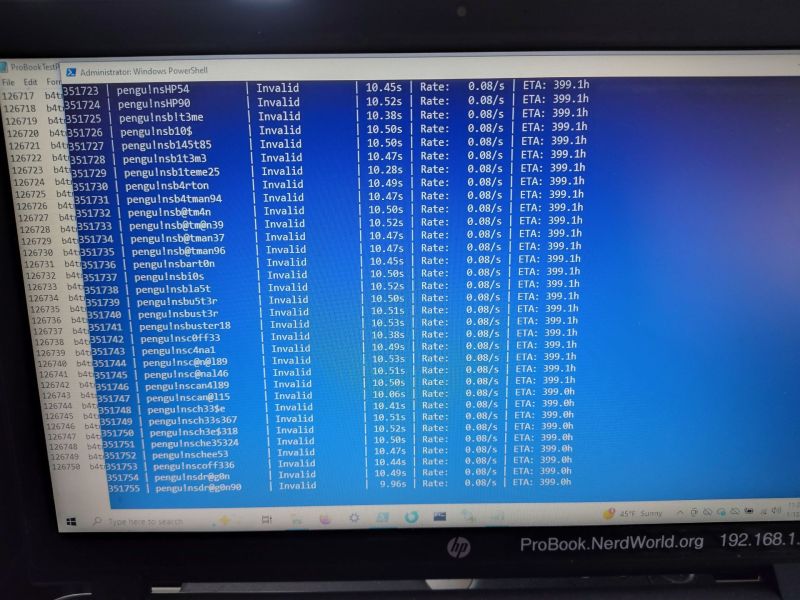
Project Fail: Cracking a Laptop BIOS Password Using AI
Whenever you buy used computers there is a risk that they come with unpleasant surprises that are not of the insect variant. From Apple hardware that is iCloud-locked with the original owner MIA to PCs that have BIOS passwords, some of these are more severe than others. In the case of BIOS passwords, these tend to be more of an annoyance that’s easily fixed by clearing the CMOS memory, but this isn’t always the case as [Casey Bralla] found with a former student-issued HP ProBook laptop purchased off Facebook Marketplace.
Maybe it’s because HP figured that locking down access to the BIOS is essential on systems that find their way into the hands of bored and enterprising students, but these laptops write the encrypted password and associated settings to a separate Flash memory. Although a master key purportedly exists, HP’s policy here is to replace the system board. Further, while there are some recovery options that do not involve reflashing this Flash memory, they require answers to recovery questions.
This led [Casey] to try brute-force cracking, starting with a Rust-based project on GitHub that promised much but failed to even build. Undeterred, he tasked the Claude AI to write a Python script to do the brute-forcing via the Windows-based HP BIOS utility. The chatbot was also asked to generate multiple lists of unique passwords to try that might be candidates based on some human guesses.
Six months later of near-continuous attempts at nine seconds per try, this method failed to produce a hit, but at least the laptop can still be used, just without BIOS access. This may require [Casey] to work up the courage to do some hardware hacking and erase that pesky UEFI BIOS administrator password, proving at least that apparently it’s fairly good BIOS security.
-
Allora... Per 3, 5 e 9 sono preparato...
Purtroppo invece su 1, 2, 4, 6, 7 e 8 mi devo applicare decisamente di più! 😂
-
I absolutely understand many, many people do not like AI generated videos. I don't like them either.
However, do not get threatening and sanctimonious and dog pile on someone who has posted something in good faith, clearly didn't know it was AI, and doesn't have the skills to spot it.
Because people become terrified of posting anything for fear of it being AI and getting lambasted for it.
AI is DESIGNED to fool people. And when you beat up someone who is fooled, you're beating up a victim.
-
This post did not contain any content.
-
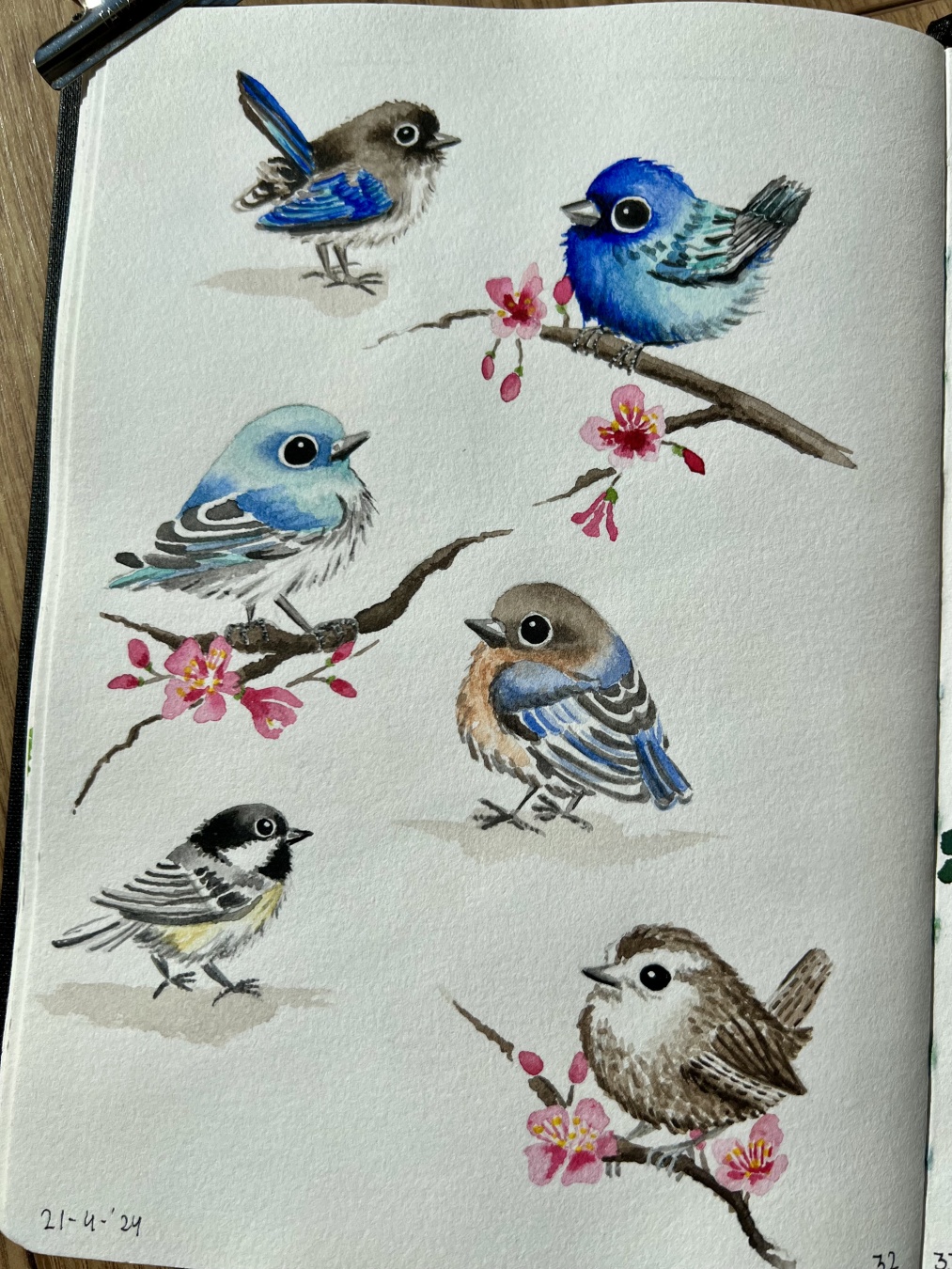
Cutie pies. Another golden oldie (‘24 😆) Watercolour on cotton paper A5.
#birds
#Painting #MastoArt #Dutchartist
#artwork #watercolorpainting #aquarelle #artoftheday #watercolordaily #watercolourdaily
#Princetonbrushes
#aquarelle #Watercoloursketchbook #Watercolorsketchbook #watercolorart #winsorandnewton
#watercolor #watercolour #watercolours