In an article about more solar farms in the UK, the BBC quotes the 7000 Acres Group:
Uncategorized
13
Posts
10
Posters
0
Views
-
In an article about more solar farms in the UK, the BBC quotes the 7000 Acres Group:
> "fighting to protect the countryside from mass industrialisation"
It's worth pointing out that the UK uses 2.2% of arable land for biofuel (as of 2024) but only 0.3% for solar farms. I don't think solar farms are necessarily more industrial than biofuels.
I'm happy to be put right if I've misunderstood.
@billhorsman I don’t think they know what industrialisation means.
-
In an article about more solar farms in the UK, the BBC quotes the 7000 Acres Group:
> "fighting to protect the countryside from mass industrialisation"
It's worth pointing out that the UK uses 2.2% of arable land for biofuel (as of 2024) but only 0.3% for solar farms. I don't think solar farms are necessarily more industrial than biofuels.
I'm happy to be put right if I've misunderstood.
@billhorsman I used to work for https://www.ramblers.org.uk/
They were then campaigning against the installation of wind turbines
They were also campaigning against the removal of red phone boxes
At the same time there was a storage clear out- which included old campaign leaflets against the installation of the red phone boxes
Some people don't like change
Beauty is in the eye of the beholder
-
In an article about more solar farms in the UK, the BBC quotes the 7000 Acres Group:
> "fighting to protect the countryside from mass industrialisation"
It's worth pointing out that the UK uses 2.2% of arable land for biofuel (as of 2024) but only 0.3% for solar farms. I don't think solar farms are necessarily more industrial than biofuels.
I'm happy to be put right if I've misunderstood.
Also, land used for solar can also be used at the same time for chickens, or sheep. Even crops, if the panels are high enough.
Anyway, a huge monoculture field of wheat or potatoes or anything is industrial - food is an industry!
-
In an article about more solar farms in the UK, the BBC quotes the 7000 Acres Group:
> "fighting to protect the countryside from mass industrialisation"
It's worth pointing out that the UK uses 2.2% of arable land for biofuel (as of 2024) but only 0.3% for solar farms. I don't think solar farms are necessarily more industrial than biofuels.
I'm happy to be put right if I've misunderstood.
@billhorsman Particularly when the land itself can still be used for livestock farming. Not that livestock needs any more land, but we could at least be making better use of the marginal arable land for solar and zero-inputs meat. Use the good arable land for feeding people directly 🙂
-
In an article about more solar farms in the UK, the BBC quotes the 7000 Acres Group:
> "fighting to protect the countryside from mass industrialisation"
It's worth pointing out that the UK uses 2.2% of arable land for biofuel (as of 2024) but only 0.3% for solar farms. I don't think solar farms are necessarily more industrial than biofuels.
I'm happy to be put right if I've misunderstood.
@billhorsman @Nickiquote Putting my farmer hat on, I’d suggest that Lincolnshire councillor and his pet nimbys simply get lost.
If they really want to “protect the countryside”, perhaps they could stop helping oil companies to burn the planet?
Or campaign against all the massive factory farms in Lincolnshire?
Or the destruction of Lincolnshire rivers from waste dumping?
Oh, silence. Quelle surprise.
-
@billhorsman @Nickiquote Putting my farmer hat on, I’d suggest that Lincolnshire councillor and his pet nimbys simply get lost.
If they really want to “protect the countryside”, perhaps they could stop helping oil companies to burn the planet?
Or campaign against all the massive factory farms in Lincolnshire?
Or the destruction of Lincolnshire rivers from waste dumping?
Oh, silence. Quelle surprise.
@BashStKid @billhorsman @Nickiquote Tell me councillor, when did you switch your allegiance to the Hard of Thinking Party?
-
In an article about more solar farms in the UK, the BBC quotes the 7000 Acres Group:
> "fighting to protect the countryside from mass industrialisation"
It's worth pointing out that the UK uses 2.2% of arable land for biofuel (as of 2024) but only 0.3% for solar farms. I don't think solar farms are necessarily more industrial than biofuels.
I'm happy to be put right if I've misunderstood.
@billhorsman I don't get the love for huge monoculture farming deserts. Fields aren't "natural" landscape, they're already industrialised.
And even in the UK, solar farms yield more than 6 times more energy than if used to grow biofuels. Some estimates suggest putting PV generated electric in an EV rather than ethanol in a combustion engine gets you 30 times further for the same acre of land.
And solar farms generally have far greater bio diversity than an arable crop.
-
@billhorsman I don't get the love for huge monoculture farming deserts. Fields aren't "natural" landscape, they're already industrialised.
And even in the UK, solar farms yield more than 6 times more energy than if used to grow biofuels. Some estimates suggest putting PV generated electric in an EV rather than ethanol in a combustion engine gets you 30 times further for the same acre of land.
And solar farms generally have far greater bio diversity than an arable crop.
@guigsy 6 times? That’s good to know. I was trying to work out how to calculate that. My gut feeling was that biofuels made more inefficient use of land than solar. Thanks.
-
In an article about more solar farms in the UK, the BBC quotes the 7000 Acres Group:
> "fighting to protect the countryside from mass industrialisation"
It's worth pointing out that the UK uses 2.2% of arable land for biofuel (as of 2024) but only 0.3% for solar farms. I don't think solar farms are necessarily more industrial than biofuels.
I'm happy to be put right if I've misunderstood.
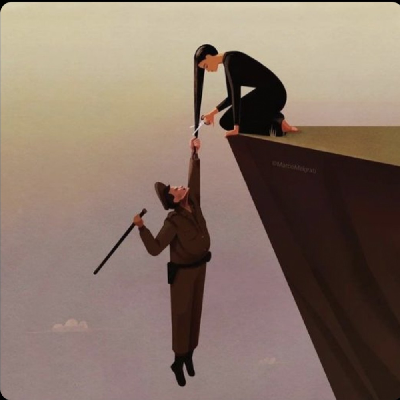
@billhorsman This apposite post also appeared in my timeline this morning.
-
In an article about more solar farms in the UK, the BBC quotes the 7000 Acres Group:
> "fighting to protect the countryside from mass industrialisation"
It's worth pointing out that the UK uses 2.2% of arable land for biofuel (as of 2024) but only 0.3% for solar farms. I don't think solar farms are necessarily more industrial than biofuels.
I'm happy to be put right if I've misunderstood.
@billhorsman
The 7000 acres group are about 250 years too late
https://en.wikipedia.org/wiki/Inclosure_Act_1773 -
@billhorsman I don't get the love for huge monoculture farming deserts. Fields aren't "natural" landscape, they're already industrialised.
And even in the UK, solar farms yield more than 6 times more energy than if used to grow biofuels. Some estimates suggest putting PV generated electric in an EV rather than ethanol in a combustion engine gets you 30 times further for the same acre of land.
And solar farms generally have far greater bio diversity than an arable crop.
@billhorsman I think that excluded the energy required to harvest and then process the crop into ethanol. There's studies in the US to suggest that growing biofuels for transport might be so ineffective as to use more fossil fuel than they save!
-
In an article about more solar farms in the UK, the BBC quotes the 7000 Acres Group:
> "fighting to protect the countryside from mass industrialisation"
It's worth pointing out that the UK uses 2.2% of arable land for biofuel (as of 2024) but only 0.3% for solar farms. I don't think solar farms are necessarily more industrial than biofuels.
I'm happy to be put right if I've misunderstood.
@billhorsman The BBC article also mentions that, if approved, proposed solar farms would cover 30,000 acres in Lincolnshire.
To keep things in perspective, that is about the same amount of land as is taken up by golf courses in the county. -
 undefined oblomov@sociale.network shared this topic on









Gli ultimi otto messaggi ricevuti dalla Federazione
-
I asked him for it, it’s part of my blogroll.
So if you want to comment on something that came from my linkblog feed, I will see it.
two-way rss.
.
-
Stragi sul lavoro: il 16 febbraio incontro…
@anarchia
… a Bologna della Rete Nazionale Lavoro Sicuro. A due anni dalla strage della Esselunga. 16 febbraio 2026 secondo anniversario della strage del cantiere ESSELUNGA di Firenze Dalla ESSELUNGA A CRANS MONTANA : LE STRAGI SUL LAVORO NON FINISCONO MAI...Vedi https://www.rivoluzioneanarchica.it/stragi-sul-lavoro-il-16-febbraio-incontro/
-
@eff It doesn't work for small websites that are registered in US states without strong anti-SLAPP laws and who don't have enough funds to hire a lawyer. Case in point: RationalWiki, censored by an out-of-court settlement with eugenics activists.
-
-
@evan +1 or +2 for international flights, depending
-
Hackaday Links: February 15, 2026
It probably won’t come as much of a surprise to find that most of the Hackaday staff aren’t exactly what you’d call sports fanatics, so we won’t judge if you didn’t tune in for the Super Bowl last week. But if you did, perhaps you noticed Ring’s Orwellian “Search Party” spot — the company was hoping to get customers excited about a new feature that allows them to upload a picture of their missing pet and have Ring cameras all over the neighborhood search for a visual match. Unfortunately for Ring, the response on social media wasn’t quite what they expected.
Nope, don’t like that.
One commenter on YouTube summed it up nicely: “This is like the commercial they show at the beginning of a dystopian sci-fi film to quickly show people how bad things have gotten.” You don’t have to be some privacy expert to see how this sort of mass surveillance is a slippery slope. Many were left wondering just who or what the new system would be searching for when it wasn’t busy sniffing out lost pups.The folks at Wyze were quick to capitalize on the misstep, releasing their own parody ad a few days later that showed various three-letter agencies leaving rave reviews for the new feature. By Thursday, Ring announced they would be canceling a planned expansion that would have given the divisive Flock Safety access to their network of cameras. We’re sure it was just a coincidence.
Speaking of three-letter agencies, the Environmental Protection Agency has announced this week that they will no longer incentivize the inclusion of stop-start systems on new automobiles. The feature, which shuts off the engine when the vehicle comes to a stop, was never actually required by federal law; rather, the EPA previously awarded credits to automakers that added the feature, which would help them meet overall emission standards. Manufacturers are free to continue offering stop-start systems on their cars if they wish, but without the EPA credits, there’s little benefit in doing so. Especially since, as Car and Driver notes, it seems like most manufacturers are happy to be rid of it. The feature has long been controversial with drivers as well, to the point that we’ve seen DIY methods to shut it off.
An incredible story ran in The Washington Post yesterday (free to read archive) that’s so wild that it’s almost hard to believe. In fact, if it wasn’t from The Washington Post, we’d be sure it was some kind of conspiracy theory fanfic. The short version goes like this: a Norwegian researcher who was so confident the “Havana syndrome” wasn’t the result of a directed energy weapon decided to prove it by not only building some sort of pulsed RF device based on leaked classified documents, but fired the thing at himself as a test. We’re not sure what the Norwegian equivalent to the “Shocked Pikachu Face” meme is, but we’ll give you one guess as to what happened.
If that wasn’t crazy enough, the article goes on to casually mention that the US Department of Homeland Security secretly purchased a similar pulsed-energy weapon for several million dollars on the black market during the Biden administration, and is currently studying it. Despite it apparently containing Russian components, the Feds have yet to determine who actually built the thing. You’ll have a hard time finding a bigger proponent for the free exchange of information than Hackaday, but even we have to admit…maybe there are some things it’s better we don’t know about.
Perfect for Meshtastic
Of course, if you’re looking to really maximize the effects of your black market pulsed-energy weapon, you’ll need to get it up high (maybe, what the hell do we know). Or perhaps you’re just a radio enthusiast. In either event, if you’re within driving distance of Tennessee, you’ll want to keep an eye on this government auction for an 80-foot-tall mobile communications tower. According to the listing posted by the Madisonville Police Department, the towable rig was built in 2016, weighs in at a little over 10,000 pounds, and has been kept in storage. It just needs some air in the tires to get it moving again.As of this writing, the high bid is just $565, but with 18 days left to go on the auction, we suspect that number will be considerably higher when the gavel drops. We’ll check back next month to see what it sold for, and on the off-chance that any of you actually buy it, please let us know.
If all this talk of mass surveillance and shady government dealings has you down, perhaps a quick game of web-based Descent will lighten the mood. It’s the product of a port to Three.js by [mrdoob], completed with the aid of Claude. We know many of you are critical of AI-produced code, and not without good reason, but the results in this case are pretty slick.
Finally, we’ll go out on a limb and guess that more than a few in the audience are fans of the film Short Circuit, which turns 40 years old this year. In celebration, an event is being planned for June in Astoria, Oregon, where parts of the movie were filmed. As if you needed any other reason to meet Steve Guttenberg, you’ll also get the chance to pose for pictures with Johnny 5 and sit in on Q&A discussions with the cast and crew. There’s even going to be licensed merch for sale, which we can only hope means you’ll be able to buy one of those miniature J5’s from Short Circuit 2. It’s not the sort of event Hackaday generally covers, but we’re certainly tempted.
youtube.com/embed/BO3KBwCXS-0?…
See something interesting that you think would be a good fit for our weekly Links column? Drop us a line, we’d love to hear about it.
-
@Fbrzvnrnd hai già utilizzato Sigil?
-
@Eetschrijver 💯 true dat