I still have lot of unanswered questions about how I'd like to publish my game.
Uncategorized
16
Posts
4
Posters
3
Views
-
I still have lot of unanswered questions about how I'd like to publish my game.
Make it #OpenSource is something I've already decided.
But I'm concerned someone could take the game to sell it on Steam. This is something I might do myself at some point (yet another unanswered question), but I clearly don't want someone who didn't work on it to get money from players (who could get the game for free instead but woudn't know or would be tricked into thinking they support devs)
-
I still have lot of unanswered questions about how I'd like to publish my game.
Make it #OpenSource is something I've already decided.
But I'm concerned someone could take the game to sell it on Steam. This is something I might do myself at some point (yet another unanswered question), but I clearly don't want someone who didn't work on it to get money from players (who could get the game for free instead but woudn't know or would be tricked into thinking they support devs)
The last idea I have would be to keep the code open source and copyleft (GPL), but place the assets under a CC-BY-SA-NC license. The important part here is "Non Commercial", which would forbid to sell the game as-is.
It would still be allowed to fork, replace assets (which might be quite easy since I plan to use CC0 assets myself), and sell the result, but that would require work, restricting it to people motivated to actually work on a meaningful fork.
Would that be a good compromise?
-
The last idea I have would be to keep the code open source and copyleft (GPL), but place the assets under a CC-BY-SA-NC license. The important part here is "Non Commercial", which would forbid to sell the game as-is.
It would still be allowed to fork, replace assets (which might be quite easy since I plan to use CC0 assets myself), and sell the result, but that would require work, restricting it to people motivated to actually work on a meaningful fork.
Would that be a good compromise?
For context, as a programmer and only developer of the game so far, I expect most of the "value" (if any) to be in the code, not in assets. Yet assets are still necessary to run the game.
Though I'm interested to know how people are handling open source games in general... I haven't studied that subject myself.
-
I still have lot of unanswered questions about how I'd like to publish my game.
Make it #OpenSource is something I've already decided.
But I'm concerned someone could take the game to sell it on Steam. This is something I might do myself at some point (yet another unanswered question), but I clearly don't want someone who didn't work on it to get money from players (who could get the game for free instead but woudn't know or would be tricked into thinking they support devs)
-
@nils_ramsperger yes, that might help indeed, but there would still be no legal barrier for someone else to also publish it on Steam (paid). If I stick to truly "free" licenses, such as GPL and CC-SA, then anyone is allowed to sell it...
Unless maybe Steam already forbids to publish two almost identical games? In which case, if anyone is allowed to do so anyway, how would they arbitrate which stays and which gets deleted?
(also, Steam is an example, but same questions apply to other platforms)
-
@nils_ramsperger yes, that might help indeed, but there would still be no legal barrier for someone else to also publish it on Steam (paid). If I stick to truly "free" licenses, such as GPL and CC-SA, then anyone is allowed to sell it...
Unless maybe Steam already forbids to publish two almost identical games? In which case, if anyone is allowed to do so anyway, how would they arbitrate which stays and which gets deleted?
(also, Steam is an example, but same questions apply to other platforms)
@youen CC BY-NC might be an idea. But since I am no intellectual property lawyer, I can’t tell for sure.
I guess you will need some professional support to solve that issue. -
For context, as a programmer and only developer of the game so far, I expect most of the "value" (if any) to be in the code, not in assets. Yet assets are still necessary to run the game.
Though I'm interested to know how people are handling open source games in general... I haven't studied that subject myself.
About the Steam case in particular:
"Generally, any license that has a so-called “copyleft” element will be problematic when combining code with the Steamworks SDK. The best-known example is GPL."
https://partner.steamgames.com/doc/sdk/uploading/distributing_opensourceHowever, the copyright holder of the code does not have to respect the license, and they also say it:
"This can happen if the author of the code that is GPL-licensed has given the permission to do so." -
About the Steam case in particular:
"Generally, any license that has a so-called “copyleft” element will be problematic when combining code with the Steamworks SDK. The best-known example is GPL."
https://partner.steamgames.com/doc/sdk/uploading/distributing_opensourceHowever, the copyright holder of the code does not have to respect the license, and they also say it:
"This can happen if the author of the code that is GPL-licensed has given the permission to do so."This would mean I'm the only person allowed to sell a work based on my own GPL code on Steam. And also that if I merge any pull-request from someone else I'd loose that right, unless I get permission from each contributor.
But they also say "The author [can] decide that what the Steamworks SDK does is just a communication with a service that does not invoke the copyleft requirement of the GPL".
And then I'm wondering if this really only applies to "the author" or to anyone?
-
 undefined oblomov@sociale.network shared this topic
-
The last idea I have would be to keep the code open source and copyleft (GPL), but place the assets under a CC-BY-SA-NC license. The important part here is "Non Commercial", which would forbid to sell the game as-is.
It would still be allowed to fork, replace assets (which might be quite easy since I plan to use CC0 assets myself), and sell the result, but that would require work, restricting it to people motivated to actually work on a meaningful fork.
Would that be a good compromise?
@youen NC is a bit delicate as license. For example, someone streaming the game on Twitch (and getting paid for it) would be technically violating it.
-
For context, as a programmer and only developer of the game so far, I expect most of the "value" (if any) to be in the code, not in assets. Yet assets are still necessary to run the game.
Though I'm interested to know how people are handling open source games in general... I haven't studied that subject myself.
@youen I don't think most open source games reach the level notoriety to have this problem.
If you, or a company you create, holds the sole copyright of the game, you are free to do what you want with it. That includes publishing it on Steam using their SDK that violates the GPL. You would effectively be giving Valve a different license to redistribute the game with Steamworks included. This is even if you also release the game under GPL. If you use other GPL code in your game, you cannot do that. Others wouldn't be able to publish your game on Steam either (unless you grant them a different license).
Another point to make is that if you use CC0 (public domain) assets, you can't re-license them under another creative commons license because you don't have copyright control. You would need to create, or commission, assets under your copyright.
-
@youen I don't think most open source games reach the level notoriety to have this problem.
If you, or a company you create, holds the sole copyright of the game, you are free to do what you want with it. That includes publishing it on Steam using their SDK that violates the GPL. You would effectively be giving Valve a different license to redistribute the game with Steamworks included. This is even if you also release the game under GPL. If you use other GPL code in your game, you cannot do that. Others wouldn't be able to publish your game on Steam either (unless you grant them a different license).
Another point to make is that if you use CC0 (public domain) assets, you can't re-license them under another creative commons license because you don't have copyright control. You would need to create, or commission, assets under your copyright.
@bryanredeagle
"if you use CC0 (public domain) assets, you can't re-license them under another creative commons license [...]"Do you mean if I integrate CC0 assets (as-is or modified by me) in something else, I can't apply any other license on the resulting work? I don't mean to remove the rights of others to use the original CC0 assets of course.
As an example, if I create a mesh and apply a CC0 texture on it, what can I do or not with the resulting work?
-
@bryanredeagle
"if you use CC0 (public domain) assets, you can't re-license them under another creative commons license [...]"Do you mean if I integrate CC0 assets (as-is or modified by me) in something else, I can't apply any other license on the resulting work? I don't mean to remove the rights of others to use the original CC0 assets of course.
As an example, if I create a mesh and apply a CC0 texture on it, what can I do or not with the resulting work?
@youen CC0 means public domain. No one has the rights to control it or give it a new license. If you create a mesh that uses a CC0 texture, then the mesh is under your copyright, but the texture is not. You would not be able to stop someone from using that texture in your game or anyone else's game. You would need to change it enough to make it a new work (of which there are no hard guidelines of how much to change).
-
@bryanredeagle
"if you use CC0 (public domain) assets, you can't re-license them under another creative commons license [...]"Do you mean if I integrate CC0 assets (as-is or modified by me) in something else, I can't apply any other license on the resulting work? I don't mean to remove the rights of others to use the original CC0 assets of course.
As an example, if I create a mesh and apply a CC0 texture on it, what can I do or not with the resulting work?
@youen I peeked at your profile. It gets even more complicated because the things I'm saying apply to the US. France is probably very similar, but there will be differences. Like, what is considered in the public domain. Because some things expire into public domain (each country has different rules), and others are put there on purpose (like SQLite).
-
@youen CC0 means public domain. No one has the rights to control it or give it a new license. If you create a mesh that uses a CC0 texture, then the mesh is under your copyright, but the texture is not. You would not be able to stop someone from using that texture in your game or anyone else's game. You would need to change it enough to make it a new work (of which there are no hard guidelines of how much to change).
@bryanredeagle I feel that we agree on the principle (CC0 assets are public domain, and I don't want or could restrict others to use them).
I want to put my work on another license (like CC-BY-SA) but also use CC0 assets in that work. Is that even possible on a practical stand point?
Things are quickly going to be mixed up and intertwined. I may patchwork texture bits in the same image, aggregate assets in single pack files for performance, etc. How to specify what falls under which license?
-
@bryanredeagle I feel that we agree on the principle (CC0 assets are public domain, and I don't want or could restrict others to use them).
I want to put my work on another license (like CC-BY-SA) but also use CC0 assets in that work. Is that even possible on a practical stand point?
Things are quickly going to be mixed up and intertwined. I may patchwork texture bits in the same image, aggregate assets in single pack files for performance, etc. How to specify what falls under which license?
@bryanredeagle according to these charts, I would believe that it's allowed to remix CC0 and CC-BY-SA-NC works. And then to license the result under CC-BY-SA-NC (which they call "adapter's license"). Unless I don't understand what this all means?
Actually, I think only the second chart matters in this specific case (I'm remixing CC0 and my own work, and wish to publish the result under CC-BY-SA-NC)
-
@youen NC is a bit delicate as license. For example, someone streaming the game on Twitch (and getting paid for it) would be technically violating it.
@oblomov indeed, I didn't think about this case, but it would be quite limiting, and not my intent at all.
Why do legal stuff always end up being inextricable 😅



Gli ultimi otto messaggi ricevuti dalla Federazione
-
-
#parle
Par🇮🇹le n°1529 3/6🟨⬛⬛🟩⬛
⬛🟨🟨🟩🟩
🟩🟩🟩🟩🟩
-
@shoofle and like now i've been running around with a full google stock phone i borrowed from the lab cause my pixel finally kicked it and it's miserable to use
and then i'm lookin at possible new phones and there's fucking zero headphone jacks anywhere to be seen
-
These look great
-
@shoofle if there was a handheld PC with half decent battery life for less than 100 billion dollars i would get it
-
#Italia #donna #voto #80anni #memoria #impegno
I #diritti per tutte e tutti. La #democrazia. La #divisionedeipoteri. La #Costituzione.
Oggi per @repubblica
-
@shoofle i've been losing the battle against my phones for years tbh. it's so much effort to hunt for compatible models and custom rom and root every new phone just to maybe sometimes get to feel like u really own the device
-
@shoofle yea it sucks


Post suggeriti
-
-
-
Literally me. 11 successful installations of Linux in my area so far, with zero complaints, and I will be doing a 12th soon.'n#linux #operatingsystem #foss #opensource
Uncategorized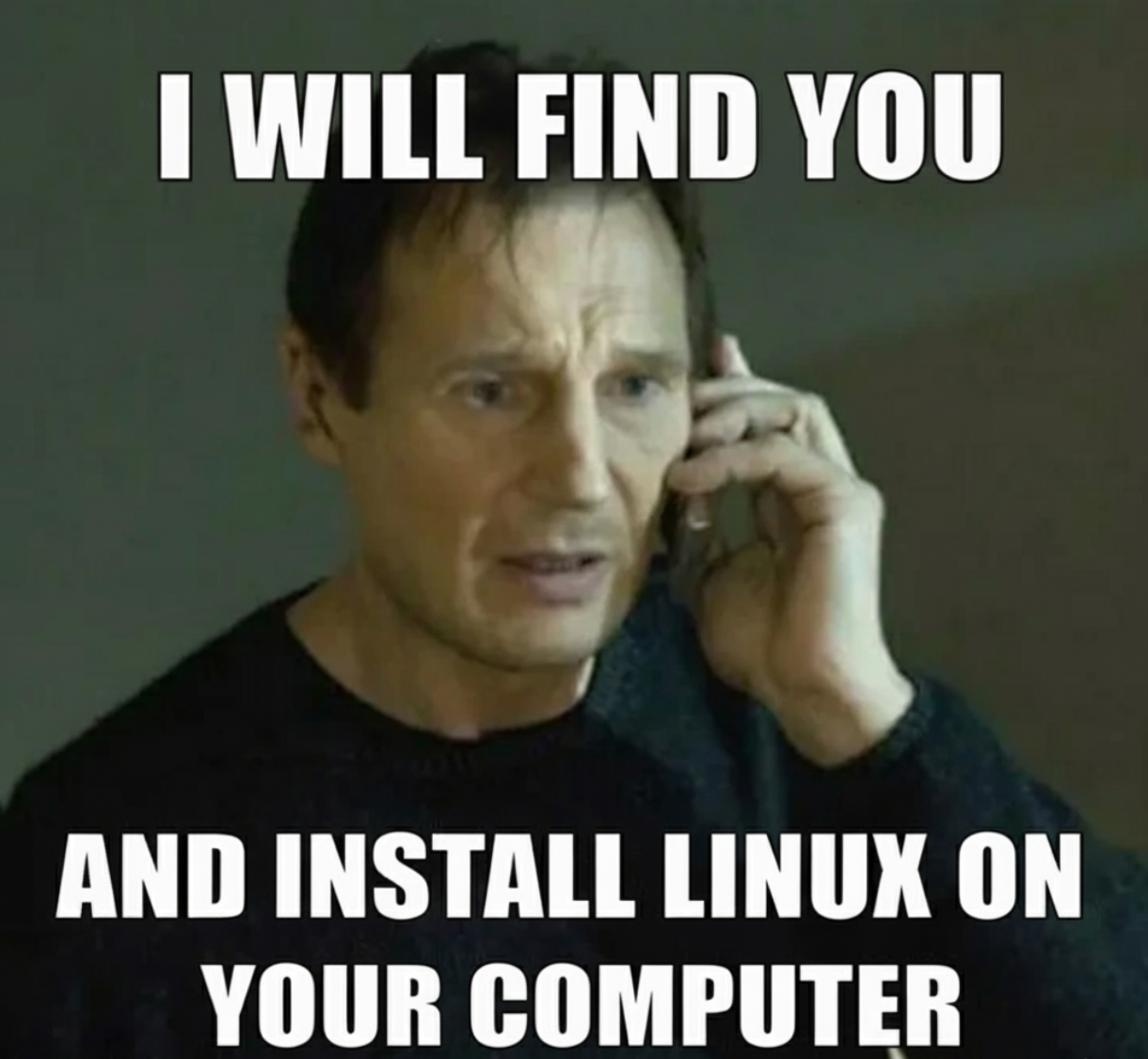 1
1
-
WinBoat è un software che porta a livelli altissimi l'integrazione di un ambiente Windows all'interno di una distro Linux
Uncategorized 1
1