In honor of Meta's latest announcement, a thread on 175 years of 3D failure.
Uncategorized
29
Posts
4
Posters
1
Views
-
In honor of Meta's latest announcement, a thread on 175 years of 3D failure.
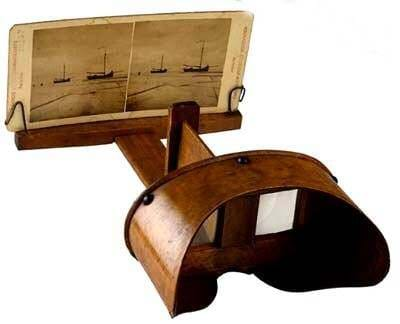
Let's first go all the way back to 1851 with the Brewster Stereoscope. No less a person than Queen Victoria was impressed, kicking off a fad that quickly sold over 250,000 units. Turns out it was not the future of photography.
1/
-
In honor of Meta's latest announcement, a thread on 175 years of 3D failure.
Let's first go all the way back to 1851 with the Brewster Stereoscope. No less a person than Queen Victoria was impressed, kicking off a fad that quickly sold over 250,000 units. Turns out it was not the future of photography.
1/
There was another wave of 3D during the rise of coin-operated machinery. Here, a device from 1905. 2/
-
There was another wave of 3D during the rise of coin-operated machinery. Here, a device from 1905. 2/
By the 1940s, thanks to amazing technical advances, the future arrived not just for postcards but for education. The US military bought 100,000 viewers and 6 million reels to educate soldiers and sailors. 3/
-
By the 1940s, thanks to amazing technical advances, the future arrived not just for postcards but for education. The US military bought 100,000 viewers and 6 million reels to educate soldiers and sailors. 3/
Then in 1952-1954 came the future of movies: anaglyph (aka red/blue) 3D. 4/
-
Then in 1952-1954 came the future of movies: anaglyph (aka red/blue) 3D. 4/
The crash of that was enough to get people to forget about stereoscopic 3D for a generation. But in the 1990s as personal computers became ubiquitous and the early Internet created excitement, computers became powerful enough to render 3D graphics in real time. Rendering 3D worlds on 2D monitors was wildly popular, but interactive stereoscopic 3D was seen as the future of fun. And also of work! 5/
-
The crash of that was enough to get people to forget about stereoscopic 3D for a generation. But in the 1990s as personal computers became ubiquitous and the early Internet created excitement, computers became powerful enough to render 3D graphics in real time. Rendering 3D worlds on 2D monitors was wildly popular, but interactive stereoscopic 3D was seen as the future of fun. And also of work! 5/
We then needed 20 years to forget about that before the next 3D future arrived: Movies! Again! This one ran circa 2009-2013. As we know it ultimately didn't pan out, but it was enough to touch off two more fads involving stereoscopic 3D. 6/
-
We then needed 20 years to forget about that before the next 3D future arrived: Movies! Again! This one ran circa 2009-2013. As we know it ultimately didn't pan out, but it was enough to touch off two more fads involving stereoscopic 3D. 6/
With 3D movies back in fashion, electronics manufacturers wasted no time taking the obvious next step: 3D TV. One CES these were everywhere, and the next one they weren't. 7/
-
With 3D movies back in fashion, electronics manufacturers wasted no time taking the obvious next step: 3D TV. One CES these were everywhere, and the next one they weren't. 7/
But the big new future that came out of 3D movies was virtual reality, round 2. Starting in 2010 or so there were many stabs at this, all funded by rafts of ZIRP investor money. 8/
-
But the big new future that came out of 3D movies was virtual reality, round 2. Starting in 2010 or so there were many stabs at this, all funded by rafts of ZIRP investor money. 8/
I'd put the peak of this era in 2021, when Mark Zuckerberg renamed Facebook to Meta, because a VR universe, the metaverse, was the future of both play and work. 9/
-
I'd put the peak of this era in 2021, when Mark Zuckerberg renamed Facebook to Meta, because a VR universe, the metaverse, was the future of both play and work. 9/
This era is clearly in retreat with mass Meta layoffs and killing products that were, only a few years ago, the future of both Meta and the world: https://www.theverge.com/tech/863209/meta-has-discontinued-its-metaverse-for-work-too
10/ -
This era is clearly in retreat with mass Meta layoffs and killing products that were, only a few years ago, the future of both Meta and the world: https://www.theverge.com/tech/863209/meta-has-discontinued-its-metaverse-for-work-too
10/Now as people have already pointed out, stereoscopic 3D has never been totally dead. Look, for example, at this graph of the proportion of movies in 3D. It's kept bumping along. https://stephenfollows.com/p/how-are-3d-movies-performing-at-the-box-office 11/
-
Now as people have already pointed out, stereoscopic 3D has never been totally dead. Look, for example, at this graph of the proportion of movies in 3D. It's kept bumping along. https://stephenfollows.com/p/how-are-3d-movies-performing-at-the-box-office 11/
My point here isn't "3D bad". It's that for 175 years or more, people have been thinking "2D success + stereoscopic 3D technology = the future".
It's not a dumb hypothesis, really. People do process (a relatively close portion of) the world with binocular vision. Seems possibly important. 12/
-
My point here isn't "3D bad". It's that for 175 years or more, people have been thinking "2D success + stereoscopic 3D technology = the future".
It's not a dumb hypothesis, really. People do process (a relatively close portion of) the world with binocular vision. Seems possibly important. 12/
My objection is that otherwise smart people, over and over and over again, make big investments in that hypothesis without ever understanding why it has failed so many times before. Facebook's VR losses alone are above $75 billion dollars.
Stereoscopic 3D is a cool novelty, but at this point I'd be amazed if anything serious ever comes out of it. And if it does, it will be because somebody really looked at the failures and pursues products people actually care about. Because so far, every time, people get bored and quietly go back to the thing that was already working for them. 13/
-
My objection is that otherwise smart people, over and over and over again, make big investments in that hypothesis without ever understanding why it has failed so many times before. Facebook's VR losses alone are above $75 billion dollars.
Stereoscopic 3D is a cool novelty, but at this point I'd be amazed if anything serious ever comes out of it. And if it does, it will be because somebody really looked at the failures and pursues products people actually care about. Because so far, every time, people get bored and quietly go back to the thing that was already working for them. 13/
Here we move from history to speculation, but I think the real reason this doesn't matter is that humans are extremely good at reconstructing mental 3D from visual 2D.
It doesn't appear to be well studied, but human binocular vision mainly works well up close, and peters out around 50 feet.
But anybody can look out a window and have a decent 3D model in their heads extending out hundreds, even thousands of feet. 14/
-
Here we move from history to speculation, but I think the real reason this doesn't matter is that humans are extremely good at reconstructing mental 3D from visual 2D.
It doesn't appear to be well studied, but human binocular vision mainly works well up close, and peters out around 50 feet.
But anybody can look out a window and have a decent 3D model in their heads extending out hundreds, even thousands of feet. 14/
My grandfather was blind in one eye from 12, but you never would have known it; he just lived his life. My understanding was that it was more a field-of-view problem for him than anything involving depth perception.
You can try it now yourself. Close one eye and go get a snack or a book from the shelf. How much does binocular vision matter at 1 foot, 10 feet, 30 feet? /15
-
My grandfather was blind in one eye from 12, but you never would have known it; he just lived his life. My understanding was that it was more a field-of-view problem for him than anything involving depth perception.
You can try it now yourself. Close one eye and go get a snack or a book from the shelf. How much does binocular vision matter at 1 foot, 10 feet, 30 feet? /15
@williampietri just gonna rudely chime in as someone who until recently had no binocular vision (and still has very little) and state that yeah, in my experience lack of it MOSTLY doesn’t affect daily life: essentially it’s like watching TV, as you say, depth can be inferred from the 2D information you’re presented.
HOWEVER: the world is a hell of a lot more visually interesting and easy to navigate with it. And now I can catch things when they’re thrown at me.
-
@williampietri just gonna rudely chime in as someone who until recently had no binocular vision (and still has very little) and state that yeah, in my experience lack of it MOSTLY doesn’t affect daily life: essentially it’s like watching TV, as you say, depth can be inferred from the 2D information you’re presented.
HOWEVER: the world is a hell of a lot more visually interesting and easy to navigate with it. And now I can catch things when they’re thrown at me.
@astronomerritt Ooh, fascinating! Thanks for responding. How did you come to start getting it?
-
@astronomerritt Ooh, fascinating! Thanks for responding. How did you come to start getting it?
@williampietri I have severe amblyopia (or lazy eye), and because vision in one eye is so much worse than the other, my brain simply switches off the bad eye in favour of my good eye. I was what is called “functionally blind” in my left eye, rather than physically blind.
Turns out VR headsets force my brain to use the eye it usually ignores. The first time I put one on was the first time I ever saw in 3D. I cried. Got one for myself. Started using it pretty frequently… and found that my brain has started using my left eye a little even when I’m not wearing the headset. My left eye’s vision has even improved a bit because my brain isn’t so violently opposed to using it any more! My optometrist is very excited. I now measure as having the lowest possible level of depth perception, but I DO have it.
This actually happens with a number of people with amblyopia to the point therapeutic treatments are in development using VR headsets, or were last time I checked.
-
@williampietri I have severe amblyopia (or lazy eye), and because vision in one eye is so much worse than the other, my brain simply switches off the bad eye in favour of my good eye. I was what is called “functionally blind” in my left eye, rather than physically blind.
Turns out VR headsets force my brain to use the eye it usually ignores. The first time I put one on was the first time I ever saw in 3D. I cried. Got one for myself. Started using it pretty frequently… and found that my brain has started using my left eye a little even when I’m not wearing the headset. My left eye’s vision has even improved a bit because my brain isn’t so violently opposed to using it any more! My optometrist is very excited. I now measure as having the lowest possible level of depth perception, but I DO have it.
This actually happens with a number of people with amblyopia to the point therapeutic treatments are in development using VR headsets, or were last time I checked.
@astronomerritt Hey, that's awesome! Now there's a great use for stereoscopic 3D.
-
@astronomerritt Hey, that's awesome! Now there's a great use for stereoscopic 3D.
@williampietri Don’t get me wrong, I agree with your thread, I don’t think 3D tech is ever really going to be a Big Thing in most people’s lives and trying to push it on folk is likely to fail. But it does have its niche uses and as you say, it can be a fun toy 😊




Gli ultimi otto messaggi ricevuti dalla Federazione
-
C'è ancora un po' di tempo per salire a bordo della missione Artemis II verso la Luna. Ecco il link per registrarsi e aggiungere il proprio nome in una scheda di memoria che volerà nella navetta Orion
https://www3.nasa.gov/send-your-name-with-artemis/
-
202 – Prima ci tracciavano. Ora costruiscono il nostro gemello digitale https://www.camisanicalzolari.it/202-prima-ci-tracciavano-ora-costruiscono-il-nostro-gemello-digitale/?utm_source=dlvr.it&utm_medium=mastodon
-
@MelissaBearTrix lava lamps have always looked like intimate props, TBF.
-
@afreytes if it's any consolation, I'm the oblivious kind as well, and I was underweight until my late 30s. I don't know if there's a physical / body image correlation with obliviousness. I've never being able to tell the difference between «sfriendly» and «coming on to me». Part of it might be that on a personal level I've always considered romance something that you build on top of friendship, rather than independently from it, leading to a conflation of the initial approach
-
Una finale assurda della Coppa d'Africa. Rigore per il #Marocco a 1 minuto dalla fine. Il #Senegal, per protesta, esce dal campo. Ritorna e #BrahimDiaz (miglior giocatore del torneo) lo batte provando il cucchiaio. Il portiere glielo sugge. Tempi supplementari: golasso dei Leoni di Taranga. Risultato finale: Marocco-Senegal 0-1. Tutto ciò neIlo stadio Prince Moulay Abdellah di Populous a Rabat, emblema delle ambizioni del Marocco https://www.domusweb.it/it/architettura/2026/01/16/stadio-populous-prince-moulay-abdellah-rabat-messico.html
-
@sortius thank
-
@Otttoz I'm sorry, I don't speak Italian, so I had to translate that. Yeh, they're cooked, only just.
The mussels are cooked with shallot, leek, celery, white wine, thyme, and parsley, then cream added at the end
-
@sortius la porzione che a me serve per capire se sono cotte