In honor of Meta's latest announcement, a thread on 175 years of 3D failure.
Uncategorized
29
Posts
4
Posters
1
Views
-
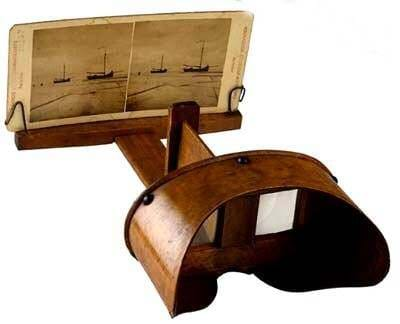
By the 1940s, thanks to amazing technical advances, the future arrived not just for postcards but for education. The US military bought 100,000 viewers and 6 million reels to educate soldiers and sailors. 3/
Then in 1952-1954 came the future of movies: anaglyph (aka red/blue) 3D. 4/
-
Then in 1952-1954 came the future of movies: anaglyph (aka red/blue) 3D. 4/
The crash of that was enough to get people to forget about stereoscopic 3D for a generation. But in the 1990s as personal computers became ubiquitous and the early Internet created excitement, computers became powerful enough to render 3D graphics in real time. Rendering 3D worlds on 2D monitors was wildly popular, but interactive stereoscopic 3D was seen as the future of fun. And also of work! 5/
-
The crash of that was enough to get people to forget about stereoscopic 3D for a generation. But in the 1990s as personal computers became ubiquitous and the early Internet created excitement, computers became powerful enough to render 3D graphics in real time. Rendering 3D worlds on 2D monitors was wildly popular, but interactive stereoscopic 3D was seen as the future of fun. And also of work! 5/
We then needed 20 years to forget about that before the next 3D future arrived: Movies! Again! This one ran circa 2009-2013. As we know it ultimately didn't pan out, but it was enough to touch off two more fads involving stereoscopic 3D. 6/
-
We then needed 20 years to forget about that before the next 3D future arrived: Movies! Again! This one ran circa 2009-2013. As we know it ultimately didn't pan out, but it was enough to touch off two more fads involving stereoscopic 3D. 6/
With 3D movies back in fashion, electronics manufacturers wasted no time taking the obvious next step: 3D TV. One CES these were everywhere, and the next one they weren't. 7/
-
With 3D movies back in fashion, electronics manufacturers wasted no time taking the obvious next step: 3D TV. One CES these were everywhere, and the next one they weren't. 7/
But the big new future that came out of 3D movies was virtual reality, round 2. Starting in 2010 or so there were many stabs at this, all funded by rafts of ZIRP investor money. 8/
-
But the big new future that came out of 3D movies was virtual reality, round 2. Starting in 2010 or so there were many stabs at this, all funded by rafts of ZIRP investor money. 8/
I'd put the peak of this era in 2021, when Mark Zuckerberg renamed Facebook to Meta, because a VR universe, the metaverse, was the future of both play and work. 9/
-
I'd put the peak of this era in 2021, when Mark Zuckerberg renamed Facebook to Meta, because a VR universe, the metaverse, was the future of both play and work. 9/
This era is clearly in retreat with mass Meta layoffs and killing products that were, only a few years ago, the future of both Meta and the world: https://www.theverge.com/tech/863209/meta-has-discontinued-its-metaverse-for-work-too
10/ -
This era is clearly in retreat with mass Meta layoffs and killing products that were, only a few years ago, the future of both Meta and the world: https://www.theverge.com/tech/863209/meta-has-discontinued-its-metaverse-for-work-too
10/Now as people have already pointed out, stereoscopic 3D has never been totally dead. Look, for example, at this graph of the proportion of movies in 3D. It's kept bumping along. https://stephenfollows.com/p/how-are-3d-movies-performing-at-the-box-office 11/
-
Now as people have already pointed out, stereoscopic 3D has never been totally dead. Look, for example, at this graph of the proportion of movies in 3D. It's kept bumping along. https://stephenfollows.com/p/how-are-3d-movies-performing-at-the-box-office 11/
My point here isn't "3D bad". It's that for 175 years or more, people have been thinking "2D success + stereoscopic 3D technology = the future".
It's not a dumb hypothesis, really. People do process (a relatively close portion of) the world with binocular vision. Seems possibly important. 12/
-
My point here isn't "3D bad". It's that for 175 years or more, people have been thinking "2D success + stereoscopic 3D technology = the future".
It's not a dumb hypothesis, really. People do process (a relatively close portion of) the world with binocular vision. Seems possibly important. 12/
My objection is that otherwise smart people, over and over and over again, make big investments in that hypothesis without ever understanding why it has failed so many times before. Facebook's VR losses alone are above $75 billion dollars.
Stereoscopic 3D is a cool novelty, but at this point I'd be amazed if anything serious ever comes out of it. And if it does, it will be because somebody really looked at the failures and pursues products people actually care about. Because so far, every time, people get bored and quietly go back to the thing that was already working for them. 13/
-
My objection is that otherwise smart people, over and over and over again, make big investments in that hypothesis without ever understanding why it has failed so many times before. Facebook's VR losses alone are above $75 billion dollars.
Stereoscopic 3D is a cool novelty, but at this point I'd be amazed if anything serious ever comes out of it. And if it does, it will be because somebody really looked at the failures and pursues products people actually care about. Because so far, every time, people get bored and quietly go back to the thing that was already working for them. 13/
Here we move from history to speculation, but I think the real reason this doesn't matter is that humans are extremely good at reconstructing mental 3D from visual 2D.
It doesn't appear to be well studied, but human binocular vision mainly works well up close, and peters out around 50 feet.
But anybody can look out a window and have a decent 3D model in their heads extending out hundreds, even thousands of feet. 14/
-
Here we move from history to speculation, but I think the real reason this doesn't matter is that humans are extremely good at reconstructing mental 3D from visual 2D.
It doesn't appear to be well studied, but human binocular vision mainly works well up close, and peters out around 50 feet.
But anybody can look out a window and have a decent 3D model in their heads extending out hundreds, even thousands of feet. 14/
My grandfather was blind in one eye from 12, but you never would have known it; he just lived his life. My understanding was that it was more a field-of-view problem for him than anything involving depth perception.
You can try it now yourself. Close one eye and go get a snack or a book from the shelf. How much does binocular vision matter at 1 foot, 10 feet, 30 feet? /15
-
My grandfather was blind in one eye from 12, but you never would have known it; he just lived his life. My understanding was that it was more a field-of-view problem for him than anything involving depth perception.
You can try it now yourself. Close one eye and go get a snack or a book from the shelf. How much does binocular vision matter at 1 foot, 10 feet, 30 feet? /15
@williampietri just gonna rudely chime in as someone who until recently had no binocular vision (and still has very little) and state that yeah, in my experience lack of it MOSTLY doesn’t affect daily life: essentially it’s like watching TV, as you say, depth can be inferred from the 2D information you’re presented.
HOWEVER: the world is a hell of a lot more visually interesting and easy to navigate with it. And now I can catch things when they’re thrown at me.
-
@williampietri just gonna rudely chime in as someone who until recently had no binocular vision (and still has very little) and state that yeah, in my experience lack of it MOSTLY doesn’t affect daily life: essentially it’s like watching TV, as you say, depth can be inferred from the 2D information you’re presented.
HOWEVER: the world is a hell of a lot more visually interesting and easy to navigate with it. And now I can catch things when they’re thrown at me.
@astronomerritt Ooh, fascinating! Thanks for responding. How did you come to start getting it?
-
@astronomerritt Ooh, fascinating! Thanks for responding. How did you come to start getting it?
@williampietri I have severe amblyopia (or lazy eye), and because vision in one eye is so much worse than the other, my brain simply switches off the bad eye in favour of my good eye. I was what is called “functionally blind” in my left eye, rather than physically blind.
Turns out VR headsets force my brain to use the eye it usually ignores. The first time I put one on was the first time I ever saw in 3D. I cried. Got one for myself. Started using it pretty frequently… and found that my brain has started using my left eye a little even when I’m not wearing the headset. My left eye’s vision has even improved a bit because my brain isn’t so violently opposed to using it any more! My optometrist is very excited. I now measure as having the lowest possible level of depth perception, but I DO have it.
This actually happens with a number of people with amblyopia to the point therapeutic treatments are in development using VR headsets, or were last time I checked.
-
@williampietri I have severe amblyopia (or lazy eye), and because vision in one eye is so much worse than the other, my brain simply switches off the bad eye in favour of my good eye. I was what is called “functionally blind” in my left eye, rather than physically blind.
Turns out VR headsets force my brain to use the eye it usually ignores. The first time I put one on was the first time I ever saw in 3D. I cried. Got one for myself. Started using it pretty frequently… and found that my brain has started using my left eye a little even when I’m not wearing the headset. My left eye’s vision has even improved a bit because my brain isn’t so violently opposed to using it any more! My optometrist is very excited. I now measure as having the lowest possible level of depth perception, but I DO have it.
This actually happens with a number of people with amblyopia to the point therapeutic treatments are in development using VR headsets, or were last time I checked.
@astronomerritt Hey, that's awesome! Now there's a great use for stereoscopic 3D.
-
@astronomerritt Hey, that's awesome! Now there's a great use for stereoscopic 3D.
@williampietri Don’t get me wrong, I agree with your thread, I don’t think 3D tech is ever really going to be a Big Thing in most people’s lives and trying to push it on folk is likely to fail. But it does have its niche uses and as you say, it can be a fun toy 😊
-
@williampietri Don’t get me wrong, I agree with your thread, I don’t think 3D tech is ever really going to be a Big Thing in most people’s lives and trying to push it on folk is likely to fail. But it does have its niche uses and as you say, it can be a fun toy 😊
@astronomerritt @williampietri This is shockingly close to what the Berkeley School of Optometry hoped would happen for my kid, but one generation of technology back, with 3D TV and vidya games. Unfortunately he was too little to play any of the games successfully (I think 4-5 years old?) so it just became a source of frustration for us all when we couldn't follow through on the therapy protocol.
Now nearly an adult, he knows that VR has worked for others but hasn't yet decided he'd like to try it, for fear of disappointment. Inspiring to hear a first-hand account!
-
@astronomerritt @williampietri This is shockingly close to what the Berkeley School of Optometry hoped would happen for my kid, but one generation of technology back, with 3D TV and vidya games. Unfortunately he was too little to play any of the games successfully (I think 4-5 years old?) so it just became a source of frustration for us all when we couldn't follow through on the therapy protocol.
Now nearly an adult, he knows that VR has worked for others but hasn't yet decided he'd like to try it, for fear of disappointment. Inspiring to hear a first-hand account!
@mogul @williampietri Oh, that’s fascinating, I didn’t know they were trying this with 3D TVs!
In general there used to be this idea that once you’re an adult, you’re stuck with amblyopia, and nothing can be done: but recent science has shown the brain’s visual cortex actually retains plasticity even in adults, and it CAN learn to use the bad eye again. If your kid hasn’t tried a VR headset to see if the 3D effect works for him, that’s a good first step (as it doesn’t always, and it can make folk nauseous).
I got mine with very low expectations. I’d heard of VR headsets helping amblyopic folk but I wasn’t really hoping for much. The first time I realised I was seeing depth even with the headset off was WILD. I was just poking a chair like “it’s CLOSE!”. I’d love for your kid to experience that too one day.
-
@mogul @williampietri Oh, that’s fascinating, I didn’t know they were trying this with 3D TVs!
In general there used to be this idea that once you’re an adult, you’re stuck with amblyopia, and nothing can be done: but recent science has shown the brain’s visual cortex actually retains plasticity even in adults, and it CAN learn to use the bad eye again. If your kid hasn’t tried a VR headset to see if the 3D effect works for him, that’s a good first step (as it doesn’t always, and it can make folk nauseous).
I got mine with very low expectations. I’d heard of VR headsets helping amblyopic folk but I wasn’t really hoping for much. The first time I realised I was seeing depth even with the headset off was WILD. I was just poking a chair like “it’s CLOSE!”. I’d love for your kid to experience that too one day.
@astronomerritt @williampietri I've heard about the research showimg greater adaptability in adults, and he has too, which is why he didn't rush to it once VR seemed to help (he had higher priority stuff happening). What was your entry point? Did you use the explicit therapy system for this, or just use VR as a gamer on your own?




Gli ultimi otto messaggi ricevuti dalla Federazione
-
@kemona_halftau lol @ Comintern
-
@davefischer nice Xzibit design there. «Yo dawg we heard you like chips so we put chips on your chips so you can compute while you compute»
-
@FlavioB ho letto l'articolo da modificare. Praticamente un terzo dei componenti del CSM fa parte di un elenco di professori universitari (competenti in materie giuridiche) e di avvocati scelti dal Parlamento. Il restante due terzi da magistrati giudicanti e requirenti.
Cosa può combinare quel terzo? Penso di non avere le competenze per dirlo.
Sta di fatto che, appunto, così viene meno l'indipendenza dei poteri.Io di base sono contraria alla separazione delle carriere.
-
-
Is something you misread with a funny effect also a #mondegreen? Or what shoud they be called?
(h/t to @afewbugs for this post I just came across https://social.coop/@afewbugs/115918330186198252 about a presto/pesto misreading)
-
@kenobit quasi quasi ci provo non sembra male come alternativa e lo dico da non vegano.... devo un attimo capire cosa sia il tahini 😀
-
Ciao amici, mi sapete suggerire un buon lettore mp3? Mi sono rotta il cazzo di usare il telefono.
Info:
- Non sono un'audiofila, mi basta che la musica si senta bene;
- Budget possibilmente non superiore alla 50ina;
- Se potesse riprodurre anche i video sarebbe eccezionale;
- Deve (DEVE!!!!!) potersi collegare alle cuffie bluetooth.Grazie, cari.
-
...questo è un "amico" di quelli "buoni"...
Siria, Al Sharaa si prende l’intero nord est: i curdi si arrendono e firmano l’accordo, finisce l’esperienza del Rojava https://www.ilfattoquotidiano.it/2026/01/19/rojava-fine-curdi-siria-news/8260935/